Reincarnation – A Belief Found Worldwide by Judith Shaw

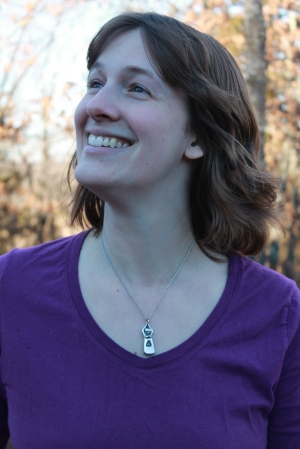
judith Shaw photo

Reincarnation is a spiritual belief that our souls are reborn many times to this physical Earth plane. These many lives give us the opportunity to experience a variety of circumstances and create karma, the law of cause and effect. Through these experiences one grows, until ultimately one’s soul reaches a level in which it transcends to another dimension. Once in these other dimensions our souls continue their evolution toward oneness with Source.

I have always believed in reincarnation myself and have explored the idea in various paintings. This painting, Many Lives, illustrates that belief. The far left figure is my present self and the other figures represent selves I might have been in past lives. But the concept of reincarnation is not as ancient as I thought it was.

Many Lives, painting by Judith Shaw

It is difficult to known exact beliefs of peoples who lived before written history began but some scholars feel that ancient cultures who practiced shamanistic Earth-based religions had a concept of reincarnation. But other scholars believe that these tribes taught only of the preexistence of the soul before birth or its independent survival after death in an Otherworld. Continue reading “Reincarnation – A Belief Found Worldwide by Judith Shaw”

Danu, Celtic Mother Goddess by Judith Shaw

judith Shaw

Danu, of the flowing waters, Queen of the fertile land – Danu, the Great Mother Goddess of the Irish Celts, known as Don by the Welsh Celts, is the Creator Goddess of the Tuatha De Danann, the first wave of Celtic tribes to invade Ireland.   She is also known as Danann, Ana, and Anann.  She gave birth to all life in the land of the Celts.

No stories of Her survive but Her power remains strong. She is the most ancient of all the Celtic deities. In a silver flash of iridescence she appears in my mind’s eye.

As the “Flowing One” She is associated with the seas, wells, springs and the Danube River, gifting Her children the magic of transformation, inspiration, and wisdom. As an Earth Goddess, She bestows abundance and earth mysteries. She embodies the wisdom of living in balance with the Earth. She is sometimes associated with Flidais of the cattle and deer. She is also connected with Brigid, Goddess of Healing, Poetry and Smithcraft, who the original Neolithic people of Ireland worshiped long before the Celts arrived. Continue reading “Danu, Celtic Mother Goddess by Judith Shaw”

Curiosity About Everything and the Language of the Goddess by Carol P. Christ

carol christMy recent discovery of Marija Gimbutas on Youtube rekindled my admiration for her work. In her slide-lecture “The World of the Goddess” Marija Gimbutas allows us to follow the line of reasoning she used to decipher the “language of the Goddess” in Old Europe.

Careful attention to her lecture shows that Gimbutas did not close her eyes, dream, and then attach her own ideas and intuitions to the artifacts she later discussed. Rather, she catalogued groups of images with similar symbolism and used her knowledge of nature (what does a water bird or an owl look like?) and folklore (she collected thousands of songs connected to the agricultural and life cycles in her native Lithuania in the 1930s) to unlock the meaning of ancient symbols.

I suspect that most of the critics of Gimbutas lack the knowledge she gained through her wide curiosity about life. Do other archeologists as a group know what specific species of water birds or owls really look like? Do they have the same kind of knowledge of folklore and folk traditions that Gimbutas had?   Continue reading “Curiosity About Everything and the Language of the Goddess by Carol P. Christ”

The Bee Goddess Calls by Judith Shaw

judith ShawSpring arrived in the Northern Hemisphere and all of Goddess’s children are waking up from our winter slumbers.  Birds are singing, fruit trees are blossoming, bees are buzzing, and early spring bulb flowers are in full bloom.  Signs of spring fever are evident as we find ourselves full of energy and vitality for new projects and relationships.

As new life emerges from the Earth we can more easily reflect on our place in the greater scheme of life.  It’s a good time to question the values of our consumer society and ask if there is another way.

In contrast to these values of domination, separation, and consumption, ancient wisdom traditions teach that we are all connected – to each other, to all life, to the whole natural world and to the spiritual cosmos. Continue reading “The Bee Goddess Calls by Judith Shaw”

Was Ariadne the Most Graceful Bull-leaper of All? Deconstructing and Re-visioning Greek Mythology by Carol P. Christ

carol-christSometimes we think of Greek myth as a pre-patriarchal or less patriarchal alternative to the stories of the Bible. After all, Goddesses appear in Greek myths while they are nearly absent from the Bible. Right?

So far so good, but when we look more closely we can see that Greek myth enshrines patriarchal ideology just as surely as the Bible does.  We are so dazzled by the stories told by the Greeks that we designate them “the origin” of culture. We also have been taught that Greek myths contain “eternal archetypes” of the psyche. I hope the brief “deconstruction” of the myth of Ariadne which follows will begin to “deconstruct” these views as well.

bull leaping ring before 2000 bc phourniAriadne is a pre-Greek word. The “ne” ending is not found in Greek. As the name is attributed to a princess in Greek myth, we might speculate that Ariadne could have been one of the names of the Goddess in ancient Crete. But in Greek myth Ariadne is cast in a drama in which she is a decidedly unattractive heroine.

In the story told by the Greeks, Ariadne falls in love with Theseus, a handsome young man who was sent with 11 other Greek young people to be fed to a monster (who is half man, half bull) known as the Minotuar. The Minotuar is Ariadne’s half brother (see below). Because of her “love” for Theseus, Ariadne helps him to murder her brother.  She then flees with Theseus on his boat.

However, this “love story” does not have a “happy ending” as Theseus abandons Ariadne on a nearby island–long before he arrives home in Athens. Theseus is ever after celebrated as a hero who killed a monster, while Ariadne is just another cast-off female.  Whose story is this? Continue reading “Was Ariadne the Most Graceful Bull-leaper of All? Deconstructing and Re-visioning Greek Mythology by Carol P. Christ”

Persephone by Barbara Ardinger

Here we are, creeping up on the vernal equinox (March 21), which astronomers and weathermen on TV tell us is the start of spring. I see Imbolc (as described by Deanne Quarrie) as the true beginning of spring, however. It’s when we see the first little crocuses popping up through the snow…..oh, yeah…..well, maybe not this year, when more than half the U.S. is buried under mountains of snow. Let’s just agree that in ordinary years crocuses pop up and bloom and trees start showing us their tiny green leaves in February. The equinox is really the turning point of spring, the hinge of time when the rising energy tips over into falling energy that is flowing toward summertime, which will arrive at Beltane (May 1 or 2).

Persephone
Demeter and Persephone

We’re probably all familiar with the story of Persephone, who under her childhood name, Kore, was out picking flowers in the meadow one day when her Uncle Hades roared up out of the earth in his mighty chariot and kidnapped her. This led her mother, Demeter, the grain goddess, to search for her and finally go on strike and let the world turn back into winter. This went on until Aunt Hecate told Demeter where her daughter was. When Persephone, now queen of the underworld, came back up with her mother—voilà! It was springtime. That’s how the vegetation myth goes. Continue reading “Persephone by Barbara Ardinger”

Celtic Goddesses – a Personal Journey by Judith Shaw

Judith ShawWhen I first discovered the Goddess as a young woman, I was drawn to the Goddess of prehistory. I felt Her power and importance through the statues, figurines and shrines that were uncovered, as Her names and stories have been lost to us.

Later I discovered, in the first written tablets found, the story of Inanna, the Sumerian Goddess. Her story covers all the aspects of a woman’s life – the maiden, the lover, the queen, the mother.  She brought the gifts of civilization to Her people.  She descended into the underworld and was reborn.  As Queen of Heaven and Earth, She ruled all.  I worked with images of Her for many years.

Continue reading “Celtic Goddesses – a Personal Journey by Judith Shaw”

Echoes of Mesopotamia by Molly

IMG_0522

Echoes of Mesopotamia
small figures from ancient places
ancient times
and ancient faces
ancient words
and ancient wisdom
still flowing in my veins

Clay in my hands
clay in her hands
running on the rivers of time
spiraling in the mysteries of being
spinning in the eddies and ripples of eternity…

I have a strong emotional connection to ancient Paleolithic and Neolithic goddess sculptures. I do not find that I feel as personally connected to later goddess imagery, but very ancient figures call to something deep and powerful within me. I have a sculpture of the Goddess of Willendorf at a central point on my altar. Sometimes I hold her and wonder and muse about who carved the original. I almost feel a thread that reaches out and continues to connect us to that nearly lost past—all the culture and society and how very much we don’t know about early human history. There is such a solid power to these early figures and to me they speak of the numinous, non-personified, Great Goddess weaving her way throughout time and space. Continue reading “Echoes of Mesopotamia by Molly”

The Great Commandment for Women: Love and Care for Yourself as You Love and Care for Others by Carol P. Christ

carol-christA rabbi known as Jesus of Nazareth taught that you should  “love God with all your heart and your neighbor as yourself.”  Charles Hartshorne, philosopher of relationship and a twentieth century advocate of the “two great commandments,” added that it should be understood that this means that God wants you to love yourself too.

I quote Hartshorne’s midrash on the great teaching often because, sadly, too many women—and some men too–have been taught to love their neighbors at the expense of themselves, to care for others, but not to care as much for themselves.  Continue reading “The Great Commandment for Women: Love and Care for Yourself as You Love and Care for Others by Carol P. Christ”

Brigid, Archetype of Inspiration and Activation by Stephanie Anderson Ladd

Stephanie AL_London_photoBrigid, Goddess of the Fire, greets us on Brigid’s Day, February 1. She is a Celtic sun goddess whose light burns brightly, illuminating the darkness of the land, of a heavy heart, and the dark night of our soul. With her shining light to guide us, we are lifted out of the Underworld darkness where we tend to descend in Winter, to the light of the World above, teeming with life as Spring begins to unfold her wet wings.

Brigid is a beloved goddess throughout the British Isles, particularly Ireland, where she is seen as the Mother of the Land and Her people. As a feminine archetype, she activates our solar, active nature. Much like the sun rising from below the Earth’s horizon, she urges us to come out of hiding and shine our light on the world. This may be done in a quiet manner, such as sitting by the hearthfire and doing needlework, finding inspiration by a walk in nature and writing a poem, moving about the kitchen making soup, getting busy with an art or craft project, or in big ways by taking on new roles as healers, artists, and leaders and calling others to join us. Continue reading “Brigid, Archetype of Inspiration and Activation by Stephanie Anderson Ladd”