Horse – Symbol of Power and Freedom by Judith Shaw

judith shaw photoThe horse was first depicted in art about 32,000 years ago on the cave walls of southern France and northern Spain. Though  archeologists disagree as to whether the paintings are realistic depictions or symbolic markings, many concur that they are both. Perhaps our ancestors applied a numinous meaning to the horses and the symbols painted on those ancient cave walls.

Continue reading “Horse – Symbol of Power and Freedom by Judith Shaw”

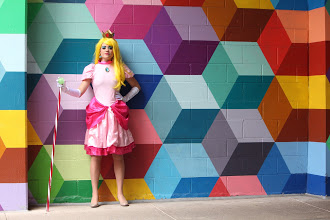
Princess Peach from The Goddess Project: Made in Her Image by Colette Numajiri

Toy stores and department store aisles are decked with pink and purple princess paraphernalia. Disney has provided an array of princesses for little girls to choose their birthday party or bedroom decor from. But as we all know, there’s a deeper secret hidden in the FAIRY TALES that high powered media execs have made their fortunes on: THE GODDESS.

Every hero’s tale, be it in video games or romantic movies sets out to do one thing: SAVE THE PRINCESS.  When I was a child I saved Her myself on my little Nintendo system never knowing why She was in trouble in the first place. And was I the only one who ever wondered why NONE of the PRINCESSES HAD MOTHERS!?

In the early Centuries during the Christianization of Europe, Pagans (which means “people of the land”) hid truths right under the nose of the newly forming Christian Church in their folklore, games and children’s rhymes to avoid being burnt at the stake. These simple people tried to covertly keep the Wisdom of the Sacred Feminine that they’d been honoring since the beginning of time, ALIVE.

Continue reading “Princess Peach from The Goddess Project: Made in Her Image by Colette Numajiri”

On Snakes by Ivy Helman

imageIn the ancient world, snakes represented fertility, creativity, rebirth, wisdom and, even, death.  They were often closely connected to female goddesses, priestesses and powerful human females who were the embodiment of such powers.    For example, there is the Minoan goddess/priestess holding the two snakes in her outstretched arms.  She is closely linked with fertility and domesticity.  Similar figurines, with similar associations and dating to approximately 1200 BCE, have also been founded in the land of what once was Canaan, where Israelites also lived.  Medusa, in whose hair lived venomous snakes, turned men who looked at her to stone.  Ovid’s account of the creation of Medusa credits the Greek goddess Athena with Medusa’s lively hair.  Another Greek legend says Perseus, after killing Medusa, gave her head to Athena who incorporated it into her shield.  Athena, the goddess of wisdom, is portrayed often with snakes wrapped around her as a belt and/or on the floor next to her. Continue reading “On Snakes by Ivy Helman”

Wisdom of Reindeer Goddess and Owl by Judith Shaw

judith shaw photo

At this time of year in the Northern Hemisphere we are called to embrace the darkness. Nighttime rules, the cold has set in and we curl up for the long winter nights with our hot beverage and an anticipation of the messages found in our dreams.

There are certain animals which stand out as guides for us during this time of cold, long nights. Reindeer of course comes to mind by all of their associations with Christmas, Santa Claus and gift-giving. Northern European goddesses such as the Antlered Ukrainian Winter Goddess Rozhanitsa; Saule, Lithuanian and Latvian Goddess of Sun and Light; and Beaivi, Sun Goddess of the Sami all flew through the sky with their flying reindeer on the winter solstice bringing the gifts of light, life and nourishment to the people. Continue reading “Wisdom of Reindeer Goddess and Owl by Judith Shaw”

A Winter Woman by Molly Remer

“When winter comes to a woman’s soul, she withdraws into her inner self, her deepest spaces. She refuses all connection, refutes all arguments that she should engage in the world. She may say she is resting, but she is more than resting: She is creating a new universe within herself, examining and breaking old patterns, destroying what should not be revived, feeding in secret what needs to thrive…

Look into her eyes, this winter woman. In their gray spaciousness you can see the future. Look out of your own winter eyes. You too can see the future.”

–Patricia Monaghan, Seasons of the Witch

When the wheel of the year turns to winter, I always feel the call to retreat, to cocoon, to pull away. I also feel the urge for significant de-cluttering—my eyes cast about the house for things to unload, get rid of, to cast away. I also search my calendar for those things which can be eliminated, trimmed down, cut back on. I think it is the inexorable approach of the winter holidays that prompts this desire to withdraw, as well as the natural rhythm of the earth which so clearly says: let things go, it is almost time to hibernate.

This shift toward winter is a time of discernment. A time to choose. A time to notice that which has not made it through the summer’s heat and thus needs to be pruned away. In this time of the year, we both recognize the harvest of our labors and that which needs to be released or even sacrificed as we sense the promise of the new year to come. Continue reading “A Winter Woman by Molly Remer”

Grieving through the Holidays: Painting Holy Women Icons of Grief by Angela Yarber

The holiday season is a particularly difficult time for grief. Whether it is grieving someone who died earlier in the year as you celebrate your first holiday season without them, or the lasting memories of loved ones who are no longer present at family gatherings, this time of year makes grief bubble to the surface. Since this is my first holiday season without my little brother, who died in March, I’ve planned ahead with coping strategies that I’d like to share with other feminists struggling to grieve through the holidays.

Upon the death of a loved one, most people in the West are offered commodified grief, costly funerals, and stifled feelings pre-packaged as dignified tradition. When deathcare became a commercial enterprise at the turn of the twentieth century, there was what mortician and author Caitlin Doughty calls a seismic shift in who was responsible for the dead. “Caring for the corpse went from visceral, primeval work performed by women to a ‘profession,’ an ‘art,’ and even a ‘science,’ performed by well-paid men. The corpse, with all its physical and emotional messiness, was taken from women. It was made neat and clean, and placed in its casket on a pedestal, always just out of our grasp (Caitlin Doughty, From Here to Eternity: Traveling the World to Find the Good Death, 136).”

Continue reading “Grieving through the Holidays: Painting Holy Women Icons of Grief by Angela Yarber”

Hooray! The Holiday Season Is At Hand! by Barbara Ardinger

December seems to have more holidays than the rest of the year put together. Days to honor Ix Chel, the Virgin of Guadalupe, St. Lucy (aka Santa Lucia), the Declaration of Human Rights, and the publication of the Rider-Waite Tarot. Saturnalia. Hanukkah. Christmas. Kwanza. Yule. Innumerable reasons to go shopping for gifts and banquets. Here, to help you survive the holiday season, are two Found Goddesses.

Who, you may ask, is a Found Goddess? The term comes from Found Goddesses, published in 1988 by Morgan Grey and Julia Penelope. Found Goddesses are modern ones that we invent to deal with modern issues that the classical pantheons can probably not cope with. Like going to the mall and cleaning our houses before our guests arrive. (Note that I’ve rewritten these pieces a bit to bring them more or less up to date.)

Continue reading “Hooray! The Holiday Season Is At Hand! by Barbara Ardinger”

Season of Change – Transformation by Judith Shaw

judith shaw photoFall is here, the leaves are changing color, the days are shortening and our ongoing natural cycle of change and transformation now moves toward the dark, quiet days of winter. Both the idea and the process of transformation have fascinated me my whole life. Blame it on my Scorpio rising. Scorpio is ruled by Pluto, the planet of transformation and regeneration. Diving deep and surfacing has always been my mode.

Continue reading “Season of Change – Transformation by Judith Shaw”

Badb, Goddess of Life and Death by Judith Shaw

judith shaw photoWith the ongoing occurrence of huge hurricanes, floods, mudslides, earthquakes, possible nuclear war and more in both the US and worldwide it seems that the wrath of the Goddess has been awakened. I felt the need to revisit the Celtic Triple War Goddess, The Morrigan. One of Her aspects is Badb, which translates as “Hooded Crow” and “One Who Boils.” She signifies fury, rage and violence. She brings war, death, chaos but also enlightenment, life, and wisdom.  Continue reading “Badb, Goddess of Life and Death by Judith Shaw”

Embodying Gaia by Christy Sim

Rosemary Radford Ruether wrote a classic text: “Gaia and God: An Ecofeminist Theology of Earth Healing.” Ever since I laid eyes on this amazing book and was convinced of the genius Ruether offered within these pages, I adored images of Gaia.

The great goddess is usually pictured holding the world as her womb, a loving representation of compassionately pulling all the hurt and agony to her abdomen for healing.

Ruether says in “Classical Western cultural traditions” of which “Christianity is a major expression,” we “have justified and sacralized” notions of God and domination (3). Such ideas teach us that domination is “the ‘natural order'” and “the will of God” for the “male monotheistic God” and his followers (3).

But Gaia is so much more and challenges these patriarchical messages in today’s culture. To imagine the divine with this motherly image helps with “ecological healing” (as Ruether says), and, being able to picture a “personified being” in the feminine (4). Gaia is truly special.

Continue reading “Embodying Gaia by Christy Sim”