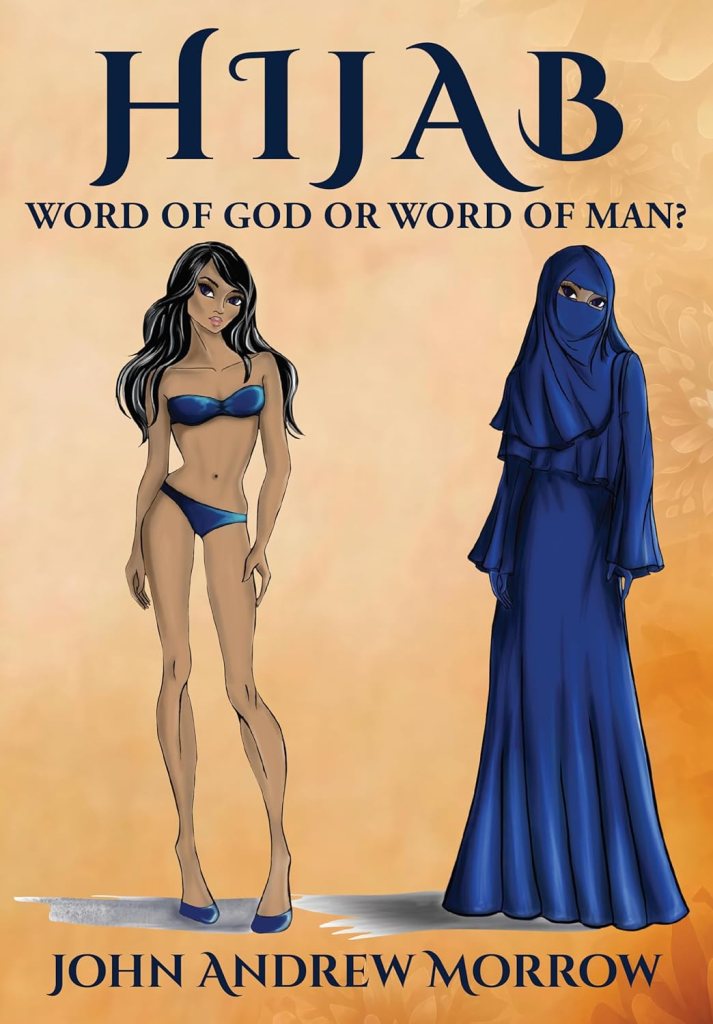
Dr. Morrow’s book is a treasure chest of facts that also includes a wide variety of scholarly opinions regarding hijab. His meticulous scholarship, laser-like vision, and accessible writing style clearly differentiate between what the Qur’an requires of women’s dress and what the jurists (overwhelmingly male) have enforced. Morrow’s book would be an invaluable addition to Islamic Studies curricula in the academy, yet it’s comprehensible enough to a lay person interested in learning about hijab.
I thoroughly enjoyed reading this substantial volume. I got a fuller picture of the meaning of hijab over time. Dr. Morrow is clear—women ought not to be forced (legally or socially) to wear hijab. Muslims are fond of saying: There is no priesthood in Islam. There is no mediator between an individual and Allah. Yet, many Muslim clergy enforce a patriarchal bent (that social system absorbed from their culture and society) to their juristic rulings that constrict women from making a free choice.
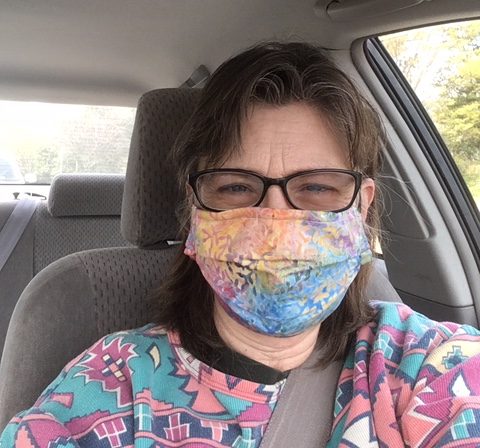
My beautiful mask was made by my sister-in-law, Gloria
“O you who believe, fasting is prescribed for you as it was to those before you, that you may (learn) self-restraint.” Quran 2:183“
This month of Ramadan 2020 is auspicious for me as it is my 30th year of fasting after I converted to Islam in late 1989. For those who do not know, Ramadan is a month of fasting which Muslims are instructed by God to observe unless sick, pregnant or traveling. We are allowed breakfast before dawn and then no food, drink or sexual intercourse during the daylight hours. Fasting includes your speech; not to lie, argue or backbite.
The fasting hours in my locale this year are from 5 am to 8 pm. The evening meal after the fast is called iftar and is usually a time to gather at the mosque or friends’ houses to eat together. During Ramadan there are extra evening prayers and the whole Quran is recited. Ramadan is based on the lunar calendar, so the date moves up by 11 days each year. At the end of the month we have community prayer, a sermon and a three-day celebration called Eid.
2020 is like no other Ramadan in memory. The irony is not lost on many of us fasting this year that God timed it this way. During the pandemic, quite surprisingly I am more connected than ever. Normally, as a Progressive Muslim the month is a little lonely for me. Usually my girlfriend is supportive, but not to the point of fasting with me. We had a group who met together to read Quran, but we never completed the effort in full measure due to logistics. We would meet for an iftar every year at a member’s home. I may go at least once to break my fast at the traditional mosque. Usually Eid was the celebration we would look forward to, meeting with the whole community for prayer and then out to breakfast wearing our best outfits.
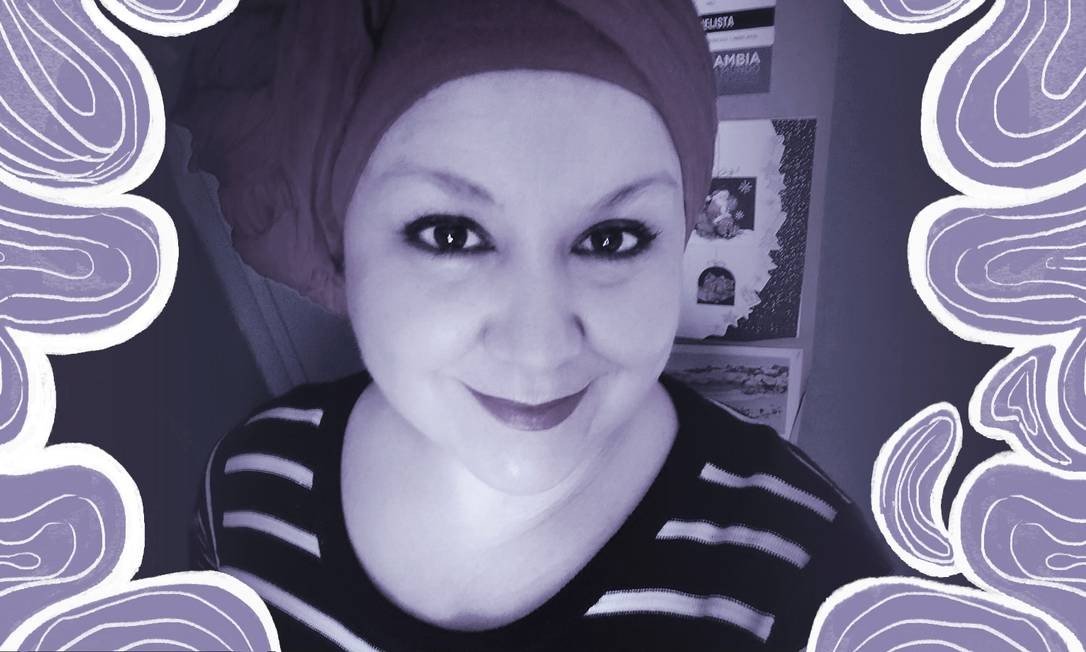
Vanessa Rivera de La Fuente is Muslim, feminist, and a human rights activist Photo: Personal archive
Background: Journal O ‘Globo, one of the most important newspapers in Brazil, belonging to the transnational media group of the same name, published this interview with Vanessa Rivera de la Fuente on Islamic Feminism. Given its relevance to the discussion on the subject, it was translated by prominent Islamic feminist and scholar Keci Ali to share it with English-speaking readers.
The Muslim women’s movement has different agendas in accordance with the reality of each country. In Latin America, the Muslim Vanessa Rivera fights against prejudice about Islam.
by Isabela Aleixo*
Vanessa Rivera de La Fuente is Chilean and Muslim. Besides being an academic researcher, she’s also an Islamic feminist engaged with questions of gender, human rights, and social development. Vanessa has wide experience in social projects in Latin American countries.
In an interview with CELINA, she discusses the prejudices that Muslim women face in Latin America, explains the movement’s demands, destroys stereotypes, and declares: “I’m a woman and I demand to be treated as a person.”
Do you consider yourself an Islamic feminist? Why?
I consider myself a feminist woman, who lives feminism in all the distinct facets of her life: I’m Muslim; I’m a single mother; I’m a professional woman, an academic; and I’m a women’s rights activist. I’m feminist with all my life experiences. I think being a woman in male-dominated society is itself a political fact, so everything that I am as a woman can be resignified by feminism, including being Muslim. Islam is integrated into my life and my political struggle, which is intersectional. It’s based on the radical idea that all women are people and we deserve equal rights and a world free of violence.
I will never forget the day Nasr Abu Zaid (1943-2010), an Islamic Studies scholar and teacher extraordinaire, told me, “Shariah is not a law.” In spite of his assertion, many people—both Muslims and non-Muslims—are convinced that Shariah is synonymous with archaic legal rulings that are at odds with democracy and modernity.
What is Shariah, then, if not a law? When we see or hear the word Shariah, the word “Law” almost always follows. Shariah literally means a path—a well-trodden path such as animals use on their way to a watering hole. Shariah, then, can be understood as something that when embraced has potential to give life and sustenance.
Muslims believe that the Qur’an was revealed to Prophet Muhammad by the angel Gabriel circa 600 C.E. That revelation—Muslims believe it to be God’s actual speech—took place over a period of approximately twenty-one years. The Qur’an contains Shariah (path) in the form of information, narrative, and poetry. Since Shariah is essentially a path that leads to life, the critical question centers on how Shariah can be appropriated, leading us to the water that sustains.
Does Islam need a reformation? The ever-controversial Ayaan Hirsi Ali’s new book Heretic: Why Islam Needs a Reformation Now argues that it does. Do you agree with her? Or do you find problems with the way Ayaan Ali frames the discussion?
A few days ago I had the pleasure of giving a talk at the Secular Student Alliance Conference on how non-believing persons can work with Churches. Amidst the chaos of conferences–managing your time, deciding which talks to attend, and making sure you have enough water (it was a Burning Ring of Fire outside in Tempe, AZ)–I got to meet some pretty incredible secular women.
One of them was Heina Dadabhoy.
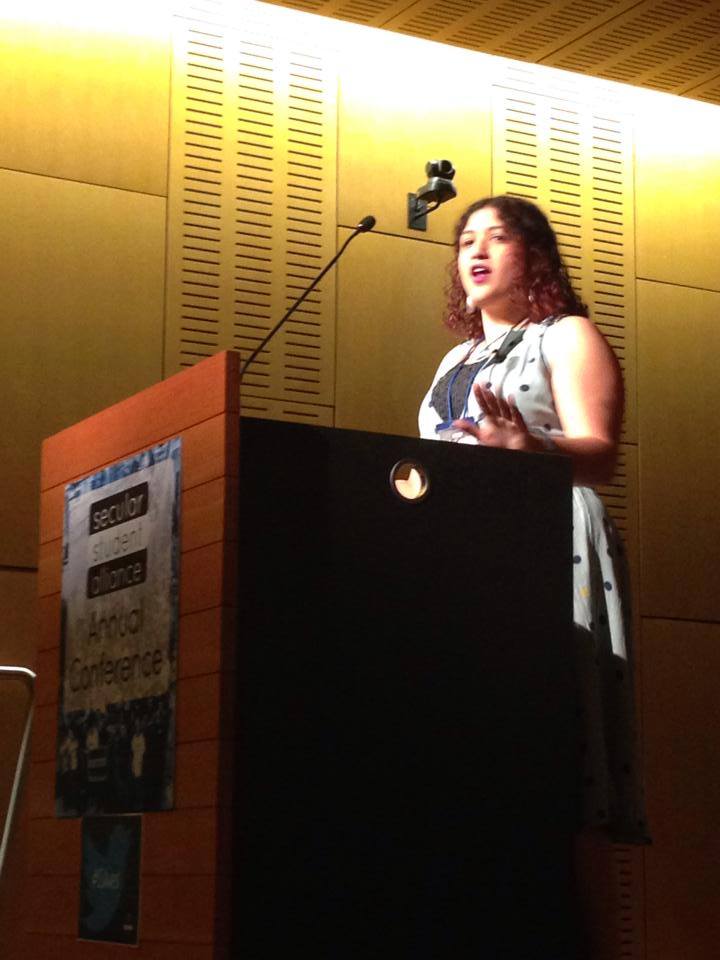
Heina speaking at SSA.
Former Muslim, blogger at Freethought Blogs, and overall bad-ass, Heina spoke about ways in which secular groups can create a more welcoming environment for ex-Muslims and Muslims beginning to doubt. Her talk, “Of Murtids and Muslims,” (a “murtid” is a public apostate) was not only about her experiences coming out as a secular humanist, but considered some of the absurd questions people ask her (and other ex-Muslims) about leaving Islam. “So did your parents try to honor kill you?” “Have you gone through FGM?” It was disturbingly humorous.
What I considered to be Heina’s main point, was that we should respect each others’ individual differences and not generalize and caricature all Muslims with the depictions of some. “Just because you read Ayaan Hirsi Ali’s book,” Heina notes, “does not make you an expert on Islam.” Heina made sure to emphasize the radical diversity that exists in Islam. She also spoke of the some of the issues that people go through when they leave Islam: How do I create a new identity when my old one was intricately tied up in my Muslim community, family, and culture? How do I navigate popular culture when I have missed a bunch of it? How do I find myself in this new secular world? Heina’s answers were refreshingly honest and insightful.
P.S. Aisha (one of Muhammed’s wives) should not simply be reduced to the young person Muhammed married; she was also a war leader, influential Muslim thinker, and someone who contributed greatly to early Islam. This is, of course, Heina’s insight.
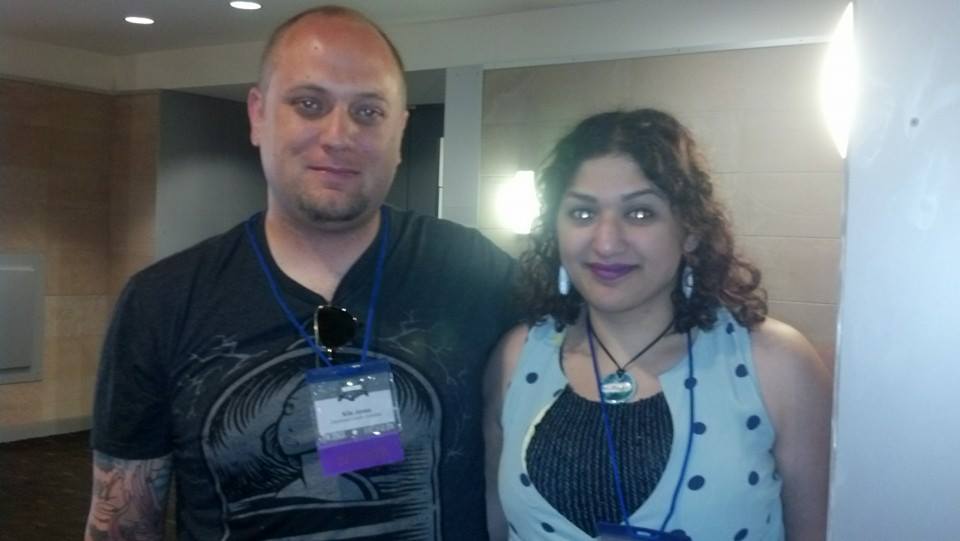
Me and Heina at SSA
Another awesome secular woman I met, was Sarah Morehead.
Sarah. Photo from Apostacon.
Sarah is a former evangelical Southern Baptist, Executive Director of the “Recovering From Religion” project, and another overall bad-ass. She spoke on how to start up a Recovering From Religion group on your campus. Here is a blurb about Recovering From Religion,
“If you are one of the many people who have determined that religion no longer has a place in their life, but are still dealing with the after-effects in some way or another, Recovering From Religion (RR) may be just the right spot for you. Many people come to a point that they no longer accept the supernatural explanations for the world around them, or they realize just how much conflict religious belief creates. It can be difficult to leave religion because family and culture put so much pressure on us to stay and pretend to believe the unbelievable. If this is you, we want to help you find your way out. Don’t let people convince you that you just didn’t have ‘enough’ faith, or that you just haven’t found the “right” religion.”
Sarah and I chatted (and often laughed) about our old experiences as conservative Christians. We discussed some of the funny language (Christian-eze) we used to use, the various levels of guilt and shame that were cast upon us, and how science helps explain some of the interesting displays of piety often seen at Pentecostal services. Sarah’s jovial and welcoming demeanor was calming, and as an Executive Director for a project aimed at helping people “recover” from religion, I cannot think of a better person for the job.
Lyz. Photo by SSA.
The last woman I have in mind is Lyz Liddell.
Lyz is the Director of Campus Organizing for the Secular Student Alliance. I have an interview I did with her a while back, on this very blog! Besides running around with her headset on, standing on chairs for announcements, and generally keeping the world of SSA from not crumbling into oblivion, Lyz is a great motivation and example. If you are ever interested in starting a SSA group on your campus, talk to her.
To all those who attended this years SSA West, or who are involved with helping secular students: Unite!
Kile Jones holds a Bachelors of Theology (B.Th.) from Faith Seminary, a Masters of Theological Studies (M.T.S.) and a Masters of Sacred Theology (S.T.M.) from Boston University, and is a current Ph.D. in Religion student at Claremont Lincoln University. He also holds a Certificate in Science and Religion from the Boston Theological Institute. Mr. Jones has been published in Zygon: Journal of Religion and Science, Philosophy Now, Free Inquiry, World Futures, Human Affairs, and the Secular Web. He is the Founder/Editor-in-Chief of Claremont Journal of Religion (www.claremontjournal.com), and is the Founder/Director of Interview an Atheist at Church Day (interviewatheists.wordpress.com).
When I was a little girl, I used to be afraid. I was afraid of the dark. I was afraid of thunderstorms. I remember once cowering on the floor in the back seat of the car waiting for my dad to come take us home. My dad, who was a Methodist Minister, was too busy talking about God to really notice my reaction to being there in the back seat of the car during that terrible storm. Instead, he just kept busy, talking about God to other grown ups—talking in a way I did not understand, or found incredibly boring and long winded, sometimes even just a little frightening.
But Thunderstorms filled in a gap I did not know I had. A gap between my tiny self and the awesome Reality I have since come to know in a very different way. So when I would hear thunder, I thought of it as coming from God. I would begin this conversation with the Awesomeness of It asking moral questions: you know about good and bad. The thunder would seem to provide direct answers. Was that the voice of God?
Isn’t that how so many people think of God: an awesome and overwhelming omnipotent presence—with a voice that roars?
One dark night, during another storm, maybe my father heard me crying. He sat me on his lap and told me, in his quiet voice, how God had promised He would never again destroy the world by water. The sign of this promise, he said to me, was the Rainbow… the place where water, light and power combine to show color and beauty. That was my first experience of transcendence. From that time forward I would seek that loving nurturing experience of the Ultimate. Continue reading ““Papa Don’t Preach”: TED-like Talks at Malmo Nordic Women’s Forum May 2014″
Albert Einstein said that there are two ways for understanding life: One, to believe nothing is a miracle; the other, to believe everything is a miracle. I think life is a bit of both. There are experiences that result from a chain of events we can easily recognize. Others are just a gift. My meeting with Amina Wadud was of the second kind – a beautiful gift from life in the beginning of the autumn in Santiago of Chile.
Meeting The Lady
Since I converted to Islam, around 5 years ago, and started my path now as a feminist Muslim, it is not possible to explain one without the other in my life history- the presence, words and activities of Amina Wadud have been a source of inspiration for me.
Her book, Quran and Woman, was the first approach to and basis for an Islamic Feminism that stands with strong feet against misogyny and fundamentalism in the name of religion. Her courage when she dared to preach a jutba (sermon) and lead a mix prayer – something still forbidden officially for women in Islam – led us to question our physical place and its symbolic meaning in the mosque. Her vocation as a globetrotter, talking, meeting, and encouraging people in the world to build new meanings and communities based in freedom of spirit, made me understand that the message of Islam and its different reading on gender, is not only on behalf of Muslim women or Muslims in general, but is on behalf of all humankind, like a whole family looking for social justice and freedom, passengers in this big mosque and madrassa that is Allah’s creation.
One topic that emerges from the discussions I have with other Muslims and people in general relates to marriage. Starting with, I don’t agree with marriage. Not because I think married life is negative but because, under the prevailing patriarchal logic, marriage is not conducive to full relationships. Patriarchy has also polluted Islam and, therefore, the way in which gender relations are understood as part of a Muslim’s life including the concept of marriage.
Since I converted to Islam, I have received 11 marriage proposals. I have refused them all. Many people have seen in my attitude a sign of pride and rebellion. They are wrong. I do not rebel against married life, but against the terms in which it is presented to me and the role I am supposed to have because I am a woman in it. Manly-man-male ideas about women, prejudices related to the fact that I am not “pure Muslim, but converted,” “not Arab,” and stereotypes about Hispanic-Latina women, have all played a major role in the deep indignation and disgust with which I have rejected each prospect. Continue reading “A Not So Ideal Deal: Perspectives On Sexism In “Islamic Marriage” by Vanessa Rivera de la Fuente”
It may come as a surprise to those who identify as both feminists and religious practitioners that I don’t believe women should be pastors of any dominant religious congregation. This includes most religions which, I assert, are rooted in and structured by the tenets of patriarchy. Does that mean I think women should be congregants of a patriarchal-originated religious system? You guessed it – no. While this may seem like a radical notion to some, it took me quite some time to come to terms with my own conflict in being both feminist and a believer.
My transition from the Pentecostal sect was a long, intricate process that involved life-altering decisions. The notion of leaving the church was driven by my immersion in women’s studies during my undergraduate degree. There were many difficult questions I simply didn’t have an answer for, as the church didn’t provide me with them.
One of them being: Can women instruct an entire congregation of believers?
For those who are female pastors, I’m sure you’ve heard this one a million times, but somehow it never fades from religious and secular discourse. Whether it’s the Islamic, Jewish, Christian, or Mormon faith, women have had to constantly fight for their right to preach religious doctrine. In the beginning of my transition, I was on the side of: Preach it ladies! Continue reading “Why I Don’t Believe in Female Pastors by Andreea Nica”



 Does Islam need a reformation? The ever-controversial Ayaan Hirsi Ali’s new book


 Feminism and Religion