The Hot Seat by John Erickson

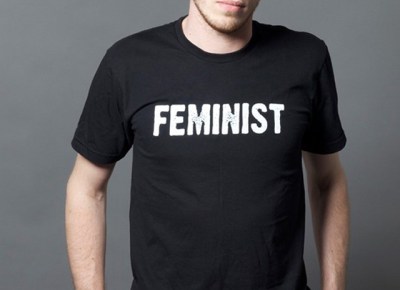
Being a man in feminism isn’t easy and that’s how it is supposed to be.

men_feminist_mainI’ve been thinking a lot about what it means to be a male feminist lately.  As the only man to be a permanent blogger on this very site until my colleague and friend Kile Jones came on board, I took my role, as a man in a traditional feminist (online) space very seriously.  Although the ongoing struggle to be a male feminist is one continually wrought with dialogues about power and positionality (amongst a host of many other topics), I am often conflicted when I see male feminists take advantage and destroy the hard work that many, specifically on this site and beyond, worked hard to build and defend.

Not wanting to reopen old wounds or start new online battles, men have been involved in feminism for quite some time.  From James Mott chairing the first women’s rights convention, to radical feminist Andrea Dworkin’s life partner John Stoltenberg, to Michael Kimmel and Michael Kaufman’s life long work to legitimize not only men in feminism but also what it means to be a man who works for gender equality, being a man in feminism isn’t easy and that’s how it is supposed to be. Continue reading “The Hot Seat by John Erickson”

Forgiveness (is a two-way street) by amina wadud

Amina Wadud 2 I am Muslim, by choice, practice and vocation

I don’t know why this came to me as the discussion I want to have in blog form today, but here you go–

Imam al-Ghazzali (d. 1111) said that Allah (God) only stops forgiving when the believer stops asking for forgiveness.  This is the crux of the Islamic view of divine forgiveness.  Start with the fact that we have NO FALL story, because despite mis-conduct in the Garden, Adam and Eve ASKED for and were granted forgiveness.  Thus, they leave without the mark of some eternal “original sin.”  They live as we all do, here on earth, not as some punishment but because that is where they were intended to live in the first place.  The creation story in Islam describes human creation as per a primordial conversation between the Creator and the unseen creatures known as angels, when God says, “Indeed, I will create ON THE EARTH a khalifah (moral agent, vice-regent of God).”

Thus, the relationship between divine forgiveness and human sin or error is fixed in a dialectic where sin and error might be part and parcel of the human being but likewise forgiveness is part and parcel of the Divine Creator.  In fact, the language used is telling.  Taubah, which is also translated as forgiveness, means “returning to the original place/station.”  Our original place is at one with the Creator, and we are in that station in harmony with all of creation ~ a sort of cosmic bliss.  When we err, we fall away from our true nature and the nature of the entire universe so must return to realign ourselves with this cosmic harmony… and everything will be alright. Continue reading “Forgiveness (is a two-way street) by amina wadud”

To Have and to Hold: Gay Marriage and the Religion Question

If a conservative religious traditions can’t give their mothers or sisters full equality, how can we expect them to give a GLBT individual the time of day?

John Erickson, sports, coming out.Outrage.  Anger.  Fear.  Hatred.  These are just a few of the words that flashed across my Twitter feed as I woke up on that fateful Wednesday, June 26 morning when the Supreme Court of the United States ruled that the Defense of Marriage Act (or DOMA) was unconstitutional and that supporters of Proposition 8, the hotly contested voter initiative in California that banned same-sex marriage, had no standing.   People were mad.  However, it wasn’t just the typical kind of mad that is associated with hatred, it was a type gay_marriage_81102178_620x350of mad that was met with impossible anguish because what I was reading and feeling was a result of one thing: there was nothing more they could do.

What does all this mean?  Questions from friends and family were filling up my inbox and although I wanted to take a moment to just hit “Reply All,” and input the words: Equality, I had to hold back and start to examine the notion that although equality may now be firmly on the proverbial table, there is still a lot of work to be done, specifically for gay marriage and those wanting to marrying inside the traditional church spaces they grew up in and not just the ones that have come out as open and affirming in recent years towards LGBT individuals. Continue reading “To Have and to Hold: Gay Marriage and the Religion Question”

Tikvah v’hashamayim (Hope and the Heavens): A Jewish Perspective on Redemption by Ivy Helman.

headshotThe Torah is bursting with hopes over-fulfilled.  Abraham and Sarah hoped for a child and gave birth to a nation.  The Israelites hoped for freedom from slavery and eventually received an entire Promised Land.  We understand hope and, in so many ways, we live on it, as hope has sustained us for thousands of years.  Today, our hopes inspire our actions and motivate us to work for peace, justice and equality.   In Jewish terms, we call this goal or vision of a better world in the here-and-now: redemption.

Yet, redemption does not just appear out of thin air or because we wish it.  Redemption and the hope of it requires work and cooperation with the Source of All Life.  As Deuteronomy 30:19 says, “I have put before you life and death… [therefore] choose life…”  This cooperation could be a simple commitment to tikkun olam, repairing the world (some times translated as social justice).  For others, choosing life could mean more observant religious practice.  It could also be a combination of the two.  In the end, though, I think both hope and redemption require choosing life in some form or another.

Just as how we choose life depends on who we are, how we achieve this redeemed world depends on how we understand G-d’s redemptive power.  Some of us think redemption will come through the moshiach (a savior), Continue reading “Tikvah v’hashamayim (Hope and the Heavens): A Jewish Perspective on Redemption by Ivy Helman.”