Talking about Privilege with Nuance by Elise M. Edwards

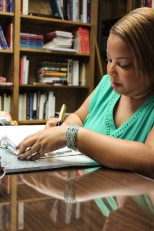
elise-edwardsYesterday evening, I led a seminar at a local church as part of their series on “Unpacking Privilege.” Once before, I’d been invited to this church, Lake Shore Baptist Church, to speak about intersectional feminism with one of my colleagues, so I expected them to be open-minded and welcoming.  They were.  Although the attendees were overwhelmingly white and older than me, they were attentive and engaged.  We had an enriching time together diving into topics like male privilege, white privilege, and class privilege with Peggy McIntosh’s 1989 essay “White Privilege: Unpacking the Invisible Knapsack” as a resource.  (If you are unfamiliar with it, I recommend taking a few minutes to read it and reflect.)

In the essay, McIntosh writes about becoming critical of male privilege and men’s obliviousness to it through her work in Women’s Studies, which then led her to see her own race privilege (as a white woman) and her obliviousness to it.  The essay does not offer a precise definition of white privilege, but the entire piece is a reflection about it.  She explains:

“I have come to see white privilege as an invisible package of unearned assets which I can count on cashing in each day, but about which I was ‘meant’ to remain oblivious. White privilege is like an invisible weightless knapsack of special provisions, maps, passports, codebooks, visas, clothes, tools and blank checks.”

Continue reading “Talking about Privilege with Nuance by Elise M. Edwards”

Christmastime for the Self by John Erickson

We’ve all been there.

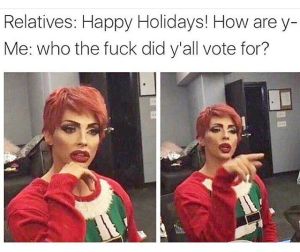
Sitting around the tree watching the kids open presents.  Attempting to enjoy a holiday meal with extended and immediate family that you may or may not have traveled thousands of miles to see.  Trying with every fiber of your being to not talk about the elephant, or red hat, in the room.

We’ve all been there.
Sitting around the tree watching the kids open presents.  Attempting to enjoy a holiday meal with extended and immediate family that you may or may not have traveled thousands of miles to see.  Trying with every fiber of your being to not talk about the elephant, or red hat, in the room.

Alyssa Edwards

I get it.  It is hard to not go home for the holidays. It’s also hard to sit at home and watch every one of your friends post online about their dinners, get-togethers, and other joyous events while you sit at home.  I also understand that many of us, as a result of our sexual and/or gender identity, or maybe our political preference, don’t feel comfortable going home or, can’t go home.  This is not ok and that is why it is so important that we all have our chosen families to be with during these times of communal gathering or more importantly, ways to cope while we are at home in these uncomfortable situations to make sure we take care of ourselves and make it out the other end.
Because this blog comes out on Christmas Day, I wanted to give you a few tips that I do to self-care in these situations.  Remember, there is no right or wrong thing to do.  I encourage you all to make your own list.  The only thing that matters is you take care of yourself!
John’s Top 5 Tips for Dealing with “Those” People
  1. Your car is your friend – Seriously, I cannot count the # of times that I have found myself driving around for that extra 5 minutes to just collect my thoughts or calm myself down.  If you need to, jump out to your car and sit back and relax for a second or drive to a gas station (Kwik Trip in Wisconsin is my go-to) and pick up a soda to drink.
  2. Drink (if you can)  – look, I know not everyone drinks (or is from Wisconsin) but sometimes you just need to make yourself a cocktail (responsibly).  However, if you are going to drink, remember that old adage: loose lips sink ships.  If you get too loose, you may say something you regret (or didn’t plan on saying; I’ve been there).
  3. Bathroom Sanctuary – Sometimes you may not need to use the restroom but you need a place to go and just lock the door, check Facebook, call a friend, or simply breath.  The bathroom is the perfect place to do that.  Find it.  Use it (even if you don’t have to).
  4. Dinner Conversation – Before I go anywhere, I always brush up on a few facts.  How are the Packers doing? How about the Milwaukee Bucks?  Can you believe they STILL haven’t finished that construction?  No matter if you’re traveling somewhere near or far, if you think you need to make sure you can participate in dinner conversation without bringing up the two forbidden topics (Politics and Religion), then do so!
  5. Push Back – Ok, sometimes it is ok to engage.  I mean, how are we ever going to get out of this great divide if we don’t talk to each other.  Now, that doesn’t mean it will go over or there will be some type of magical aha moment but it is ok to say something, especially when your crazy Aunt/Uncle/Cousin/Second Cousin/Random Friend of Cousin who no one invited starts spouting off some nonsense (like Mexico 1nlYpaying for Trump’s wall because that just isn’t going to happen).  If you feel safe enough to push back and say something, especially when someone if being completely and totally rude and inappropriate, always make sure you have an exit strategy. That is either a friend you can call, a room you can go to, or a nap you suddenly want to take.  No matter what, if you do choose to engage always remember to a.) Speak calmly and slowly at all times (Republicans are triggered when you yell and provide them with too many facts too fast); b.)  Make direct eye contact; c.) Make sure you always have something to take a long sip from afterward to prove you made your point.
I have to admit, I am quite lucky.  I know I have written a lot on this site about what has happened to my family since the election of the Fascist-in-Chief.  Luckily for me, I surround myself during these times with people who openly love me, my views (for the most part), and allow me to be myself, or simply, we just don’t talk about “it” because they clearly know now that we were right about Trump and his cronies. I don’t have to use these tips because the people they apply to, don’t really come around our holiday gatherings.
However, if there is one thing that I learned, it is that this election has cost us each something.  Whether that was a friend, family member, or a part of yourself that you never think you’ll be able to get back, we need to respect these losses and the pain that comes with them.  I promise you that it will get better (heck, better starts on January 3, 2019).  We have a long way to go until 2020 (I mean, a LONG way to go) but I know we will all get there together, one way or another because there are better Christmas and holidays to come where we won’t have to use these tips and tricks to survive anymore.
So, from my family to yours, Merry Christmas and Happy Holidays!  I’m thankful for each and every one of you this holiday season (unless you voted for Trump).
2155509_1

John Erickson is a Ph.D. Candidate in American Religious History and holds two MA’s from Claremont Graduate University. John serves as a commissioner on the California Commission on the Status of Women. He is President of the Hollywood Chapter for the National Organization for Women, a boardmember for the City of West Hollywood’s Lesbian and Gay Advisory Board, a board member for the ACLU of Southern California, the Legislative Action Chair for Stonewall Democratic Club, and a board member for the National Organization for Women.

A Better World is Impossible Today (#WETOO) by Adam F. Braun

At the end of the second Matrix film (Reloaded), Neo (the messianic figure, “The One”) is told by the Architect of the Matrix, itself a program in the system, that Neo was in fact the sixth iteration of messianic figures that the Matrix had itself created.  In such a case, what hope is there when the System creates messiahs in order to produce a hope it allows—a hope it allows for the sake of reproducing itself through the exploited labor of others, who are able “to get by” because they have this same hope.  A hope that a better world is possible.

In the midst of the young #metoo movement in Japan, this story emerges from one of its medical schools:

Japan’s government urged a medical university to promptly disclose the results of an investigation into its admissions process Friday after reports alleged it had altered the test scores of female applicants for years to deny them entry and ensure fewer women became doctors. Continue reading “A Better World is Impossible Today (#WETOO) by Adam F. Braun”

What You Learn When Your Voice Shakes by Marisa Goudy

As I heard my voice rising over the half-eaten breakfast, something inside me began to splinter.

“We cannot effectively ‘open lines of communication’ with racists and fascists!” I exclaimed. It was followed by an impassioned speech (perhaps you’d call it a tirade) fueled by news of migrant families separated, my own helplessness, and other people’s tweets.

My family didn’t greet me with stunned silence. They’ve watched me get worked up over politics since well before I could vote. All of us are accustomed to the pervasive, ever-escalating outrage that’s been part of the new normal for the last year and a half. And when one of us gets loud (ok, it’s always me), nobody tends to get offended.

But, as I said, something cracked within me when I heard the brittle desperation in my own tone.

When I stopped talking, I heard the echo of my own voice

I know this part of me, the part whose words rise above everyone else’s. It’s harsh, frantic, and shadowed. It’s driven by disconnection, adrenaline, and fear.

This is the part of me that only knows how to react and exclaim, not how to consider and respond.

This is the part of me that tells you to bury your thoughts and prayers ‘til the end of the battle.

This is the part of me that loses track of personal, grounded truth in order to parrot collective indignation.

This is the part of me that forgets every spiritual truth and every bit of healing wisdom I’ve gained.

This is the part of me that retreats and leaves her weapons to rust, once again exhausted from all that seemingly fruitless fighting.

This is not the part of me that is truly empowered to change the world. This is not the part of me that is confident she’s contributing to the work of peace, justice, or divinity. This is not the part of me that is teaching my daughters how to create a livable, equitable society they want to live in.

That said, I forgive her. After all, she’s also the part of me that’s trying.

Yes, we need to raise our voices.
The passion often makes our voices crack.
Sometimes, those cracks show us our own fragility, fault lines, and beautiful sacred edges.

…Tomorrow, Part Two

Marisa Goudy is a story healer and writing coach with a passion for everyday creative magic. Currently, she’s working on a book project called Sovereignty Lessons which invites women to “free the princess, crown the queen, and embrace the wise woman.” Marisa is fascinated by the Irish Sovereignty Goddess and how her many expressions in myth and contemporary understanding can guide us through 21st century life through life. A graduate of Boston College’s Irish Studies program and recipient of an MA in Anglo-Irish Literature and Drama from University College Dublin, Marisa lives with her husband and daughters in New York’s Hudson Valley. Visit her website to sign up for the free community writing practices sessions she holds regularly and for the #7MagicWords challenges that she offers at the turn of each season. 

Vagina Happy Fact by John Erickson

HNWH_TVM_Cast_Social_1200x1200_020918_A_REV2

A month ago, the Hollywood Chapter of the National Organization for Women (NOW) and the City of West Hollywood presented the Vagina Monologues.  The event was a complete success and we raised over $5,000 for Planned Parenthood Los Angeles!  While the cast and crew worked together and formed a community in West Hollywood, communities were being ripped apart by senseless gun violence that took the lives of 17 beautiful souls at the Marjory Stoneman Douglas High School in Parkland, Florida

The cast and crew began to have discussions over a specific monologue and whether or not the audience, or cast members, would be triggered by its use of gun specific language in relation to the power of the vagina.

Continue reading “Vagina Happy Fact by John Erickson”

“Womenspiration” for International Women’s Day by Elise M. Edwards

elise-edwardsHappy International Women’s Day!  I hope it is a happy day for you as we recognize women’s achievements throughout the world.  Our FAR community is not only for or about women, but as feminists in some form or another, collectively we support women, their growth, their health, and their contributions to the world.  On a day like today, we should take note of what still needs to be done and recommit ourselves to our work.  But let’s not rush past an opportunity for joy and celebration. Many generations of women have fought for equal rights and participation in all sectors of society, and we have made progress. To commemorate that legacy today, I am highlighting just a few of the women who inspire me with their lives and with their work. They are my “womenspiration.”  My hope is that you join me in recognizing them and that as you read about them, you reflect on the women who inspire you.

Continue reading ““Womenspiration” for International Women’s Day by Elise M. Edwards”

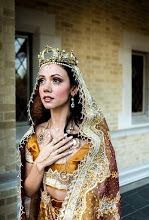
Queen Esther from The Goddess Project: Made in Her Image by Colette Numajiri

Queen Esther
An orphan child,
who became
a well respected queen,
Esther, the Queen of Persia,
was a woman of integrity,
Wisdom and courage,
a beautiful woman, truly supreme,
favored by God,
She had a awareness of dependability,
steady strong, long-suffering faithfulness, with vision foreseen
in courage to stand in times of trouble
with true self esteem,
wise above measure,
Esther, Queen of Persia.
Like many Goddess tales, Esther (from the Old Testament “Book of Esther” or the “Megillah”) took full control of a dangerous situation and against all odds created a miracle, saving the lives of ALL OF HER PEOPLE.
There is a yearly Jewish celebration because of Her called PURIM (today, March 1st this year) where people wear costumes, re-read the Megillah, feast and give gifts of food and money to the needy.

Continue reading “Queen Esther from The Goddess Project: Made in Her Image by Colette Numajiri”

Michal the Priestess: Midrash, Multiplicity, and the Tales of King David by Jill Hammer

When I was in my late teens, I discovered midrash: the Jewish exegetical process by which commentators weave creative and additive interpretations into the sacred text.  Midrash comes from the word “to ask,” “to seek,” or “to divine.” For example, the tale in which a well follows the prophetess Miriam through the wilderness is an ancient midrash. The story in which God stops the angels from singing as the Egyptians drown in the Sea of Reeds is a midrash. Each of these stories derives from a particular close reading of text, whether a Torah text or a verse elsewhere in the Bible.  Each of them allows a new generation to add its own perspectives to the tradition.

Contemporary feminists, and many other contemporary artists, writers, and exegetes, have used a modern form of midrash to add liberatory perspectives to Jewish tradition and to biblical lore.  From Miriam to Vashti, female biblical characters shine in the creative interpretations of feminist midrashists.  Judith Plaskow’s “The Coming of Lilith” made a huge impact on the reading of the story of Eve and the legend of Lilith. Anita Diamant’s The Red Tent changed the conversation on Dinah forever. Alicia Ostriker, Norma Rosen, Veronica Golos, and many others have joined in this creative play which highlights marginalized voices within the text.  Wilda Gafney has made contributions to a Christian and womanist form of midrash.  Voices like Andrew Ramer and Joy Ladin have invited us to see queer and trans themes in the text. And of course many others, from poet Yehuda Amichai to bibliodramatist Peter Pitzele, have added to this rich tapestry.

Continue reading “Michal the Priestess: Midrash, Multiplicity, and the Tales of King David by Jill Hammer”

Saving Joan of Arc by Natalie Weaver

I’m finished with my first semester as a studio arts major at Kent State University.  I am not sure whether I’ll be registering for a second one.  There were pros and cons about the experience, and I am not sure if one set outweighed the other. Regardless, I am on sabbatical this spring, have two books to complete, and figured I would do well not to be trekking back and forth in an hours worth of snow and ice over the next few months from my home to the school.  So, I am taking a semester off, and I have become one of those retention risks. I am grateful for the opportunity to reflect on the experience with only minimal consequence to my bank account and my (laughing) future in the arts.

It wasn’t a bad experience; it wasn’t a good one either, really.  I learned some things in drawing, but I am very much on the fence about my experience in sculpture.  For starters, I imagined playing with clay and making pinch pots while some Swayzesque spirit from beyond rubbed my shoulders.  Instead, I was more Jessica Beal with a welding mask, except, instead of wearing a swanky black leotard and off-the-shoulder-slouch-dance tunic, I was wearing ugly jeans and steal-toed shoes under the green welding suit that had half-dollar size holes in it.  The protective gear only partially worked; I was scared of the tools after a classmate almost lost a finger; and the top of my hair went up in smoke when a spark shot under my ill-fitting Vader hat on week two.  I put it out quickly, fortunately.

Continue reading “Saving Joan of Arc by Natalie Weaver”

Another Season of Reflection and Review by Elise M. Edwards

elise-edwardsI turn inward and become reflective at this time of year.  It’s the Advent season in the Christian liturgical year, which encourages practices of piety focused on preparation, examination, and hopeful longing.  It’s the end of a semester and a calendar year, which provokes review of the months before.  In the northern hemisphere, it’s a time of darker days and longer nights, which suggest a retreat indoors, in silence or in stillness.

During this time of year, I’m typically exhausted, and so I seem to enact annual rituals with a recurring sense of ambivalence.   I really love the celebration of Christmas, but preparing for it takes a lot of energy.  So I do some decorating, but not as much as I planned.  I attend some parties and celebrations, but end up missing or cancelling others.  I start a new devotional book, only to set it aside within a week or so.  I want this time of year to be both reflective and celebratory.  I want it to be spiritual and religious.  I want to be sociable with friends and family and also find time to rest and recover in solitude.  At some point, those goals seem too contradictory to be realizable and then I start practical negotiations:  How much decorating will I do? What kind of time will I set aside for solitude and self-care?  Will I have enough energy to be joyful and present with my family and friends?

“Some, but not enough” is the answer I seem to come to every year.

Some decorating, but not enough.  Some time for solitude and self-care, but not enough.  Some energy for social occasions, but not enough.  This year, I want to let go of that voice that says it’s not enough.  That voice that says I am not enough.

To help myself let go of the guilt and self-deprecation, while retaining the reflective focus of the season that may be life-affirming, I reviewed my previous years’ December writings on this blog.  What might I discern from this pattern of yearly reflection?

In 2012, I wrote about why women might be tempted to cancel Christmas.  I was in my final year of the Ph.D. program when I wrote that, and was prompted to do so when I heard that friends and colleagues were planning to skip Christmas preparations or scale them back dramatically.  That year, I sought to maintain “religious and social rituals associated with Christmas” so that I could be “spiritually grounded, emotionally provoked, mentally rested, and physically fed.” I don’t have a vivid memory of that year’s holidays, but as I read it again, I wonder if I was carrying a sense of religious obligation rather than release.  Did I feel free or beholden to social custom? I’ve learned that I will only be able to let that “not enough” voice go when I let go of the expectation that Advent and Christmas should look a certain way or I should be present to it in a certain way.  I’m more willing this year to let peace and joy ebb and flow  in celebrations and moments of sadness and mourning that accompany the season, too.

In 2014 and 2016, my Advent reflections were more focused on justice and peace at the societal level than in the household.  They were mournful.  In December 2014, I was trying to stave off despair after Michael Brown’s killer was not indicted by a grand jury.  The police officer would not stand trial for killing the black teen.  That year, I was mourning Michael Brown and Trayvon Martin and the loss of my own naivete as I became more conscientized about racial violence. I had a similar wake-up call last year when Hillary Rodham Clinton lost the US presidential election and I working through the anger and dread I felt at 45’s approaching presidency.  This year, the struggle continues as we anticipate changes to the tax code and DACA.  But at least Roy Moore lost.  We do continue to work for progress and systemic change, and sometimes, it works.

Feminists have long asserted that the personal is political and that the political is personal.  I’m acknowledging this holiday season that my perpetual weariness during Advent and Christmas is legitimate, as it emerges from personal and political struggle.  I am frustrated with the injustices and hardships I encounter at home, work, and the broader community.  I would not be weary if I was not awakened to the suffering.  This year, I accept that the exhaustion is part of the cost of my work and my calling.  The weariness will ebb and flow, as will joy and peace. Being able to teach and write is a blessing that allows me to help others become more aware of injustice and more involved in addressing it.  This year, I’m acknowledging that I’ve done what I can do.  I’m resisting the impulse to assess whether it was enough.  In previous years, I’ve been trying to hold on to hope; this year I’m resting in God’s grace.

As Christmas approaches, I’m embracing the Christian teaching that the divine meets humanity where we are.  The beauty of the Incarnation is that the eternal meets the temporal and that God unites with human to bring light to a suffering world.  That’s a gift for me this year, a comfort to be able to shift the focus from my own action and being to divine action and being.

I can see the sacred work and presence in this online community and other communities of faith.  Holiday blessings to you all.

Elise M. Edwards, PhD is a Lecturer in Christian Ethics at Baylor University and a graduate of Claremont Graduate University. She is also a registered architect in the State of Florida. Her interdisciplinary work examines issues of civic engagement and how beliefs and commitments are expressed publicly. As a black feminist, she primarily focuses on cultural expressions by, for, and about women and marginalized communities. Follow her on twitter, google+ or academia.edu.