IN THE NEWS: Religious, Atheist, and Political Feminists – Unite?

This post is the first of a new weekly feature on Feminism and Religion that will be published every Wednesday. “In The News”  is designed to invite discussion on topics that are showing up in news and media outlets and are relevant to feminism and religion

Diane Winston recently wrote an op-ed piece for the Los Angeles Times regarding the role of faith in politics. She comments that recent poll results give the impression that religion is not playing a significant role in the current elections, for how else does one make sense of the fact that the Republican Party’s ticket is made up of a Mormon and a Roman Catholic? However she is quick to point out that although religious labels may be passé, “the religious values that inform who’s taxed, what’s regulated, how jobs are created and when or where we help those in need,”  are still very much the driving force behind how people vote and with whom they form coalitions. Thus, in the U.S. seemingly incompatible religions as well as denominations within those religions have come together in an effort to control and legislate women’s bodies and autonomy. As the editors of the Religious Dispatches asserts, “the Moral Majority couldn’t have come together without a big interfaith effort.”  

But theirs are not the only religious voices on the scene. Continue reading “IN THE NEWS: Religious, Atheist, and Political Feminists – Unite?”

Happiness is a Warm Space: Enchantment as Feminist Virtue by Amy Levin

Art can provide a balm for the modern soul – Claude Monet

Living in New York has its vices, and anxiety-triggering space is one of many. Though the city offers ailments just the same, whether they are in the form of meditation or medication, I’m beginning to believe the statistics delineating just how much more anxious us city-dwellers have become. But once in a while you catch a break.

This past Friday, for me, it was the free admission to the Museum of Modern Art. My favorite exhibition room of the MoMA is neither original nor surprising – Monet’s water lilies. The cool hues of greens, blues, and purples that spread across the triptych canvases so effortlessly interrupt the chaotic bodies roaming about the room, evoking a calm, liberating energy. My lungs expand, my shoulders relax. It is my opinion that more people sit down in this room more than any other in the museum.  These ameliorating spaces, which, using Monet’s words, provide a “balm for the modern soul,” not only lift us emotionally and physically, but they offer us something a bit more. . .metaphysical. The water lilies are just one example of the way that art can offer us a sort of spiritual uplift in, what most of us would consider, a secular space. Continue reading “Happiness is a Warm Space: Enchantment as Feminist Virtue by Amy Levin”

They Are Trying to Trick You by Xochitl Alvizo

These chocolates embody a truth — the truth that resources are valuable, that living ethically is not ‘cheap,’ and that cheap is an illusion…

Information is everywhere and is being collected about each one of us every minute of every day. If you are reading this post on your computer you have just fed the information gathering machine new information about yourself, your interests, your trends – and if you click on any of the links embedded within this post – all the more so. Welcome to the 21st Century.

In a way it sounds terribly “Big Brother-ish.” And maybe so, but I don’t think of it that way as that would be terribly overwhelming and perhaps even paralyzing. Instead, I simply see it as capitalism in full force. Capitalism depends on a consumer economy – the more we buy the more profit a small percentage of people make. And the consumption of goods is heavily reliant on marketing, which nowadays is being streamlined more and more so that it can to be targeted and personalized for each individual. In order to do this the powers that be need information about us – detailed information and lots of it! Here enter Google and Facebook – the great gatherers of all the personal information we freely give them. They gather information and share it with corporations so that these may in turn more effectively market products to us that we are more likely to buy. We are now in what is called the Google Age, the great servant of capitalism and our consumer economy.

So what does a feminist do in the face of such an overwhelming reality? I have a few suggestions of course. First, you remember that they are trying to trick you. Seriously, they are! Continue reading “They Are Trying to Trick You by Xochitl Alvizo”

How Does Goddess Change the World? by Xochitl Alvizo

It can only be that She begins in a small way at a single place in the world. It can only be that She begins within us. 

Carol Christ’s post this week made me think of a favorite little passage I love from a Catholic theologian, Gerhard Lohfink, who wrote a book about whether God needs the church. I’m not going to engage that specific question here nor am I going to talk about the ins and outs of the book. I simply mention it because it holds within it the beautiful passage that deeply resonates with me and has become the primary image I hold on to when thinking about how I want to participate in the transformation of the world. The passage comes from a part of the book where Gerhard Lohfink muses about how God would start a revolution while still respecting human freedom and participation:

God, like all revolutionaries, desires the overturning, the radical alteration of the whole society – for in this the revolutionaries are right: what is at stake is the whole world, and the change must be radical, for the misery of the world cries to heaven and it begins deep within the human heart. But how can anyone change the world and society at its roots without taking away freedom? (Lohfink, 26)

The issue is that for centuries people have tried and tried again to change the world, to ‘free the masses’ and save people from suffering, misery, and oppression – but too often revolutionaries resort to violence as their means. The systems are so rigidly and stubbornly in place that the revolutionary comes to see no other way to bring about radical social change except through a widespread violent overthrow. Continue reading “How Does Goddess Change the World? by Xochitl Alvizo”

Re-Imagining Resurrection in Light of The Hunger Games by Tiffany L. Steinwert

Love is defiant. In a cruel world of violence and vengeance, love is the ultimate rebellion: the only thing that can beat back the forces of death and destruction.

It is an interesting coincidence that when both Jewish and Christian communities were rehearsing our respective salvation narratives, the world outside of synagogues and congregations was consumed with the story of The Hunger Games, a young adult novel turned Hollywood hit. This trilogy chronicles the coming of age and struggle for freedom of Katniss Everdeen, a 16 year old citizen of the post-apocalyptic nation of Panem.

As we in the Christian tradition journey through the Easter season, the dystopic world of the Hunger Games invites us to re-imagine resurrection in light of a crucified world.

We first meet Katniss as she sets off for the annual Hunger Games, a state sponsored television show, a cross between the pseudo-reality shows of Survivor and Fear Factor and the very real, ancient Roman gladiator battles. Invented by the Capitol as a form of perpetual discipline and punish for a past rebellion of the 12 (once 13) districts, the Games require each district to send two children, or tributes, to star in a live broadcast battle in which the adolescent scapegoats kill one another until only one remains.

There is a reason why our nation has been captivated by this tale and it is not because it is so fantastical that we cannot imagine it. Continue reading “Re-Imagining Resurrection in Light of The Hunger Games by Tiffany L. Steinwert”

Beyond “Liberal” Female Piety or “Women Read the Qur’an Too” by Amy Levin

I’m a teacher’s assistant for an undergraduate course at New York University called, “What is Islam?” The other day in class, my professor asked the students whether or not the Qur’an is considered a “book”. Fraught with anxiety over inheriting such a problematic scholarly tradition of defining and delineating what “religion” is, I kept quiet. While my professor was aiming more for something sounding like, “a book is read, while the Qur’an is recited,” I kept thinking about the physicality and sacrality of the Qur’an (among other authoritative religious texts) and the way it is handled, revered, preserved, loved, an constantly under interpretation. It was about a week later when news broke out that U.S. soldiers in Afghanistan were guilty of burning several copies of the Qur’an on their military base, followed by an unfortunate slew of casualties including at least 30 Afghan deaths and five US soldiers. Continue reading “Beyond “Liberal” Female Piety or “Women Read the Qur’an Too” by Amy Levin”

“If You Allow Gay Marriage…” by John Erickson

“We need to start examining the underlying questions of counter-cultural relationships that view one man marrying many women to be hip because we begin to see that although a polygamist idea of marriage may be sexy from a popular culture standpoint, the thought of legally recognized gay marriage always then gets likened to bestiality.”

… you have to allow polygamy, bestiality, and everything else!” The title for my post this week is a quote from an individual I used to associate with.  This individual, haling from a conservative evangelical background, tried to explain to several others and myself the reasons why gay marriage would eventually lead to the repeal of anti-polygamy and bestiality laws across the United States.

The problems that I have with this particular argument are conflating gay marriage with religious freedom.  Activists and scholars can draw comparisons to anti-polygamy cases such as the 1878 U.S. Supreme Court case Reynolds v United States and the 1882 Edmunds Act and 1887 Edmunds-Tucker Act that disfranchised and led to the imprisonment of Mormon polygamists. But in the end, gay marriage is not about religious freedom but rather human rights.

I often feel that there is this need both within and outside religious communities to promulgate the idea that LGBTQ individuals want to get married within the sanctified walls of “the church” just as much as heterosexual couples do.  Although I do not want to disqualify those who desire to see LGBTQ equality within their faith based communities, buying into a heternormative ideal of what traditional marriage should look like needs to result in LGBTQ individuals asking why marriage should be performed in sacred spaces in the first place The normative traditions that have often defined marriage have also served as shackles keeping LGBTQ couples in the mindset that to achieve fully marriage equality with their heterosexual counterparts is to fully immerse themselves within the same traditions and practices. Continue reading ““If You Allow Gay Marriage…” by John Erickson”

Body, Nature, Ancestors by Carol P. Christ

Some years ago, womanist theologian Karen Baker–Fletcher asked about ancestors following a lecture I gave on the body and nature.  I have since come to realize that ancestors are a missing link between the two:  we cannot speak adequately of embodiment and interdependence in the web of life without recognizing the ancestors whose lives made ours possible.  Our mothers quite literally gave us our bodies.  All of our ancestors gave us their genes.  Care and callousness with origins going back longer than conscious memory was imprinted on the psyches of our parents and grandparents and transmitted to us.  All of our ancestors give us connections to place.  While many black people in America can recite oral histories that begin with slavery in the United States, I come from a family where stories of origin for the most part were not valued or told.  Both of my father’s parents lost their fathers when they were very young, and my father, who was raised Catholic at a time when Catholics were discriminated against, preferred to think of our family as “American now.”  Like the hero of the film Lost in America, most members of my family dreamed of “melting right into that pot.” In the process we lost stories we need to help us to understand ourselves and the complex realities that “becoming American” involved.   Continue reading “Body, Nature, Ancestors by Carol P. Christ”

Son of Man: An Updated Gospel Story of Jesus Set in South Africa by Michele Stopera Freyhauf

January 12, 2012

Son of Man is an updated story of the life of Jesus set in the fictional State of Judea that is modern day South Africa – complete with warlords and child soldiers.    It could easily be mistaken for modern day Rwanda or Darfur with its modern issues and political overtonesRoger Ebert stated, “The secret of the movie is that it doesn’t strain to draw parallels with current world events – because it doesn’t have to.”  The director draws parallels between the gospels and 21st century Africa.  According to Dartford-May, “we wanted to look at the Gospels as if they were written by spin doctors and to strip that away and look at the truth.”  The director “captures the rhythms of African life in both rural settings and sprawling townships.”  “Feather-clad young angels offer an eerie echo and reminder of Africa’s lost generations.”

The movie also sticks with what Eric Snider calls “Traditional African trial music, dance, and costumes” as a type of worship or or allusion to Jesus’ godhood.  Judea is in flux; warlords and corruption take center stage.  Poverty, violence, and oppression affect the all of the people.  The key idea is that Jesus is a freedom fighter – one that fights injustice and oppression.  The director does not emphasize “Jesus’ divinity so much as his leadership, good sense and compassion.”  Jesus is not violent and his followers, most of whom were former child soldiers, are encouraged to respond non-violently, which goes against their upbringing and training. Continue reading “Son of Man: An Updated Gospel Story of Jesus Set in South Africa by Michele Stopera Freyhauf”

A Next Wave of Scholarship By Kwok Pui Lan

I came to the United States in 1984 to begin my doctoral studies at Harvard Divinity School. It was an exciting time to do feminist theology and religious studies. Womanist ethics just began to emerge, as Dr. Katie Geneva Cannon has just completed a dissertation on the subject at Union Theological Seminary in 1983. I count it as a blessing that she was teaching at the Episcopal Divinity School, just on the other side of the Cambridge Common.

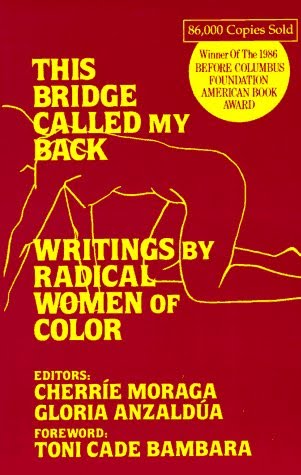
The mid-1980s saw the paradigm shifts in feminist studies in religion, as womanist, mujerista/Latina, Asian and Asian American women began to articulate their own theological understanding. If Womanspirit Rising (1979) was a reference text for our field, which contained essays by white women, we had the first reader by radical women of color, This Bridge Called Our Back(1981).

We began to discuss multiple oppressions and multiple identities, and the need to integrate race, class, and gender into our analyses. We challenged white women who have universalized their middle-class, white experience as if women were all the same. Continue reading “A Next Wave of Scholarship By Kwok Pui Lan”