“Enlightened Sexism” and The Media: The Cultural Attack on Feminism by Michele Stopera Freyhauf

Freyhauf, Feminism, Religion, Durham, Old Testament, Blogger, Bible, Gender, Violence, Ursuline, John CarrollWhat is a feminist mother of four daughters to do these days?  Look at our media and how girls and women are portrayed to our daughters, teens, and young adults. Then take a look at how media portrays the face of feminism, promoting every negative stereotype out there.  As I scroll through the magazines, listen to songs on the radio, and watch the programming targeted at girls in junior high and up, I cannot help but ask the question – Is the media trying to destroy feminism?

While this introduction might sound drastic, much truth lies behind the questions.  One merely needs to look around and watch former Disney Star, Miley Cyrus, twerk and make lewd gestures with a foam finger while grinding against a man, almost twice her age, as he sings about the blurred lines of sexual consent. When I saw the news stories and yes, watched the video, I was utterly mortified and stunned.  Gloria Steinem, in a statement that seems to condone this behavior stated that Cyrus’ performance (actions) is not a new phenomenon, but a product of American culture.  Instead of looking at it through the lens of degradation and influence, she defended the young star by saying:

 “I wish we didn’t have to be nude to get noticed. But given the game as it exists, women make decisions.  For instance, the Miss America contest… the single greatest source of scholarship money for women in the United States.  If a contest based only on appearance was the single greatest source of scholarship money for men, then we would be saying ‘this is why China wins.’ You know?  But that’s the way culture is.  I think that we need to change culture, not blame the people that are playing the game that exists.”

When Cyrus’ actions are boiled down to being “nude to get noticed,”  and we accept this behavior by merely chalking her performance up to  culture – isn’t it time to change culture?  Continue reading ““Enlightened Sexism” and The Media: The Cultural Attack on Feminism by Michele Stopera Freyhauf”

What Would Malala Do? by Gina Messina-Dysert

Gina Messina-Dysert profileOctober 11th was International Day of the Girl – a movement that empowers girls around the world to see themselves as powerful change agents. This year’s theme is “Innovation for girls’ education.”  Certainly, this makes sense given that education is one of our most powerful resources – just ask Malala.  During her recent interview on The Daily Show, Malala reminded the world that it is education that can solve global problems – not war.

The youngest person in history to be nominated for a Nobel Peace Prize, Malala is clear in her message; the only way to make change is through peace, dialogue, and education.  When asked about her reaction to the threat to her life by the Taliban, Malala responded saying that she thought quite a bit about what she would say if she came face to face with a Talib.  “I would tell him how important education is and that I would even want education for your children as well. That’s what I want to tell you, now do what you want.”

Although the Taliban has continued to threatened her life, Malala says striking back is not the right approach.  “If you hit a Talib, then there would be no difference between you and the Talib. You must not treat others with cruelty. … You must fight others through peace and through dialogue and through education.”  Such words of wisdom from a child. Continue reading “What Would Malala Do? by Gina Messina-Dysert”

The Sisters In Our Midst by Natalie Weaver

Natalie Weaver

On September 28, 2013, Ursuline College hosted a symposium entitled The Impact of Vatican II on Women Religious in the United States.  The symposium featured five speakers.  Sister Karen Kennelly, CJS. gave the keynote address entitled “Women Religious in the U.S.: From the Vatican Council to the Present.”  Four other speakers gave breakout talks.  Sr. Mary Frances Taymans, SND, spoke on education.  Sr. Kathleen Feely, SND, spoke on social services.  Sr. Patricia Talone, RSM, spoke on health care, and Sr. Loretta Harriman, MM, spoke on foreign missions.  The symposium began with a Friday evening event featuring a lecture called “Progress and Promise: Local Conversations,” which surveyed the history of women’s religious communities in Northeast Ohio (FAR blogger Michele Stopera Freyhauf worked on this project with our team as well!).  In addition to the talks, the Northeast Ohio component of the national Women & Spirit exhibit (now retired), which was produced by the Leadership Council of Women Religious and which toured throughout the country from 2009-2012, was on display.

Having been a collaborator in the organization and management of the symposium, I had several months to reflect on the intentions, purpose, and hoped-for outcomes of the event.  As our conference committee reflected on an appropriate theme for a conference commemorating the 50th year anniversary of the Second Vatican Council, we wanted to focus on women religious, a group often conspicuously overlooked and generally under-represented in Vatican II anniversary conferences. Continue reading “The Sisters In Our Midst by Natalie Weaver”

Cultural conditions and Spiritual Subtleties by Oxana Poberejnaia

oxanaI am very grateful to Carol P. Christ and other contributors for their insightful comments and thoughtful questions to my post “Blindness of the Gals”. As I promised to Carol, here is my post that starts answering some of the issues raised in the comments.

I cannot say that it was giving birth to my daughter that first made me question my blindness to patriarchy in religion and culture. Rather, it was a gradual process of educating myself by reading works by feminist thinkers, and learning about the brave women and men who have been fighting and are still fighting for women’s rights.

Continue reading “Cultural conditions and Spiritual Subtleties by Oxana Poberejnaia”

The Institutional Silencing of Women by Natalie Weaver

Natalie Weaver

On July 26, 2013, I had the opportunity to hear Rev. Helmut Schüller speak at the City Club of Cleveland’s Friday Forum.  He spoke to a convened audience of around 150 people, in addition to the much greater broadcast audience, and he responded to questions that ranged from wholly supportive, to sincerely questioning, to highly critical.  I myself sat with a group of vowed religious women from Pittsburgh who seemed enthusiastic about Rev. Schüller’s Austrian Priests’ Initiative, while behind me sat a table of obvious, vocal critics.

Rev. Schüller’s initiative, now represented by over 400 priests, began in 2006 as an effort to mobilize priests to lead the way for change in the Catholic Church in at least four crucial areas: women’s ordination; married priesthood; same-sex marriages; and lay participatory voting in the election of their bishops.  Of course, Catholics have been having these conversations long before the Priests’ Initiative.  What makes Father Schüller’s work different is that it is an “insider job.”  He argued that the laity have done their part, and now it is time for the clergy to speak, even at some personal and professional risk to themselves. Continue reading “The Institutional Silencing of Women by Natalie Weaver”

The Hot Seat by John Erickson

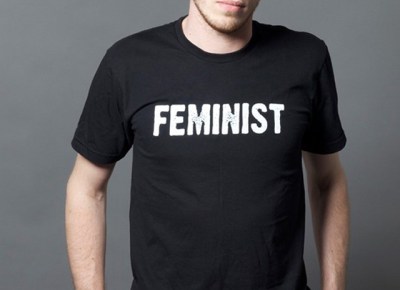
Being a man in feminism isn’t easy and that’s how it is supposed to be.

men_feminist_mainI’ve been thinking a lot about what it means to be a male feminist lately.  As the only man to be a permanent blogger on this very site until my colleague and friend Kile Jones came on board, I took my role, as a man in a traditional feminist (online) space very seriously.  Although the ongoing struggle to be a male feminist is one continually wrought with dialogues about power and positionality (amongst a host of many other topics), I am often conflicted when I see male feminists take advantage and destroy the hard work that many, specifically on this site and beyond, worked hard to build and defend.

Not wanting to reopen old wounds or start new online battles, men have been involved in feminism for quite some time.  From James Mott chairing the first women’s rights convention, to radical feminist Andrea Dworkin’s life partner John Stoltenberg, to Michael Kimmel and Michael Kaufman’s life long work to legitimize not only men in feminism but also what it means to be a man who works for gender equality, being a man in feminism isn’t easy and that’s how it is supposed to be. Continue reading “The Hot Seat by John Erickson”

Blindness of the Gals by Oxana Poberejnaia

Oxana PoberejnaiaWomen (and men) are often blind to women’s inequality. I, as a Buddhist practitioner, have been blind to the reality of women’s second-class status in sacred texts of Buddhism and practice.

In her book “Buddhism After Patriarchy” Rita M. Gross describes how her fellow western Buddhist women completely overlooked the fact that women are not allowed into Rumtek Buddhist monastery in Sikkim, even after watching a video of a woman leaving an offering outside the gate and walking away.

Continue reading “Blindness of the Gals by Oxana Poberejnaia”

The Inter-Faith Youth Initiative and Feminism by Ivy Helman

ivyFrom June 25th through July 2nd 2013, I participated, as one of three Jewish mentors, in IFYI (Inter-Faith Youth Initiative), an inter-faith immersion experience for high school and college-age youth sponsored by Cooperative Metropolitan Ministries (CMM). The mentors and the rest of the staff guided, encouraged, empowered and supported 30 participants. Throughout the week, I also led an art interest group and co-led an affinity group with Beau Scurich, the Muslim chaplain at Northeastern. The entire community of participants and staff gathered around the week’s theme: the ways of truth and love. As Mahatma Gandhi said: “When I despair, I remember that all through history the ways of truth and love have always won. There have been tyrants and murderers, and for a time, they can seem invincible, but in the end, they always fall. Think of it–always,” (emphasis added).

IFYI was not only an exercise in how to live out the ways of truth and love, but it also became a vehicle through which the participants and staff expressed to the larger world what the ways of truth and love meant to us. Here is some of what the ways of truth and love came to mean throughout our journey together. Continue reading “The Inter-Faith Youth Initiative and Feminism by Ivy Helman”

Rape Culture and Abstinence Only Education by Gina Messina-Dysert

Gina Messina-Dysert profileRape culture, as has been noted on Feminism and Religion in multiple articles (see Carol Christ’s post this week), permeates every aspect of our society, every aspect of our lives.  Something that I believe warrants serious attention is Elizabeth Smart’s recent comment about abstinence only education.  In her talk at John Hopkins University about her own harrowing ordeal, she well demonstrates the many ways rape culture plays itself out in our society and also shares why we must continue to explore options beyond abstinence only education.

As you may recall, Elizabeth Smart’s name became well known across the US when she was abducted at the age of 14 and then found alive 9 months later.  During her captivity Smart was forced into a polygamous marriage and repeatedly raped (rape culture).  When she was found walking down the street with her captors, many wondered why she hadn’t tried to escape or ask for help (rape culture).  According to Smart, the question she is asked most often is “Why didn’t you run? Why didn’t you scream?” (rape culture).  Smart responded to that question during her talk and her answer included abstinence only education (rape culture). Continue reading “Rape Culture and Abstinence Only Education by Gina Messina-Dysert”

God Doesn’t Live Here Anymore: Gay Bars and the Growing Divide Between Sexuality and Spirituality by John Erickson

oes God exist within the LGBTQ community anymore or has the community itself abandoned God for all-night raves, dance clubs, alcohol, and hypersexualized and over commoditized fetishized forms of femininity and masculinity? Oftentimes, I find myself answering yes to the above questions. After surviving hate crime after hate crime and endless batches of newly elected conservative politicians hell bent on ignoring medical and social epidemic plaguing the very country they were elected to serve and protect, why would a community, oftentimes linked to sin itself, believe in a holy entity?

John Erickson, sports, coming out.My good friend and fellow Feminism and Religion Contributor Marie Cartier’s forthcoming book, Baby You Are My Religion: Women, Gay Bars, and Theology Before Stonewall argues that American butch-femme bar culture of the mid-20th Century should be interpreted as a sacred space.  Specifically, gay bars served as both communal and spiritual gathering spaces where butch-femme women were able to discover and explore not only their sexuality but also their spirituality.  An opus of an academic accomplishment based off of the amount of in-depth interviews she conducted, Professor Cartier explores lived religion in an area that has become all too common within the LGBTQ community: the bar

The Palms, the last local and only lesbian bar to be found in city of West Hollywood, CA is closing its doors and I can’t help but wonder where its patrons or parishioners will now go? Continue reading “God Doesn’t Live Here Anymore: Gay Bars and the Growing Divide Between Sexuality and Spirituality by John Erickson”