I just finished reading for review The Bloomsbury Reader in Religion, Gender, and Sexuality, edited by Donald L. Boisvert and Carly Daniel-Hughes. Targeting an undergraduate audience, the text explores ways that religion, gender, and sexuality intersect and interact in a variety of religious traditions.
The book’s essays traverse a wide sampling of religious inheritance including indigenous traditions, Christianity, Judaism, Islam, and various Asian religions. The topics examined range from the culture of male love in Japanese Buddhism to various themes of love in Haitian Voodoo, from sexual desire in Beguine communities to Gandhi’s experiments in sexual chastity, and from the passion of St. Pelagius to the transgender performance characteristic of the Hijra identity in India. Among other things, the book offers a wide array of interpretations regarding how sexuality emerges in particular traditions and contexts. One is left with a feeling that nearly anything goes depending on which set of rules or religious mores a particular group of people follow. The variations presented in each chapter related to the interpretation of sexuality’s embeddedness in spiritual expression problematize the notion of the “normal” emerging in sexual desire and expression. Continue reading “Sexuality and Spirituality: Convergence or Alienation? by Stephanie Arel”
In her 1975 manifesto, “The Laugh of the Medusa,” French feminist Hélène Cixous urges women to write: “Writing is for you, you are for you; your body is yours, take it. . . . Women must write through their bodies, they must invent the impregnable language that will wreck partitions, classes, and rhetorics, regulations and codes . . .”
“The Laugh of the Medusa” remains a thrilling essay, challenging and inspiring women to “return to the body” and to language. “Woman must write woman,” Cixous insists, “for, with a few rare exceptions there has not yet been any writing that inscribes femininity.”
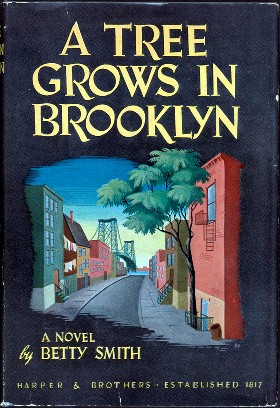
Although Cixous may not have been aware of it, Betty Smith’s beloved, perennially popular 1943 novel, A Tree Grows in Brooklyn is one of those “rare exceptions” that “inscribes femininity” in precisely the way she advocates. This autobiographical novel, so often dismissed as sentimental or as a children’s book, is actually written through the female body—which may explain its lasting popularity and power. Continue reading “Writing Through the Body: Betty Smith’s A TREE GROWS IN BROOKLYN by Joyce Zonana”
In 2011, the Anglican Theological Review published arguments for and against same-sex marriage. “A Theology of Marriage including Same-Sex Couples: A View from the Liberals,” co-written by Deirdre Good, Cynthia Kittredge, Eugene Rogers, and Willis Jenkins, presents a rationale for same-sex marriage that is surprisingly traditional, grounded in scripture and doctrine, understood and interpreted “in the company of patristic interpreters as well as in the company of readers long silenced by the tradition.” Part of the liberal view explores the relationship between eros and caritas, and how the marriage vows, which “mark marriage as an arduous form of training in virtue,” teach us to love and “offer a means by which God may turn eros into charity.”
As someone for whom eros is both a modality of intimate communion and manifest expression of divine love, the idea that it would need to be transformed into something less sensual, more socially acceptable, seems an arbitrary sanitization that positions eros as untamed and dangerous, in need of redemption by sexless ideals of Christian charity. Admittedly, my aversion to scrubbing eros of its rawness likely comes from my own understanding of the word, which might differ from that of traditional Christian theology, and which is inherently tied to the ways in which I’ve known the divine more deeply through expansive, mystical, erotic experiences that engaged my every sense in the coolness of rivers and grazing touch of mountain breezes.
We know through the body; we sense through our skin and parts and cells and perceive through nerves and fibers and tissue – seismic shocks of color and sound reverberating through our beings in the abstract, or the specific, deep, and warming awareness of divine love washing over our grief, fear, or loneliness. Each of these teaches us about the nature of the universe and of love, about bodies and subjectivity, and (by extension) about God and God’s action in the cosmos. My experience of eros – of the sensual explosion of erotic energy that makes me tremble, lays gooseflesh across every inch of me, and takes my breath as it rises inside my chest and belly – is not limited to sexuality, but comes through nature, art, song, movement, and touch. It is my primary way of experiencing divine love, and needs no purification. Continue reading “Eros, Caritas, and Relationship by Chris Ash”
Christmas morning. I don’t usually have Sundays free and our family holiday celebrations lean nontraditional, so I’d come to a special ecstatic dance celebration and brought my 9-year-old daughter with me. As the music started and people all around us began to flow and move, I reached out to touch her hand. As if she’d been doing it for years, she shifted into a beautiful contact improv flow with me, rolling her arm down and across mine as she beamed love and radiance right into my heart.
This child brings up so many feelings in me as I watch her grow.
On many occasions at ecstatic dance, I’ve looked around the room and been overwhelmed by the beauty of the dancers and their joyful embodiment. When delight, peace, and ease are conditioned out of many of our bodily relationships through past traumas, body issues, or simply living in a disembodied or misembodied culture, feeling comfortable in our own skins is simultaneously an intentional act of cultural resistance and a profound act of self-care and self-love. Being present in the ecstatic dance space with lovely people moving confidently in fluid, sensual, emphatic, and silly ways fills my heart to overflowing on any given dance day.
Photo by Flickr user dannysoar
Being present in that space with my daughter, looking around the room and imagining what it must look like through the eyes of a 9-year-old girl, gave it a whole new hue of meaning. People danced alone or with partners, men danced with men and women with women, all without shame over their bodies or feelings. The occasional dancer who slipped off to sit on the periphery, nursing tears that flow in the way holidays bring for some, was joined, held, hugged, cried with. My little girl danced with joyful abandon surrounded by men and women of all ages and shapes, present in their bodies and feelings, moving in ways that felt good, glowing with presence and the freedom of acceptance. Continue reading “Present in Our Bodies: Sensuality, Movement, Feelings, and Joy by Chris Ash”
Many women are drawn to the image of the Sacred Marriage—perhaps especially those raised in Roman Catholic or Protestant traditions where sex is viewed as necessary for procreation but nothing more, and who learn that the naked female body as symbolized by Eve is the source of sin and evil. In this context, the positive valuing of sexuality and the female body found in symbols of the Sacred Marriage can feel and even be liberating.
Jungians have claimed that the Sacred Marriage is an archetype of the wedding between the “masculine” and the “feminine.” Many women have been attracted to this idea as well. It “softens” the radical feminist critique of patriarchy and male dominance. Rather than “castrating” the “phallocracy” as Mary Daly urged, we can think in terms of the “marriage” of qualities traditionally associated with male and female roles. Women, it is said, can use a good dose of ego and assertiveness traditionally associated with the masculine, while men need to have their dominating rational egos tempered by feminine qualities like care and compassion. Continue reading “Sacred Marriage or Unholy Cover-up? by Carol P. Christ”
Remembering to be thankful may just be a privileged illusion that individuals in positions of power get to write about in the December of each year to self-congratulate themselves about being actually able to be able to be thankful. It may just seem like people who write about being thankful are complaining or pontificating that being thankful is in itself a chore.
With the holidays just around the corner and the frazzled, crisp ping of anxiety, rush, and panic take over the air around us, it is easy to forget to stop and “smell the roses.” In times where teaching positions continue to shrink and more universities switch to adjunct labor, fees and class costs continue to rise, or just simply life becomes a little more complicated, due to the nature of balancing life, activism, work, friendships, or relationships, remembering to remind myself to be thankful is another task, I find adding to the never-ending list of stuff I always seem I have to do.
However, remembering to be thankful, scheduling it into one’s daily schedule are vital to our success as new and emerging faculty or activists or just in general because being thankful reminds us that we have aspects of our lives that are worth being thankful for. Remembering to be thankful proves that we are in some way, connected to a larger sense of life that, at times, grants our wishes, wants, or desires, brings us despair, and then allows us to get through it, or even makes us feel alive.
As I sit back and look at the personal and professional landscape around me I understand that I have a lot to be thankful for both consciously and unconsciously. Most recently at AAR, I participated on a panel in response to Bernadette Barton’s Pray the Gay Away. During the course of our panel, the conversation of chosen vs. biological families came up. Most recently, my mentor and panel moderator, Dr. Marie Cartier, talked about the same topic here on FAR and the difficulties many of us experience in regards to our chosen families vs. our biological families. With the holiday season all around us, and regardless of what or if, you celebrate it or not, it is quite hard to get away from it all without realizing who your “family” is and whether or not you’re close or connected with them can be traumatizing during these times where we’re taught or expected to be with them.
After our discussion on the panel and then at the hotel bar, people discussed the pains and traumas in relation to not having a biological family to go home to during the holidays. Sitting there and listening to the conversations, I realized that, for once in my life, I had nothing to say. Continue reading “Remembering to Be Thankful by John Erickson”
In the past month, Feminism and Religion has posted important pieces regarding the serious debate in the United States over gun control in the wake of mass shootings at our schools, including “Its Okay to Kill Each Other,” by Kate Brunner, and “It’s Mom’s Fault,” by Esther Nelson. Both of these authors give powerful insights into this discussion, pointing to the humanity (or inhumanity) involved, and challenging assumptions/ attitudes underlining this debate and corresponding inaction.
Preparing for motherhood these past nine months, a state of being that both authors also discuss when considering the larger issue of gun control, I have found myself hoping for hope—looking for something positive: progressive action in this sea of violence and inaction. I wanted to share one of my discoveries in light of this national (and international) discussion of gun control, something that gave me hope, a protest that made me smile even when given such great cause to despair.
On Saturday, September 19, 2015 I married two of my best friends Andrea and Cindy in holy matrimony in Appleton, WI.
Don’t urge me to leave you or turn back from you.
Where you go, I will go, and where you stay, I will stay.
Your people will be my people and your God my God.
Where you die, I will die, and there I will be buried.
May the God deal with me, be it ever so severely, if even death separates you and me.
–Book of Ruth 1:16-17
On Saturday, September 19, 2015 I married two of my best friends Andrea and Cindy in holy matrimony in Appleton, WI. Having been ordained since 2009, I truly never thought I’d ever get the chance to use these credentials until they asked me a few months back. Although my answer was an automatic yes, I sought to make sure that my homily and the words of advice I gave them on their special day were something unique, not always heard at wedding ceremonies. Continue reading “#LoveWins by John Erickson”
Kim Davis does need a lot of things but saying of suggesting that she needs a haircut, a makeover, or even to lose weight, makes you and those that continue to repeat it no better than she is; to state such statements doesn’t purport the ideal that #LoveWins, which took over social media just mere months ago, but changes the whole narrative to symbolize that sexism and hate are more important than love and equality.
Kim Davis, the defiant county clerk, is currently sitting in isolation in a jail cell after refusing to issue marriage licenses to same-sex couples in Rowan County, Kentucky, even after she was ordered by a judge to comply with the Supreme Court’s ruling on same-sex marriage or be held in contempt of court.
Everywhere I turn on both social media or in person people are talking about Ms. Davis, her actions, personal history and for some weird reason her hair and looks. I’m all for individuals taking a virulent stand against an individual who chooses to not uphold the law of the land as well as continually acting in an unjust discriminatory way but bringing her looks or anything else about her physical appearance into the narrative is not only just plain wrong it is sexism in its worst form. Continue reading “Two Wrongs Don’t Make a Right by John Erickson”
I’m not particularly fond of my periods – they’re painful, full of cramps. But they are a part of who I am, and I’m not going to apologize for them. We women, especially those of us belonging to the sub-continent, have been shamed or embarrassed into silence, while being reminded that motherhood is the most exalted position a woman could ever hope for. I mean, isn’t that paradoxical – if it weren’t for the bloody nemesis (pardon the pun), we would never get to experience motherhood.
I grew up in a Western environment (in southern Africa) where “period” wasn’t necessarily synonymous with repulsion. But when I moved to India, the land of my birth, soon after my “life-altering” experience, things began to look different. I came to realize that I ought not to be like the neighbour girl who was so besharam, or shameless, that she insisted on announcing her monthly ignominy to the world by refusing to conceal the fact that she had indeed been at the pharmacist’s to buy sanitary pads. Why, the pack of pads, sealed in newspaper and carried in a little black plastic bag was right there for the entire world to see on her ten minute walk back home! I gradually came to understand that “those four days” were taboo – do not speak of “it,” do not make it obvious even if you are writhing in unbearable pain, do not contaminate sacred space with your womanly profanity. Continue reading “Four Days of Bliss (or How I used The System to beat The System) by Vibha Shetiya”


 I just finished reading for review The Bloomsbury Reader in Religion, Gender, and Sexuality, edited by Donald L. Boisvert and Carly Daniel-Hughes. Targeting an undergraduate audience, the text explores ways that religion, gender, and sexuality intersect and interact in a variety of religious traditions.
 In her 1975 manifesto, “
 In 2011, the Anglican Theological Review published arguments for and against same-sex marriage. “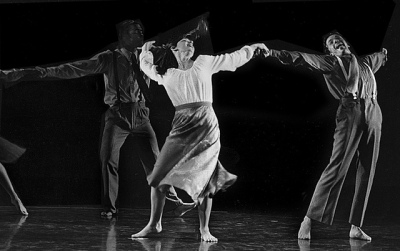
 Many women are drawn to the image of the Sacred Marriage—perhaps especially those raised in Roman Catholic or Protestant traditions where sex is viewed as necessary for procreation but nothing more, and who learn that the naked female body as symbolized by Eve is the source of sin and evil. In this context, the positive valuing of sexuality and the female body found in symbols of the Sacred Marriage can feel and even be liberating.
 Don’t urge me to leave you or turn back from you.
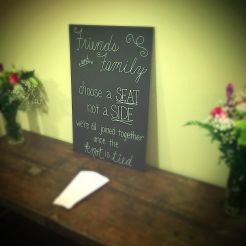 ea and Cindy in holy matrimony in Appleton, WI. Having been ordained since 2009, I truly never thought I’d ever get the chance to use these credentials until they asked me a few months back. Although my answer was an automatic yes, I sought to make sure that my homily and the words of advice I gave them on their special day were something unique, not always heard at wedding ceremonies.
  Kim Davis
 I’m not particularly fond of my periods – they’re painful, full of cramps. But they are a part of who I am, and I’m not going to apologize for them. We women, especially those of us belonging to the sub-continent, have been shamed or embarrassed into silence, while being reminded that motherhood is the most exalted position a woman could ever hope for. I mean, isn’t that paradoxical – if it weren’t for the bloody nemesis (pardon the pun), we would never get to experience motherhood.
 Feminism and Religion