How I Loved Myself through Charismatic Worship by Andreea Nica

Andreea Nica, pentecostalismBreaking up with your first love can be an excruciating process; especially when it happens to be completely entangled with your being. God was my first love and he stayed for a long while. We had many exhilarating times together, particularly within the branch of Christianity I was raised in: Pentecostalism. I fell in love with God when I uttered his divine language at 13 years of age.

Currently, I’m writing my memoir and narrative nonfiction, Freeligious ™, for which I explore the scientific explanations of my charismatic experiences in the church, which inevitably led to a closer attachment to God. In the Pentecostal church, we were encouraged to connect with God through supernatural phenomena.

Examples include: speaking in tongues (glossolalia), healings, trances (drunk in the holy spirit), visions (hallucinations), prophetic messages (delusions), rebuking evil spirits (paranoia), and many more god-friendly activities. While some of my church peers and most outsiders found the charismatic ordeal to be phantasmical and plain ol’ crazy, I became enchanted by the initiation. The initiation process was quite simple really. As believers in Christ, we must receive the baptism of the holy spirit which usually took the form of speaking in tongues, clinically known as glossolalia. Continue reading “How I Loved Myself through Charismatic Worship by Andreea Nica”

Size Islam: Where do I fit in? by Jameelah X. Medina

Size Islam: Where do I fit in?

Reading Laury Silvers’ recent post caused me to reflect upon not only how my body is gendered in worship as a Muslim woman, but how my body is displaced, inconvenient, and often seen as an assault on thinner women’s, and even Islamic, sensibilities. This is a phenomenon in the prayer line, on prayer mats, in socio-religious gatherings, and even in online discussions with Muslims and other major religions.

I am usually the tallest (or among the tallest) women in mosques I have frequented. I am also obese and among the largest women in the mosque. I enjoy lifting weights, which also causes me to have very large thighs and arms and broad shoulders. Additionally, I have long feet, as well as wide hips and a large backside that no amount of fabric can hide. Among girlfriends, I’ve often referred to my shape as a “three-hour glass.” Needless to say, some shorter and smaller people find my frame imposing. Continue reading “Size Islam: Where do I fit in? by Jameelah X. Medina”

The Quiet Voice of the Frame Drum by Oxana Poberejnaia

oxanaLayne Redmond passed away on 28 October 2013. Days before her death I received by post her signature Lotus Tambourine which Layne developed with Remo, manufacturer of world frame drums. Remo posted a tribute to her on her page as a Remo artist. Percussive Arts Society published an In Memoriam of her, along with the link to an article by Layne Redmond “Frame Drums and History”. Facebook and especially Women Frame Drumming page exploded with expressions of gratitude, sympathy and testimonials of how Layne changed people’s lives. Here is an account of Layne’s last summer by a person who supported her in her end-of-life transition.

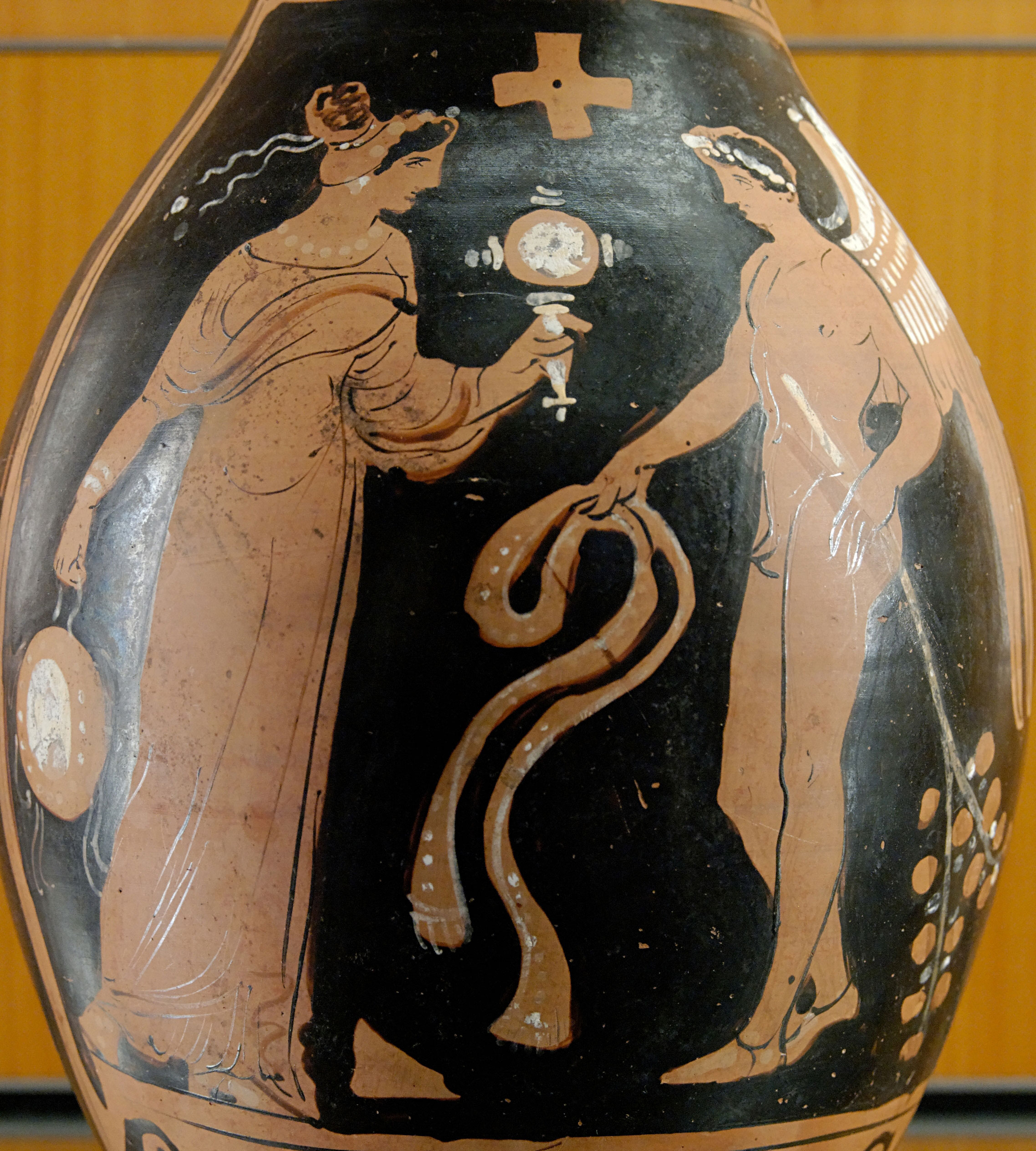
Woman_mirror_tambourine_MBA_Lyon_L631FWLayne Redmond was intensely busy with two projects during this time: completing her film about drumming spiritual practices to dream awake Afro-Brazilian Gods and Goddesses, and preparing her seminal book When The Drummers Were Women for re-printing with new materials and photos. She put out appeals for both projects, including on Karen Tate’s show “The Voices of the Sacred Feminine” in June 2013, and people helped with their money and time.

Continue reading “The Quiet Voice of the Frame Drum by Oxana Poberejnaia”

A Poem About Sister Love by Marcia Mount Shoop

A Poem:  Sister Love

This post will
never be complete
it can only house the fragments,
the remains
of days at my sister’s hospital bed

the vortex of medical labels
“critically ill”
“brain aneurism”
the singular attention to
fragile body chemistry
sodium, potassium, blood sugar, magnesium

Continue reading “A Poem About Sister Love by Marcia Mount Shoop”

Longing for Hermitage by Elizabeth Cunningham

Elizabeth Cunningham headshot jpegAt least since the days of the Desert Mothers in the 4th and 5th centuries CE, there have been women in the Christian tradition (and doubtless other traditions) who have lived lives in religious solitude, whether by choice or circumstance.  In Medieval Europe many churches had anchorholds, small enclosures inhabited by men or women dedicated to a life of solitude and prayer. The word anchorhold implies that the presence of the anchoress or anchorite grounded the church community, but the word derives from the ancient Greek verb (pronounced anachōreō) for to retire or withdraw.  Anchoress Julian of Norwich is still revered as the author Revelations of Divine Love, possibly the earliest surviving book written by a woman in the English language.  Six centuries after her death, her vision of Jesus our Mother continues to challenge, comfort, and inspire.

I grew up in an Episcopal rectory, daughter of a secretly agnostic mother who loathed being a minister’s wife (living in a fishbowl, she said) and a father who preached and practiced the social gospel as had his father before him. If you weren’t directly feeding, clothing, visiting “the least of these my brethren,” your pieties (as my father dismissed them) were worthless. At every meal we prayed, “make us always mindful of the needs of others.”  Selfishness and individualism were synonymous. The pronoun “I” was frowned upon.  The only route to salvation was social and/or political activism. My father walked his talk, literally, taking part in the 1965 march from Selma to Montgomery.

Continue reading “Longing for Hermitage by Elizabeth Cunningham”

Peace of mind vs Dogma and Capitalism by Oxana Poberejnaia

oxanaWhen I said in my response to Carol P. Christ’s comment that on one level Goddess spirituality and Buddhism are about the same thing, I am afraid it could have sounded shallow. What I wanted to express is that for a Goddess adherent, the primary goal is not to go through death and be reborn. Neither is the primary goal for a Buddhist to go through death and not be reborn. I believe they both seek the same thing: to be happy in this lifetime, to be comfortable with themselves and the world, to be OK with the reality of their own death. Carol says: “For me, regeneration applies to the community, to nature, to the whole, not to the individual”.

The two faiths just lead to this result by using different theology and practices. One of the ways Buddhism installs this peace of mind is by dissolving the very notion of an “individual” and thus, their impending death becomes less of a problem. From the Goddess side of things, listen to an episode of Karen Tate’s Sex, Religion, Politics podcast Enlightenment for the Rest of Us/Shamanism with Polly Campbell, author of Imperfect Spirituality: Extraordinary Enlightenment for Ordinary People. Karen is a Goddess advocate, and what Polly was teaching could be called secular Buddhism: the same breathing techniques, being in the moment and being grateful.

Continue reading “Peace of mind vs Dogma and Capitalism by Oxana Poberejnaia”

Liberations of Immigrant Women in Western Religious Conversion by Andreea Nica

Andreea Nica, pentecostalismThe prolonged debate around feminist subjectivity and religious participation continues to evoke much compelling discussion in academia, political arenas, and public space. There have been a number of academic studies around the intersection of gender, religion, and migration, specifically on how gender and immigration assimilation is constructed and managed within western religious systems.

I am currently researching the trajectories of immigrant assimilation and conversion, and how gender relations and religious identities are managed within these processes to further develop my proposal for doctoral study. I find this area of research fascinating as it’s so diverse and pertinent to the progression of gender equity amongst religious participants. Continue reading “Liberations of Immigrant Women in Western Religious Conversion by Andreea Nica”

Muslim Ritual Prayer, Social Submission, and Embodied Dissonance by Laury Silvers

Silvers, Bio Pic FRBlogWebsites run by Muslim scholars typically offer advice columns for those seeking legal rulings and religious guidance on personal concerns. One young Muslim woman wrote to a site about her doubts that wearing hijab was connected to being a good person. The gist of the opinion was that wearing a head scarf, whether she feels right about it or not, will internalize good behavior thus transforming her faith. The acting scholar, Shazia Ahmed writes,

“…performing good deeds, even if one may not be ‘feeling it’, can affect us and change us.  The limbs are inroads, and performing good deeds with them can soften a hardened heart, bring enlightenment to a closed mind, and give a person a feeling of rejuvenation and desire to come closer to Allah and do more positive things.”

If she wears a head scarf, her faith, ritual and ethical observance, and peace of mind will increase. This approach is supported by studies undertaken in the field of social and behavioral psychology. It’s been shown that standing or sitting in an open-bodied “power pose” increases testosterone and reduces cortisol, just as forcing a smile increases serotonin. That’s all well and good, and I’ve certainly got nothing against hijab. As we should all be aware by now, hijab has multivalent meanings for Muslim women that do not typically accord with non-Muslim assumptions of its oppressiveness. So hijab is not the point here. My point is that the use of repetitive behaviors and rituals, which are capable of transforming a person’s the inner life, may also act as methods of social control that may not result in the desired peace of mind.

Continue reading “Muslim Ritual Prayer, Social Submission, and Embodied Dissonance by Laury Silvers”

Muslim Feminism: On Finding Meaning in the Struggle by Jennifer Zobair

painted hands, Jennifer Zobair
Photo Credit: Brian Ziska

I threw Catholics under the bus at a book reading.

I didn’t mean to and, as a former Catholic, I felt awful about it. I was promoting my novel, Painted Hands, about dynamic, successful Muslim women in Boston. During the Q&A, someone asked why I’d converted to Islam. Pressed for time, I explained that I’d tried hard to be a Catholic feminist, referenced the fact that there was no Original Sin imputed to Eve in Islam, and admitted I’d struggled with the Trinity and welcomed a religion where Jesus was revered but not divine.

Afterwards, I fretted about the comparisons. “That was bad, wasn’t it?” I asked my husband. “Maybe,” he said gently, “stop at the fact that there are feminist interpretations of Islam. Maybe don’t say anything about other religions.”

When you’ve left one religion for another, the implication is that you did find something better.  Continue reading “Muslim Feminism: On Finding Meaning in the Struggle by Jennifer Zobair”

Truths My Mother Taught Me by John Erickson

I never gave much credence to religion but through my mother, I met G-d, and through her I understood that I’m not a feminist because of the books I’ve read but rather because of the woman I call mom.

Graduation PhotoThe first question I always get asked when I’m in feminist spaces is: “What inspired you to become a feminist?”  Although I could go into the various histories revolving around men’s involvement in the early stages of the women’s movement to the similarities between the LGBTQ and women’s movements, my simple answer has always relied on one person: my mother.

I’ll be the first to admit (as well as many other people who will join me in the same chorus) that my mother deserves Sainthood for having put up with all the shenanigans I have, and still continue to, put her through. From running away from our local Catholic church the moment she dropped me off at Sunday School, to swearing like a sailor on leave at a very early age in front of Father Schmidt (who still fondly remembers me and the list I brought in with me to the confessional booth). Continue reading “Truths My Mother Taught Me by John Erickson”