Peace of mind vs Dogma and Capitalism by Oxana Poberejnaia

oxanaWhen I said in my response to Carol P. Christ’s comment that on one level Goddess spirituality and Buddhism are about the same thing, I am afraid it could have sounded shallow. What I wanted to express is that for a Goddess adherent, the primary goal is not to go through death and be reborn. Neither is the primary goal for a Buddhist to go through death and not be reborn. I believe they both seek the same thing: to be happy in this lifetime, to be comfortable with themselves and the world, to be OK with the reality of their own death. Carol says: “For me, regeneration applies to the community, to nature, to the whole, not to the individual”.

The two faiths just lead to this result by using different theology and practices. One of the ways Buddhism installs this peace of mind is by dissolving the very notion of an “individual” and thus, their impending death becomes less of a problem. From the Goddess side of things, listen to an episode of Karen Tate’s Sex, Religion, Politics podcast Enlightenment for the Rest of Us/Shamanism with Polly Campbell, author of Imperfect Spirituality: Extraordinary Enlightenment for Ordinary People. Karen is a Goddess advocate, and what Polly was teaching could be called secular Buddhism: the same breathing techniques, being in the moment and being grateful.

Continue reading “Peace of mind vs Dogma and Capitalism by Oxana Poberejnaia”

Liberations of Immigrant Women in Western Religious Conversion by Andreea Nica

Andreea Nica, pentecostalismThe prolonged debate around feminist subjectivity and religious participation continues to evoke much compelling discussion in academia, political arenas, and public space. There have been a number of academic studies around the intersection of gender, religion, and migration, specifically on how gender and immigration assimilation is constructed and managed within western religious systems.

I am currently researching the trajectories of immigrant assimilation and conversion, and how gender relations and religious identities are managed within these processes to further develop my proposal for doctoral study. I find this area of research fascinating as it’s so diverse and pertinent to the progression of gender equity amongst religious participants. Continue reading “Liberations of Immigrant Women in Western Religious Conversion by Andreea Nica”

Muslim Ritual Prayer, Social Submission, and Embodied Dissonance by Laury Silvers

Silvers, Bio Pic FRBlogWebsites run by Muslim scholars typically offer advice columns for those seeking legal rulings and religious guidance on personal concerns. One young Muslim woman wrote to a site about her doubts that wearing hijab was connected to being a good person. The gist of the opinion was that wearing a head scarf, whether she feels right about it or not, will internalize good behavior thus transforming her faith. The acting scholar, Shazia Ahmed writes,

“…performing good deeds, even if one may not be ‘feeling it’, can affect us and change us.  The limbs are inroads, and performing good deeds with them can soften a hardened heart, bring enlightenment to a closed mind, and give a person a feeling of rejuvenation and desire to come closer to Allah and do more positive things.”

If she wears a head scarf, her faith, ritual and ethical observance, and peace of mind will increase. This approach is supported by studies undertaken in the field of social and behavioral psychology. It’s been shown that standing or sitting in an open-bodied “power pose” increases testosterone and reduces cortisol, just as forcing a smile increases serotonin. That’s all well and good, and I’ve certainly got nothing against hijab. As we should all be aware by now, hijab has multivalent meanings for Muslim women that do not typically accord with non-Muslim assumptions of its oppressiveness. So hijab is not the point here. My point is that the use of repetitive behaviors and rituals, which are capable of transforming a person’s the inner life, may also act as methods of social control that may not result in the desired peace of mind.

Continue reading “Muslim Ritual Prayer, Social Submission, and Embodied Dissonance by Laury Silvers”

Muslim Feminism: On Finding Meaning in the Struggle by Jennifer Zobair

painted hands, Jennifer Zobair
Photo Credit: Brian Ziska

I threw Catholics under the bus at a book reading.

I didn’t mean to and, as a former Catholic, I felt awful about it. I was promoting my novel, Painted Hands, about dynamic, successful Muslim women in Boston. During the Q&A, someone asked why I’d converted to Islam. Pressed for time, I explained that I’d tried hard to be a Catholic feminist, referenced the fact that there was no Original Sin imputed to Eve in Islam, and admitted I’d struggled with the Trinity and welcomed a religion where Jesus was revered but not divine.

Afterwards, I fretted about the comparisons. “That was bad, wasn’t it?” I asked my husband. “Maybe,” he said gently, “stop at the fact that there are feminist interpretations of Islam. Maybe don’t say anything about other religions.”

When you’ve left one religion for another, the implication is that you did find something better.  Continue reading “Muslim Feminism: On Finding Meaning in the Struggle by Jennifer Zobair”

Truths My Mother Taught Me by John Erickson

I never gave much credence to religion but through my mother, I met G-d, and through her I understood that I’m not a feminist because of the books I’ve read but rather because of the woman I call mom.

Graduation PhotoThe first question I always get asked when I’m in feminist spaces is: “What inspired you to become a feminist?”  Although I could go into the various histories revolving around men’s involvement in the early stages of the women’s movement to the similarities between the LGBTQ and women’s movements, my simple answer has always relied on one person: my mother.
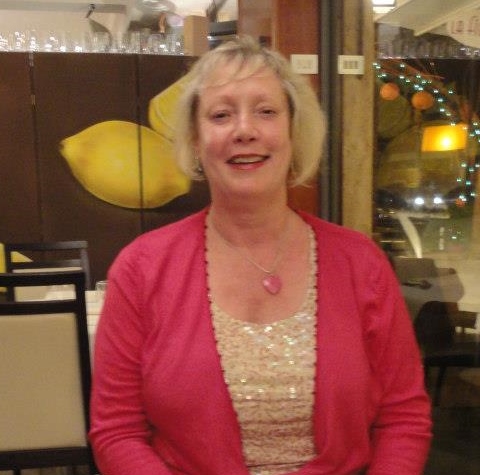
I’ll be the first to admit (as well as many other people who will join me in the same chorus) that my mother deserves Sainthood for having put up with all the shenanigans I have, and still continue to, put her through. From running away from our local Catholic church the moment she dropped me off at Sunday School, to swearing like a sailor on leave at a very early age in front of Father Schmidt (who still fondly remembers me and the list I brought in with me to the confessional booth). Continue reading “Truths My Mother Taught Me by John Erickson”

Letter to Allah by Jameelah X. Medina

Would we eat without the pangs of hunger? Would we drink without feeling thirst? Would we sleep without feeling fatigue or drowsiness? Would we cry without feeling sorrow? These are some questions I’ve asked myself when I wonder why so many people tend to find God, religion, or spirituality in times of great dis-ease and despair. Suddenly, I felt inspired to write a letter to God thanking Her for all that She is and for all that I am. In labyrinthical terms, this is my letter to the God in me that resides within me in God.

Letter to Allah Continue reading “Letter to Allah by Jameelah X. Medina”

Cultural conditions and Spiritual Subtleties by Oxana Poberejnaia

oxanaI am very grateful to Carol P. Christ and other contributors for their insightful comments and thoughtful questions to my post “Blindness of the Gals”. As I promised to Carol, here is my post that starts answering some of the issues raised in the comments.

I cannot say that it was giving birth to my daughter that first made me question my blindness to patriarchy in religion and culture. Rather, it was a gradual process of educating myself by reading works by feminist thinkers, and learning about the brave women and men who have been fighting and are still fighting for women’s rights.

Continue reading “Cultural conditions and Spiritual Subtleties by Oxana Poberejnaia”

In Dreams I Trust by Annette Allen

AnnetteGrowing up in an agnostic family in 1950’s Britain, I did not hear religion discussed.  So it seemed odd that my parents sent my brothers and me to Sunday school.  At home, as I was battling my father’s constant criticism and jealousy towards Eric, my younger brother, learning about Jesus thrilled me.   Jesus seemed to love and value young children – what a hero!

Moving to Addis Ababa, Ethiopia, in 1962, deepened my faith.   At Nazareth School for Girls, I practised Catholicism, recited the rosary, and devoured books about female Catholic saints. But the American sisters taught that our bodies were impure, not healthy; lustful thoughts about boys were wrong, and husbands were masters.  Worst of all, heaven didn’t have any animals.  To an innocent girl, God was now judging and condemning.  I was very confused. Continue reading “In Dreams I Trust by Annette Allen”

THE LABRYS: A RIVER OF BIRDS IN MIGRATION by Carol P. Christ

carol-christ“There’s a river of birds in migration, a nation of women with wings.” Goddess chant, Libanalabrys seal ring

On the Goddess Pilgrimage to Crete, I explain that many of the names given to “Minoan” (c. 3000-1450 BCE) Cretan artifacts and architecture are products of patriarchal and Eurocentric imaginations, and as such, are misleading.  For example the name “Minoan” was given to the culture of Bronze Age Crete in honor of “King Minos,” who was said to have ruled in Crete a few generations before the Trojan War–several hundred years after the end of the culture to which his name was attached.  In fact, despite his eagerness to find evidence that King Minos ruled at Knossos, the excavator Sir Arthur Evans finally had to concede that the best he could do was to produce a fresco of a “Prince of the Lilies” which he identifed as the image of the male ruler of the culture he called “Minoan.”  Evans’ Prince had white skin, a fact that Evans conveniently overlooked–because according to his own interpretation of “Minoan” iconography, white skin would mark the figure as female.  Mark Cameron, who reviewed Evans’ reconstruction of the fresco, suggested that the Prince is more likely to be a young woman who is perhaps leading a bull to take part in the bull-leaping games.  He also stated that the “crown” belonged to another fresco altogether.

Evans’ failure to find evidence of a King or for that matter a Queen at the complex of buildings he called “The Palace of Knossos” calls into question his idea that these structures were palaces.  Nanno Marinatos argued that the “palace” was instead a ritual center for the surrounding village, as well as a community gathering place, a place for storing grain, wine, and oil in a sacred way, and a place where ritual objects were fashioned of clay, bronze, stone, and gold.  Following her lead, I renamed the “Palaces” “Sacred Centers.” In this blog I will experiment with renaming the “Minoan” culture “Ariadnian,” after the pre-Greek name Ariadne, which may be one of the names of the Goddess of Bronze Age Crete.

One of the most pervasive–and many would say–most enigmatic symbols of the Ariadnian culture is the labrys.  Continue reading “THE LABRYS: A RIVER OF BIRDS IN MIGRATION by Carol P. Christ”

To Have and to Hold: Gay Marriage and the Religion Question

If a conservative religious traditions can’t give their mothers or sisters full equality, how can we expect them to give a GLBT individual the time of day?

John Erickson, sports, coming out.Outrage.  Anger.  Fear.  Hatred.  These are just a few of the words that flashed across my Twitter feed as I woke up on that fateful Wednesday, June 26 morning when the Supreme Court of the United States ruled that the Defense of Marriage Act (or DOMA) was unconstitutional and that supporters of Proposition 8, the hotly contested voter initiative in California that banned same-sex marriage, had no standing.   People were mad.  However, it wasn’t just the typical kind of mad that is associated with hatred, it was a type gay_marriage_81102178_620x350of mad that was met with impossible anguish because what I was reading and feeling was a result of one thing: there was nothing more they could do.

What does all this mean?  Questions from friends and family were filling up my inbox and although I wanted to take a moment to just hit “Reply All,” and input the words: Equality, I had to hold back and start to examine the notion that although equality may now be firmly on the proverbial table, there is still a lot of work to be done, specifically for gay marriage and those wanting to marrying inside the traditional church spaces they grew up in and not just the ones that have come out as open and affirming in recent years towards LGBT individuals. Continue reading “To Have and to Hold: Gay Marriage and the Religion Question”