An Advent Journey by Victoria Rue

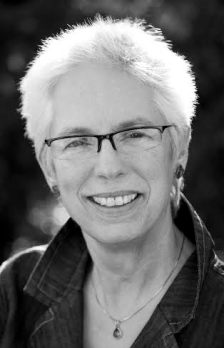
Victoria RueI decided to take the fall semester off from teaching.  I wanted to volunteer my abilities somewhere in the world.  With guidance from a friend and Volunteers in Global Service, I exchanged emails with Visthar: an Academy for Justice and Peace in Bengaluru, South India.  “Visthar” means open space.  What I discovered right away was that the work of Visthar dovetailed with my own: gender, sexuality, religion, education and theatre.

Visthar presents workshops on the intersection of gender, sexuality and religion to lgbtq activists, social workers, students, women pastors and inter-faith leaders. Within the trainings, Visthar asked me to offer a theatre workshop that allowed participants to creatively embody and strategize these issues.   Continue reading “An Advent Journey by Victoria Rue”

An Archaic Trinity of Goddesses? Not Necessarily. by Barbara Ardinger

Barbara ArdingerIn her comment following my last post which was about mythology, my friend, Carol Christ, expands on my paragraph about how the so-called “ancient triple goddess” was really invented in 1948 by Robert Graves in his book, The White Goddess. (Thanks, Carol.)

Back in the 1970s and 1980s, when the Goddess movement was just getting up on its feet and our ovular books were being published, the idea arose that if “they” have a holy trinity, “we” have one, too. And ours is older and holier. We see it in the three phases of the moon, new (Virgin), full (Mother), and dark (Crone). Here’s a tiny sample of these books that changed the lives of so many women and men:

  • Woman’s Mysteries Ancient and Modern by M. Esther Harding (1971, but first published in 1933)
  • The Goddesses and Gods of Old Europe (1974) by Marija Gimbutas
  • When God Was a Woman (1976) by Merlin Stone
  • Lost Goddesses of Early Greece: A Collection of Pre-Hellenic Myths (1978) by Charlene Spretnak
  • The first edition of The Spiral Dance (1979) by Starhawk
  • The Chalice and the Blade (1987) by Riane Eisler
  • Laughter of Aphrodite (1987) by Carol P. Christ
  • The Holy Book of Women’s Mysteries (1989) by Z. Budapest
  • The Reflowering of the Goddess (1990) by Gloria Feman Orenstein
  • Whence the Goddesses: A Source Book (1990) by Miriam Robbins Dexter

Triple goddess? ’Tain’t so. Our beloved triple goddess is one of our foundational myths. It’s nice and it’s perhaps inspiring, but it’s only a myth. Anyone who looks at a calendar or almanac—or up into the sky every night for a month—can easily see that the moon doesn’t have three phases. It has four: waxing, full, waning, and dark. And since the late 20th century, women have lived long enough to go through more than three stages of life. Continue reading “An Archaic Trinity of Goddesses? Not Necessarily. by Barbara Ardinger”

Journey into Light by Mary Sharratt

mary sharrattDecember 7 marks the Second Sunday of Advent.

Here in Northern England, I find myself plunged into the depths of midwinter darkness. It is in this dark womb of stillness that the Light is reborn. Through the ages and across cultures, world faith traditions have marked this sacred passage through the darkness.

In Christian tradition, Advent is a period of expectant waiting, of anticipating the birth of Christ. The word Advent comes from the Latin adventus, which means “coming.” This First Sunday of Advent marks the beginning of the Western Christian liturgical year.


hildegard's house of light erickson_house_72dpi

 Image: “Hildegard’s House of Light,” painting by Elizabeth Erickson

The Advent wreath and Advent calendar are relatively recent innovations. Christmas and Advent celebrations have gone through many permutations throughout history. Continue reading “Journey into Light by Mary Sharratt”

When Baby Girls and Old Crones Ruled by Jeri Studebaker

Jeri Studebaker

The data came as somewhat of a shock to me.  I stumbled across it one day in The Civilization of the Goddess, a mammoth book by the late Lithuanian-American archaeologist Marija Gimbutas about what Gimbutas dubbed “Old Europe” – a culture area in southeastern Neolithic Europe that she maintains was centered around female deity.

Until she had the temerity to suggest that people at some point in the past might have worshipped goddesses rather than gods, Gimbutas had a sterling reputation among academics, even being hired to teach at two of the most prestigious of all  American archaeology departments, Harvard’s and UCLA’s.  After presenting her goddess theory of Old Europe, however, Gimbutas came under attack by a few powerful male archaeologists, after which her reputation among academics began to plummet (see Spretnak 2011 for a good accounting of Gimbutas’ fall from grace).

Marija Gimbutas
Marija Gimbutas

Before I get to the data that so startled me, I need to tell you a bit about archaeologists.  Like the members of many academic disciplines, they disagree with each other – sometimes vehemently (and perhaps even somewhat more vehemently than scholars in other disciplines).  One thing however they all agree on is this: the higher the quality and quantity of grave goods buried with an individual, the higher that individual’s status in her or his society. Continue reading “When Baby Girls and Old Crones Ruled by Jeri Studebaker”

Stop. Drop. And Pray. by Valentina Khan

543296_10151140607043082_1192980077_n

The other night, it was close to 11:00 pm and I was finally enjoying my own little ‘midnight’ snack and a healthy dose of reality TV when I got a phone call from a cousin I haven’t heard from in quite some time. He is in the East Coast and it seemed too late for a leisure phone call from him. So I answered in a panic, yet, all he wanted was to say “hi” and to talk a little bit about the obligation of a Muslim to pray the five daily prayers. OK, this is odd, I thought, but I guess I could entertain this topic for a few minutes. Might be better for me than the junk TV I was winding down to anyway.

We chatted for a few minutes and he started to get very heated about the requirement of the five daily prayers.  To back up a little, let me paint a quick picture of this eccentric cousin of mine. He is smart.  A New Yorker.  Middle-aged. He has studied at prestigious universities, has traveled the world, and even delved into religion so much so that he used to give sermons on Fridays, the holy day of the week for congregational prayer in the Muslim tradition. His main question for me, “Do you really believe in the flying white horse story?” Continue reading “Stop. Drop. And Pray. by Valentina Khan”

Has the Phaistos Disk Been Cracked? by Carol P. Christ

Carol Christ in LesbosRecent headlines in the international press announced that the enigmatic language of the ancient Cretan “Phaistos Disk” has been translated—in part—by the Welch-Cretan scholar Gareth Owens. Owens states that the Phaistos Disk records an ancient hymn to a Mother Goddess. More specifically he claims that one side is dedicated to a Pregnant Goddess and the other to a Birth-Giving Goddess.

All of this is very exciting, but is he right? Continue reading “Has the Phaistos Disk Been Cracked? by Carol P. Christ”

The Sphere: A Symbol of Ancient Greek Female Spirituality by Stuart Dean

Stuart WordPress photoOriginally, in ancient Greek, ‘sphere’ simply meant ‘ball.’  Though its grammatical gender varied, it was primarily a feminine noun.  It is in that sense and with that gender that it bounces into Western literature in the episode of the Odyssey where Nausicaa and her companions are playing catch on a beach (Odyssey 6.100 ff).

Nausicaa is said to be conducting her companions in ‘molpe,’ a curious term that seems to refer to dancing, music and poetry as a single form of performance art.  Authorship (including possibly female authorship) and dates of individual episodes of the Odyssey remain debatable, but both from this episode as well evidence from other sources there is no doubt that in general what Nausicaa and her companions are doing here relates to an actual custom among Greek women that dates back to well before writing was adopted. Furthermore, molpe was spiritually significant.  As the conductor of its performance Nausicaa is compared to Artemis.

The reference to Artemis as one of those who ‘holds heaven’ (Odyssey 6.150), suggests that the sphere with which Nausicaa and her companions are playing may have been intended (at least by the author of this episode) to be a symbol of the celestial sphere.  That suggestion is bolstered by an appeal to what is to be found in the fragments that survive of the poetry of Sappho, who it is readily apparent considered herself as much a musician and choreographer as a poet.  That is to say, whereas Nausicaa may be a fictional persona, with Sappho we have the only direct evidence of any substance directly from an actual woman of what constituted molpe.  From how she refers to a female performer of molpe as goddess-like (S. 96), followed immediately by a comparison of yet another woman’s beauty to that of the moon, as well as other fragments of poems where either the appearance or movement of women in connection with a molpe performance is related to celestial events such as the appearance of a full moon or the movement of the Pleiades, it is clear that for Sappho choreography was in effect applied cosmology (see S. 154 and S. 34 and how it is surely echoed in a much later Latin poem here). Continue reading “The Sphere: A Symbol of Ancient Greek Female Spirituality by Stuart Dean”

Cerridwen, Dark Goddess of Transformation, Inspiration and Knowledge by Judith Shaw

judith Shaw photoCerridwen, Dark Goddess of Transformation, Inspiration and Knowledge is best known as the mother of Taliesen, the greatest of all the Welsh poets.   But Her story is much older and Her powers run deep.

Cerridwen (“White Sow”, or “White Crafty One”) has many other names:  Dark Moon Goddess, Great Mother, White Lady of Inspiration and Death, Goddess of Nature, and Grain Goddess. She rules the realms of death, fertility, regeneration, inspiration, magic, enchantment and knowledge. Her ritual pursuit of Gwion Bach symbolizes the changing of the seasons, nature’s yearly cycle of death and rebirth.

Continue reading “Cerridwen, Dark Goddess of Transformation, Inspiration and Knowledge by Judith Shaw”

Thinking about Global Activism and Social Change, Personal Intentions and Spiritual Consciousness by Jameelah X. Medina

Jameelah MedinaThe events in this world begin with the individual. The world’s occupations trace back to the individuals who create them and those who ignore or support them. The world’s genocides trace back to the individuals who create them and those who ignore or support them. The world’s offensive wars trace back to those who create them and those who support them through action or inaction. Daring to exclude Divine Decree from this discussion, the events that take place in the world are due to the malice within mankind. This malice can be direct and intentional, or it may be malice by default due to the absence of benevolence. These atrocious events begin with the individual because unjust rulers, dictators, invaders, executioners and occupiers, only have the power to rule, dictate to, invade, execute and occupy because they have subordinates who give their obedience and acquiescence. We are those subordinates as a group and as individuals. The question is: Why do we obey and acquiesce?

The reasons for our obedience, acquiescence is in part due to political ignorance, fear and a sense of powerlessness, but also due to a lack of self-consciousness, soul-consciousness, a finely-tuned conscience, purpose, and intention.

Acquaintance with One’s Soul

The soul or spiritual heart of the individual determines either positive or negative, good or bad thoughts, action and chain reactions. Individual spiritual illness and disease is at the root of what we see occurring on this earth, from the rape of Mother Earth, who has sustained us in her womb with perfect balance since before our collective memory can recall, to the complete disregard for human life and its intrinsic value through legal, illegal and unchallenged annihilations and genocides under the guise of “national security,” “liberations” and “democracy,” and in the form of wars, prisons, miseducation, and unnatural natural disasters.  Because the root cause of these events is at the individual level, we are each and all accountable and responsible for correcting it. This correction begins with our intention. Continue reading “Thinking about Global Activism and Social Change, Personal Intentions and Spiritual Consciousness by Jameelah X. Medina”

The Descent of Inanna to the Underworld by Deanne Quarrie

Deanne QuarrieInanna provides a many-faceted image of the feminine. She is a goddess of order, fertility, grains, love, war, heaven and earth, healing, and emotion. She is called the “Lady of Myriad Offices”. Most of the powers once held by her, “the embodied, playful, passionately erotic feminine; the powerful, independent, self-willed feminine; the ambitious, regal, many-sided feminine” were eroded by the patriarchy throughout time.

Her descent to the Underworld is a valuable story at any time of the year but even more so here as the wheel turns fully into the dark of the year. During the dark of the year, we are to turn inward, our most introspective work is to be accomplished at this time. It is vital that we enter the darkness as did Inanna, bare and bowed low. Continue reading “The Descent of Inanna to the Underworld by Deanne Quarrie”