“Dear Terrorist: Keep Up the Good Work” Said NO ONE by Valentina Khan

Valentina KhanHow much longer do I as a Muslim American female, have to deal with the “gang-buster,” terrorizing, “Satan” worshipers high-jacking my faith for the sake of trying to supposedly ‘preserve’ it? Who are these wackos and why do they seem to represent my faith in mainstream media? Where did they all come from? Which terrorist schools have they all graduated from and what truly is their agenda?

I don’t know how else to say it- I’m so disgusted and fed up by the heinous acts of the terrorist mentality coming from what appear to be Muslim males– who really knows? ISIS, for example, with their masked individuals carrying out barbaric crimes could actually be another race or religion for all I know. Regardless, as a female, I want nothing to do with them. As an American, I want to go to war with them. As a Westerner, I want to hide in my Orange County bubble and only watch Bravo TV- just to get dumb and numb to the problems- and turn a deaf ear and blind eye to world events on the news.

However, as a Muslim my heart aches. My body trembles and my mind is terribly puzzled. How can all these awful events happening around the world come from people who claim to be Muslim, as I am? Didn’t they grow up reading the Prophet’s Last Sermon, as I did? Did they miss something? Did I miss something? Why are murder, beheading, and stoning things to be prideful about on social media? Why are they playing God and taking the lives of others in the name of a higher power? Why are they casting judgment on cultures and people when really they should start healthy dialogues in order to resolve differences of ideologies from one socio-cultural context to the next? Unfortunately, lunatic terrorists with apparently nothing positive going on their lives feel that their suicidal guerrilla warfare style of killing to avenge their faith is the ticket to authentic belief and entrance into heaven! Continue reading ““Dear Terrorist: Keep Up the Good Work” Said NO ONE by Valentina Khan”

Awake! Awake! A Reflection on the Awakening of Conscience and Advent by Elise M. Edwards

Elise Edwards‘Tis the season to be…?

For me, this has not been a season to be jolly. I teach at a university, and again, I’m in the midst of the most hectic time of year of grading and exams and wrapping up projects due at the end of the calendar year. There have been moments of joy and rest. But I’ve been more reflective and sorrowful. This year, my heart and mind and soul have been opened up in new ways and I feel more urgency and need for social change. I’ve been experiencing “conscientization” during the time of year many Christians refer to as Advent.

I was introduced to the concept of conscientization in the work of Christian feminist and womanist ethicists like Beverly Wildung Harrison and Stacey Floyd-Thomas. Other feminist and liberationist thinkers had already convinced me of the vital role that critical thinking, consciousness-raising, and action occupy in ethical reflection and social change. In a chapter on “Feminist Liberative Ethics” in a textbook on liberative approaches to ethics, Michelle Tooley explains the meaning of conscientization:

“Activists speak of conscientization as waking up to the injustice in the world—or seeing it for the first time. It is not that the injustice is beginning; it is that you encounter oppression, injustice, violence yourself or you see it in a person or situation. You may have seen the same situation many times before, but for some reason you begin to connect the event with a deeper recognition that the injustice is wrong.”

(p. 185, Ethics: A Liberative Approach, Miguel A. De La Torre, Editor)

I was conscientized the night I heard that a grand jury did not indict Darren Wilson for killing Mike Brown, an unarmed black man. I was horrified to learn that this police officer doesn’t even have to stand trial for his violent and deadly act. Now it wasn’t like before grand jury’s decision I thought that black lives were given equal value in the US justice system. After all, for months I have been researching and preparing a paper called “When the Law does not Secure Justice or Peace” about artistic and religious responses to the dishonoring of black male personhood. I have been mourning the loss of Trayvon Martin and others as I write. But this decision left me sobbing in a hotel room as I watch the events unfold in Ferguson, Missouri. I gained a deeper social awareness about the depths to which the demonization and disregard of the lives of black women, men and children are entrenched in American life and the institutions within it.

I gained deeper self-awareness too. One reason the tragedy of the grand jury’s decision became so palpable to me is that just hours prior, I witnessed former president Jimmy Carter address the American Academy of Religion. He spoke passionately about the proliferation of violence, mistreatment of women, climate change, and other social concerns. To put it plainly, I was floored to see a white man in his 90s who was raised in Georgia and was a Southern Baptist until his 70s state without any qualms that people in power intentionally misinterpret religious texts to support the domination of women and nonwhites because those they do not want to lose their privilege. Yet he also called himself, like Archbishop Desmond Tutu, a “prisoner of hope.” He believes that things will change, and draws from his Christian convictions to sustain hope and motivate his work to fight injustice.

I was electrified by his words. I, too, had hope. In the days prior, I had gotten a break from my daily life, connected with friends, and conversed with like minds. I had been thinking about art and love. I had learned strategies for de-centering dominant narratives in the classroom and I was hopeful that I could use them to make a difference in my students’ lives. But mere hours later, while watching the news, the self-awareness I came to is that my hope is more fragile than I wish it to be. Futility consumed my hope.

A few weeks later, I can assert that my faith in God is not shaken, but my hope in humanity’s goodness has as much stability as a house of cards. In my present state of mind, I’m grateful that we are at a point in the church year that provides me with an opportunity to mourn the brokenness of our world. Christmas is approaching, but that doesn’t mean I have to sing merry carols. Advent is a season when Christians reflect on why the world needs God’s miraculous action and what it means to wait for light to emerge in the darkness. In the church calendar, it is a time when Christians re-enact and re-experience the anticipation of Jesus’ coming. Advent songs have a different character than Christmas carols. Many of them have a haunting tone or an eerie, sad, or mysterious sound. The lyrics of these songs place exhortations to “Rejoice!” next to pleas of “O come, o come, Emmanuel!” Emmanuel, also spelled Immanuel, means “God with us.” Christians draw this name from the Hebrew prophecies in Isaiah that are cited in the Gospel of Matthew’s account of Jesus’ birth. Matthew describes Jesus’ birth as the fulfillment of prophecy.

My conscientization allows me to hear these prophecies anew. They are familiar to me, as they are repeated often this time of year in Christian settings, but I hear them in new ways. I hear Isaiah 9:6 quite differently: For to us a child is born, to us a son is given, and the government will be on his shoulders. And he will be called Wonderful Counselor, Mighty God, Everlasting Father, Prince of Peace.

“The government will be upon his shoulders” likely means that this child will have authority. But as I hear those words this year, I imagine the Prince of Peace in the choke-hold of a law enforcement officer. I think of a little baby who are welcomed into the world with joy but who grows up only to be killed at a young age by threatened authorities and crowds of supporters. This is the story Christians tell about the God who is with us, the God who is also fully human. And this is the story we tell about Michael Brown, Eric Garner, Tamir Rice, Alesia Thomas, Aiyana Stanley-Jones and far too many others.

This Advent, I’m making a real effort to hold hope and despair together. I don’t want to become hopeless. I don’t want to think that my work in the classroom, in my church, in my community, on this site and in the printed page have no meaning. Hope is what sustains us to work for justice. I want to believe in that transformation of hearts and minds and souls is possible and immanent even when it emerges through sorrow and struggle. Suffering, sorrow, and killing without consequences must not be acceptable. With my new eyes, I see just how terrible they are.

Elise M. Edwards, PhD is a Lecturer in Christian Ethics at Baylor University and a graduate of Claremont Graduate University. She is also a registered architect in the State of Florida. Her interdisciplinary work examines issues of civic engagement and how beliefs and commitments are expressed publicly. As a black feminist, she primarily focuses on cultural expressions by, for, and about women and marginalized communities. Follow her on twitter, google+ or academia.edu.

How Shall We Then Live? by Esther Nelson

esther-nelsonPresident Obama, responding to the beheading of American journalist, James Foley, by ISIL (Islamic State of Iraq and the Levant), said, “ISIL speaks for no religion…and no faith teaches people to massacre innocents….ISIL is not Islamic” (August 20, 2014). I don’t believe President Obama realizes the tangled thicket he’s entered with those words.

We don’t like to think of our faith traditions as places that harbor theologies or ideologies that promote death and destruction. We’d rather think along the lines of what Huston Smith (b. 1919), a philosopher and religious scholar, asserts: “If we take the world’s enduring religions at their best, we discover the distilled wisdom of the human race.” So words that reflect “religions at their best”–love, justice, mercy, compassion, peace, fairness, kindness, truthfulness, and charity are what come to the minds of most people when thinking about how faith traditions should manifest themselves in the world.

This proclivity to think of religion as weighted on the side of “best” is most noticeable when faith traditions express themselves dualistically–good/bad, right/wrong, sacred/profane, pure/impure, etc. Those things labeled “bad” most often get ascribed to an anti-god or Satan. Monotheistic religions (Judaism, Christianity, and Islam) have a more dualistic bent than do Goddess traditions, Hinduism, and Buddhism.

In addition, when we understand our sacred writings to be “revealed,” meaning information has been given to humanity by a divine source–information that could not be known other than through revelation–we become more prone to dualistic thinking. The “Revealer of Truth” (God) brings light to a wayward humanity. God (a symbol that often gets reified) easily fills the role of being and defining all that is “good” although “good” is a relative term. Kill a journalist? Bomb an abortion clinic? Start a war? Feed the hungry? Educate children? Eradicate Ebola? Humans have engaged in all these activities in the name of God. Each activity has been defined as “good.” Continue reading “How Shall We Then Live? by Esther Nelson”

Are You Ready for Some Football? by John Erickson

Although putting women in charge of drafting new policies that address the “woman problem” currently facing the NFL, it too reeks of the similar dismissive and patronizing actions women face when trying to obtain leadership roles in their religious traditions. Supercilious progress for the sake of progress isn’t progress and progress under the guise of silence is still misogyny. We need women in positions of leadership in both the NFL as well as in religious traditions. The culture of violence and silence will only continue, albeit with a Band-Aid firmly in place, holding the painful experiences and histories of women, long forgotten and often overlooked, until society values their rights just as much as the men leading the prayers and those that are being prayed for on Sundays across America.

John Erickson, sports, coming out.There is never a reason for physical violence.  There is never a reason to hit your partner or child to the point where they are unconscious or bruised.  There is never a reason to inflict violence against someone else, but apparently there are exceptions to these rules if you’re an NFL football player.
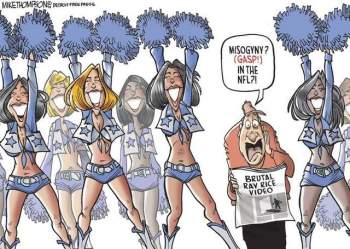
In my native state of Wisconsin, watching football on Sunday is synonymous with attending church prior to the game.  Watching football on Sunday is a cultural norm in many, if not all, different regions of the country where individuals, whether you like it or not, gather each Sunday to both praise and pray that your team ends up on top.

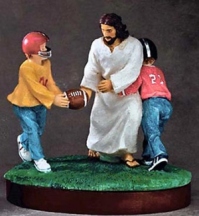
Football Jesus

In Wisconsin, you attend church with your family and head to your desired destination where you gather with friends and family to eat, talk about your life, and of course watch your local football team battle their weekly rival.  Although I am not much of a football fan these days, I have very fond memories of attending football games, watching them with my family and talking about the Green Bay Packers’ Super Bowl chances.  It was my time to both bond with the men of my family as well as catch up on the gossip the women would whisper back and forth to each other at the dinner table while the men were in the other room screaming at the TV.

Although I’m sure I will watch more games in my future, lately, all I do is cringe when I think about the growing violence that women and children face and have faced in the large shadow of an organization worth north of $9 billion dollars.

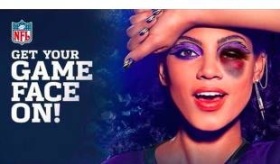
The biggest scandal to hit the news waves lately is that of Baltimore Ravens running back Ray Rice’s assault of his wife in an Atlantic City elevator.  Although Rice and the various other incidents regarding NFL players and violence is disturbing, the biggest problem facing the NFL isn’t just its treatment of women but its continual commodification of them as a disposable resource emblematic with the culture of violence that it has created.

photo (1)

If you didn’t know, women make up an estimated 45% of the NFL‘s more than 150 million American fans and have, in recent weeks, become their most valuable resource and source of criticism.  However, after a long string of incidents stemming back from NFL teams underpaying cheerleaders to the Ray Rice incident, one needs to ask what the roles of women, if any, are outside of the disturbing images of the abused wife, hypersexualized cheerleader?  Is being dragged out of an elevator by your abusive husband the only way to get women’s issues addressed in the NFL by fans, league owners, and the NFL commission?

The roles of women in the NFL and religion have many similarities.  Aside from end zone celebrations where players praise God for his apparent direct role in helping them score a winning touchdown or certain players edifications as gods on Earth, women make up the crux of both NFL fandom and attendance but are responsible for the gatherings similar to the ones I, and many others, grew up with.

bilde

Although putting women in charge of drafting new policies that address the “woman problem” currently facing the NFL, it too reeks of the similar dismissive and patronizing actions women face when trying to obtain leadership roles in their religious traditions.  Supercilious progress for the sake of progress isn’t progress and progress under the guise of silence is still misogyny.  We need women in positions of leadership in both the NFL as well as in religious traditions.  The culture of violence and silence will only continue, albeit with a Band-Aid firmly in place, holding the painful experiences and histories of women, long forgotten and often overlooked, until society values their rights just as much as the men leading the prayers and those that are being prayed for on Sundays across America.

Ann Braude said it best in her foundational text Sisters and Saints that “if we want to understand the history of American women, we need to examine the religious beliefs and activities that so many have found so meaningful.” Without women, we wouldn’t have many, if not all, of the religions that are present throughout the world today and in case we forget, without women, we too wouldn’t have the millions of little boys who grow up being taken to and from practice by their mothers with the hope that they too could one day become the professional football players that fans scream and pray for.

Without women, there is no NFL and without women, there is no religion.  Kelly Brown Douglas said it best on this very blog when she stated, “It is the violence that violence creates.”  Although I agree with her, I would only add that while violence does indeed create violence, the real sin isn’t the violence itself but rather the silence that follows.

Let us pray that we will continue to not be silent and that we will rise up and fight for the millions of women (and men) each day who do not live in fear that their significant other’s multimillion dollar contract will not be reinstated but rather that they and their children may not see another day on this Earth.

 John Erickson is a Ph.D. Candidate in American Religious History at Claremont Graduate University.  He holds a MA in Women’s Studies in Religion; an MA in Applied Women’s Studies; and a BA in Women’s Literature and Women’s Studies. The LGBTQ and women’s rights movements, masculinity studies, gender theory, and the utilization of technology in forming communities and creating new teaching methodologies influence his research interests.  His work is inspired by the intersectionality of feminism, queer identity, LGBTQ history, and religious and sexual cultural rhetoric. He is a Non-Fiction Reviewer for Lambda Literary, the leader in LGBT reviews, author interviews, opinions and news since 1989 and the Co-Chair of the Queer Studies in Religion section of the American Academy of Religion’s Western Region, the only regional section of the American Academy of Religion that is dedicated to the exploration of queer studies in religion and other relevant fields in the nation.  When he is not working on his dissertation, he can be found at West Hollywood City Hall where he is the City Council Deputy and Chief of Staff to Councilmember Abbe Land. He is the author of the blog From Wisconsin, with Love and can be followed on Twitter @JErickson85

Domestic Violence: The Sin that Sin Created by Kelly Brown Douglas

Rev.-Dr.-Kelly-Brown-Douglas - Version 2In these last several weeks, the horror that one out of four women will encounter domestic violence- sometimes referred to as “intimate partner” violence- in their life time has come to the national forefront. Indeed, women are more likely than men to be killed by their “intimate partner:” one in three women who is a victim of homicide is killed by an intimate partner. While sixty percent of domestic violence incidents occur in the home, this is not where domestic violence begins. It is the perhaps inevitable result of a culture of violence against women. It is the violence that violence creates.
This is a culture of violence in which women’s work continues to be grossly undervalued. One third of all women are living in or near poverty, what has been described as “the brink of poverty.” Two-thirds of minimum wage workers are women. The average white woman is paid 77 cents for every dollar her male counterpart man makes; for African American women it is 64 cents and Hispanic women 55 cents for every dollar made by white men. Women devote more than double the hours as men to “unpaid interactive children care.” Women over 65 “are twice as likely as men of the same age” to live in poverty—primarily because they are full or part-time caregivers. A 2013 “State of the World’s Mothers Report” ranked the United States 30th of the 30 best countries in the world to be a mother, based on indicators such as economic status, political opportunities and universal health care. And what this report makes most clear is that the status of children reflects the status of their mothers. This means that at least 28 million children are living in poverty in the United States.

As for physical violence, one in four college aged women experiences an attemptted or actual date rape. Forty-two percent of women who have been date raped consider suicide. In the Shriver Report, Sister Joan Chittister suggests that in the United States, “rapes in military and rapes on college campuses go unpunished because ‘boys will be boys,’ and winning wars and football games are more important than protecting the integrity of the women who are victims of rape.” These statistics represent nothing less than systemic and cultural violence against women and their children.[i] And, such violence is a sin. Continue reading “Domestic Violence: The Sin that Sin Created by Kelly Brown Douglas”

Muslim Separatists and The Idea of an “Islamic” State by amina wadud

amina 2014 - croppedThe other day, someone on twitter said she would not allow ISIS (known as the Islamic State of the Levant) use the name of “her” religion.  In fact, scholars in Egypt had proposed that they be called “the Separatist movement” and take the word “Islam” out of it. This question raised here is: what exactly is “Islamic” about what they are doing and how they are doing it?
I have contended for at least 2 decades that people use the word “Islam” anyway they want to make any point they want.  More importantly, whoever has the power to assert their definition of the word “Islam” controls how it is used. I say the past 2 decades because I used to think I could somehow determine “pure” “Islam”—as opposed to cultural reflections, human imperfections, and intellectual genuflections.  I came instead to see that everyone has a definition of Islam and whose definitions held sway was less a matter of epistemology and more a matter of power.

So, I followed one of my intellectual mentors and agreed that for any discourse about Islam, a definition had to be established, agreed upon, and then consistently maintained. He suggested that a simple criteria referent be applied based on Islam’s two primary sacred sources: the text of the Qur’an and the normative practices of the Prophet Muhammad, called sunnah.  He juxtaposed these to “little traditions” in the multiple ways Muslims experience or live out their understandings of these two.

Part of the methodology of Islamic feminism and reformed Islamic thought has been to demonstrate a direct link to the two primary sources but with a different paradigm about key principles espoused there in- like justice, human dignity, and compassion.  From that point forward, I tend to provide my definition of Islam, give evidence to support that definition from the primary sources and then elaborate how it would work in application to whatever issue is at hand.  Continue reading “Muslim Separatists and The Idea of an “Islamic” State by amina wadud”

Systemic Violence and the Killing of Michael Brown by Xochitl Alvizo


Xochitl
Photo by Chris Pinkham

Oppression is systemic. Injustice is systemic. It pervades the whole – it seeps into everyday actions and becomes habits and patterns that function as default. As a result, the actions that fall within these patterns hardly need justifying. If anything, the questioning of them is what is put on the defensive. And those who stand against injustice must usually do so in the face of militarized policing, before vast forces that serve to preserve the status quo.

I can’t help but see the similarities between the everyday existence of young black men, of boys in this country, and that of women. The lack of safety in public places; the need to always be aware of one’s surroundings; the lack of trust in the intentions of another; living with the knowledge that people like you experience violence at much higher rates than others. It is a racist, violent, patriarchal world we live in. And, yes, it is also other things, good and beautiful things, but sometimes the hard reality of everyday life blocks out that light. Continue reading “Systemic Violence and the Killing of Michael Brown by Xochitl Alvizo”

Women are like countries: both need to fight hard for independence by Oxana Poberejnaia

oxanaRita M. Gross in her book Buddhism After Patriarchy presents portraits of prominent women from Buddhist history. Some stories are extraordinary for the brutal details they contain. For example, Yeshe Tsogyel was raped, kidnapped and beaten by her suitors to the point that her back was a bloody pulp. She subsequently escaped to meditate in a cave.

In a patriarchal society, religious fervour is not recommended for women. Submission and obedience – yes. The life of an ascetic, a wanderer or a hermit – no. A son is relatively free to pursue religious activities (especially if he is one of the younger children and the issue of inheritance is sorted out). However, all daughters are better off tucked into a marriage. Supporting your husband and sons on their spiritual path – yes. Independent striving away from family life – no. Continue reading “Women are like countries: both need to fight hard for independence by Oxana Poberejnaia”

#YesAllWomen, the Darwin Debate, and the God Complex by John Erickson

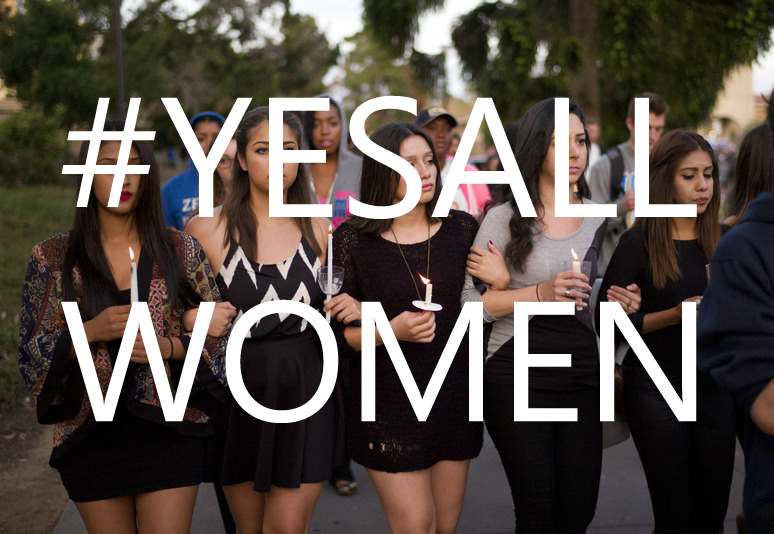
#YesAllWomen proved that although not all men commit horrible crimes against women, the men that often get the headlines and create the most controversy are the ones that need to be watched out for.

John EricksonThe one thing I typically will choose to do on the rare occasion that I’m able to sit down and relax is to watch a documentary.  While some people may go to the gym, read a book, or hang with friends, I typically choose to stay in, nestle up on my couch, and learn.  While on my last bout of relaxation, I chose to watch the HBO documentary Questioning Darwin. Although it offers very little new insight into the evolution vs. creationism debate, it does offer an interesting new way to look at the recent social media hashtag war feminists, allies, and supporters found themselves in over the #YesAllWomen movement that took the world by storm.

yesallwomen

Now, before I discuss #YesAllWomen, I have to admit that I did not enter into the safe space women created for themselves to tell tales of the horrible things they have and have had to face on a daily basis.  I firmly believe that men should not have entered into the digital space Continue reading “#YesAllWomen, the Darwin Debate, and the God Complex by John Erickson”

BARBARA LEE SPEAKS FOR ME by Carol P. Christ

carol christWhile I was in Crete on the Goddess Pilgrimage teaching about and experiencing a Society of Peace where violence and domination were neither celebrated nor encouraged, another war broke out in Iraq, breaking my heart, breaking all of our hearts—yet again. When will we ever learn, oh when will we ever learn?

Barbara Lee was the only member of Congress to vote against the US war powers authorized after 9/11 which were used to launch war in Afghanistan; she also voted against authorization for the Iraq war in 2002. Hillary Clinton voted for the Iraq war, despite clear indications that the US administration was lying about weapons of mass destruction—which were never found in Iraq. I voted for Barack Obama because he opposed this war. Then he listened to General Petraeus and expanded the war in Iraq. Barbara Lee speaks for me. Hillary Clinton and Barack Obama do not.

The Iraqi people are once again living in fear of their lives as reports surface that armies and militias are engaging in mass executions of their so-called “rivals.” Is there any cause that could justify this? Continue reading “BARBARA LEE SPEAKS FOR ME by Carol P. Christ”