A Christian Response to Racism, Sexism, & the Rise of American Terrorism by Trelawney Grenfell-Muir

Trelawney bio pictureAs our country reels in horror at the brutal massacre of nine worshipers at Emanuel African Methodist Episcopal Church, one particularly important detail has emerged: the young man who killed those nine people entered the world of white supremacism after the object of his romantic interest rejected him and dated a black man.

According to his cousin, the experience dramatically changed the young man, led to his obsession with racist hatred, and motivated him to commit the atrocity. In some ways, the event resembles the 2014 Santa Barbara massacre, in which a young white man with strong racist tendencies massacred young women because he felt angry that women generally did not respond favorably to his romantic advances. Other mass murderers have also exhibited violent misogyny. Moreover, our country has begun to notice that most mass shootings are carried out by white males, and to point out that white masculinity may lead young men into feeling like failures if they do not achieve all the trappings of their supposedly superior race and gender identity.

My questions are: how did we, as a society, fail these young men? And how have we, as a church, failed society? And, most important, how can we help heal these diseases that are killing us? Continue reading “A Christian Response to Racism, Sexism, & the Rise of American Terrorism by Trelawney Grenfell-Muir”

THE REFUGEE CRISIS IN GREECE: A TEST OF OUR COMMON HUMANITY by Michael Bakas, translated by Carol P. Christ

Note from Carol Christ: I returned home from the Goddess Pilgrimage to Crete a week ago to find my island, Lesbos, and my village, Molivos, overwhelmed with a refugee crisis of enormous proportions. We are a town of about 1000 permanent residents, and I would estimate that 10,000 or more refugees from the wars in Syria and Afghanistan have passed through our village in recent months. Local authorities and volunteers are exhausted, and there is an urgent need for help from the European Union. This week instead of my own blog, I am offering my translation of a moving plea for help from my dear friend and colleague in the Green Party, Michael Bakas, who by the way is himself a feminist.
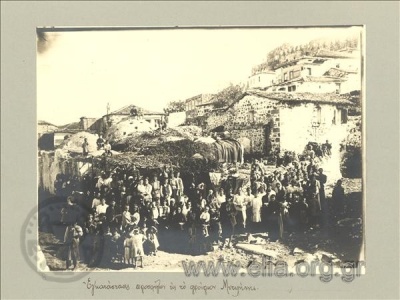
Refugees in Mytiline 1914-1918There is nothing new about refugees fleeing from war. At the beginning of World War I, more than 50,000 people arrived in Lesbos from the nearby shores of what is now Turkey. At the end of the war many of these refugees returned to Asia Minor, but after the Greek army invaded and was driven back, the Asia Minor Catastrophe of 1922 sent nearly a million refugees to Greece.

Faced with an ocean of refugees flooding the island, the local population was dumbfounded, fearful, and tied up in knots. They shut their doors and averted their eyes: “it was as if a dark cloud of death had descended on their minds, and so they felt nothing. They did not want to see anything or to hear anything that was happening on the other side of their doors.” The end of this story is well-known: with courage and a great will to live, the refugees put down roots and found their way.

In the first decade of the 21st century Lesbos again experienced a wave of refugees who came via Asia Minor. This group, mainly from Afghanistan, came to the island with the hope of putting war behind them. Most of them were held for a year or more in cramped conditions near the capital of Lesbos. This center was closed in 2009 due to the efforts of local volunteers who had alerted European groups to the problem.

But the Greek debt crisis soon followed. For several years, the flow of refugees lessened. When it began to increase at the end of 2012, volunteers from all over the island came together without any government support to provide help. Thousands of refugees were housed in a former campground for children’s holidays, where they were offered clean clothing, blankets, and food, as well as love and compassion.

Lesbos became known as an all-European model for solidarity. Resisting the xenophobia that was growing in Greece and in Europe as a whole, the citizens of Lesbos reached out to the refugees, refusing to listen to those who were promoting hate. The neo-fascist anti-immigrant party known as Golden Dawn gained less support in recent elections in Lesbos than in most of the rest of Greece.

refugee children in LesbosThe good will of the people of Lesbos is currently being tested by the wave of migrants now arriving on our shores. Estimates are that more than 20,000 refugees have arrived in our island alone in the first five months of 2015. There are no systems in place to deal with them. Yes, the European Community has dedicated resources to the “refugee problem,” but most of that has gone into patrolling the borders in hopes of stemming the flood of refugees—not to helping those who arrive on European shores.

Those who arrive in northern Lesbos are being welcomed and fed by volunteers, but the Coast Guard does not have the resources to transport them to the capital city for processing. Thus they are being told—mothers and babies among them—that they must walk 60 kilometers on mountainous roads in summer heat to reach their next destination.

Once they arrive in the capital city, the Coast Guard is not able to accept and process all of them, because the reception center cannot cope with the numbers. Thus, thousands of refugees sit in the harbor, hoping the authorities will arrest them and thus be forced to process them.

The residents of Lesbos are once again beginning to become afraid of the influx of refugees. In the touristic village of Molivos, at the same time that both locals and foreigners are helping the new arrivals, others are saying that “it spoils the vacations of tourists to be faced with seeing so many refugees.”

The situation seems to be more than government officials can cope with. The mayor of the island has been trying to find a place where the refugees can stay while they are being processed. The regional government has not yet lifted its hand. The Minister of Immigration visited the island, but no interventions followed. The European Community has yet to act. The UN and international aid groups have not arrived.

This state of affairs plays right into the hands of the racists and xenophobes. Rumors are spreading about the refugees—lies about diseases they are carrying and threats they pose to local and tourist women. People who in the past have been sympathetic to the refugees and the volunteers are getting fed up. Their pent up anger could lead to violence within our own communities or against the migrants.

At the same time more and more refugees are arriving, sleeping in the streets, relieving themselves without toilets–among them pregnant women, babies and old people, and even disabled individuals—all trying to save themselves from violence in their own countries.

Instead of fighting each other, it is time to get serious about finding a solution to a humanitarian crisis of vast proportions. Lesbos—along with other islands of the Aegean—must be declared an “Emergency Zone.” The Greek government, the European Community, and international organizations must provide resources.
We need arrival centers in northern Lesbos, where the immediate needs of the migrants can be met—including shelter from the sun, food, toilets, blankets, and a place to sleep if necessary. Processing centers adequate to the numbers of refugees need to be opened in the island’s capital. Transport to these centers must be provided. Trained Greek or EU officials must be sent to staff them.* We also need a plan for August when the ferryboats being used to transport the refugees to Athens will be full, and if no alternate plans are made, large numbers of migrants will be forced to stay on the streets or in already crowded centers in the worst of summer’s heat.

It is time for us to move forward–Greeks, Europeans, and migrants together–in the name of our common humanity and in concern for the lives of all human beings on our planet. We also need to work to end the wars and the violence that drives people from their homes and homelands.

*We have just learned that the EU is planning to send a team of officials to assist with processing the refugees.


michael bakas2Michael Bakas is a leader of the Green Party in Lesbos, Greece and has been working for many years with its committee on Human Rights. This call to action was originally published in longer form in Greek on June 16, 2015 on Apolotaria.gr., and was published in English in Green European Journal on June 19, 2015, the International Day of the Refugee.


timothy jay smithTimothy Jay Smith  has been working closely with volunteers in Molyvos and Mytilini to provide for the refugees. If you wish to contribute to these efforts, you can donate through Tim’s account at PayPal: kosmosfilms@gmail.com or send a personal check to Timothy Jay Smith in U.S. dollars or Euros (French banks only). Also see his “Mister, They’re Coming Anyway.”


Carol P. Christ leads the life-transforming Goddess Pilgrimage to Crete (facebook and twitter).  Carol’s books include She Who Changes and and Rebirth of the Goddess; with Judith Plaskow, the widely-used anthologies Womanspirit Rising and Weaving the Visions and forthcoming next year, Goddess and God in the World: Conversations in Embodied Theology. Explore Carol’s writing.

 

What’s Wrong with this Picture? by Elise M. Edwards

Elise EdwardsOn Monday, the picture was on my Facebook feed again: The picture of a girl lying face down in the grass under a police officer pressing his knee in her back. It was from the video of an African-American teenager being pinned to the ground by Eric Casebolt, the police officer in McKinney, Texas who was responding to calls about a pool party. When I saw the picture this time, it was in a screenshot with these words below it:

“Funny how a 14 year old bikini-clad black girl being publicly assaulted by an adult male does not accrue mainstream feminist outrage.” – Yohanna

The screenshot was taken of a post to Yohanna’s Twitter account (@maarnayeri). I don’t know her, but she troubled me.

If you haven’t seen the images we’re talking about, you can view the video here with a description of what is concurring or below from YouTube. I was reluctant to watch the video. It seems voyeuristic to view this young woman’s suffering and screaming. And, if I am honest with myself, it also seems useless. Viewing this from my computer screen, I’m in no position to help her. I hear her cries and it make me cry too. But I can’t push him off of her. When other teens tried to come to her defense, Casebolt pulled a gun on them and chased them. I don’t even have the power to get him fired from his position of authority immediately. No, we must have the investigations and inquiries and due process that seems so indiscriminately afforded to the privileged. Casebolt was put on administrative leave on Friday, and on Tuesday June 9, he resigned.

So how should I respond?

I had a conversation with one of my closest friends a couple days ago that provoked me to reflect on what to do when I’m conflicted about how to respond. Her background is in acting and theatre, and now she is a pastor and artistic director of a Christian church and arts initiative who believes in supporting arts, imagination and creativity. In our conversation about discerning the next steps in our lives, she was reminded of a book by Samuel Wells that proposes “theatrical improvisation as a model for Christian ethics.” That reminded me of books I’ve read that talk about musical improvisation or call-and-response as model for living, and some pieces I’ve written about that. Inspired by ethicists and theologians including Emilie M. Townes and H. Richard Niebuhr, I believe that to answer the question of how I should respond, I must first answer ‘What’s going on?” An improvised response or a fitting response is the response to what is already occurring. We must look at the situation critically to respond appropriately.

What’s going on in this video and the controversy surrounding it? I am certainly not an impartial or all-knowing observer, but here’s what I see:

  • A white man forcibly throws an unarmed, African-American teenager to the ground yelling “On your face!” We can see that she is unarmed because she is wearing a bikini.
  • The man is a police officer. He is upset that his authority is being challenged. Other officers are present and seem to be asking questions, but the violent one seems out of control and frantic, running around and yelling. He escalates the situation when he throws the girl to the sidewalk, which causes an outcry in the crowd.
  • As the video went viral, there were many protests and online statements against this violent event, but also statements of support for the officer. And sadly, I agree with Yohanna’s assessment. I may have missed it (and I hope I did), but I didn’t see a broad, mainstream feminist response against this violence.

I’m a feminist. I’m a black feminist. I’m a Christian feminist. I may not be a mainstream feminist (depending on your definition), but I’ll express my outrage anyway. It is sickening to watch his treatment of this teenage girl. This man’s mistreatment of a young black girl’s body is chilling. It is wrong and he should be held accountable for it.

I don’t think outrage is enough. But outrage does express that our moral sensibilities have been awakened and that we recognize that something profoundly wrong has occurred. In the face of comments that say she deserved this treatment, we as feminists must insist on the officer’s wrongdoing. “She had it coming.” “She incited him.” As feminists, we know that these kinds of statements are used in cases of rape and intimate partner violence to explain away violent actions and to shift the guilt from perpetrator to victim. The backlash against feminists and others who oppose these explanations argues that we ignore the victim’s responsibility or agency.

Bloggers and social media users know all too well the horrific statements that often appear in the comments section of online posts, videos, and articles. One comment I saw about the McKinney video says that the girl was “sassing back” at the police and that “if she wants to talk like adult then she’s going to be treated like an adult.” This kind of justification makes my blood boil! Sassing back is speaking up and saying something to an authority figure when you are expected to be silent.  While the term sassing back doesn’t exclusively apply to women and girls, it is nonetheless a phrase with gendered connotations. How many boys are called “sassy”? Is it that no one had the right to say anything to this officer running around yelling at black teen boys to sit on the ground, or is it that this black female should have kept quiet? Regardless, throwing an unarmed person to the sidewalk for supposedly saying something disrespectful is not justifiable behavior to adults or children.

I wish I knew more about what’s going on and how to respond to the violence I see in the world. I know these perennial questions subvert easy answers. I only have a partial response. I am responding with outrage and questioning and take this to my feminist community and into my spiritual practice. “What’s going on?” and “How should I respond?” are questions I ask God. I pray for justice. I pray for God’s presence in the outrage and in the investigations, and in the lives of those children who were violated.

Elise M. Edwards, PhD is a Lecturer in Christian Ethics at Baylor University and a graduate of Claremont Graduate University. She is also a registered architect in the State of Florida. Her interdisciplinary work examines issues of civic engagement and how beliefs and commitments are expressed publicly. As a black feminist, she primarily focuses on cultural expressions by, for, and about women and marginalized communities. Follow her on twitter, google+ or academia.edu.

The Religiosity of Silence by John Erickson

In a repetitive culture of abuse and silence, is it really shocking to find out that an individual who preached such hate and discontent for others actually perpetuated other forms of heinous abuse against others?

John Erickson, sports, coming out.In 2013, I wrote an article about the then latest reality TV scandal featuring A&E’s Duck Dynasty’s Phil Robertson and his rampant foot-in-mouth disease that caused him to express, in the pages of GQ, his true distaste for the LGBT community and specifically for the sexual proclivities of gay men.

Now, two years later in another reality TV show, TLC’s ’19 Kids and Counting’, it isn’t star Josh Duggar’s anti-LGBT statements getting him into trouble but rather his sexual assault and molestation of 5 girls, including two of his sisters. However, while the Internet explodes with attacks against Josh Duggar and his Quiverfull background, it is vital to remember that the silence that he and his family inflicted upon his victims since 2006 has not only been ongoing since then but is also being reemphasized today with each keystroke focusing on the assailant rather than the victims. Continue reading “The Religiosity of Silence by John Erickson”

The Evil Powers are Well at Work and I’ve Lost My Spirit… by Valentina Khan

Valentina KhanIt has been over a year now that I haven’t been actively a part of my interfaith community. I find that especially odd since I graduated last May from the Claremont School of Theology with a Masters in Religious Leadership. I had hopes that I would be empowered by new education to go out and do more for my community, be invited to be a guest speaker at local houses of worship, or sit on panels; all the things I used to do more frequently and now have all stopped.
I am mostly to blame. Although my personal life has definitely changed with the birth of my son, two new businesses for my husband and me, and the ongoing pressure I put on myself to study for the bar exam any free moment I get (I really don’t have any leisure time to study, but thinking about it takes a lot of energy!), and now expecting my second child, I stopped attending my monthly meetings– whether it be with the Interfaith Youth Council of Orange County, the Muslim-Jewish forum of Los Angeles, or my own beloved organization “I Am Jerusalem.”

Continue reading “The Evil Powers are Well at Work and I’ve Lost My Spirit… by Valentina Khan”

Traumatic Narrative on the Screen: Is there a Grey Area? by Stephanie Arel

Arel - AAUW HeadshotOn May 8, Fifty Shades of Grey became available in DVD format. Marking its release, this post reflects on the mass consumer consumption of this provocative film and the abuse inherent in its script previously discussed here by Michele Stopera Freyhauf. Grossing $500 million dollars at the box office, Fifty Shades will most certainly sell as an unedited DVD. While some self-proclaimed feminists like Emilie Spiegel commend the story, feminists and conservatives slam it, often pressing viewers to reject the film and deny it financial support. Nonetheless, The Fifty Shade of Grey franchise will most probably have a sequel in 2016, continuing to amass hundreds of millions of dollars.

Concerns about the book and film include how the storyline presents a romantic ideal for women wrapped surreptitiously in abuse. Peering deeper at the narrative reveals the potential for conflicted emotional responses including feelings of guilt and shame, revulsion and interest, disgust and seduction. Confronted with the writing of this post, I responded in turn, torn between whether to watch the film or not. While wanting to deny the franchise any monetary gain, I also wanted to both know what I was rejecting and what, if any, value existed in viewing. Continue reading “Traumatic Narrative on the Screen: Is there a Grey Area? by Stephanie Arel”

What’s God Got To Do With It? by Esther Nelson

esther-nelson

We’re no longer shocked, albeit still horrified and sickened, by the images of violence that come at us daily from all around the globe.  I’ve come to expect it.  Beheadings.  Burning people in cages.  Shootings–“execution-style.”  Bombings of all kinds–including drones and suicide.  Perpetrators of such violent acts often claim God to be the motivator for their violent deeds.

Responses to that claim vary.  Some people assure themselves that they were right all along–the God that motivates one to kill and destroy is indeed a God that demands such from “his” followers.  “I knew all along their God to be a God of hate and violence–that’s why they do the things they do.”  Other people insist that “God would never require a person to engage in destructive acts–not the ‘true’ God anyways.”  Sometimes a proselytizing effort gets under way to inform people about this “true” God.

Continue reading “What’s God Got To Do With It? by Esther Nelson”

The Difficult Truth: “Terrorists” are also Human by Hanadi Riyad

Hanadi Riyad cropped

This past month Jordan has witnessed a lot of grief, as well as a certain shift in politics and popular opinion regarding Da’esh and the government’s position towards it. On 3 Feb, Da’esh released a video of the immolation of the Jordanian air force pilot Muath al-Kasasbeh.

The ensuing shock, grief, and outrage have only just started to ebb. Immediately after the video release, government officials started issuing statements promising “revenge,” appealing to a largely tribal society where values of revenge and “honor” are defining traits. In a matter of a few hours, a mostly male mass hysteria took hold and demands for “revenge” dominated the streets and the local media.

Chants and slogans about the Jordanian people being “all men” could be heard and seen everywhere including on social media. The only “emotion” present was rage, the only masculine emotion. Hardly any women were present in any of the rallies on that day or after. On social media, Da’esh combatants were called “women” for trying to intimidate the Jordanian forces so as not to have to confront them as “men” would and, conversely, “monsters” and “animals.” Some statements called for the killing of Da’esh “women and children” as well.

Continue reading “The Difficult Truth: “Terrorists” are also Human by Hanadi Riyad”

Role Play: In Search of the Authenticity of My Being by Elise Edwards

Elise Edwards“I stood in the authenticity of my being: Black, preacher, Baptist, woman. For the same God who made me a preacher made me a woman, and I am convinced that God was not confused on either account.”
– Reverend Dr. Prathia Hall

These words came across my Facebook feed on Sunday in celebration of International Women’s Day. Reconciling Ministries Network put the statement on its Facebook page, along with a picture of Prathia Hall preaching from the pulpit, in remembrance and honor of women leaders who contributed to the US Civil Rights Movement. This past Sunday, March 8, when the quote was displayed, marked the 50th anniversary of Selma’s Bloody Sunday. Prathia Hall was a leader in the Student Non-Violent Coordinating Committee (SNCC) and one of the activists on the Edmund Pettus Bridge who were attacked as they began to march from Selma to Montgomery, Alabama. Later in her life, she became an ordained minister, professor, and womanist theologian.

For me, this past weekend was about remembrance through many forms. While there were many events commemorating Selma and the important events that unfolded there 50 years ago, my family and I were focused on a more intimate form of remembrance. On Saturday, we held a dinner and informal memorial service for my godfather who passed away last month. I got the news of his death on a day when I’d been doing some deep soul-searching and reflecting about the image I present to the world and its correspondence with who I am and desire to be. Just a few days prior, I’d spoken to my godfather about his health and subsequently, I had been questioning how I might be more connected to him. We lived several states apart, and I wondered how I could be a good goddaughter to him despite the distance. Those questions are left unanswered in the wake of his death. Continue reading “Role Play: In Search of the Authenticity of My Being by Elise Edwards”

Being Scared: Fear and Authenticity by Ivy Helman

meblogMy partner is a lawyer who works with asylum seekers and other immigrants here in the Czech Republic (ČR). She’s amazing at her job and I’m constantly in awe of her passion and commitment along with her righteous anger at systematic injustices. In fact just last week, her workplace, together with a consortium of other immigration organizations in the ČR, helped organize a demonstration in the center of Prague to protest the Czech Republic’s refusal to admit Syrian children and their families into the country. She invited me to attend the event with her. I went.

It was my first time attending a public demonstration in Europe. It was moving to see many of her co-workers there and inspiring to listen to the passionate speeches against xenophobia, Islamophobia, racism, the plight of the Roma people as well as the need to come together and welcome diversity. In addition, there were signs in Czech, German and English saying “No One is Illegal,” “End Xenophobia,” “Do Syrian Children Have to Wait for their (Nicholas) Winton?” “I want to have a Syrian Friend!” and “Refugees Welcome!” I wanted to hold each one of those signs! Continue reading “Being Scared: Fear and Authenticity by Ivy Helman”