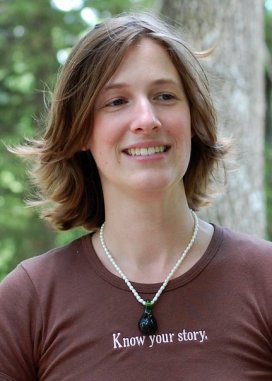
 “Human connections are deeply nurtured in the field of shared story.” –Jean Houston
“The universe of made of stories, not of atoms.” –Muriel Rukeyser
This month I went searching for a quote for one of my Red Tent Initiation students. She had shared some powerful reflections about the vulnerability required to reveal our personal stories—there can be a lot of risk, sometimes shame, and more, bound up in our ability to uncover ourselves and speak our truth. What I wanted to communicate with her was the idea that in sharing our stories, including the painful pieces, we free other women to do the same. Our courage to be vulnerable, to be naked, to be flawed, to experiment with ideas, concepts, or ways of being gives permission for other people to do the same.
In 2012, I went to a dancing workshop at Gaea Goddess Gathering. The facilitator mentioned that when facilitating ritual, you have to be willing to look a little ridiculous yourself, have to be willing to risk going a little “over the top” yourself, because in so doing you liberate the other participants—“if she can take that risk and look a little goofy doing so, maybe it is okay for me to do it too.”
After a lot of digging around, I found the quote! I should have known it was from one of my favorite authors and sister FAR blogger, Carol Christ, who said:
“When one woman puts her experiences into words, another woman who has kept silent, afraid of what others will think, can find validation. And when the second woman says aloud, ‘yes, that was my experience too,’ the first woman loses some of her fear.”
This is part of what makes Red Tent Circles so powerful. When women are willing to dig into the questions, activities, and processes, to turn them over, to explore how they work in their own lives…they lose some of the fear and they encourage others to lose their fear too. Continue reading “Story Woman by Molly”


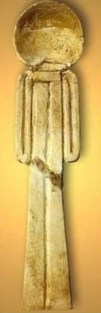 Over the years I have seen the image of the amulet called the Knot of Isis but in all honesty, never paid it much attention. I am on the organizing committee for our annual Goddess Festival here in Austin this year and we have chosen Isis as our Goddess to honor. The intent is to reclaim the Sacred Name of Isis and celebrate Her power, especially for women.
 Goddess, explains:
 I’m going to do something I’d never thought I’d do: fill your newsfeed with yet another article pertaining to the 2016 United States Presidential election and yes, I’m going to talk about former Secretary of State Hillary Clinton (hint: I’m emphatically supporting her and I’m unapologetic about it.)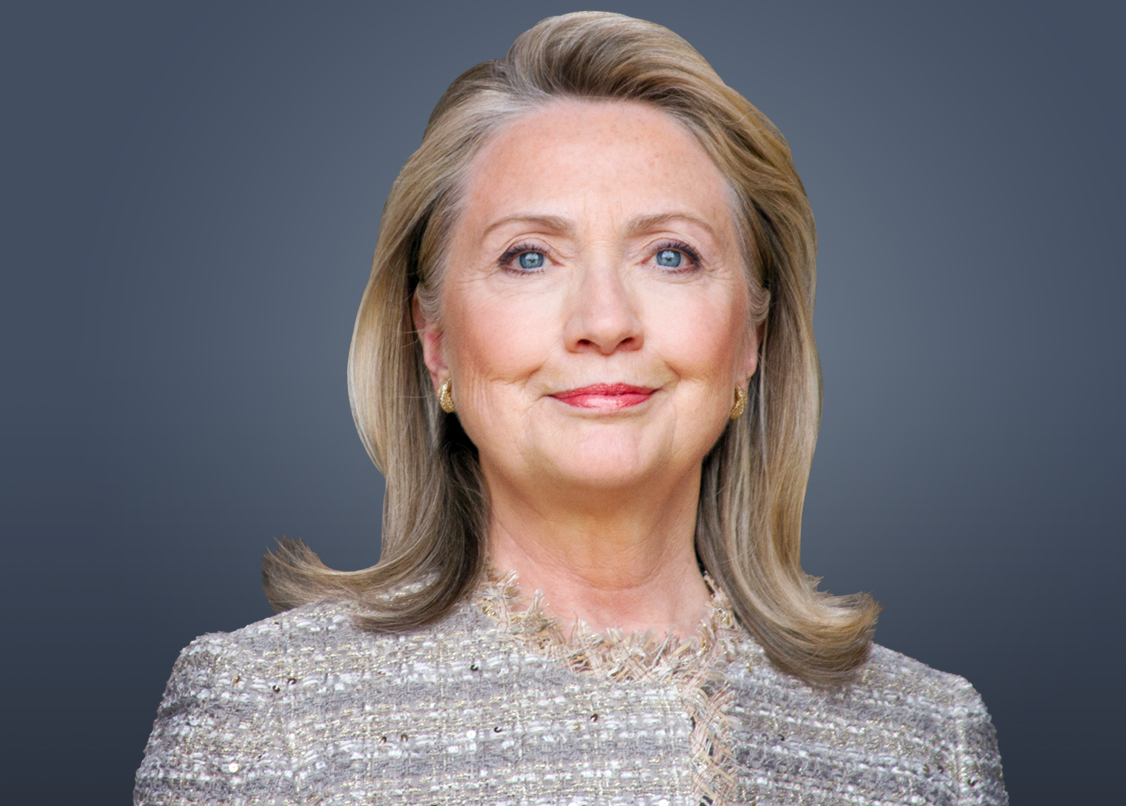
 I have never understood the logic behind sexism. Why is half (or so) of the human race better than the other half? Of course, patriarchy and patriarchal religious traditions offer various seemingly logical reasons, sometimes even divine explanations for the inequality between the sexes. Still, the –isms of patriarchy, whatever their “reasons” or perhaps better excuses, puzzle me.
 She appeared on a hill on December 9, 1531. She spoke to Juan Diego in his native tongue of Nahuatl; the language of the Aztecas. She asked for a church to be built at that very site in honor of her, the Virgin Mary. Juan Diego took the request to the local priest, but his story was not believed. On December 12, following further instructions from La Virgen, Juan Diego was able to find and pick roses not native to Mexico. He rolled them up in his tilma and returned to the priest. When he unrolled his tilma to present the roses, there on the tilma was the image of La Virgen de Guadalupe; she was as dark as the natives themselves.
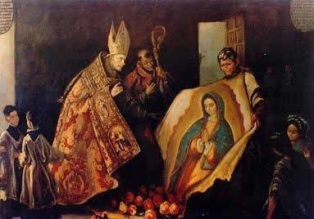 La Virgen de Guadalupe
 When Flint, Michigan’s water supply was poisoned by lead through a policy decision— as has been widely reported, especially by
  A friend of mine once commented that my feminism is evident from the moment you step into my house. In reference to all the female images around my house, she noted that my space reflected a different way of being in the world. I had never thought of it actually, it was not a specifically conscious choice I made to be woman-centered in the books and artwork I displayed, I simply put up what I loved. But once she pointed that out to me, I appreciated the point it raised about what we surround ourselves with and what it reflects about the world we want to live in and help create. What do our spaces evoke for us? for others? Do they help spark the imagination, and if so, what toward?


 Feminism and Religion