 I have begun to call my mother the “Reaper,” which I understand could be to some mums sort of insulting. Images of the Reaper are typically not terribly flattering, you know, with all that sunken skin and stringy black cloth flying around. My mom looks nothing like that, by the way. In fact, she has at all stages of her life borne a striking resemblance to Elizabeth Taylor, causing many a stranger to run up to her over the years, exclaiming, “Oh my goodness, do you know who you look like?” And, let me add, often much to the consternation of those in Mom’s company, such as, well– me, for example– when I was trying to deliver my first baby and the attending nurse ignored me in order to chat with my mom about her resemblances. But, I digress here.
Mom is the Reaper because she is at that point in her life when she rather unabashedly tells it like it is, “reaps truth” as I have come to think of it. Though she may look all violet eyes and white diamonds, she is beyond mincing words.
Is this a feature of aging? I once read that the decreased estrogen and increased testosterone levels in post-menopausal women may contribute to a personality shift where women are more inclined to report on what they are thinking. This may be a factor, but I would find it likelier that many women, menopausal or not, simply get to a point when they have seen/heard/experienced/endured enough that they find little merit in putting up fronts, regardless of hormonal predisposition.
Plus, I am wildly unimpressed by some of the material out there on menopause. It seems like a lot of conflated nonsense that correlates every aspect of female sexual maturation with hormonal imbalance and impending doom. I recently read a book by an “expert” named Dr. Miriam Stoppard – great last name for a menopause specialist, right? – that actually gave medical advice alongside hints about make-up tricks, relationship management tools for your depressed mid-life spouse, and what girdles to wear to help hold up your sagging flesh.
It is interesting that “women who speak their minds” are even an object of contemporary cultural commentary at all. I mean, would there be any talk at all about males who speak their minds? Young girls who speak their minds are cast as feminists, strong-willed, scary to boys, unfeminine, and so on. Of course, the embedded androcentric assumption is that they are doing something contrary to normative female behavior. Older women who “speak their minds” are cast as rude hags and crones, spreading around their venom and disappointment, especially if they swear. This blog on post-divorce dating, kind of says it all:


 Both my sisters claim to have no regrets about their lives. I do. It’s not so much that I regret specific things that happened to me in my life or even some of the particular choices I made although both the “happenings” and “choices” are a result of a larger regret. Nor do I spend much time going over it all in my mind. I don’t believe that listing all the “if onlys” and ruminating about “wrong turns” is productive.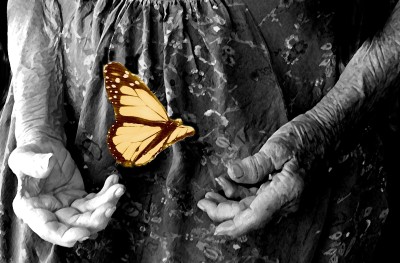

 At times, being ignored, erased, and made invisible, is more hurtful than open debate and disagreement. Such silencing and marginalization render the energy, activism, and work of so many people mute and, ultimately, they do not serve the communities and society we are attempting to change. In what follows I insist on uplifting and naming some of the radical Muslim activists and advocates for gender justice I saw ignored in a recent Muslim community event.
 “Human connections are deeply nurtured in the field of shared story.” –Jean Houston
 One of my favourite tasks is translating works from various Indian languages into English. I developed a love for this while enrolled in a graduate seminar on translation theory. The challenge of it all was mind-boggling – how do I reduce the jaggedness of despair running within the depths of someone’s soul into two-dimensional, Times New Roman, 12-point font? How do I convey an intangible phenomenon such as a believer’s union with god without losing the intensity of his or her experience? I loved the exercises, but it is only now I realize how much the concept of translation had also been intertwined with my own fiber of being.
 Society has created this vortex of fear surrounding women aging. Yet, as I turn 30, I am only feeling awe. Awe over everything I accomplished in my twenties and awe in all the things yet to be realized in my thirties. The interesting thing is how other people are experiencing me turning thirty. Some are reminiscent of their twenties or how their experienced their thirties. Others start to bring up certain things which are apparently still lacking in my life. The biggest ones are a husband and children. They look at my eve of thirty-hood as the clock ticking away on me finding love and most definitely on my biological clock.
 Mormon feminists experience what most
  Freshly cleansed, I stood naked in front of a foggy full-length mirror. I had just taken my first hot, indoor shower in nearly two months. I’ve been
  Feminism and Religion
