Ever since the election of You-Know-Who, I have been doing a lot of creative writing.
Ever since the election of You-Know-Who, I have been doing a lot of creative writing. Unlike academic publications, policy reports, or my dissertation, creative writing, much like my mentor Dr. Marie Cartier has written about, provided me with a needed escape from a world that seems to grow darker with each passing day. In college, I served as Poetry Editor for the Wisconsin Review, the oldest literary journal in Wisconsin. Continue reading “What I Believe (Post-2016) by John Erickson”
This summer I traveled quite a lot domestically. While I was in airports, on trains, waiting in lines, and going about my summer I kept coming across certain patterns and experiences which were becoming all too common and too significant to ignore; a mixture of overt and subtle sexism.
First it started out with one of my airport shuttle drivers wondering why I was traveling alone. While there is always room for small talk, I was struck with how – if I was male – that question would not have been asked. It reached the pinnacle when I was told by an older man to give up my seat for an elderly woman so he didn’t have to give up his seat – this was after he had stared at me for over 10 minutes when I first sat down using his eyes to voice his displeasure over me taking up two seats. Regardless of the fact that he, himself, was taking up 3.
“In the past, for reasons I try to explain, I’ve often felt I had to be careful in public, like I was up on a wire without a net. Now I’m letting my guard down.” —Hillary Rodham Clinton, from the introduction of What Happened
I just finished reading Secretary Hillary Clinton’s new book, What Happened. It is currently Number One on Amazon, outselling even Stephen King’s It and Margaret Atwood’s The Handmaid’s Taleat this moment. Put another way- hardcover sales of the book are the highest for any non-fiction book in the past five years.
I’ve written several times during the past year regarding Hillary Clinton and the election of 2016. About the real meaning of “sanctity of life”—living a full life and voting for a candidate who believed in that for everyone, including women’s right to choose and also about the process of those trying to silence her/ shame her/ not listen to her and how she refused to be silenced.
Devastated after the election I wrote a post here on FAR. And months afterward, I wrote how many of us were not “over it” and were not “ready to play nice.” We, along with Secretary Clinton, are not “ready to play nice” still. And probably will not ever be. We may be willing to (as I will speak of later) lead with love and kindness—but that is different from “playing nice.”
I am so frustrated that we are still fighting to affirm women’s place in leadership. I’ve been thinking about this struggle in the context of church ministries (especially preaching) and social activism, seeing a stark contrast between the way institutional churches and universities promote and subvert women’s authority and the ways movements like Black Lives Matter do.
Particularly, I’ve been struck by the ways that more radical movements employ language and practices that are based in spirit more than hierarchical authority. I have found a theme emphasizing equality in humanity’s access to spirit in both historical and contemporary movements and writings about religious experience. I’m certainly not the first one to notice or discuss how appeals to Spirit have empowered those excluded from dominant systems of power to challenge constrictive social structures, but I would like to share how this dynamic has become more visible to me so that, together, we might find encouragement, inspiration, and food for thought.
These days I find it hard to write – I feel plagued with negativity, and the news and violence and overall hateful actions of others have weighed deeply on my soul. While I personally am ready to celebrate a milestone birthday, am another year closer to completing my Ph.D., witnessed the graduation of one daughter, experienced the independence of another, a milestone for my twins, as well as my father’s successful completing of another orbit around the sun after a year plagued with health issues – rather than joy, my heart is filled with pain – pain of the election, pain of the failure of our political system’s supposed checks and balances, pain of violence and bigotry like that enacted in Charlottesville, pain of terror attacks in England, Spain, Finland, France, etc. Where we ought to be united, we are divided. Thus, I write from a place of remembering – a place of strength – a place to say I count (as you count) – and I begin this blog in the voice of Enheduanna, where she becomes the first voice in history to reveal herself – her name, by simply stating – – “I AM.” Continue reading “In the Words of the First Poet and Historian: “I am” by Michele Stopera Freyhauf”
You may have seen the viral video of Congressional Representative Maxine Waters’ demands for “Reclaiming my time!” Video was taken during a proceeding in which Representative Waters is questioning Treasury Secretary Steven Mnuchin, who responds with long-winded answers and indirect statements. Ms. Waters appears annoyed, and she is not interested in flattery. She wants a direct response to her question. When she does not get it, she appeals to protocol, which allows her to “reclaim” the time allotted to her (intentionally) wasted by a man who wants to dodge her questions.
The video was very popular on my social media feeds. I know of preachers who used “Reclaiming my Time” in their sermons the following Sunday. There were memes, of course. There was even another viral video of Mykal Kilgore singing his gospel composition of Waters’ words. He and Waters appeared on a TV show soon after.
It’s fairly obvious why this video–and the sentiment behind it–struck such a chord with so many people. We wish we could reclaim our time in situations where we are moving forward with a purpose, only to be met with delays and roadblocks from those who want to deter us. Sometimes, these delays are unintentional. But too often, they are strategic attempts to wear us down, distract us, and redirect our energy away from our goal. Ms. Waters wasn’t having it. She called out the delay tactics and held firm to what was rightfully hers. Her time.
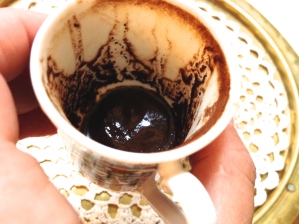
In my lifetime of researching women’s ritual dances in Greece and the Balkans, I have often come across related practices of divination or healing. One of these is the custom of coffee divination, the art of interpreting patterns in the fine grounds left in the cup after drinking Greek or Turkish coffee. The practice is found in Greece, the Balkans, Asia Minor, the Caucasus and the Middle East, and all over the world where people from these regions have emigrated. It is practiced mainly by women, particularly older women.[1]
Kafemanteía is related to much older techniques of divination and ritual, including the libations or liquid offerings which were an integral part of prayer in ancient Greece.[2] Sometimes, after the libation was poured, ‘the empty cup was examined for signs of oracle.’[3] The Old Testament mentions Joseph’s skill in divination by use of a cup,[4] while Istustaya and Papaya, the spinning and weaving pre-Hittite goddesses of destiny, divined using bowls of liquid akin to vessels used for scrying in many cultures.[5] The humble coffee cup can thus be seen as belonging to a long tradition of ceremonial vessels used in divination.[6]
Female figure in stance of invocation, with miniature votive shrines, pillars and cups or bowls for offerings. 5000 BCE, Netafim spring, Eilat, Israel.
In antiquity, Joan Breton Connelly makes clear, ‘religious office presented the one arena in which Greek women assumed roles equal and comparable to those of men,’ a fact which despite abundant evidence ‘has, until recently, been ignored by modern commentators or, worse yet, denied’.[7] In ancient Germanic, Celtic, Canaanite, Mesopotamian, and Anatolian cultures, ‘it was primarily women who were regarded as able to interpret signs and omens and to foretell the future’.[8]
Women who read cups today tend to view their ability either as a divine gift or as a talent learned or inherited from their mother, grandmother or aunt. The concept of inherited oracular or shamanic talent is an ancient one, according to Barbara Tedlock, who suggests that intuition as an ‘unconscious cognitive process’ may be ‘genetically determined in its structure and function.’[9]
In her 2005 book The Woman in the Shaman’s Body, Tedlock describes what she calls ‘the primacy of women in shamanism’, stating that ‘women’s bodies and minds are particularly suited to tap into the power of the transcendental.’[10] Her assertions have important implications for the discussion of kafemanteía as a women’s art, but also reignite feminist controversy about biological ‘essentialism’ and ways that theories about differences between the sexes have been used to justify oppression based on gender.
As an in-depth discussion of essentialism is not possible here, I highly recommend Carol P. Christ’s excellent posts on the topic for those who wish to think more deeply about these questions. As Christ shows, the assumption that ‘if there are sex differences they must inevitably determine behaviour’ is a flawed syllogism. Christ invites us to discuss these issues in a more open-minded way: ‘I think our feminist conversations would be richer if we could find ways to talk about sex differences without immediately jumping to the conclusion that it is regressive or anti-feminist to do so.’[11] In our discussion of kafemanteía, I suggest we remain open to the possibility that neurological and biological differences may have significance, though not in a deterministic way. Men can also be readers of coffee grounds and tea leaves, but the fact remains that most readers of cups are women. Why might this be?
The social component of kafemanteía is very important, offering comfort and company to both reader and querent. According to neurologist Louann Brizendine, women have both a greater need and greater capacity for the positive emotional interaction of this social relationship. Neurologically, the female brain contains more mirror neurons than the male brain, giving women an advantage in establishing emotional connection and triggering production of the anti-stress hormone oxytocin.[12] Rather than ‘fight or flight,’ female stress responses follow a behavioural pattern known as ‘tend and befriend,’ based on the maintenance of social networks that increase bonding and decrease stress.
Reading the patterns
The intuitive response when reading the patterns in a cup often comes from what we call ‘gut feelings,’ which, as neuroscientific research reveals, ‘are not just free-floating emotional states but actual physical sensations that convey meaning to certain areas in the brain.’‘ [13] As Brizendine shows, areas of the brain that track gut feelings are larger, more sensitive, and more active in women’s brains; thus ‘the relationship between a woman’s gut feelings and her intuitive hunches is grounded in biology.’ [14] A further element to consider is the fact that neurological activity in most men is left-brain dominant, while women’s brain function tends towards a more even balance between left- and right-hemisphere activity.
Finally, Barbara Tedlock presents fascinating information on protein and collagen matrices embedded in connective tissues in the human body, ‘composed of liquid crystals and biopolymers that behave as electronic conductors, storing large amounts of cognitive information.’ [15] Given that these matrices can be seen as the biological structure in which ‘somatic consciousness’ resides, I would venture to ask whether the greater proportion of fat cells in women’s bodies may enable greater cellular conductivity for storing and transmitting intuitive and cognitive information. I would love to see further research in connection with the biological tendency of women to accumulate more fat cells post-menopause, and the image of the older wise woman or crone considered in many cultures to have oracular or divinatory powers.
I have had my cup read many times on my travels, and have often been astonished by the accuracy of information offered by the reader, including precise personal details which she could not have possibly known. This remains a mystery. Although I support further study into kafemanteía, I acknowledge that in essence it appears to defy conclusive rational explanation and therefore may remain permanently impenetrable to the scholarly mind. Perhaps all we can do is to simply increase our awareness of, and respect for, this living divinatory art, and the older women who keep it alive worldwide. I would be interested to hear from others about their experiences!
This post is drawn from a much longer article I have recently written, ‘Kafemanteía: coffee divination as women’s prophetic art in ancient and modern times.’ It appears in the current issue of Walking the Worlds 3:2 (2017): 52-68, available from www.walkingtheworlds.com
Laura Shannon has been researching and teaching traditional women’s ritual dances since 1987. She is considered one of the ‘grandmothers’ of the worldwide Sacred / Circle Dance movement and gives workshops regularly in over twenty countries worldwide. Laura holds an honours degree in Intercultural Studies (1986) and a diploma in Dance Movement Therapy (1990). She has also dedicated much time to primary research in Balkan and Greek villages, learning songs, dances, rituals and textile patterns which have been passed down for many generations, and which embody an age-old worldview of sustainability, community, and reverence for the earth. Laura’s essay ‘Women’s Ritual Dances: An Ancient Source of Healing in Our Times’, was published in Dancing on the Earth. Laura lives partly in Greece and partly in the Findhorn ecological community in Scotland
References:
Barber, Elizabeth Wayland. The Dancing Goddesses. New York: Norton, 2013.
Brizendine, Louann. The Female Brain. New York: Morgan Road Books, 2006.
Christ, Carol P. ‘What If There Are Sex Differences But Biology Is Not Destiny?’ FAR February 16, 2015.
Christ, Carol P. ‘Has the Vatican Discovered that Women Should Be Running the World?’ FAR February 9, 2015.
Connelly, Joan Breton. Portrait of a Priestess. Princeton: Princeton University Press, 2007.
Green, Marian. “Wise Women Counsellors: Popular Methods of Divination.” In World Atlas of Divination, edited by John Matthews, 81-87. Boston: Little, Brown, 1992.
Karcher, Stephen. The Illustrated Encyclopedia of Divination. Shaftesbury, Dorset: Element, 1997.
Miller, Guldjin. The Secret Art of Coffee Reading. Australia: Guldjin Miller, 2015.
Seremetakis, C. Nadia. The Last Word. Chicago: The University of Chicago Press, 1991.
Shannon, L. ‘Kafemanteía: coffee divination as women’s prophetic art in ancient and modern times.’ Walking the Worlds 3:2 (2017): 52-68
Stone, Merlin. “Inner Voice: Intuition.” In Merlin Stone Remembered, edited by David B. Axelrod, Carol F. Thomas, and Lenny Schneir. Woodbury, MN: Llewellyn Books, 2014.
Tedlock, Barbara. The Woman in the Shaman’s Body. New York: Bantam Dell, 2005.
Tedlock, Barbara. “Toward a Theory of Divinatory Practice.” Anthropology of Consciousness 17:2 (2006): 62-77.
Walker, Charles. The Encyclopedia of the Occult. New York: Crescent Books, 1995.
Winkelman, Michael. Shamanism: A Neural Ecology of Consciousness and Healing. Westport, Conn.: Bergin and Garvey, 2000: 243-44. Quoted in Tedlock (2006):70.
Every summer in the US, movie theatres show their newest big budget films, hoping to draw in large audiences. While I appreciate an air-conditioned theatre on a hot day, I love the opportunity to go to an outdoor movie screening. These screenings are usually community-oriented opportunities for social gathering. In my previous post, I talked about Moana, a Disney film I saw at an outdoor screening earlier this summer. I enjoyed watching this movie with my friends and their families and I was delighted by the story itself. It has several religious and spiritual themes and strong female characters. Previously, I spoke of the significance of myths in this movie. Today, I’m focused on depictions of nature in Moana and their remarkable beauty.
Many feminist and womanist theologians and religion scholars have raised concerns about the interrelated dominations of women and nature, as well as the disproportionate hardships women and children are exposed to with increasing climate change and environmental degradation. Our changing environment affects all life on the planet, but it is the people who are most vulnerable (physically, economically, politically) who at most at risk. Obviously, animals and plants are endangered, too. Ethicists like me are interested in finding ways to address these concerns because we are committed the preservation of life. As feminists, there’s more to it, though. We recognize the way nature itself is often feminized (“Mother Nature”), which makes it even more troubling when it is cultivated without respect for the wellbeing of existing ecosystems and the life forces dependent upon them.
June 2, 2017 saw a boost in the revolution led by a former Israeli soldier turned model and actor in the iconic role of Wonder Woman, a role that has been around for over 76 years. The movie has shattered projections of first weekend profits as well as the notion that no female directed, female super hero movie could bring in as much as its male counterparts. This movie has created a fervor of positive female representation on the big screen and more importantly a resurgence for continuing the fight against oppression, racism, and sexism.
“When I dare to be powerful–to use my strength in the service of my vision–then it becomes less and less important whether I am afraid.”
–Audre Lorde
“The purpose of life is not to maintain personal comfort; it’s to grow the soul.”
–Christina Baldwin
When teaching childbirth classes, I would speak to my clients about shifting the common fear-based “what if” cultural dialog of birth to “positive” anticipation rather than fears, encouraging them to ask themselves questions like: “what if I give birth and it is one of the most powerful, thrilling moments of my life?” While I stand by this practice, I also think about the what ifs that crawl out of our dark places and lodge in our hearts. The what ifs that snake around the edges of our consciousness in the early hours of the morning. The what ifs we try to push down, down, down and away. The what ifs that stalk us. The what ifs so very awful that we fear in giving voice to them, we might give life to them as well.
We may feel guilty, ashamed, negative, and apologetic about our deepest “what ifs.” We worry that if we speak of them, they might come true. We worry that in voicing them, we might make ourselves, our families, our communities, our work, or philosophies, our faiths, or whatever look bad. We want to be positive. We want to be blissfully empowered, confident, and courageous. And, guess what? We are. Sometimes that courage comes from looking the “what ifs” right in the eye. Sometimes it comes from living through them. My most powerful gift from my pregnancy with my daughter, my pregnancy-after-loss baby, was to watch myself feel the fear and do it anyway. I was brave. And, it changed me to learn that.
What if we can learn more from our shadows than we ever thought possible? There is power in thinking what if I can’t do this and then discovering that you CAN.


 This summer I traveled quite a lot domestically. While I was in airports, on trains, waiting in lines, and going about my summer I kept coming across certain patterns and experiences which were becoming all too common and too significant to ignore; a mixture of overt and subtle sexism.
 These days I find it hard to write – I feel plagued with negativity, and the news and violence and overall hateful actions of others have weighed deeply on my soul. While I personally am ready to celebrate a milestone birthday, am another year closer to completing my Ph.D., witnessed the graduation of one daughter, experienced the independence of another, a milestone for my twins, as well as my father’s successful completing of another orbit around the sun after a year plagued with health issues – rather than joy, my heart is filled with pain – pain of the election, pain of the failure of our political system’s supposed checks and balances, pain of violence and bigotry like that enacted in Charlottesville, pain of terror attacks in England, Spain, Finland, France, etc. Where we ought to be united, we are divided. Thus, I write from a place of remembering – a place of strength – a place to say I count (as you count) – and I begin this blog in the voice of Enheduanna, where she becomes the first voice in history to reveal herself – her name, by simply stating – – “I AM.”


 June 2, 2017 saw a boost in the revolution led by a former Israeli soldier turned model and actor in the iconic role of Wonder Woman, a role that has been around for over 76 years. The movie has shattered projections of first weekend profits as well as the notion that no female directed, female super hero movie could bring in as much as its male counterparts. This movie has created a fervor of positive female representation on the big screen and more importantly a resurgence for continuing the fight against oppression, racism, and sexism.
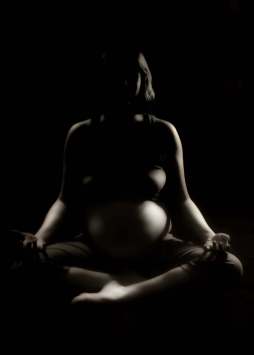 cultural dialog of birth to “positive” anticipation rather than fears, encouraging them to ask themselves questions like: “what if I give birth and it is one of the most powerful, thrilling moments of my life?” While I stand by this practice, I also think about the what ifs that crawl out of our dark places and lodge in our hearts. The what ifs that snake around the edges of our consciousness in the early hours of the morning. The what ifs we try to push down, down, down and away. The what ifs that stalk us. The what ifs so very awful that we fear in giving voice to them, we might give life to them as well.
