FAR is on Hiatus. See you in September.

Merrows: The Enchanting Mermaids of Celtic Mythology by Judith Shaw

Mermaids have captivated our imaginations worldwide for thousands of years. Across cultures, mermaids are depicted in differing ways—as a dangerous seductresses like the Greek sirens, or as one who could grant immortality like the Japanese ningyo.  

Celtic Ireland, with its abundance of fairies and magical beings has its own kind of mermaid, the Merrow. This term derives from the Gaelic word, “murúch,” which translates as “sea maiden.”

A Merrow‘s Longing by Judith Shaw, gouache on paper, 12″x18″
Continue reading “Merrows: The Enchanting Mermaids of Celtic Mythology by Judith Shaw”

The Beat of Your Own Drum by Sophie Messager – Book Review by Judith Maeryam Wouk

Pick up a drum and start your unique journey with this sacred tool; there is no one right path.  The drum can help women hear their inner voice, access their own wisdom, reclaim their power, and heal. The drum in its simplicity offers a direct link to our deepest selves. 

That is the message of this profoundly personal saga, told through the stories of Sophie Messager and others.  She recounts her own transition from scientist to birth doula to journey guide for women in life transition, through reiki and a diagnosis of ADHD, growing into her identity shift from outer- to inner-centered wisdom.  Her personal practice now includes weekly drumming at dawn in a woodland with two friends and monthly drum circles.      

Continue reading “The Beat of Your Own Drum by Sophie Messager – Book Review by Judith Maeryam Wouk”

Offerings to the Labyrinth on Papoura Hill, excerpt from the novel by Sylvia V. Linsteadt

Sylvia’s discussion of Papoura Hill was posted yesterday; read it here.

I have so many words I want to pour out of my vessel of milk and honey upon Papoura Hill, on the big scar in Crete’s earth where the airport is being carved, on all the places slated for the construction of electricity pylons, and into so many other scars left by millennia of conquest and occupation, but for today what follows is just one song to her. These words are not full of fighting rage or defiance, but of praise, and softness, and memory. Of motherlines that cannot die, and fatherlines almost lost, but not quite. These words come from the beginning of a novel that I began writing during my first season living in Crete almost seven years ago now, a novel that has metamorphosed with me across these many years, shedding skins and growing new ones— both me, and the novel. The book is still in process, close to being born, but here is one of her many skins, laid at the center of the labyrinth on Papoura Hill with my love.

Moonrise Over Old Crete
an excerpt

The earth tilted toward dusk.
Along the shores of Crete, the Aegean turned for a moment to gold.

Women flocked down to the sea like dark birds to pour jugs of oil and wine into the water. Amphitrite of the cockle crown, they murmured, Aphrodite mother of vessels, mother of the foam and deep, bring our men home safe. The sun lowered under the edge of the world, leaving the last light along the coast. Threads of it pooled in sea-caves and in the inlets where fishermen kept their summer boats. The old storytellers said that in lost times, when the queen was called the Ariadne and her king the Bull, the women of Crete could gather up the last light from the sea onto their distaffs and take it home to spin golden thread for their skirt hems and finest vests.

Continue reading “Offerings to the Labyrinth on Papoura Hill, excerpt from the novel by Sylvia V. Linsteadt”

Offerings to the Labyrinth on Papoura Hill by Sylvia V. Linsteadt

Rhea, mother of Demeter, is coming down upon the seven mountain ranges of her Crete. Ariadne, granddaughter of Rhea, is coming up from her ten thousand perfect caverns inside those mountains with clear water in her arms. They have been quiet a long time, but they are not quiet now. Between them comes Demeter across the wide plateaus where her stones and soil are being stripped for profit, where her bees are dying from pesticide use in their hives, where her grain and oil are sold out from under her, the farmers who grew them cheated by countries with fatter economies and shinier marketing schemes.

They are gathering on Mt. Juktas and Mt. Dikti and Mt. Ida and on Papoura Hill, on all the old holy mountain places where nereids and kouretes were born, where midwives danced, and the dead were buried, and the priests and queens held night-long vigils to take divinations from the procession of the stars. From those divinations they turned the wheel of Crete’s festivals so that they continued year by year as precisely as Earth turned around her axis, so that Earth knew that she and her gifts were respectfully received, and truly loved.

Continue reading “Offerings to the Labyrinth on Papoura Hill by Sylvia V. Linsteadt”

Asherah and Taghonja: A rain ritual with ancient roots, by Laura Shannon

The Great Goddess of North Africa and the Near East had many different names. In Canaan, she was Asherah, Mother of Creation, Queen of Heaven, and consort of the male god El/Yahweh. Countless archaeological discoveries of ‘images of the Goddess, some dating back as far as 7000 BC, offer silent testimony to the most ancient worship of the Queen of Heaven’. (Kosnick 2017, Stone 1978)

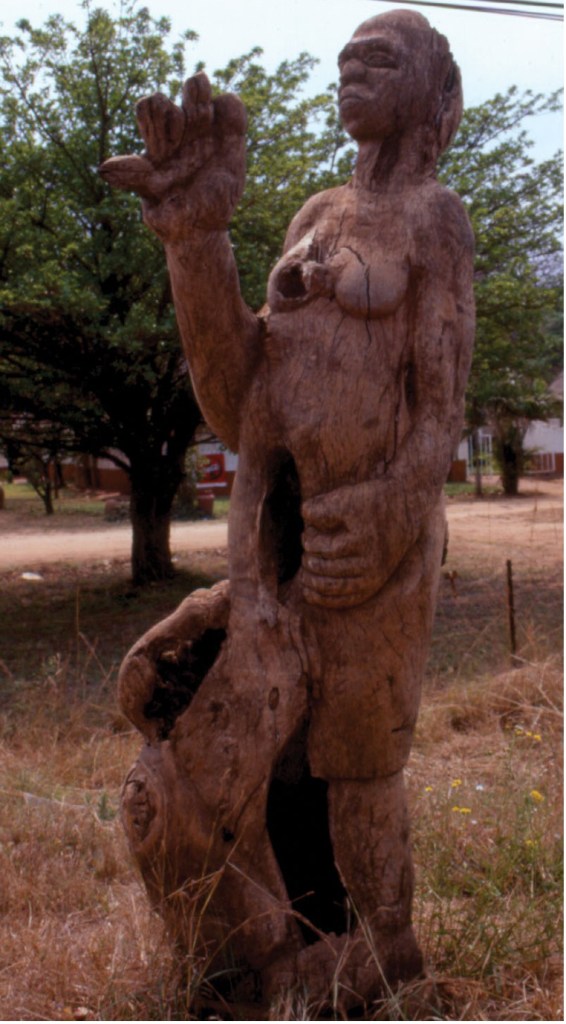
Judean pillar figure representing Asherah, ca. 8th-7th C BCE. Wikimédia commons.

In Canaan, Asherah’s sacred places included high hills and mountaintops, ‘under every spreading tree and every leafy oak’. Identified with the Tree of Life, Asherah was represented by wooden poles or pillars known as asherim. These were ‘cut and shaped from a tree’, ‘adorned with silver and gold’, and ‘had to be carried’. Her rites were chiefly in the hands of the women, who honoured her with incense and liquid offerings, and baked sweet cakes for the Queen of Heaven.. Women also wove elaborate veils to dress the asherim. (Ezekiel 6:3; Jeremiah 10:3-5, 44:17-18; 7:18-19; 2 Kings 23:7)

Continue reading “Asherah and Taghonja: A rain ritual with ancient roots, by Laura Shannon”

Hospicing Hope Continued by Sara Wright

Part 2, You can read last week’s post here.

Lucy relaxing

Walking over to Hope’s gravestone early the next morning, I immediately noted the passionflower was still open. Very Unusual. But then, crucifixion and abandonment by someone this dog loved characterized the last two months of Hope’s life, the dark side  associated with the mysterious power that permeates this wild vine and flower. When this passionflower started blooming profusely in the house months before ki’s time, I felt the threat looming…

A few minutes later after the sun cast her fire over the hillside where Hope’s body lay, masses of golden swallowtails dipped and soared around her grave. Oh, that’s when I felt Hope surrounding us with love. I am well she told me and flying with the butterflies as you can see…

 The earth moved beneath my feet.

  One month later swallowtails continue to fly around Hope’s grave.

Continue reading “Hospicing Hope Continued by Sara Wright”

Legacy of Carol P. Christ: Susan B. Anthony’s Bargain with the Devil

Moderator’s Note: Some of Carol’s pieces are so important that we are reposting them for a 2nd time. This was first posted in November 2019 and reposted in November 2021

Matilda Joslyn Gage


[T]he most grievous wrong ever inflicted on woman has been in the Christian teaching that she was not created equal to man, and the consequent denial of her rightful place in Church and State. –Matilda Joslyn Gage, Woman, Church, and State, 1893, page 1

I do not approve of their [referring to Gage and Stanton] system of fighting the religious dogmas of people I am trying to convert to my doctrine of equal rights to women. –Susan B. Anthony to Olympia Brown, following the disputed merger of the radical National Women’s Suffrage Association with the conservative American Women’s Suffrage Association in 1889

Most readers of Feminism and Religion know that Susan B. Anthony and Elizabeth Cady Stanton were leaders in the nineteenth century struggle for women’s rights. Fewer will know that Matilda Joslyn Gage was widely understood to be Stanton’s equal as a theorist and Anthony’s equal as an organizer. The fact that Gage’s contributions have been lost to history can be attributed to Susan B. Anthony’s bargain with the devil.

If Anthony’s bargain had affected only the reputation of Matilda Joslyn Gage, that would be bad enough. But Anthony’s decision to merge the NWSA with the AWSA signaled that the women’s rights movement would cease and desist from its policy of naming and indicting Christian dogma as the source and cause of women’s subordination in the law in Christian countries. This decision meant that feminists would no longer have a clear understanding of the forces they were reckoning with. Continue reading “Legacy of Carol P. Christ: Susan B. Anthony’s Bargain with the Devil”

Mother Blues II: Interfaith Womanist Reflections on Nurturing a Resilient Bloom, part 2 by Chaz J

You can read part 1 here.

I remember confessing to a kindred spirit, also a therapist, heart heavy with a therapist’s sight: my daughter, a child of divorce. And I, who knew the long, shadowed roads— the substances, the destructive turns children take to bury unaddressed grief, hurt, and pain— this knowledge terrified me.

My friend, in turn, spoke of her own adopted daughter, of sudden, tearful storms for a birth family unseen. “This is her journey,” she said softly, “You cannot control the currents of her life. All you can do is stand with her, and teach her to navigate with a healthy heart.”

Until that moment, my fierce, unspoken goal was to shield my daughter from a therapist’s couch in twenty years’ time. But then, my friend’s truth cut through: “There is no perfect parent, and she will likely find her way to therapy no matter what you do. Just do your best and TRUST that she will be ok.”

This truth allowed me to soften, to release. Now, my purpose unfurls: to forge a bond with her, a healthy and vibrant connection that stretches through the wholeness of our days. I want her to know, beyond all shadow of doubt, that she can depend wholly on her mother, a steadfast harbor in every storm.

Continue reading “Mother Blues II: Interfaith Womanist Reflections on Nurturing a Resilient Bloom, part 2 by Chaz J”

Mother Blues II: Interfaith Womanist Reflections on Nurturing a Resilient Bloom, part 1 by Chaz J

Even before her life unfurled beneath my heart, a quiet vow took root: to parent with purposeful grace. My unwavering compass points to this: to nurture an emotionally vibrant, confident, kind, compassionate, gentle, yet fiercely bold chocolate warrior queen, a child wholly devoted to her own radiant self. For in her spirit, I long to mend the broken echoes of my past, to see her soar where I once faltered, especially in the intricate landscape of the soul. She will possess a richness I only dreamed of; she will transcend.

Seven years, a fertile ground before her birth, from youth’s edge at twenty-two to twenty-nine, I dreamt of motherhood, shaping it idealistically. My spirit yearned to reweave the tapestry of mothering, to cast aside the heavy cloak of predetermined expectation: no longer would Black motherhood be synonymous with weariness, with anger’s sharp embrace, with bitterness, or a spirit held distorted and captive. I craved for her a vision unobstructed, a path where she could shatter the assigned roles that shadowed a Black girl’s journey into Black womanhood in this land. Above all, I wanted her to be FREE.

Continue reading “Mother Blues II: Interfaith Womanist Reflections on Nurturing a Resilient Bloom, part 1 by Chaz J”