

 Asked the secret of her long and happy marriage, Dorothy Hartshorne, wife of the philosopher Charles Hartshorne, posed a question: “What do you think you must never do in a marriage?” The young woman thought for a moment and replied, “Never hurt each other?” “Oh no,” Dorothy responded, “you will hurt each other all the time. What you must never do is bore each other.”
In the years since I first heard this story, I have come to understand that a good marriage requires that both partners have their own interests and be willing to share them, and that each partner be interested in at least some of the interests of the other. Happy people share an interest in life in all of its diversity and difference. A person who is interested in life may ask herself why her neighbor is so unhappy and offer an ear to listen to her story. Or he may ask about the birds that come into his garden—learning their names and behaviors, while delighting in their beauty. It doesn’t matter if the things you are interested in are large or small, but you must be interested in life.
Second, each you must be interested in yourself and in your partner. If conflicts are to be resolved, if hurts are to be assuaged, you must always be willing to ask: why was I angered or hurt in this situation, and why did my partner act or react in a particular way? This will not always be easy. Often one of the partners will feel more comfortable talking about feelings. Patience and deep listening may be required of one of you, and moving into unfamiliar territory of the other. If you are not interested in your own feelings and those of the other, your relationship is likely to founder—not only in hurt and anger, but also in boredom.
Dorothy’s husband Charles Hartshorne was fond of saying that the golden rule to love your neighbor as yourself implies that you love yourself. This is wise counsel. We are often told that marriage involves loving another, but less often that it requires loving yourself as well.
As you, Shelby and Mark, enter into marriage, I offer you these blessings:
May you always retain your interest in life.
May love yourself as well as the other.
May you never bore each other.
May you have many long and happy years together.
* * *
 Carol gave this blessing at the wedding of Shelby Carpenter and Mark Miller on August 3, 2017 in Molivos, Lesbos.
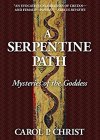
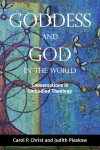
Carol’s new book written with Judith Plaskow, is Goddess and God in the World: Conversations in Embodied Theology.
FAR Press recently released A Serpentine Path: Mysteries of the Goddess.
Join Carol on the life-transforming Goddess Pilgrimage to Crete. Space available on the fall tour.
 These days I find it hard to write – I feel plagued with negativity, and the news and violence and overall hateful actions of others have weighed deeply on my soul. While I personally am ready to celebrate a milestone birthday, am another year closer to completing my Ph.D., witnessed the graduation of one daughter, experienced the independence of another, a milestone for my twins, as well as my father’s successful completing of another orbit around the sun after a year plagued with health issues – rather than joy, my heart is filled with pain – pain of the election, pain of the failure of our political system’s supposed checks and balances, pain of violence and bigotry like that enacted in Charlottesville, pain of terror attacks in England, Spain, Finland, France, etc. Where we ought to be united, we are divided. Thus, I write from a place of remembering – a place of strength – a place to say I count (as you count) – and I begin this blog in the voice of Enheduanna, where she becomes the first voice in history to reveal herself – her name, by simply stating – – “I AM.”
 In the wake of Charlottesville, and following
 My idleness has been cured as I take a new job teaching college English to high school students at a charter school for eight hours a day. At exactly my 80th and last job application since January 2017, I received the offer just a few hours after my interview and had just a few days to pack up my life and leave. Traveling through desolate flatlands, relieved tornado season was quelled at late summer, I would finally embark on a full-time job, my last one having been almost a decade ago.

 Since patriarchy is atrocious, and capitalism is currently driving the earth to a very real catastrophe, we can get passionate about these issues. We can get angry. We can get self-righteous.
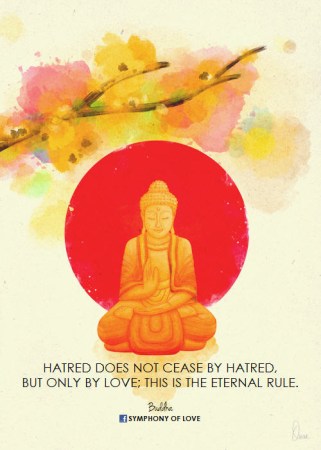 However, as one of the most famous verses of Dhammapada goes:


 Katey Zeh, M.Div is a strategist, writer, and speaker who inspires communities to create a more just, compassionate world. She has written for outlets including Huffington Post, Sojourners, Religion Dispatches, Response magazine, the Good Mother Project, the Journal for Feminist Studies in Religion, and the United Methodist News Service. She is the co-host of
 Despite having thought
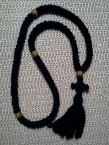 During this time, I came across the Greek Orthodox prayer rope (komboskini) that had been spontaneously removed from her person and given to me by the Mother Superior of the
 It is in our hearts –one’s sense of superiority exists within. We are all and each capable of hate and bigotry.
 It is quite common, I think, for Jewish feminists to gravitate to the first creation story of Genesis/Bereshit as an example of human equality but struggle to claim this same passage as an example of the goodness of embodiment. Genesis/Bereshit 1:27 reads, “So G-d created humankind in the divine image, in the image of G-d, the Holy One created them; male and female G-d created them.” In this passage, we have not only equality between men and women, in direct contrast to the second creation story, but also a description of human nature.

