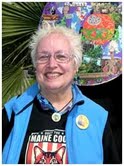
Facing the Shame that Lingers: A. Denise Starkey and Michelle Obama Lead the Way by Stephanie Arel

stephanie-arelIn March of 2011, at a symposium on trauma, healing, and spirituality in Belfast, Ireland, I spoke about shame in the context of war, addressing the experiences of women survivors of rape during the Rwandan genocide, US soldiers returning from war with PTSD symptoms, and cultures, such as those in Belfast and Bosnia, steeped in war and violence. While discussing how theology has a responsibility to examine how the church talks about shame, guilt, and sin to help survivors of war trauma heal, I recognized A. Denise Starkey in the audience, a woman whose work was instrumental in the crafting of my own. Her book, The Shame that Lingers: A Survivor-Centered Critique of Catholic Sin Talk, published two years prior, provided a critical backdrop for my presentation, and would be foundational to my dissertation and subsequent book: Affect Theory, Shame, and Christian Formation.

Five years later, Starkey and I had a chance to meet and exchange stories about what inspired our writing about shame. I acknowledged her influence on my own work, and we discussed our current personal and professional commitments to continuing critical conversations we raise in our texts.  Continue reading “Facing the Shame that Lingers: A. Denise Starkey and Michelle Obama Lead the Way by Stephanie Arel”

Confessions of the Yoga Sutras: Guidelines for Life by Elisabeth Schilling

green pathBack in August when I was applying for yoga certification, I discovered, in my search for our textbooks, the Yoga Sutras by Patanjali, 196 aphorisms. I had no idea what a gem of wisdom they would be, especially the first two pada (sections). No doubt, my reception of them is made possible by the mindful commentary of Reverend Jaganath Carrera, but I have found them to be much needed guidance, lessons that were never articulated to me in quite this way. I’d like to share with you some of the sutras that have most helped me begin moving again.

1.30. Disease, dullness, doubt, carelessness, laziness, sensuality, false perception, failure to reach firm ground, and slipping from the ground gained—these distractions of the mind-stuff are the obstacles.

Yes! Yes! Yes! Unabashedly, this describes a thick slice of my self-narrative. Carrera comments that the obstacles are in order, as if steps to a downfall. I had been wondering before encountering these scriptures where I had gone off-course. I had found myself feeling depressed, anxious, and desperate without a job and a means for independence at 35. I had a Ph.D., but that did not seem to matter in the way I thought it would. I can very much say that after graduating and having been an adjunct for 10 years already, I was feeling dis-ease. I fell into dullness, only applying haphazardly to full-time jobs and then into doubt when nothing positive came back. Once you lose your faith, I’m not sure much can happen. So I began to get careless, forgetting what it was to be a scholar. I felt the job search for the academy was too difficult and became lazy, beginning to look for something easier. This is when I decided to shelve everything and travel around Spain, Germany, and Ireland for as long as I could. It was sensually indulgent for sure. I cannot say I did not have a magical and liberating time. I absolutely did. But I returned after four months only to sink to that place I mentioned in the beginning – the depression and panic. My false perception was what I discussed in my post about “Hard Work without Getting Anywhere” – I realized that I had been so despondent because I had felt I was entitled. Entitled to an easy path to job security and the comfortable life I envisioned. But I hadn’t reached any firm ground. And although I had built up a decade of teaching experience and completed my dissertation, I was quickly slipping from any ground gained. All in all, I had created a world of distractions for myself that didn’t need to be. Patanjali and Carrera: you really get me.

Of course, what would this spiritual guide be if it couldn’t tell me what and how to rise up out of the mire and head somewhere? (Actually it would still be really enlightening.) This leads me to the second sutra I find so helpful: Continue reading “Confessions of the Yoga Sutras: Guidelines for Life by Elisabeth Schilling”

Present in Our Bodies: Sensuality, Movement, Feelings, and Joy by Chris Ash

Christy CroftChristmas morning. I don’t usually have Sundays free and our family holiday celebrations lean nontraditional, so I’d come to a special ecstatic dance celebration and brought my 9-year-old daughter with me. As the music started and people all around us began to flow and move, I reached out to touch her hand. As if she’d been doing it for years, she shifted into a beautiful contact improv flow with me, rolling her arm down and across mine as she beamed love and radiance right into my heart.

This child brings up so many feelings in me as I watch her grow.

On many occasions at ecstatic dance, I’ve looked around the room and been overwhelmed by the beauty of the dancers and their joyful embodiment. When delight, peace, and ease are conditioned out of many of our bodily relationships through past traumas, body issues, or simply living in a disembodied or misembodied culture, feeling comfortable in our own skins is simultaneously an intentional act of cultural resistance and a profound act of self-care and self-love. Being present in the ecstatic dance space with lovely people moving confidently in fluid, sensual, emphatic, and silly ways fills my heart to overflowing on any given dance day.

Joyful dancers move ecstatically
Photo by Flickr user dannysoar

Being present in that space with my daughter, looking around the room and imagining what it must look like through the eyes of a 9-year-old girl, gave it a whole new hue of meaning. People danced alone or with partners, men danced with men and women with women, all without shame over their bodies or feelings. The occasional dancer who slipped off to sit on the periphery, nursing tears that flow in the way holidays bring for some, was joined, held, hugged, cried with. My little girl danced with joyful abandon surrounded by men and women of all ages and shapes, present in their bodies and feelings, moving in ways that felt good, glowing with presence and the freedom of acceptance. Continue reading “Present in Our Bodies: Sensuality, Movement, Feelings, and Joy by Chris Ash”

New Year and Sustainable Resolution by Sara Frykenberg

At the end of 2016, my foot hurt—my body telling me: it is painful to move forward as you have been. You have to walk differently. Yow have to walk with more support, and sometimes, carrying less weight.

I am writing this blog on New Year’s Day, so Happy New Year! Today I say these words as both a statement of hope and as invocation. Happy New Year: may it be! My twin sister told me that our horoscope said that 2017 would be a party: we should throw our energies into anything and everything we want to see happen in our worlds because it can and will happen this year—may it be! Because it certainly doesn’t feel like a time for flourishing. I echo the introductory sentiments of Kate’s blog last Friday:

I am fried. These last two years proved personally & professionally exhausting. And yet, another year looms ahead unavoidably — another incredibly demanding year which will require more than I can fathom I actually have to give at this moment.”

Yes Kate. Oh my god/dess yes. This is exactly how I feel… and sitting down to write this blog this morning, I felt overcome with a wave of anxiety and stress, focused on all the things I have to do, the lack of time I have to do them, and the lack of energy I feel. Lurking beneath this stress is real pain and fear. What should we expect this year, in light of what’s already happening, in light of the hate already ignited? I think I have been locked in this pain and this fear. Continue reading “New Year and Sustainable Resolution by Sara Frykenberg”

Life in the Tenements by Carol P. Christ

carol-p-christ-photo-michael-bakasDuring my ancestor research, I have seen the word “tenement”—with the implication of poverty, filth, and disease–handwritten onto more than one death certificate. Last month, I visited the Lower East Side where my Irish 2x great-grandmother Annie Corliss lived in the tenements near the docks with her husband the Scottish seaman James Inglis and their nine children.

Though the tenements where they lived in the vicinity of Cherry Street a block from the East River have been torn down to build public housing, my newly discovered third cousin Hattie Murphy still lives in the area. She arranged for me to visit the “Irish Outsiders” house in the Tenement Museum on nearby Orchard Street in order to gain an understanding the conditions of life in the tenements in the middle of the nineteenth century.

Tenement housing, which was a euphemism for apartment living in crowded and impoverished conditions, was often built on 25 x 100 foot lots that had been intended for single family homes. These several story buildings with four windows on the front of each floor were divided into small three-room apartments eight to a floor, each with one window facing the street or the back alley.

montrose-st-across-from-170
Buildings like this may look charming from the outside, until you imagine living your whole life in a small apartment set behind only one of these windows.

In the apartment we visited, the window was in the sitting room in the front, the bedroom was in the back, and the kitchen was in the center. The kitchen included a coal stove that was the only heating for the house. Laundry hung above the stove, and, as our guide explained, dirty diapers with only “number one” were simply pinned up to dry. Coal dust hung in the air and fell upon everything. Even in the summer when the windows were open, fresh air rarely reached to the kitchen, let alone to the bedroom in the back. Our guide remarked that the smells of cooking, coal, babies, and unwashed bodies would have been overpowering. Despite their poverty, the women purchased pretty dishes, often chipped, at second hand stores, and proudly displayed them.

tenement-museum-irish-house-kitchen-and-bedroom
This photo shows the communal staircase, the open door of the apartment, kitchen and bedroom. The window inside the apartment was added to improve air circulation due to health regulations. Blue Willow pattern dishes on display upper left.

Our visit began in the back “garden” where there were four toilets for twenty-two families. I shuddered to imagine trying to clean them or to run down to use them in the middle of the night. There was a pump for fresh water. The guide handed around a bucket filled with pebbles to give us an idea of the weight the housewives and their children had to lug up flights of stairs numerous times each day. No wonder baths were infrequent. I remember an older Greek friend telling me how they used to wash with a cloth from the waist up one day and from the waist down the next. Annie’s family may not even have managed that.

tenement-museum-toilets-outside
Outdoor toilets in the back “garden” serving twenty-two families.

Our tour included a description of a sick and dying baby and a funeral with the baby’s body laid out in the sitting room. My 2x great-grandmother gave birth to nine children of whom, unusually, the first eight lived to adulthood. Annie must have understood that hygiene is heath. Her days would have been spent fighting to keep her house and her children as clean as she could.

tenement-housing-boy-at-sink
Boy washing in tenement kitchen. The sink doubled as a work space.

The bedroom in the apartment we visited had a small double bed pushed up against two walls, with just enough room to walk past it to get to a small closet and a few trunks crammed in the space against the back wall. When James the seaman was home, this would have been the marital bed, but when he was gone, the younger children slept with their mother, while the older ones wrapped themselves in sheets and blankets near the stove or in the sitting room.

annie-corliss-young
Annie, at the time of her marriage

Anne, age 20, and James “Ingles,” mariner, age 25, husband and wife, living in the area of the docks, appear on the 1855 New York State census. In fact, Annie was perhaps 15, while James was 17. I suspected this was an unusually young age to marry, and research proved me right. The average age for Irish marriages at the time was 20 for the bride and 25 for the groom. Annie would have had every reason to lie about her age for reasons of propriety.

Documents I have only recently found show that Ann “Carless,” age 13 arrived in New York with her mother Mary on January 16, 1854. Her two younger brothers, one 7 and the other an infant, died on the ship. As I could not find Ann’s mother Mary after that, I assume she died soon after arriving, leaving her young daughter on her own.

Annie lived her whole life in America in tenements in the the unsavory area near the docks—filled with bars, drunken sailors, prostitution, and crime. She died at the age of forty-five of a stroke, leaving her husband and eight children. Because of her, I am here.

Also see “The Careless Spirit of Annie Corliss.”

***

a-serpentine-path-amazon-coverBe among the first to order A Serpentine Path, Carol P. Christ’s moving memoir of transformation. Carol’s other new book written with Judith Plaskow is Goddess and God in the World: Conversations in Embodied Theology. Carol also wrote the first Goddess feminist theology, Rebirth of the Goddess.

Join Carol on a Goddess Pilgrimage to Crete in 2017. Save $200.

Read two of the chapters in the book: Mysteries and Dionysian Rites.

Thanks to Judith Shaw for the cover art “Downward Serpent.”


Happy New Year by Barbara Ardinger

Here we are, beginning a new year. Let’s hope it’s a good new year. I grew up in a working-class family in St. Louis. We were Calvinist and Republican. I’ve escaped from the last two, but I still claim my working class background. My father was a lithographer, my mother, a housewife. And I will never forget the advice given every year (actually, more than once every year) by my Dutch grandmother: Whenever you start something new, start clean. Take a bath, brush your teeth, wash your hair. More than that, she meant clean your house. Wash dishes. Dust. Vacuum. Pick up stray books and pet toys. Gramma put the fear of god in me, at least about cleaning. Every time she took the bus down to visit me while I was in graduate school, I spent two days cleaning my apartment.

It’s thanks to Gramma that when I wrote a daybook titled Pagan Every Day, I started the year writing about home. Here’s the page for January 1:

Usually, we invoke Janus on this first day of the year. He was the Roman two-faced god of the doorway (ianus), the transition point between the safe indoors and the outside world, where anything could happen. Roman weren’t alone in believing that this opening needed to be protected. The mezuzah, which holds verses from Deuteronomy, is affixed to doors of Jewish houses, the façade around the doorway of a medieval cathedral is as elaborate as the altar, and nearly every pagan is taught to cut a “doorway” into the energy of the circle. As the doorway stands between inside and outside, so does the turning year stand between an old year we knew and a new year we don’t yet know. Janus gave his name to January and the Romans honored him all month. Before he came to the city, however, he was Dioanus, an Italian oak god whose consort was the woodland goddess, Diana. Continue reading “Happy New Year by Barbara Ardinger”

This Time by Joyce Zonana

jz-headshot

And the new sun rose bringing the new year.

Alfred, Lord Tennyson, “The Passing of Arthur,” Idylls of the King

It’s arbitrary, of course, this designation of January 1st as New Year’s Day on the Gregorian Calendar, but it’s also unavoidable.  Everywhere around us, people are gathering, celebrating, making resolutions, ringing out the old, ringing in the new.

The Jewish calendar’s Rosh Hashanah, near the Autumnal Equinox, always feels like the real New Year to me, with its time-honored rituals of renewal and return.  The ancient Persian New Year, observed at the Vernal Equinox and recalled in in the Jewish and Christian celebrations of Purim and Mardi Gras, also moves me.  And, like so many of my brother and sister pagans, I experience the Winter Solstice as a truly numinous moment, a time to release the past and welcome the future as the sun dies and is reborn.

This year, it’s especially meaningful to find Chanukah so close to the solstice, filling the week between Christmas and New Year’s.  I’ve been lighting my candles each night with particular pleasure.  Yet I’m happy, too, to join the rituals associated with the secular, popular New Year.  In my view, there can never be too many moments of renewal and return.

Continue reading “This Time by Joyce Zonana”

A Movement Needs A Song by Esther Nelson

esther-nelsonI’m back in Las Cruces, New Mexico, spending the break between semesters in the spot where I plan to eventually retire.  When I was here last summer (2016), I visited the Unitarian Universalist Church so decided to join the people gathered there on Christmas Day.  Not many showed up—about twenty or so.  The service was abbreviated. The emphasis was on singing Christmas carols from the hymnal.  Unitarian Universalists, it appears, love to sing.

Inside the bulletin on a separate sheet of paper, Catherine Massey, the Director of Music, wrote an essay titled “Sunday Music Notes.”  She asks, “How can music help us respond to the needs around us?” She listed several ways we can benefit from singing and chanting. One way is calming the self, enabling us to better cope with life’s struggles. Singing can also bring comfort to the sick and/or dying as well as to their families. She used her final paragraph to write about the necessity of music in social action movements.

…[S]inging has been an integral part of many social action movements, from the American Civil rights movement of the 1950s-60s to the anti-apartheid movement of South Africa.  Ysaye Barnwell, member of the African American women’s a cappella group “Sweet Honey in the Rock,” has said that for a social justice movement to gain and maintain momentum, it needs songs to be sung by the people.  She believes recent movements, such as Occupy Wallstreet, have had limited success because the people on the streets haven’t found their songs.

I am still grieving about the choices many American citizens made during the recent U.S. election. Although disheartened, I know I am not alone in my grief and outrage. I hope that decent people will push back against the misogyny, heteronormativity, racism, xenophobia, and just plain hatred that this new administration stands for and will, no doubt, perpetuate. We need music and songs to carry the “resistance” forward. Continue reading “A Movement Needs A Song by Esther Nelson”

Contemplative Education: A Pedagogical Approach of Compassion by Elisabeth Schilling

green pathEven though I encountered wisdom literature when specializing in Hinduism during my Religious Studies doctoral program, through reading the works of Christian female mystics and the liberation theologies of feminist spiritual guides, it took a book I never encountered in my academic studies to give me a spiritual foundation that feels complete after my departure from Christianity: Eckhart Tolle’s The Power of Now. It led me to the place where I am now, practicing mindfulness, being aware of the ego, and attempting to live in the present. Now I can return to wisdom literature with a lens that helps it make sense. Although I did not know it when I began utilizing these ideas in the classroom, there is an entire pedagogy based on them.

Contemplative education is based on the observation that the world is in need of healing and the majority of people have not encountered helpful ways to deal with their suffering. Why not use the classroom for healing and to create healers? Contemplative education has five goals or elements: 1. deep, or critical, thinking, 2. constructive communication, 3. awareness of the global impact of our behaviors, 4. personal development/well-being, and 5. a non-sectarian admiration for and inclusion of wisdom literature and traditions. This last element is what really distinguishes this pedagogy from others. And I see how it shares a great deal with feminist practices as well, especially as feminist pedagogy honors experiential knowledge, self-reflection, and activism. Continue reading “Contemplative Education: A Pedagogical Approach of Compassion by Elisabeth Schilling”

FAR Press Publishes A Serpentine Path: Mysteries of the Goddess by Carol P. Christ

carol-p-christ-photo-michael-bakasThis is a great day for me as I announce the publication of A Serpentine Path: Mysteries of the Goddess. It is the first —but certainly not the last—book from the new FAR Press, directed by Gina Messina and Xochitl Alvizo, two of the founders of www.feminismandreligion.com. The release of my book is the fruit of friendship and collaboration that has been nourished in the blog community. I hope you will join with us in celebrating our joint venture by ordering the book, telling your friends about it, sharing it Facebook and Twitter (links below), reviewing it on Amazon, and letting Gina and Xochitl know if you can review in a magazine, journal, or blog.

Here is an excerpt from the preface to whet your appetite.

*

A Serpentine Path is a story that begins in despair and ends in rebirth and regeneration. It depicts a turning point in my life, a psychological and spiritual breakthrough that opened me to living the rest of my life in grace and joy. Though I am tempted to say it was a journey from darkness to light, that would be inaccurate, for mine was a journey into the darkness and out again. The path of life is never straight or narrow, and the circle of light and darkness is never-ending.

When I began the journey described in A Serpentine Path, I did not feel loved, I did not want to live, I could not write, and I believed the Goddess had betrayed my faith. As I completed the book, I knew I was loved, I wanted to live, I was writing, and I understood that the Goddess had never abandoned me. Though my life has had its ups and downs since then—as all lives do—I have never forgotten that I am loved, I have wanted to live, I have not stopped writing, and I feel the Goddess ever-present in my body, in my breath, and in my connections with the living and the dead. Though my story is deeply personal, my struggles with love and death, trust and control, are widely shared.

A story of finding the Goddess, A Serpentine Path is part of a growing genre that is developing as women explain to themselves and others why they left the patriarchal religions of their origins for a more nourishing spiritual vision that affirms both women and the earth. A Serpentine Path documents the first of the Goddess Pilgrimages to Crete I have been leading twice a year since then. For the women who have traveled with me, it will evoke many memories. For those who have dreamed of a pilgrimage to the Goddess, it offers an opportunity to imagine the journey. I now know a great deal more about ancient Crete, the folklore and customs of traditional Crete, and the rocks, trees and plants of Crete, than I did when I began. But I learned the mystery on my first pilgrimage. Because we are all deeply connected to each other, I know that the path to the mystery I discovered is not mine alone.


a-serpentine-path-amazon-coverBe among the first to order A Serpentine Path, Carol P. Christ’s moving memoir of transformation. Carol’s other new book written with Judith Plaskow is Goddess and God in the World: Conversations in Embodied Theology. Carol also wrote the first Goddess feminist theology, Rebirth of the Goddess.

Join Carol on a Goddess Pilgrimage to Crete in 2017. Save $200.

Read two of the chapters in the book: Mysteries and Dionysian Rites.

Thanks to Judith Shaw for the cover art “Downward Serpent”