

 I just got home from the first yoga class I’ve attended since the recent (11/8/16) U.S. presidential election. I cried for the entire 75 minutes—through forward folds, downward facing dogs, exalted warriors, and especially shavasana (corpse pose). The young man (probably in his thirties) doing his yoga practice next to me asked after the closing Namaste, “Are you all right?” “No, not really. I’m very upset.” He nodded his head as if to say he understood.
Ever since the nation’s president-elect declared victory, I’ve felt a huge sense of angst. Why? A huge percentage (81%) of white evangelical voters propelled him to that victory. I grew up in a branch of the evangelical church. The church, to a large degree, is all about translating a particular understanding of God’s will as “revealed” in Scripture into public policy and law, keen on imposing that interpretation on our pluralistic society. Continue reading “Violent Virtue by Esther Nelson”
 At Thanksgiving and the solstice holidays many of us are reminded that we are the “black sheep” of our families. In my case this means that I am too “assertive,” too “aggressive,” too “demanding,” too “political,” too “willing to upset my father,” too “opinionated,” too “feminist,” and so on.
 As per my last month’s FAR
  We are all experiencing troubled times.
 This month I had planned to write a long column of finding joy in the midst of pain, or rather enjoying what you can still enjoy. I know you all will be reading this the day after Thanksgiving…I want to be grateful and I am… for so much. I want you to find what you are grateful for and hold onto it.
 I wrote this letter to President Obama on November 18, the morning after I returned from a few days at Standing Rock. I am not an activist by temperament. I went to Standing Rock to support a friend who felt strongly called to go, as well as, to support the cause. I did not participate in direct action, because I did not fully grasp till I was there the preparations I would need to make in terms of clearing my calendar for jail time and a return to North Dakota for a trial. Gratitude and respect for those who are taking this risk and dedicating their lives to this cause.
  Birds soaring high above the earth reaching for the heavens have long inspired humans as links to the divine realm. Birds fulfill various functions in world cultures and religions – from playing a central role in creation, to birth, to healing, to death; from messenger to trickster to oracle. Some birds are associated with shape shifting and transformation.
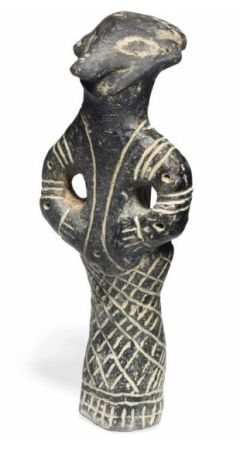 Divine embodied in the feminine.
 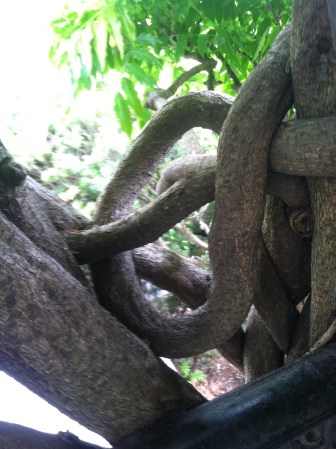 Isaac Luria, a Jewish mystic in the city of Sfat, told this tale of creation in the seventeenth century. It caught the Jewish imagination and has been wildly popular as a Jewish creation myth ever since. It captures our longing for wholeness and our experience of brokenness. It also offers a parallel with the Big Bang (a hot seed of light that expands into the universe as we know it) that many find quite compelling. I have loved this story for a long time. To me, it is reminiscent of the story of birth: an empty space that becomes full, then leaks out into the world as a new being. Yet as a feminist who is also committed to sustainability, as more news of our planet’s scorching rolls in, I find this myth is beginning to crack.
  In these these days when many of us are gripped by paralyzing despair as we come to terms with the election as President of a racist, sexist bigot who has created a climate of fear and promises to undo much of the progressive legislation of the past fifty years, I find it appropriate to reiterate an insight that has sustained me through many years of sadness and disappointment about the state of our world.
 If you are like me, you are still reeling from the election results in the United States – trying to make sense of it, while at the same time going through the steps of mourning. As I write this, it is difficult to call our country United – because it is anything but. In reality, we have become the Divided States of America – and worse, we have had friendships lost and detachments with relatives over this election. And I guess I could say, what’s even worse – we learned about the bigotry and viewpoints of people we used to consider friends or even learned this about family members, even spouses.
