Mourning by Beth Bartlett

Grief is the experiencing . . . Mourning is the process,
when we take the grief we have on the inside and express it outside ourselves –
writing, planting, burying, burning, rising up
ceremony, ritual, community[i]
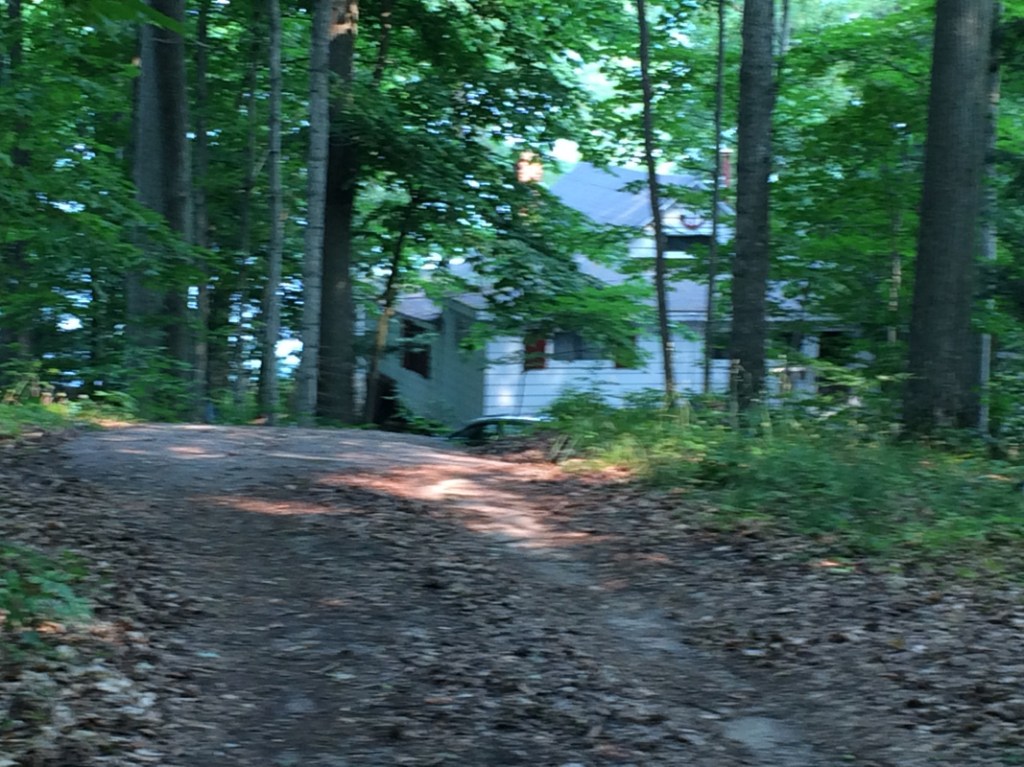
A glimpse of our cottage as I drove away.

“As long as I stayed there, I could keep you with me. . . .” Those words kept repeating in my mind throughout my long drive home from my sister, Jeannie’s, “Celebration of Life” service. I’d stopped midway on my thousand-mile journey at the cabin our family has shared for sixty years.  There I could still feel her presence — on the hillside where we so often sat with our morning cups of tea, or watching the sunset, or chatting away the afternoon; on the dock where we’d lie in the sun or sit late at night and watch the stars come out, or cuddle up in blankets on windy, fall days; in the circle of couches and chairs where we played telephone Pictionary, charades, and CatchPhrase; in the kitchen where we’d cooked and eaten and played card games together; in the bedroom we often shared with a dog between our beds; the road where we’d go for family walks – eight, ten, twelve of us all together, and always two, three, or four dogs; even the driveway where we’d greet and hold each other with great gladness after months of separation, and where we’d hug and say goodbye, and then hug once more because in the back of our minds we’d be wondering if this was the last time.  . . .

Continue reading “Mourning by Beth Bartlett”
A Leaf Peeper’s Reflection by Sara Wright

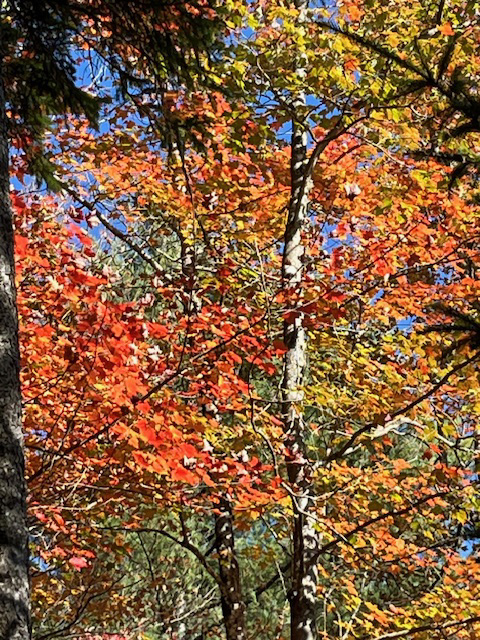
Twice a year, once in May for a few days and during the first week of October I can’t leave home because I’ll miss the next moment of spring flowering or scarlet flames.

Last week I was captivated by how the golden morning light affects each deciduous leaf. For about five days I ran inside and out all morning to feast upon the astonishing leaf color changes as the sun rose higher. ‘Fire on the Mountain’, crimson, gold, seductive sultry salmon brilliance. In and out for hours. I drove my dogs crazy. Noting the bees on the blushing hydrangea, glad for dragonflies cruising around the house. Greeting little green frog framed against his log. Breathing in the Light. Infused by all too brief moments of swamp maple’s fierce fiery splendor.

Continue reading “A Leaf Peeper’s Reflection by Sara Wright”

Legacy of Carol P. Christ: WOMEN ARTISTS AND RITUALISTS IN THE GREAT CAVES: THE BEGINNING OF THE END OF INDOLENT ASSUMPTIONS

This was originally posted October 21, 2013

In an earlier blog, I suggested that women might have blown red ocher around their hands to leave their marks in prehistoric caves.

At the time I thought this was a rather bold suggestion.

Had I been asked why I thought the images were made by women, I might have said that people have understood caves to be the womb of the Great Mother, the Source of All Life, from time immemorial. I might have added that those who performed rituals in the caves cannot have been performing simple “hunting magic,” but must also have been thanking the Source of Life for making life possible for them and for the great beasts they hunted.  Still I am not certain that I imagined women as the artists in the Paleolithic caves.

handprint peche merle cave
Continue reading “Legacy of Carol P. Christ: WOMEN ARTISTS AND RITUALISTS IN THE GREAT CAVES: THE BEGINNING OF THE END OF INDOLENT ASSUMPTIONS”

On Noach and its Ecofeminist Potential.

The Torah portion for November 2, 2024 is Noach.  The portion includes the stories of Noah’s ark and the tower of Babel and ends with Abraham and Sarai settling in the land of Canaan.  In my feminist analysis of Noach, I will focus on the ecofeminist potential of divine acknowledgements and how the divine is portrayed.

As ecofeminists at the intersection with religion, one task we have is to interpret those sacred texts which have something to say about nature and animals.  Within Judaism, there are numerous such texts, and parshah Noah is one of them.  Afterall, most of Noach revolves around a great flood in which the deity destroys the earth and most of its inhabitants, animal and human.  

The divine destruction of the material realm is problematic.  The deity blames the divine decision to destroy creation on the rampant corruption of the flesh: human and animal alike (6:13).  In feminist thinking, linking material existence to corruption is unsettling since patriarchy often disavows material existence by linking it to evil.  In addition, in Noach, an aspect of the material world, water, is used in bringing about that destruction.  However, water is also ironically what all flesh depends on for life.    

Continue reading “On Noach and its Ecofeminist Potential.”

Why Celebrating the 9th Anniversary of the Goddess Feminist Activist Spirituality Movement? (Part 2) by Helen Hye-Sook Hwang

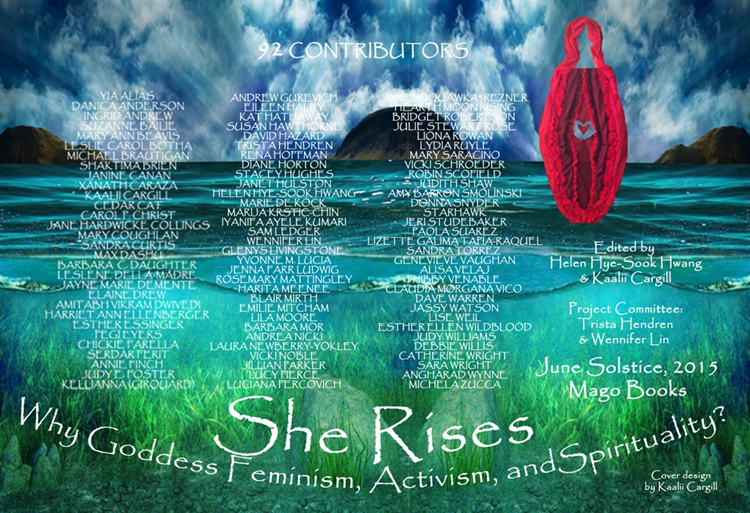
As I noted in Part 1, this year marks the 9th anniversary of the first volume of She Rises trilogy, a collective writing project, which was first published in 2015 by Mago Books. Entitled Why Goddess Feminism, Activism and Spirituality?, the 93 contributors trumpeted the onset of the Goddess Feminist Activist Spirituality. It was followed by the second volume​, How… Goddess Feminism, Activism, and Spirituality?, with 96 contributors, in the following year, and the third one, What… Goddess Feminism, Activism, and Spirituality?, in 2019.​ The 9th anniversary of the first volume provided a new momentum for all contributors of the trilogy to come together as a virtual group, which we named “She Rises…” This group allows the authors of all three volumes to gather together for the first time, while inviting newcomers from outside the She Rises trilogy.

Continue reading “Why Celebrating the 9th Anniversary of the Goddess Feminist Activist Spirituality Movement? (Part 2) by Helen Hye-Sook Hwang”

How we Began the Movement of Goddess Feminist Activist Spirituality in the 21st Century (Part 1) by Helen Hye-Sook Hwang

Mago is an East Asian/Korean word for the Cosmic Mother or the Creatrix. This piece is written as the first of a four-part essay. In this series I am surveying the past 9 years of The Mago Work (A collective effort to restore the consciousness of Mago, the Creatrix), which birthed the Movement of Goddess Feminist Activist Spirituality, while being shaped by the latter.

Continue reading “How we Began the Movement of Goddess Feminist Activist Spirituality in the 21st Century (Part 1) by Helen Hye-Sook Hwang”

Censored Angel: Anthony Comstock’s Nemesis. A Novel by Joan Koster

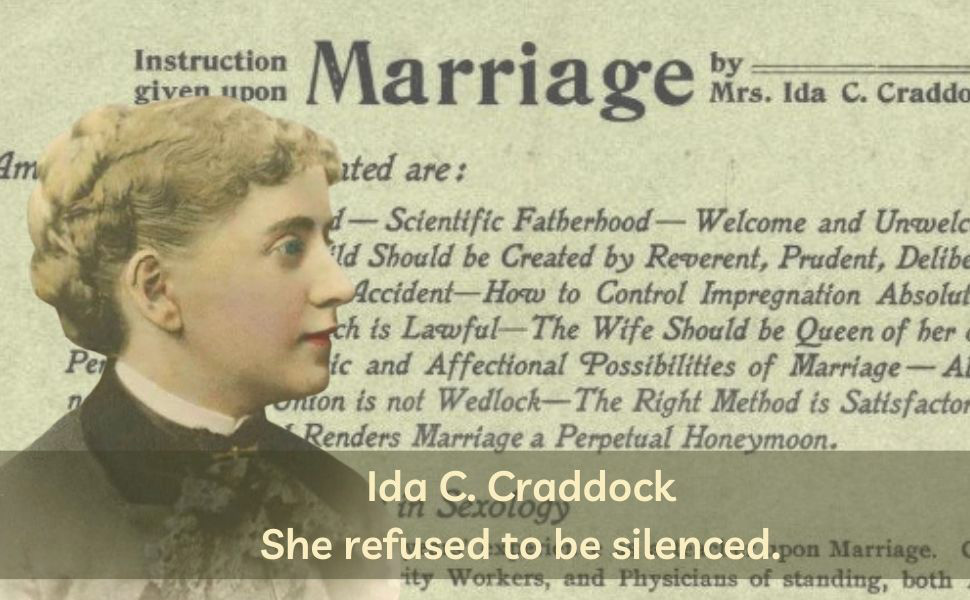
“I would lay down my life for the cause of sex reform, but I don’t want to be swept away. A useless sacrifice.” Ida C. Craddock, Letter to Edward Bond Foote, June 6, 1898

In 1882, Ida C. Craddock applied to the all-male undergraduate school of University of Pennsylvania. With the highest results on the entrance tests, the faculty voted to admit her. But her admission was rejected by the Board of Trustees, who said the university was not suitably prepared for a female. (U of P only became co-ed in 1974)

With her aspirations blocked, Ida left home determined to leave her mark on women’s lives by studying and writing about Female Sex Worship in early cultures. At the time, little information was available to women about sexual relations. To do her research, Ida resorted to having male friends take books forbidden to females, such as the Karma Sutra, out of the library for her.

An unmarried woman, she turned to spirituality and the practice of yoga, a newly introduced practice to the American public at the time, as a way to learn about sex. In her journals, she describes her interaction with angels from the borderlands, and in particular, her sexual experiences with Soph, her angel husband through what was likely tantric sex.

Continue reading “Censored Angel: Anthony Comstock’s Nemesis. A Novel by Joan Koster”

Listen to the wise women by Molly Remer

In 2012, shortly after I finished my priestess ordination process and I’d been facilitating women’s retreats for two years, I got a wild idea to go to a goddess festival of some kind. I did a google search and found one that sounded great—Gaea Goddess Gathering–and it was happening in just two weeks. Imagine my surprise to then look at the bottom of the screen and see that it was located only a five-hour drive from me, just over the border into Kansas. I decided it was “meant to be.” My mom and a friend signed up with me (and my then 18 month old daughter) and we packed up my van and went! The night before we left on our adventure, I sat down at the kitchen table and felt a knife-like stinging pain on the back of my leg. I’d accidentally sat on a European giant hornet (these are not regular hornets, they are literally giant hornets about two inches long).

Continue reading “Listen to the wise women by Molly Remer”

A Creation Narrative Leads to a Surprising  Equinox Encounter, part 2 by Sara Wright

Part 1 was posted last week. You can read it here.

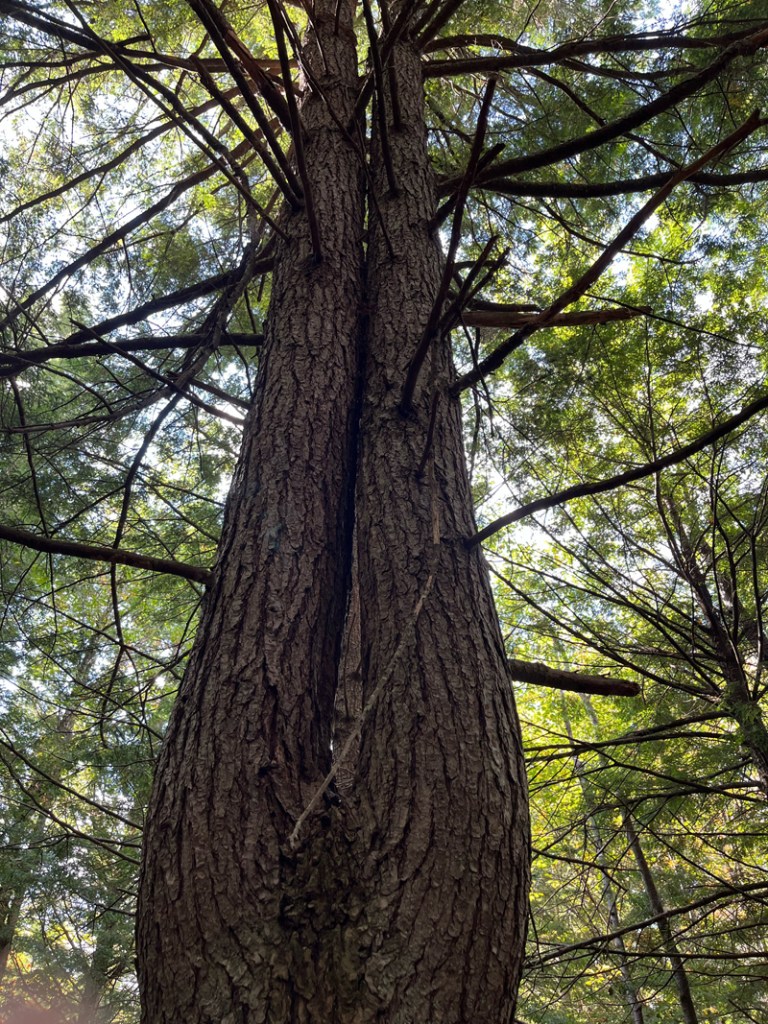
Yesterday on the day before the equinox I returned to my favorite hemlock forest after another morning of unproductive research on the mycelial web. The scarcity of information on this critical source of all life on land is troubling. As my frustration mounted I heard a little voice say, ‘Go visit with the hemlocks’. I did.

 After I crossed the bridge into the forest something amazing happened. An invisible cloud of incredibly fragrant mushroom scent slipped over me like a shroud. I just stood there for a moment inhaling sweet earth, astonished and bewildered.

Continue reading “A Creation Narrative Leads to a Surprising  Equinox Encounter, part 2 by Sara Wright”

Legacy of Carol P. Christ: The Turtle Goddess from Myrtos in Ancient Crete

This was originally posted on October 15, 2012

“As we bless the Source of Life, so we are blessed.” Song by Faith Rogow

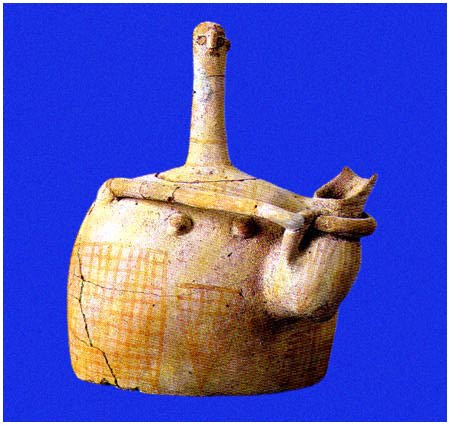
The strange and cheerful figure portrayed in this ancient Cretan vessel comes from the site known as Fournou Korifi near Myrtos, in Crete.  Dated before 2000 BCE, she was called the “Goddess of Myrtos” by the excavator, Peter Warren.  This little Goddess was found on an altar in a small room in the ritual area of a complex of small rooms on a hill above the sea that was home to up to 120 people.  The Goddess of Myrtos is a vessel holding a vessel.  In ritual libations, liquid would have been poured from the pitcher she holds onto an altar.

.She is obviously female, with breasts and a sacred triangle.

The cross-hatching on her sacred triangle and on the squares drawn on her body perhaps symbolize woven cloth and the important roles of women as weavers in the community that created her.  A side view shows that she is “stitched together” along her sides.  The many spindle whorls and loom weights recovered from the site provide material proof of the importance of weaving at Myrtos.

Continue reading “Legacy of Carol P. Christ: The Turtle Goddess from Myrtos in Ancient Crete”