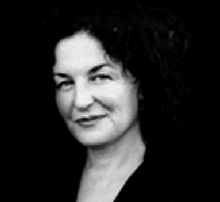
How literal is too literal? My Experience with Tallit Katan. By Ivy Helman

I tried a new spiritual practice yesterday.  I wore a tallit katan.  It is commonly worn by Orthodox, Hasidic and other Ultra Orthodox men and boys from the age of 3 onward and usually not worn by women within these communities.  Occasionally, one can see Jews (mostly men) from Conservative shuls wearing these garments and rarely from Reform congregations.  They seem to be a marker of a more observant Jewish practice that reads much of the Torah literally.  One is commanded to wear fringes (tzitziyot) when wearing four-cornered garments as reminders of the covenant between G-d and the Jews and more specifically of the 613 commandments.

There are a number of reasons women and men from Orthodox and ultra Orthodox communities give for discouraging women from the wearing of tallit katan and tallit gadol.  First, women are said to be exempt from time-bound mitzvot, or commandments .  Wearing tzitziyot are considered time-bound because the Torah says one should be able to see them which has been interpreted to mean that they be worn during the day.  The reason given that women are not held to time-sensitive mitzvot has to do primarily with their childcare responsibilities.  Children and fulfilling their needs often requires much time and may not allow one to complete a task within a given time frame.  A related ideology says that women are often generally thought to be more spiritually attuned, and therefore do not need such physical reminders to follow the mitzvot. Continue reading “How literal is too literal? My Experience with Tallit Katan. By Ivy Helman”

Catholic Feminists Meet, Strategize by Rosemary Radford Ruether and Theresa Yugar

During July 8-11, 2012 twenty Catholic feminist leaders met in a retreat center near Baltimore to discuss their concerns and hopes in the light of the recent and ongoing attacks of Catholic bishops on women and especially on feminist work in the church. The group consisted of representatives from many sectors of Catholic institutions and movements.  There were the founders of a peace and justice movement of the Sisters of Charity and the Institute for Communal Contemplation and Action. There was a pastor and leadership trainer from an alternative parish and a writer for the National Catholic Reporter.

Many in the group were professors of theology or ethics at Catholic, Protestant or state schools. Among them were teachers at Whittier College, Claremont School of Theology, Santa Clara University and San Jose University in California, Loyola University in Chicago, St. Catherine in Minnesota, Drew University in New Jersey and Boston College. Catholic reform movements were well represented, with leaders from Dignity, the Women’s Ordination Conference, Call to Action and RomanCatholicWomenPriests. There was a teacher at Marymount School in New York City, the President of Marymount School in Los Angeles and a doctoral student in theology. Continue reading “Catholic Feminists Meet, Strategize by Rosemary Radford Ruether and Theresa Yugar”

SHADOWS OF THE GODDESS IN GREEK ORTHODOX TRADITION: EASTER AND THE DORMITION OF THE VIRGIN by Carol P. Christ

While I would not wish to argue that Greek Orthodoxy is in any way a “feminist” tradition, the shadow of the Goddess falls long over the two great festivals of spring and midsummer.

In Greek Othodox tradition, there are two major spiritual holidays– Easter in the spring and the Dormition/Assumption of the Virgin at midsummer.  The Panagia, She Who is All Holy, also known as Mother of God, Virgin, and Mary, is a central figure in people’s faith–dethroned neither by the Reformation nor by Vatican II.  Indeed when I speak of the need for the “rebirth of the Goddess” in Greece, I am often told, “the Panagia is our Goddess.”  This may not be theological orthodoxy, but it expresses a truth of practice. Continue reading “SHADOWS OF THE GODDESS IN GREEK ORTHODOX TRADITION: EASTER AND THE DORMITION OF THE VIRGIN by Carol P. Christ”

Her Name by Janine Canan

She is dancing her Dance
and everything changes.
This is what is meant by Impermanence,
buddhist for God.

She is dancing her Dance
and nothing remains.
This is what is meant by Nothingness,
atheist for God.

She is dancing her Dance
and everything is beautiful.
This is what is meant by Changing Woman,
navajo for God. Continue reading “Her Name by Janine Canan”

Painting Pachamama and Gaia by Angela Yarber

 Pachamama prevails.  Her body is one with the Andes and she births the caverns, canyons, and rivers that sustain the earth.  

This month, the indigenous people of the Andes celebrate a high holy season in Incan mythology, honoring their beloved Pachamama.  Pachamama is venerated as the earth goddess and during August, her followers give her payment (pago) with their central ritual of Challa.  So, I’d like for my monthly article about Holy Women Icons to celebrate this earthy goddess of Peru, along with a similar manifestation of mother earth, Gaia.  Thus far, the biblical dancer, the Shulamite, feminist scholar, Mary Daly, and literary figure, Baby Suggs, have been the icons with a folk feminist twist that I have discussed on Feminism and Religion.  Now, I’d like us to join with our Andean sisters in toasting the holy women icons of mythology: Pachamama and Gaia. Continue reading “Painting Pachamama and Gaia by Angela Yarber”

The Search for Belonging by Cynthia Garrity-Bond

My life today is a continuation of the desire to belong I felt as a child, only the terrain is now a spiritual homelessness of sorts, the inability to feel welcomed and accepted in what seems to be an oxymoronic state, a feminist woman in the Catholic Church.  

Family vacations in my childhood usually took the form of camping.  This was an era devoid of seat belts and car seats, where we rode unrestrained in the back of our parent’s pickup camper like pieces of discarded luggage.   One trip found us deep in the Baja coast of Mexico.  At that time I was four years old with three older brothers, one younger and one on the way; who in spite of my repeated pleas to the Blessed Virgin Mary, turned out to be yet another brother.  Sandwiched between all this testosterone was me, the only girl child who continually failed to fulfill her parent’s dream of the quiet, sweet, and passive daughter.  This would be one of many family job descriptions at which I would fail. Continue reading “The Search for Belonging by Cynthia Garrity-Bond”

Discrimination, the Catholic Bishops, and Chick-fil-A by Michele Stopera Freyhauf

You may be tired of the controversy about Chick-fil-A, but the events of the last few weeks revealed a big issue in the organization – that of discrimination and the illusion of religious freedom.  However discrimination exists beyond the LGBTIQ community, it applies to Catholics and those “outside” their strict fundamentalist belief system.  However, the hierarchy in the Catholic Church seems to be embracing many of the beliefs put forth by Evangelical Fundamentalists in the political arena.

When it was time for my eldest daughter to get her first job, she applied and was hired to work at Chick-fil-A.  Knowing they were a  Christian organization, I felt that she would be well treated and we could still have family time on Sundays.  Everything started out o.k. but the longer she worked there, problems developed.  First, when I stopped through the drive-thru to show my support as her mother, I received apocalyptic material in my bag talking about the end times, where my soul would go, and inviting me to their church.  I found the material offensive and never returned. Despite the organization’s community support and “Christian” values, I was still fairly naive about their discriminatory practices that many experience on a daily basis.

Continue reading “Discrimination, the Catholic Bishops, and Chick-fil-A by Michele Stopera Freyhauf”

Breaking Up with Chick-fil-A by Gina Messina-Dysert

I haven’t eaten fast food in many years; however as a new mom Chick-fil-A offered something quite different than other fast food chains: healthy options, freshly made food, clean space, and a great spot for play dates; not to mention the organization’s commitment to the environment.  My daughter and I have made many trips to our local franchise in the last year.  It became a usual spot for play dates, the go to place for dinner when I was on a time crunch (grilled chicken nuggets, fresh fruit, and chocolate milk has saved the day many times over!), and let’s not forget the perfect option for Baby S to get some play time in while Mommy connected to the free Wifi to get some work done.  Yes, Chick-fil-A felt like a mommy’s dream come true.

I am embarrassed to say that I had heard rumors that Chick-fil-A was anti-same sex marriage; but I ignored all the warning signs trying to hold on to the many positives I thought the chicken chain brought to my life.  With the recent blow up of Dan Cathy’s response “guilty as charged,” when asked about Chick-fil-A’s support for families led by heterosexual couples, I can no longer turn a blind eye.     Continue reading “Breaking Up with Chick-fil-A by Gina Messina-Dysert”

Olympic Inspiration: My Athletic Mirror by Sara Frykenberg

What I realized was that my ability was different from hers and that I really could, as in ‘I had the ability to,’ decrease our time.  I carried our arms differently; and it surprised me.  I’ve never forgotten this sudden sense of myself and of my own power.

Watching the Olympics this week, I found myself very inspired… and very reflective.  You see I was once an athlete.  Not an Olympic caliber athlete, but an athlete none-the-less.  I swam competitively for eight years.  My events were the 100 and 200 freestyle and the 200 and 400 Individual Medley.  I started swimming in 8th grade.  I worked out 30 hours a week through my last two years of high school; and I was relieved when I started swimming for an NCAA division one team in college because the NCAA limited workout hours to *approximately* 20 per week—so I had more time to study.  I was a swimmer and I was completely dedicated to my sport.

But as I got older, my times slowed and I no longer felt successful; so I began to deny myself the title “athlete.”  It’s still hard for me to claim this title (even when applying it to the past) because my body has changed so much, as has my competitive drive.  I am more comfortable identifying as an academic.  Plus, as therapy and my feminist academic studies helped me to realize, I had often used my swimming to physically punish myself, literally. Continue reading “Olympic Inspiration: My Athletic Mirror by Sara Frykenberg”

IS ‘HAVING TO HAVE’ ONE OF THE ROOTS OF SUFFERING? by Carol P. Christ

There is a strong thread of fatalism in modern Greek culture that has been a powerfully healing antidote to my American upbringing in the culture of “I think I can, I can.”  When confronted with an obstacle, many Greeks throw up their hands, raise their eyebrows, and say, “What can we do?” This phrase is not an opening toward change, but a closing–an acknowledgment that there are many things in life that are not under our control.

In American culture we are taught that if we work hard enough, we can achieve our goals. This view can bring a light of possibility into fatalistic cultures. The truth, however, lies somewhere in the middle–between fatalism and belief in the power of individual or collective will.

In American culture the belief that we can “have it all” if only we work hard enough is the root of much personal suffering.  If things don’t turn out as we imagined they should have, we often blame ourselves. Continue reading “IS ‘HAVING TO HAVE’ ONE OF THE ROOTS OF SUFFERING? by Carol P. Christ”