2.24.2017
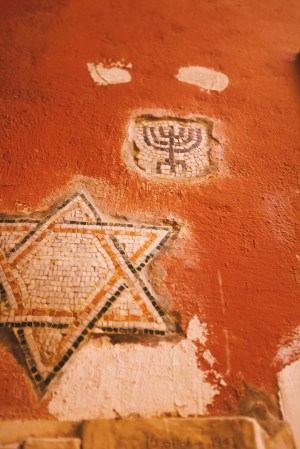
During a meditation before bed, I saw an image of a candelabra similar to what Jewish people use for Hanukkah. It was yellow/gold in color, engraved/etched onto a surface. All at once I saw the imagery of a star, a silhouette of a woman, and a beam of light move from the base of the candelabra through the top and beyond.
In these moments, I did not understand the significance of or the relationship between these images. What did a feminine figure have to do with the Jewish candelabra? What is the name of their candelabra? I could not even recall the name of it. It was something I grew up knowing the name of, as it was an image that I frequently saw beside the kinara of Kwanzaa in my school-aged years.
Because I was sheltered from the Abrahamic religions, my mother opted for participating in Kwanzaa as a means to shield me from any potential bullying from my classmates, and to celebrate a part of my diverse heritage. It was already a problem for my peers and the adult staff at school that I chose to identify as a Jamaican-American or a mixed person, as opposed to African-American. To tell a group of African-American Christians or those with an Afro-centric view that I didn’t celebrate Christmas or Kwanzaa, or that my mother taught me to listen to my dreams and intuition, would only serve as a means to further isolate myself; and by extension, my little sister. So celebrate Kwanzaa we did, until I began high school.
 November, which begins with All Saints Day (yesterday) and All Souls Day (today), gives us a quiet, welcome break between the loud make-believe of Halloween and the incessant caroling of the winter solstice season with its popular holidays. In the Northern Hemisphere, the days are noticeably shorter and darker now. Where I grew up, it’s gray, cloudy, and often rainy. It has always seemed to me that people are turning inward and the month is closing in on itself. Even today in southern California, I feel a delicious melancholy composed of silence and rest from hard work.