
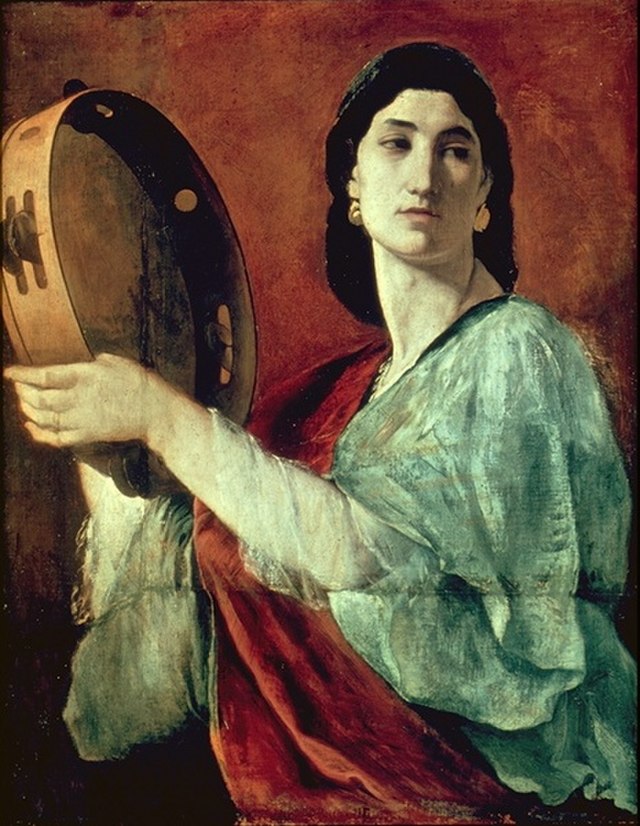
Bathsheba: From Survivor of Sexual Abuse to Queen Mother by Linda Cooper Costelloe

Bathsheba by Artemisia Gentileschi, wikimedia commons, public domain

The image we have of Bathsheba is that of a scheming temptress. That’s the way she’s been portrayed in media, such as the 1951 movie, David and Bathsheba, and Leonard Cohen’s song, Hallelujah. She deliberately bathed on a rooftop in sight of King David. She caught his eye and he was helpless to withstand her charms. The Bible does not support that image of Bathsheba, however. It says that Bathsheba was used and abused by David, and God was displeased.

The Bible says that David was on his rooftop. It does not say where Bathsheba was, only that she was bathing to purify herself after her period (2 Samuel 11:2-4). She was probably in an inner courtyard. In their book, Flawed Families of the Bible. How God’s Grace Works Through Imperfect Relationships, David E. Garland and Diana R. Garland write: “The laws required ritual washing at the conclusion of her menstrual period. A woman would be highly unlikely to conduct such a cleansing from her menstrual period as a come-on. If she were in public view, she would have washed without disrobing. There is no reason even to assume that she was naked. Public nudity was not acceptable in this ancient Jewish culture but instead was considered shameful. There is no foundation for assuming she was some kind of exhibitionist.”i

Continue reading “Bathsheba: From Survivor of Sexual Abuse to Queen Mother by Linda Cooper Costelloe”

From the Archives: Aren’t We All Divine Children? by Janet Maika’i Rudolph

This was originally posted March 18, 2021
Note from Janet: Thank you all who supported the launch of my book Desperately Seeking Persephone on May 19. Due to a printer’s error, the original books sent out were deeply damaged without formatting, editing and with uncertain content. If you received one of these books you are entitled to a free replacement. I have put instructions at the bottom of the post for anyone affected to receive their copy.

Consider the following four birth stories:

Continue reading “From the Archives: Aren’t We All Divine Children? by Janet Maika’i Rudolph”

Willful Women, Feminist Killjoys, and Jesus: Reflections on Sara Ahmed’s Living a Feminist Life by Liz Cooledge Jenkins

I’ve been thinking about willful women and feminist killjoys—two main guiding images in feminist scholar Sara Ahmed’s book Living a Feminist Life (Duke University Press 2017).

The idea of the willful woman (or willful girl, or willful person) is something I can easily get behind. The way I understand it, it has to do with women getting in touch with our own wills and being willing to speak and act and live out of our wills. Particularly if these wills turn out to exist in opposition to the things other people might will for us.

It’s about learning to stand up for ourselves, learning to affirm our full humanity in a world that often expects…less. It’s a way of consciously, intentionally being willing to be called “willful” as a negative thing—as in, stubborn, selfish, antagonistic, difficult—because the affirmation of our own wills is worth it.

I like all of this and find it helpful. Be willful. Expect pushback and penalties for it. Be willful anyway.

Continue reading “Willful Women, Feminist Killjoys, and Jesus: Reflections on Sara Ahmed’s Living a Feminist Life by Liz Cooledge Jenkins”

Biblical Poetry – Trees by Janet Maika’i Rudolph

Image from an Egyptian tomb ca. 1314-1200 BCE. Isis is giving nourishment in the form of fruit and drink,

In many cultures of the world, including our own, trees are considered the ancestors of humanity – own our ancestors.

Trees are connected with great goddesses throughout antiquity. We see this in the bible where, as I’ve noted before, the Tree of Life is Eve’s tree for the word Eve means life. It is, in essence, the Tree of Eve. Goddesses in trees feeding humans were common themes in ancient Middle Eastern art. The tree was Hers to give freely of as she wished.  

Anthropologist and religious scholar, Mircea Eliade writes extensively about the associations of trees ancestral connection to humans. He calls them both mystical and mythical.[1] His examples include the Miao groups of Southern China and Southeast Asia who “worship the bamboo as their ancestor.” He also notes Australian tribes who view the mimosa as their progenitor. And there is a tribe from Madagascar, called Antaivandrika which means “people of the tree,” who considered themselves descended from the banana tree.

Continue reading “Biblical Poetry – Trees by Janet Maika’i Rudolph”

Beauty in the Heart of the Beholder by Janet Maika’i Rudolph

In the past two years, I began a project which I call biblical poetry. I had been doing my own translations of biblical verse based on the hieroglyphic meanings of Hebrew words. Ancient Hebrew or Semitic Early writing grew out of the hieroglyphs of Egypt. Since hieroglyphs are pictures, we are able to use the rebuses or picture puzzles to glean the original or at least older meanings of words. I have begun to see these a route to interpreting meanings from before the dawn of patriarchy. This door to understanding appeals to my religious/spiritual/feminist sensibilities. At first, I attempted to stay somewhat true to the well-known meanings as they have come down through the ages. When I began my poetry project, I broke out of that structure to reveal the more mystical/shamanic/pagan meanings that I find beneath the words. At the bottom of this post, I have links to a few of my past biblical poetry posts.

The bible is quite large, so this is an encompassing project with lots of material to explore. This month, I wanted to take a look at how the concept of beauty is treated in the bible. The word for beauty is yaphah. Yaphah can also mean miracle and wonder as well as beauty. Let’s stop for a minute to unpack that. When we think of the word beauty in our culture, the thought is generally about how someone looks (unusually a female someone). But just the Hebrew word alone broadens the meaning. If beauty is someone or something that is wondrous and has miraculous qualities than it goes well beyond cultural standards of how someone looks. If you love someone, they would be beautiful to you because they would be wondrous. Biblical usages and translations tend to focus on beauty, mostly women, sometimes cows (yep cows) and a few handsome men in the mix. But I found that yaphah doesn’t have to be a vision that relies on one’s eyes.

Continue reading “Beauty in the Heart of the Beholder by Janet Maika’i Rudolph”

Moses and the Rambo Problem by Janet Maika’i Rudolph

Moses is an interesting character is in the pantheon of religious leaders. He is such a major personage, considered the founder of Judaism and yet there are no extra-biblical accounts of his life and his deeds. He only exists in the bible. You’d have thought that such a major event as leading a whole class of people away from Egyptian slavers, would have shown up on the radar of other written or mythical accounts from the time. Nothing!

Even his name is interesting. When the Egyptian princess gathered Moses out of the waters she said:

She named him Moses, explaining,

“I drew him out of the water.”

Exodus 2:10

This is one meaning of his name. But there are others. In Egypt, the land where he was born and raised, the M-SH (variations: m-s or m-ss) root simply means “son.” Or it can mean “child” in a non-patriarchal sense. We see this in other Egyptian names Ramses is the child of the sun god Ra. Tutmose is the child of Tut. 

Continue reading “Moses and the Rambo Problem by Janet Maika’i Rudolph”

Eden, Eve and a Tale of Seeds by Janet Maika’i Rudolph

Last month I wrote about the Garden of Eden. You can read it here:

In that post, I described how Eden is essentially a garden of treasures. What are those treasures? I believe that they are seeds, the most prolific and creative element for spreading life here on Earth. Below is my own fantastical story about the Garden and how the seeds came to reside there.

Sinuous and serpentine, Hawwah, Hayyat, Eve emerged from Apsû, carrying within her seeds, fertilized eggs, and all the fruitfulness and abundance therein. 

Continue reading “Eden, Eve and a Tale of Seeds by Janet Maika’i Rudolph”

Asherah, Blessed, Asherah by Janet Maika’i Rudolph

Once upon a time, the Great Goddess was the spiritual focal point of ancient culture. Her worship included honoring women, living in harmony with the earth, and cherishing the processes of the cycles of nature. Asherah was one of those Goddesses. When the Patriarchs moved in and worked to suppress the old goddess religions, Asherah and her fellow Goddesses were diminished, and in a propaganda coup we might recognize today, defined Her as evil. I imagine that some brave people fought to hold onto the Goddess in Her glory but when they saw they were losing the battle, they encoded Her and Her Sister Goddesses into their cultural mythology. Hidden in this manner, She found Her way into the bible. If we can uncover those codes, we can reclaim Her, others and their Earth-based spirituality.

Continue reading “Asherah, Blessed, Asherah by Janet Maika’i Rudolph”

Biblical Poetry, 5th Installment

This is the 5th in a series of work I have been doing to translate passages of the bible into poetry that strips out the patriarchal overlays. You can read the previous posts.

In this installment I am grouping together some passages that deal with vibrational energy and its role in creation. We humans often express sacred vibration as song or chant. When we get into the vibrational flow they are truly uplifting. In the translations below, I have kept two of the words in Hebrew because of their wonderful vibrational essences:

Continue reading “Biblical Poetry, 5th Installment”

Biblical Poetry, Part 2 by Janet MaiKa’i Rudolph

Last month, I wrote about a new project I have been playing with which is to re-write biblical verses as spiritual poetry rather than follow along with stricter translations (although truth be told, my translations have never been strict). My main goal is to strip away the layers of patriarchy that grew up around universal, earth-based, mystical lessons. In my last blogpost I wrote about why I translate El (god in English versions) as All-Potential Powers. You can read it here: https://feminismandreligion.com/2021/04/15/biblical-poetry-by-janet-maikai-rudolph/

I have written before about my translation of YHVH as mother/father creator. You can read that here: https://feminismandreligion.com/2019/03/05/eve-by-any-other-name-by-janet-rudolph/ 

YHVH, the sacred 4 letter tetragrammaton, is always translated as LORD in the bible. It is truly a wondrous name with many layers of meaning which the English one-word term LORD doesn’t capture. I find that the English translations of these two words – LORD and god – are dull and without sacred energetic aspects. In ancient times, the words used to depict divinity in general, and YHVH specifically, were meant to be intoned and chanted.

Continue reading “Biblical Poetry, Part 2 by Janet MaiKa’i Rudolph”