Public Goddess Gatherings by Caryn MacGrandle

I swat at her like an annoying fly.  ‘Stop it.  I’m good. I’m very happy.  Go away.’

Photo credit:  Melitas istockphoto

I took a part time security gig on the weekends to bring in some extra cash, and they sent me out to direct traffic at a holiday outdoor market here.  150 booths of incredible, local, organic, home-made, natural items.  Right up my alley.

The festival started at noon.  And the steady stream of cars started.  By 12:45pm, the entire parking lot was filled, several football fields long: a Dave and Busters, a Wahlburgers and a Trader Joe’s sharing the same area.  All their spaces filled too. 

Continue reading “Public Goddess Gatherings by Caryn MacGrandle”

The Dying Throes of Patriarchy in the House of the United States by Caryn MacGrandle

Women all nationalities stand with their proud heads speaking out against patriarchy struggle for empowerment.

The other day I wrote on the Mother Well feed section of my app my disappointment about the new House Speaker Mike Johnson. 

Mike has proposed and supported bigoted and racist filled legislation. He is against same sex marriage, abortions and even was accused of making changes to legislation to allow clergy to refuse to perform marriage for interracial couples. 

Yes, you read that correctly.

Yes, this is 2023.

Continue reading “The Dying Throes of Patriarchy in the House of the United States by Caryn MacGrandle”

Free Write at the Turning of the Wheel by Sara Wright

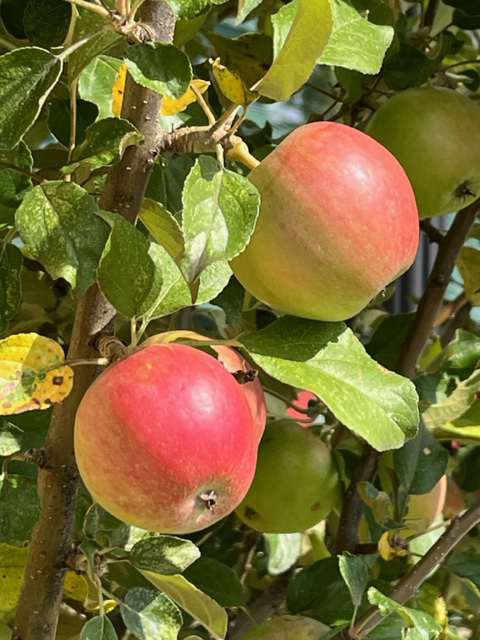
Pink plastic barbies in a pink plastic world they said it was great it was garbage insulting every feminist I know – as for ecofeminism – well it must be dead am i dead too? – how could an earth lover survive in a plastic world with plastic pink barbies I barely made two hours? -oh yes a few colors they had to didn’t they? And the hourglass figures dominated the dolls that tip over because they are so tall even without high heels – an insane movie full of patriarchal lies and this is our culture – constructed out of lies – i left in confusion – people i trusted said a “must see” – turns out one, a professor that recommended it hadn’t seen it – had been seduced by reviews – who doesn’t believe the new york times besides me ?– thick humidity greeted me at the door after the pink charade – oh something alive captures me from a ten inch tree – two rosy apples ignite a soul dead corpse – yet another torrential downpour blurred my

Continue reading “Free Write at the Turning of the Wheel by Sara Wright”

When Every Day Will Be Tu B’Shevat by Ivy Helman.

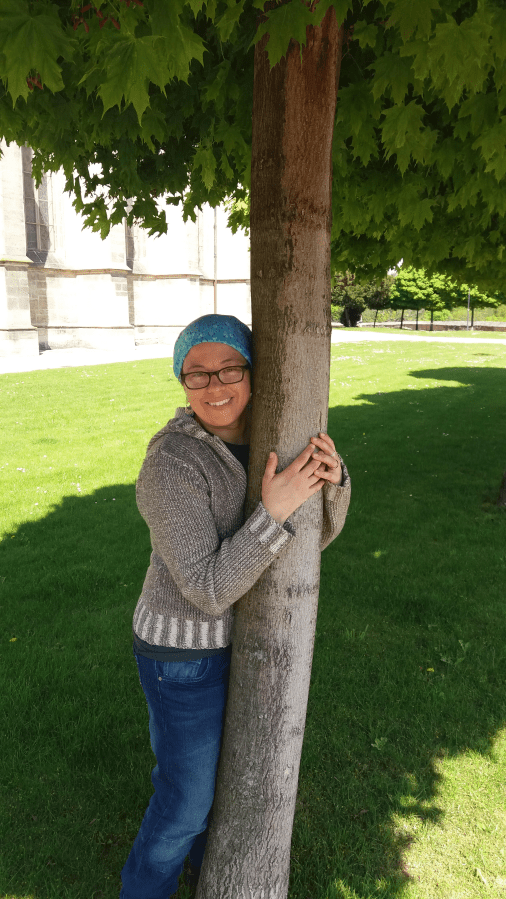
ivy tree huggingTomorrow is Tu B’Shevat, the New Year of the Trees, or their birthday.  It is the day of the year when all trees, regardless of when they have been planted, turn another year older.  The rabbis standardized this day in an effort to minimize complexities, since in the land of Israel, fruit can only be eaten from trees that are four or older (Leviticus 23-25).  Tu B’Shevat, then, on a practical level, marks how old fruit bearing trees are.   

The holiday has evolved since then.  In the 16th century, Kabbalistic mystics developed a seder to celebrate the holiday, which involved eating certain fruits, drinking both red and white wine, saying blessings, and reading certain mystical texts.  Each type of fruit one eats has a specific mystical meaning whether the fruit is completely edible (i.e. apple), has an inedible pit (i.e. olive), has an inedible shell (i.e. pistachio) or has a covering one generally wouldn’t eat, but could (i.e. orange). To this day, many congregations observe the holiday by hosting their own Tu B’Shevat seders often ripe with such kabbalistic overtones.  Continue reading “When Every Day Will Be Tu B’Shevat by Ivy Helman.”

“Don’t Let the Store Shop You” by Natalie Weaver

My mother, in the great tradition of all mothers, says things sometimes that:  1) crack me up; 2) speak some depth of human truth; and 3) plainly and pithily state facts that could never be otherwise articulated, even if the task were undertaken by the whole complement of talents of Shakespeare, Goethe, Dostoevsky, and J.K. Rowling combined.  I occasionally feel that I have failed as a mother myself because I do not have a mom-ist voice. If I have one, it surely isn’t pithy. I often find myself spending four hours in a graduate seminar, lecturing on some aspect of Christology and ministry or the like, only to summarize the whole thing with a “momism” that better said what I was getting at all along.

Today, in conversation, I came back around to one of my mom’s oldest and best bespeakings of truth-to-power. Some years back, we were talking about a sale at Macy’s, observing that the base prices on things seemed to go up and down in relationship to sale percentages, such that one always pays about the same, whether the item is “on sale” or just “for sale.”  Even the language of “on sale” seemed ridiculous, we mused, since everything in the store was being sold.  If the sale is “on,” I guessed that means it is “on,” like a string of pulsing Christmas lights or a kettle of boiling water or a revving engine, as opposed to a static, dusty package of picture hangers forgotten in the bottom rack of a narrow row in the bowels of a hardware store (unless, of course, the picture hangers were, well, on sale).  Continue reading ““Don’t Let the Store Shop You” by Natalie Weaver”

Who is the Perpetrator? by Oxana Poberejnaia

A poem by Thích Nhất Hạnh, a Vietnamese Buddhist monk and peace activist, “Call Me By My True Names,” lists various situations from natural world and the world of humans, most of them to do with violence and death. He claims in the poem to be both: the victim and the perpetrator of violence.

This poem has always bothered me. I can understand a world perspective where you express solidarity with all the sufferers, but how to come to terms with identifying oneself with the oppressors and murderers?

At my current limited level of understanding of the Buddhist teaching I can only say that perhaps the words: “I am a rapist and a murderer” point to tendencies that are present in all of us. First and foremost it is a tendency to divide, to separate. The most noticeable separation is between the “I” and the “outside” world.

First we counter position ourselves against all the others. Next we start believing that it is possible to achieve happiness just for ourselves, at the expense of the others. So we live egotistically. From here, I suppose, there is only a small step to rape and murder.

Continue reading “Who is the Perpetrator? by Oxana Poberejnaia”

Get Serious: Don’t Die in Character by Oxana Poberejnaia

oxanaRecently I had a few experiences that brought home to me the meaning of a saying by the Buddha:
What’s the laughter, why the joy,

When the world is ever burning?

Plunged into darkness,

Won’t you look for a lamp?

Dhammapada, 146, translated by Valerie J. Roebuck

dhammapada-logo-2This saying is one of those that sound a bit curious to a Western ear. It is almost as if the Buddha was against fun or humour. However, we all are familiar with the Buddha’s depictions where he smiles. The canonical texts also bear witness to the Buddha’s smiling.

It has become clear to me that the Buddha points here at the preciousness of the limited time we have in this human life. In short, he was saying that suffering is not a laughing matter, and life is not a joke.

Time is running out – the message that is even more relevant today, as it relates now not only to each of us individually, but to all of us as a species.

Continue reading “Get Serious: Don’t Die in Character by Oxana Poberejnaia”

On Minimalism by Ivy Helman

untitledOne of the concerns of ecofeminism is the modern materialistic mindset of capitalism. Materialism in capitalism instills not just owning many possessions, but it also inculcates the “need” to own the newest innovation. In addition, materialism advocates a throw-it-away mentality. In other words, it is often cheaper to buy a new shirt or computer than to have them repaired. Similarly, it is not enough to have a cell phone. Rather, one must have the newest and best one! The environment pays the price.

One attempt to deny the hold of materialism is minimalism. The minimalist movement seems to run the spectrum. From the ideals of less is more, there seems to be some competition between mindful consumerism and extreme self-denial. Mindful consumerism suggests that minimalism is a journey of recycling, reusing and repairing combined with well-researched, well-considered, as-ethically-produced-as-possible purchases when necessary. Extreme self-denial advocates owning almost no material possessions. While I strive toward mindful consumerism, I have serious concerns about extreme minimalism. Continue reading “On Minimalism by Ivy Helman”

Pause, Stop and Re-evaluate your place within patriarchy and capitalism by Oxana Poberejnaia

oxanaThere are three vicious circles: patriarchy, samsara and wanton destruction of environment. All three lead ultimately to annihilation of life. All three are incredibly difficult to escape. One of the reasons for this difficulty is that there are pay-offs. Someone or something benefits from keeping the cycles going.

Men and Mothers-in-Law seemingly benefit from patriarchy. However, the privileges granted by patriarchy are based on a pyramid scheme of tyranny. You get to bully people who are below you on the patriarchal pecking order: women, men of the lower status, daughters-in-law. Everyone at the higher level gets to bully you. The top man lives in constant fear of de-throning. Continue reading “Pause, Stop and Re-evaluate your place within patriarchy and capitalism by Oxana Poberejnaia”

Stillness by Oxana Poberejnaia

oxanaI am visiting my home town in Russia for holidays. I have not been home for 3 years and I have not lived there for 12 years. Many things surprise me. One of the features of contemporary life in my home town is the relentless and often destructive onset of capitalism. As I have said already, currently patriarchy has joined forces with capitalism in order to suppress nature and oppress women.

One of the ways capitalism does this is by involving women and men into an endless rat race and by substituting their Wild Nature (as Dr Clarissa Pinkola Estés describes it) with an identity of a consumer. People willingly put on masks of consumers who live to make money and to spend it on entertainment which is sold to them.

Continue reading “Stillness by Oxana Poberejnaia”