

Part 1 was posted yesterday
May clearly defines her audience,
“For I am supposing our particular artist to be no gay tourist doing Europe according to guide-books, with perhaps few lessons, here and there, taken only for the name of having been a pupil of some distinguished master, but a thoroughly earnest worker, a lady, and poor, like so many of the profession, wishing to make the most of all opportunities, and the little bag of gold last as long as possible”(6).
In her book, she covers three art hubs, London, Paris, and Rome, providing information on means of travel, places to stay, artists to study with, galleries and museums to frequent, scenic sites for sketching and painting, and even stores to buy art supplies and clothing. A more useful document, I cannot imagine! Julia Dabbs concurs with this assessment in her article Empowering American Women Artists: The Travel Writings of May Alcott Nieriker:
“Then as now, it is difficult to imagine a reader not being inspired by May’s words of encouragement, her practical advice, and her passion for art.”
Wendy Slatkin in her book The Voices of Women Artists, says of May and her guidebook,
“Her spirited defense of women artists in general and American women painters in particular make her book valuable document of the growing feminist awareness among women artists by the last decades of the nineteenth century”(126).
Julia Dabbs also depicts May as an advocate for women’s rights, one who openly called out discriminatory practices,
“Nieriker had first raised the gender inequity issue in 1876, soon after her arrival in Paris. In a letter addressed to the Boston Evening Transcript, she openly criticized the popular Academie Julian, where women would encounter ‘very inferior advantages at more than double the cost charged to the men, and in this as in so many other ways the injustice toward women who are trying to help themselves is very apparent.’”
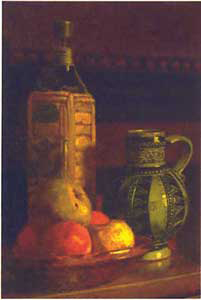
In 1877, after years of hard work and study, one of May’s paintings was accepted into the Paris Salon, others were to follow. In a letter home, she teases about her new notoriety:
“My dear Marmee’s heart will be delighted to hear that my little picture is accepted at the great Salon exhibition, where from 8500 works sent in, only 2000 were accepted, and mine was thought worthy a place among the best. Who would have imagined such a good fortune, and so strong a proof that Lu does not monopolize all the Alcott talent. Ha! ha! sister, this is the first feather plucked from your cap, and I shall endeavor to fill mine with so many waving in the breeze that you will be quite ready to lay down your pen and rest on your laurels already won”(Ticknor 192).
No doubt that May’s success made Louisa and the entire Alcott family happy!
May was a lively person who enjoyed herself most of the time, regardless of what others thought. This excerpt from a letter home from London reveals her spark:
“But the boating fever was on me, and I could no more keep from the water than a Newfoundland dog. With a naughty satisfaction in asserting my Yankee independence, I boldly replied to their gentle hints and kindly advice: ‘Very well: if you don’t like to go, I’ll go alone, for a row in the Rose I must have”(115).
Her feistiness is further exposed in this snippet from Dabbs:
“Armed with a dagger ‘in case of emergencies’, Alcott Nieriker was driven by her need to experience the world and its art, even if it meant riding on top of a carriage, despite the protestations of her travelling companions that she was ‘insane’.”
In 1878, May met the love of her life, Swiss businessman Ernest Nieriker, and they were married in a quiet, private ceremony in Paris. They settled just outside of the city and their time together was described by May as the happiest to date.
“We mean to live our own life free from conventionalities…I paint and walk and write all day…I feel like one in a happy dream selfishly enjoying my life without a thought beyond; Ernest, my pictures, my home, are all I desire. There is not a cloud as big as your hand in my sky,”(Ticknor 263-277), she wrote Louisa.
May knew hers was an unusual and enviable arrangement at the time:
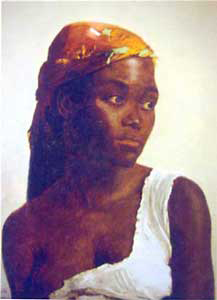
“I mean to combine painting and family, and show that it is a possibility if let alone…This blessed lot is mine, and from my purpose I never intend to be diverted…I am free to follow my profession”(278-279).
To this end, she even had the support of her mother-in-law:
“Mama often says, ‘Stick to your art, May, and let Ernest take care of himself.’ She believes in women having a career as well as men”(281).
This all-encompassing bliss was cut short by May’s untimely passing, and Ernest, honoring one of her final wishes, handed over their baby girl to Louisa who May knew would love the baby as she would have. When Louisa passed away eight years later, Ernest retrieved Lulu from Concord and took her to Switzerland and then Germany where she lived the rest of her life.
Although her still lifes, portraits, and sketches on display in the Orchard House are valuable, as Dabbs points out,
”her most potent legacy lives on not in her art, but rather in her travel writings, which often strikingly advocate for equal opportunities for women generally, and for women artists in particular.”
Answering the question, Who was this woman? has been a true adventure, uncovering a treasure with breadth and depth not imagined. I am taken with May, the one who painted her bedroom walls beautifully and who, for a moment, held it all in her hands and heart.
My hope is this short piece about such an ambitious and generous ‘little woman’ sparks you to read more, for there is always so much more than we can fit into a single post!
May Alcott Nieriker is a #Nasty Woman Writer, Artist, and Advocate.
Works Cited
Alcott Nieriker, May (Abigail). Studying Art Abroad and How To Do It Cheaply. Boston: Roberts Brothers, 1879.
Dabbs, Julia K. Empowering American Women Artists: The Travel Writings of May Alcott Nieriker, Nineteenth-Century Art Worldwide 15, no. 3 (Autumn 2016), http:/www.19thc-artworldwide.org/autumn16/dabbs-on-the-travel-writings-of-may-alcott-nieriker ).
Slatkin, Wendy. The Voices of Women Artists, New Jersey: Prentice Hall, 1993.
Ticknor, Caroline. May Alcott: A Memoir, Boston: Little, Brown, and Company, 1928.
Discover more from Feminism and Religion
Subscribe to get the latest posts sent to your email.


Fascinating! What an artist. What a woman. So interesting to have a look between the lines of Little Women.
LikeLike