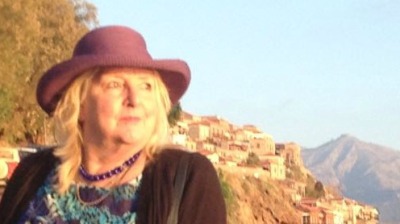
More Than Just an Image by Jassy Watson

jassyI spent 2015 teaching an Intentional Creativity program ‘Wisdom of the Goddess” to an intimate tribe of women creatives from our local community. In December we held an end of Year Art Gala displaying a portion of the work which saw over 100 paintings of Goddesses created over a 10-moon period.

The program was divided into the cycles of Creation, Transformation and Celebration, as inspired by Hallie Inglehard’s book “The Heart of the Goddess”. Each month, through ritual, visioning and painting, we explored a Goddess that represented these cycles; Eve, Anjea, Demeter, Cerridwen, Kali, Persephone, Aphrodite, Ochun and finally, our Inner Goddess.

It took great courage for the artists to display their paintings in public. It is often hard to explain this work because it requires such deep and thoughtful exploration of one’s inner world along with a commitment to a creative practice that favours personal growth and discovery over outcome. It can be difficult finding the language to elucidate on this process that is not just about the act of painting.

It is painting to grow and heal.

It is sacred.

It honours and empowers women.

It inspires authentic creative expression.

It unites one with self.

It connects one back to the earth.

It transforms.

It reveals.

The show was a great success. A gallery full of Goddesses was surely a sight to behold! It was a humbling experience to be out and proud about our creative work in our regional, agricultural, largely conservative community. I feel it is imperative for the restoration of female empowerment to be remembering and re-imagining the Goddess by way of image and it was through Her that these astounding women artists found the courage to put their heart and soul on the wall for all to see.

The influence that image has is far-reaching and cannot be under-estimated. Image is a universal language that evokes emotion and can go as far as mobilising the masses and even change the course of history. The famous photo of ‘Phan Thi Kim Phuc’ running naked down a road after a napalm attack during the Vietnam War is but one outstanding example.

As I reflected on the years work however, I was reminded that while these paintings carry with them incredible insights and powerful messages of change, growth, discovery and transformation, the Goddess is so much more than just an image; and certainly more than just an image to mass-produce and sell. While “the strength and independence of female power can be intuited by contemplating ancient and modern images of the Goddess” (Carol P. Christ in ‘Why Women Need the Goddess’), it cannot be forgotten that She is the sacred made immanent in the natural world, expressed in the diversity of all forms of life and death. We seek Her, sometimes even travelling to the ends of the earth to find Her, forgetting that She is everywhere. She is you and me and Her sacred sites are found in our own backyards.

With this in mind I recently returned to some creative investigations I had begun a few years ago exploring woman in nature and the Goddess as the body of the earth through paint. The earth speaks and I am listening to Her stories and bringing them to the canvas to re-affirm my sense of wonder and respect for nature. My aim is to awaken an ancient memory of the sacred relationship between human and nature, for now, more than ever, it is critical that this relationship be restored. In doing so, the earth may once again be seen and valued as a living, breathing body that sustains and nourishes all life rather than being merely a commodity to be devastated and destroyed in the name of capitalism and greed. Further, these images are reminders of the interconnectedness of all life; we are not separate from the earth, but part of its’ intricate web.

The following image was inspired in part by Terry Tempest Williams ‘When Women Were Birds’ but is also an image born from a revelation I had many, many years ago when I first starting seeing woman in nature, especially in the body of trees.
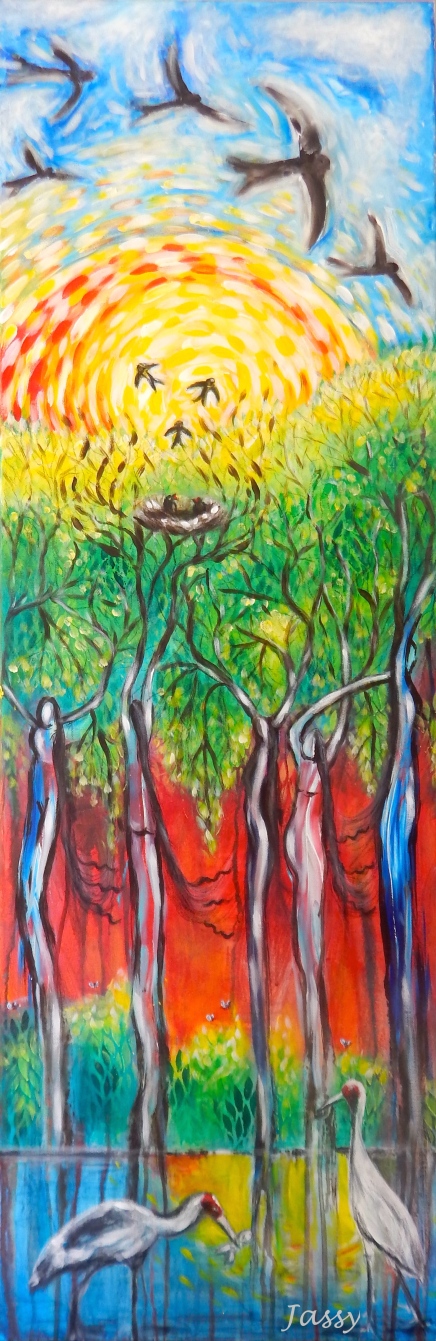
When women were birds FINAL


“We are the birds eggs. Birds eggs, flowers, butterflies, rabbits, cows, sheep; we are caterpillars; we are leaves of ivy and sprigs of wallflower. We are women. We rise from the wave. We are gazelle and doe, elephant and whale, lilies and roses and peach, we are air, we are flame, we are oyster and pearl, we are girls. We are woman and nature. And he says he cannot hear us speak.

 But we hear.”

 Susan Griffin, Woman and Nature: The Roaring Inside Her

Jassy Watson, who lives on the sub-tropical coast of Queensland Australia, is a Mother of four, passionate organic gardener, Intuitive/Visionary Artist, Intentional Creativity Coach and a student of Ancient History and Religion at Macquarie University, Sydney. She is the Creatress of Goddesses Garden Studio & Gallery; a small school for the Sacred Creative Arts. Jassy teaches regular painting workshops in person, nationally, internationally, and online based around themes that explore myth, history, earth connection and the Goddess. Her latest SOULSCAPES (TM) exploring woman in nature will be on show at ‘Dreaming Into Being’, Percolator Gallery, Paddington, Brisbane April 5th-11th. You can see her work at http://www.goddessesgardenandstudio.co
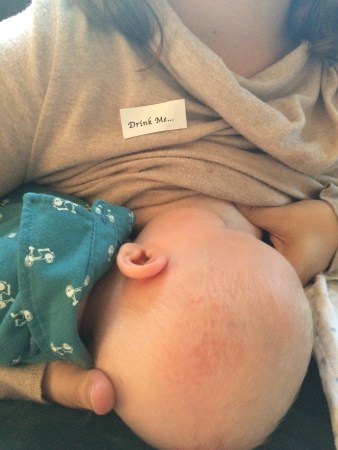
Breastfeeding and the Abject? by Sara Frykenberg

The trappings of motherhood are all too powerful reminders that, as Catherine Keller reminds us in her book From a Broken Web, mother goddesses have to be continually slain for patriarchal heroes to be born. Indeed, she suggests that conceptions of Western selfhood are based upon this symbolic matricide—so it is no wonder that breast milk might be considered abject…

IMG_3269Once upon time formula companies and complicit medical experts launched a serious campaign to sell more formula, telling a generation of mothers that this product was both superior to breast milk and far better for baby and mother. Some were convinced, others found formula a good alternative to breast milk given their employment status, hormonal changes, their particular baby’s needs,personal choice, difficulty producing their own milk, or the like; and still others chose to breastfeed despite criticism, like my mother-in-law, who received scorn and derision from medical personnel as the only breastfeeding mother in the hospital in which she gave birth in 1970.
Despite this effort, science has finally “proven” that breast milk, when it is possible to give it, is better for your child than synthesized alternatives. Wow. Well, the politics of believability aside, women in the U.S. are now encouraged to trust their own bodies to feed their babies and give the breast a try. In fact, every new book, article, website and internet forum, birthing class teacher and hospital nurse will tell you that “breast is best,” repeatedly, for months, asking you about your breastfeeding plan, and urging you to keep trying until you and baby get it right. A counter-campaign, this vigorous encouragement is working to undo the attitudinal changes within popular culture that placed a stigma on the breastfeeding woman. Continue reading “Breastfeeding and the Abject? by Sara Frykenberg”

Forgiveness is a *choice* by Vibha Shetiya

VibahSomeone I dearly love recently lent me a very sensible piece of advice: “You should forgive.” I know he resorted to these words out of love because he didn’t like seeing me in pain, a sentiment for which I was and remain grateful. I also know he wasn’t judging me when he brought it up, nor was he pressuring me into doing something I wasn’t ready for.
I truly understand how forgiving someone who has deeply hurt you can set you on the path to freedom. In the sense that forgiveness can loosen the chains that bind you to the past, the anger, the deep sense of betrayal, helping you learn to live again; that forgiveness is not so much about the other person but about the self. I have watched shows in which victims of horrific crimes or their family members have chosen to forgive, not always out of a sense of human bonding towards the aggressor, but because they could not live with the debilitating anger and hatred festering inside, and so chose to forgive to set themselves free. Continue reading “Forgiveness is a *choice* by Vibha Shetiya”

The Sacred Feminine or Goddess Feminism? by Carol P. Christ

In recent yCarol Molivos by Andrea Sarris 2ears “the Sacred Feminine” has become interchangeable with (for some) and preferable to (for others) “Goddess” and “Goddess feminism.” The terms Goddess and feminism, it is sometimes argued, raise hackles: Is Goddess to replace God? And if so why? Does feminism imply an aggressive stance? And if so, against whom or what?
In contrast, the term “sacred feminine” (with or without caps) feels warm and fuzzy, implying love, care, and concern without invoking the G word or even the M(other) word–about which some people have mixed feelings. Advocates of the sacred feminine stand against no one, for men have their “sacred feminine” sides, while women have their “sacred masculine” sides as well.

Nothing lost, and much to be gained. Right? Wrong.

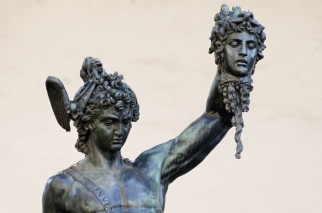
Perseus with the Head of Medusa: Sacred Masculine?
Perseus with the Head of Medusa: Sacred Masculine and Sacred Feminine?

When Goddess feminism emerged onto the scene early in the feminist movement, it had a political edge. It was about women affirming, as Meg Christian crooned in “Ode to a Gym Teacher,” that “being female means you still can be strong.” Goddess feminism arose in clear opposition to patriarchy and patriarchal religions. It was born of an explicit critique of societies organized around male domination, violence, and war; and of the male God or Gods of patriarchal religions as justifying domination, violence, and war. In this context, “the sacred masculine” was not understood to be a neutral or positive concept. To the contrary, the male Gods of patriarchy were understood to be at the center of symbol systems that justify domination.

The terms “the masculine” and “the feminine” were floating around and sometimes evoked in early feminist discussions, but when examined more closely, they were rejected by most feminists as mired in sex role stereotypes. The psychologist Carl Jung, for example, associated the masculine with the ego and rationality and the feminine with the unconscious. True, he argued that modern western society had developed too far in the direction of the masculine and needed a fresh infusion of the feminine in order to achieve “wholeness.” This sounded good, but when feminists looked further, they discovered that Jung and his followers harbored a fear of the uncontrolled feminine.

Jungians consider the unconscious to be the repository of undisciplined desires, fears, and aggressive feelings that require the rational control of the ego. Though strong and intelligent women were among Jung’s most important followers, Jung and his male companions retained a fear of independent women, speaking of women who developed their rational sides fully enough to argue with men and male authorities as “animus-ridden,” a term not meant as a compliment.

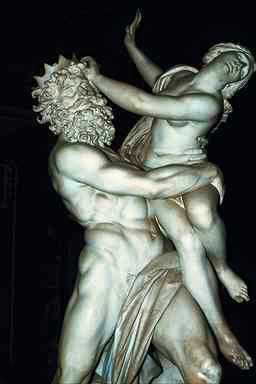
Hades Abducting Persephone: Marriage of Sacred Masculine and Sacred Feminine?

Jungians, following Erich Neumann, understand the progress of history through an evolutionary model in which humanity began in a matriarchal stage in which the unconscious reigned. This period of culture, which spawned the image of the Great and Terrible Mother, was primitive and irrational. Matriarchy was naturally superseded by patriarchy, in which the individual, the ego, and rationality emerged. In the patriarchal stage of culture, male Gods and heroes were the primary symbols, and rationality reigned supreme.

The patriarchal stage of culture had its limitations, which were revealed in the two World Wars of the twentieth century and the nuclear and environmental crises that followed. Rational man, Jungians argued, had come to the point where he needed to reconnect with his feminine side. The unconscious feminine was now understood to be a nurturing matrix that included the body, nature, and feeling, from which rational man should and could never fully separate himself.

The great archaeologist Marija Gimbutas also spoke of two cultures within Europe, an earlier matrifocal one she called Old Europe and a later patriarchal one. The Jungian Joseph Campbell endorsed Gimbutas’ work, leading some to assume that Gimbutas and Jungians hold similar theories of human history. In fact they do not: Gimbutas did not subscribe to an evolutionary theory of culture. She would never have said that the earlier matrifocal culture “had to be superseded” by the later patriarchal culture “in order for civilization to advance.” The clear conclusion to be drawn from Gimbutas’ work is that the patriarchal culture was in almost every way inferior to the one it replaced.

For Gimbutas, the agricultural societies of Neolithic Old Europe were peaceful, egalitarian, sedentary, highly artistic, matrifocal and probably matrilineal, worshiping the Goddess as the powers of birth, death, and regeneration. These societies did not evolve into a higher stage of culture, but were violently overthrown by Indo-European invaders. The culture the Indo-Europeans introduced into Europe was nomadic, patriarchal, patrilineal, warlike, horse-riding, not artistic, worshiping the shining Gods of the sun as reflected in their bronze weapons. Gimbutas did not look forward to a new “marriage” of matrifocal and patriarchal cultures. Rather she hoped for the re-emergence of the values of the earlier culture. Her theories had a critical edge: she did not approve of cultures organized around domination, violence, and war.

This critical edge is exactly what is lost when we begin to substitute the terms “sacred feminine” for “the Goddess” or “Goddess feminism” and “sacred masculine” for “patriarchy” and “patriarchal Gods.” When we allege that we all have our “masculine and feminine sides,” and that it is important “to reunite the masculine and the feminine,” it is easy to forget that in our history, the so-called sacred masculine has been associated with domination, violence, and war.

If we hope to create societies without domination, violence, and war, then we must transform the distorted images of masculinity and femininity that have been developed in patriarchy. We must insist that domination, violence, and war are no more part of masculinity or male nature than passivity and lack of consciousness are part of femininity or female nature. It may feel good to speak of reuniting the masculine and the feminine, but feeling good will not help us to transform cultures built on domination, violence, and war.

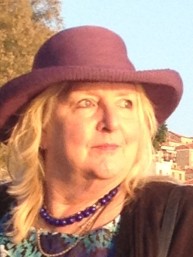
Carol P. Christ is author or editor of eight books in Women and Religion and is one of the Foremothers of the Women’s Spirituality Movement. She leads the Goddess Pilgrimage to Crete in Spring and Fall: Early Bird Special until February 15. Follow Carol on Twitter @CarolP.Christ, Facebook Goddess Pilgrimage, and Facebook Carol P. Christ.  Photo of Carol by Andrea Sarris.

A Serpentine Path Cover with snakeskin backgroundA Serpentine Path: Mysteries of the Goddess will be published by Far Press in the spring of 2016. A journey from despair to the joy of life.
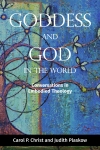
Goddess and God in the World: Conversations in Embodied Theology with Judith Plaskow will be published by Fortress Press in June 2016. Exploring the connections of theology and autobiography and alternatives to the transcendent, omnipotent male God.

Islamophobia is Gender Violence and a Feminist Issue

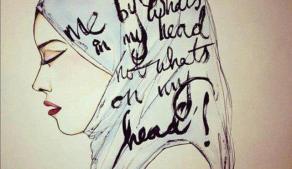
The case of Larycia Hawkins, an African-American Christian, Associate Professor of political science at Wheaton College in the United States, who published a photo on Christmas day on Facebook wearing a headscarf in solidarity with Muslim women victims of Islamophobia, has raised a significant controversy about whether non-muslim women wearing the hiyab is useful for Muslim women and our feminists struggle in Islam or not. Beyond the debate about veils, the heated discussion that followed reminds us that Islamophobic violence against Muslim women is a gender matter that must be addressed not only by Islamic feminists, but also by all decolonial feminists.

According to Itzea Goicolea Amiano, a Spanish researcher, in her work “Feminismo y Piedad” (“Feminism and Piety”):

Gender Islamophobia is a term that refers to the xenophobic and Islamophobic attitudes mixed with sexist and misogynist discourses that oppress, discriminate and targets with a negative preference for Muslim women more than muslim men …

Continue reading “Islamophobia is Gender Violence and a Feminist Issue”

Gun Control and Party Lines by Gina Messina-Dysert

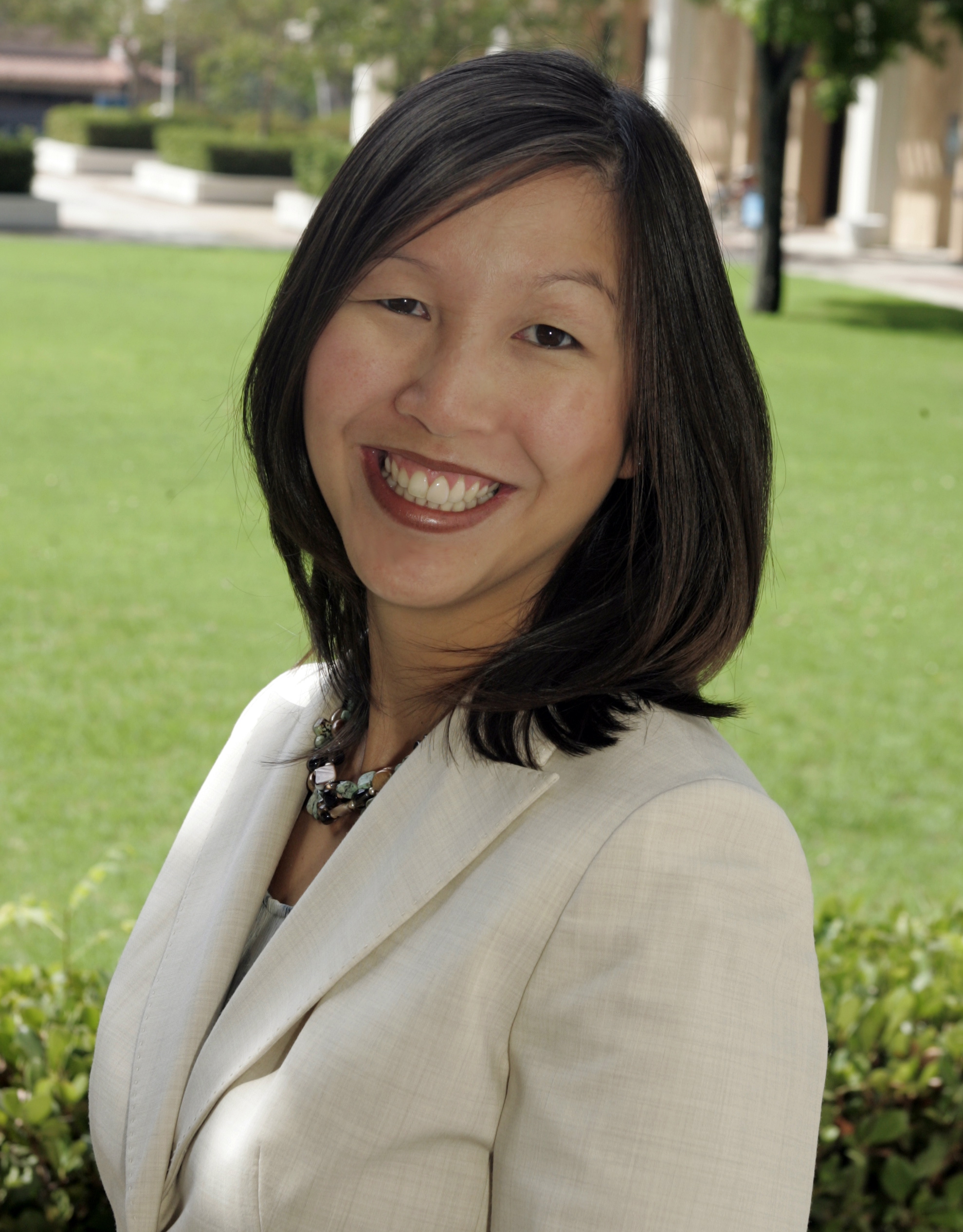
Gina Messina-Dysert profileGuns and bibles have somehow become linked in this nation. Particularly throughout the midwest and the south, many associate their right to own a gun with their Christian religious values.  I personally find this confusing given Jesus’ stance on non-violence.

Many call me a “gun hater,” and that might not be too far from the truth.  But with that said, I need to be honest and share that there are guns in my home. They belong to my husband, Chris, but they exist in my space. It was a major issue that we debated before and after we were married.  Growing up in Ohio, Chris started hunting at a young age and continues to do so today (yes, he does eat what he kills).  We have a six year old daughter and I find it very difficult to cope with the fact that we own guns with a child in the house.  Nonetheless, we own a gun safe and take proper precautions.  And although I don’t like guns and I don’t like hunting, after fifteen years of marriage, I finally told my husband that I am going to stop judging him for his hunting lifestyle – it seems like the Jesus thing to do. *read sarcasm

I share this to say that the gun debate that exists in this nation also exists in my home.  Both my husband and I feel very strongly about our stances.  But we love and respect each other and so we find ways to compromise and ensure that in some ways we are both getting what we want, our rights our being honored, and safety is always our first concern.

The gap in the gun control debate has grown substantially in the last few decades.  During his presidency, Ronald Reagan argued that “I do not believe in taking away the right of the citizen for sporting, for hunting and so forth, or for home defense. But I do believe that an AK-47, a machine gun, is not a sporting weapon or needed for defense of a home” (February 6, 1989).  I don’t disagree with this position, and I don’t think many would.  However, the debate over gun control has become about party lines rather than a reasonable law that honors rights and is committed to safety.

In 2015 there were more mass shootings in the US than days in the year. In fact, the US has one of the highest murder rates of developing countries with nearly three quarters of those murders being committed with a gun. In addition, gun control is a serious women’s issue given that most women murder victims are killed by a gun by someone they know. Following the mass shooting at Umpqua Community College on October 1, 2015, Obama commented, “Tally up the number of Americans who’ve been killed through terrorist attacks over the last decade and the number of Americans who’ve been killed by gun violence, and post those side-by-side.”  So here are those numbers:

From 2005-2015:

  • Americans killed in terror attacks on US soil: 71
  • Americans killed by gun violence in the US: 301,797

Whether you are an Obama supporter or not, you have to admit, the numbers don’t lie. Also important to note, mass shootings only account for about two percent of gun deaths annually. Most of those killed by guns are murdered in various situations from domestic violence, to arguments at the bar, to road rage; there are numerous situations that result in someone being murdered with a gun in the US each year.  When I hear Trump propose that there should be no such thing as a gun free zone, I wonder if he is really looking at the issue with a critical eye?

Many republicans don’t disagree that some level of gun control is needed. For instance, in January, 2013 now Speaker of the House, Paul Ryan stated “I think we need to find out how to close these loopholes and do it in such a way that we don’t infringe upon people’s Second Amendment rights.” He continued, “We had this issue, 2001, 1999 I think … when I first got into Congress. At the time I remember thinking, ‘You know, there is a loophole here. We should address that.'”

However, in January of 2016 when President Obama announced his executive action aimed at reducing gun violence, Ryan criticized him for being “dismissive” and called his actions unconstitutional.  Focused on expanding background checks, registration for licensed gun dealers, and narrowing the gun show loophole, Obama’s executive action mirrors Ryan’s call for change in 2013.  However, once the plan was proposed by a democrat, Ryan argued, “We all are pained by the recent atrocities in our country, but no change the president is reportedly considering would have prevented them…At a time when the country wants the president to lead the fight against radical Islamic terror, this is yet another attempt to divide and distract from his failed policies.”

Likewise, Marco Rubio took to the airwaves claiming that Obama wants to take away everyone’s guns.  In an interview on Good Morning America, Rubio made this argument and was quickly called on the carpet by George Stephanopoulos.  Backing down, barely, Rubio acknowledged that the executive action would not take away gun owner rights, but continued that he strongly believes this is the ultimate goal of Obama. Rubio then followed up calling all citizens to purchase guns.  Appearing on Face the Nation with John Dickerson, Rubio argued, “If ISIS were to visit us, or our communities, at any moment, the last line of defense between ISIS and my family is the ability that I have to protect my family from them, or from a criminal, or anyone else who seeks to do us harm. Millions of Americans feel that way.” It seems that fear mongering rather than facts continues to play a critical role in our gun control debate.

While our politicians are obsessed with battling party lines and maintaining partisan stances, our “Christian” nation continues to be one of the most violent.  As a Catholic and a feminist, I would personally like to see harsher gun control laws.  But that said, I wonder, if we fought so vigorously for every person’s right to have food, clean water, and health care as we do for guns, where would we be as a nation? As a people? A global community?  When will our politicians stop focusing on personal vendettas and instead put the needs of the people first?


This article is an excerpt from Jesus in the White House coming from the Far Press in Spring, 2016.

Gina Messina-Dysert, Ph.D. is Assistant Professor of Religion and Gender Studies at Ursuline College and Co-founder of Feminism and Religion. She writes for The Huffington Post, has authored multiple publications and is the co-editor of the highly acclaimed Faithfully Feminist: Jewish, Christian, and Muslim Feminists on Why We Stay. Messina-Dysert is a widely sought after speaker and has presented across the US at universities, organizations, conferences and on national platforms including appearances on MSNBC, Tavis Smiley, NPR and the TEDx stage. She has also spoken at the Commission on the Status of Women at the United Nations to discuss matters impacting the lives women around the world. Messina-Dysert is active in movements to end violence against women and explores opportunities for spiritual healing. Connect with her on Twitter @FemTheologian, Facebook, and her website ginamessinadysert.com.

Wisdom Fiction (Part 2) by Elise M. Edwards

Elise Edwards“There are years that ask questions and years that answer.” from Their Eyes Were Watching God by Zora Neale Hurston

In my previous two posts, I’ve discussed the wisdom that can be found in black women’s literature. Continuing this series, I’m sharing a statement from the most well-known novel written by Zora Neale Hurston. Hurston was an American novelist, folklorist, anthropologist, and cultural critic whose work was first published in the 1920s-1940s. Their Eyes Were Watching God was published in 1937 and has since been reissued and adapted into film.

“There are years that ask questions and years that answer.” This quote is one that has circled around my mind every New Year and every birthday for many years. These times of year are when I’m likely to reflect on the previous year and wonder what has come from it.

Continue reading “Wisdom Fiction (Part 2) by Elise M. Edwards”

Four Tips for New Students in Seminary By Grace Yia-Hei Kao

Yesterday, the institution at which I work hosted an Orientation for some 50 new students who will begin their graduate theological education imminently. I was asked to provide an informal talk to a smaller group of them about student success. What follows below are the revised and expanded tips I made for how to get the most out of their degree programs, which may or may not have ready application outside of the seminary context (or graduate school in religion) for which they were designed.

Continue reading “Four Tips for New Students in Seminary By Grace Yia-Hei Kao”

Releasing Artemis by Carol P. Christ

As I was writing thcarol molivos with view 1is story, my Word program froze several times, and I lost what I had written. This has never happened before. The fifth time, it occurred to me that Artemis was not happy with the way I was telling the story of her life and death. I lit a candle and prayed for her spirit to fly free like the gulls over the sea that I could see out my window and began again. The words in italic are the ones she added.

Yesterday morning I heard the church bells tolling a plaintive, “dong, dong, dong,” as they do when someone dies. Quite a few people die in our village in winter, and I did not wonder who it might be. You didn’t think of me? A few hours later, I saw the death notice on a telephone pole next to my car. My friend and neighbor Artemis died. The words “Theos voithos,” “with the help of God,” came immediately to my mind. Continue reading “Releasing Artemis by Carol P. Christ”

Coloring Holy Women by Angela Yarber

angelaColoring is a fast growing trend among over-stressed adults. Soothing coloring pages are a top Google search item. There are coloring books featuring mandalas, garden scenes, inspirational quotes, and even curse words written in fancy calligraphy sprouting branches, flowers, and swirls eager to be illuminated with colored pencils toted by hipsters, young professionals, retirees, clergy, and other adults searching for artistic ways to tap their creative spirit and sooth their jangled nerves. Articles—popular and academic—whose authors range from psychologist to spiritual director purport the power of coloring to calm anxiety, relieve stress, and provide a creative and spiritual outlet. Is this a feminist issue? I’d say so.

There are, indeed, feminist coloring books and goddess coloring books, though I’ve seen very little that fuses together both feminism and religion. In order to fill this gap, while also seeking to expand my own creative expression, I have finally completed the drawings for my forthcoming Holy Women Icons Contemplative Coloring Book. Continue reading “Coloring Holy Women by Angela Yarber”