Truths My Mother Taught Me by John Erickson

I never gave much credence to religion but through my mother, I met G-d, and through her I understood that I’m not a feminist because of the books I’ve read but rather because of the woman I call mom.

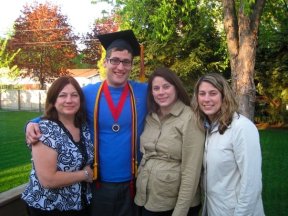
Graduation PhotoThe first question I always get asked when I’m in feminist spaces is: “What inspired you to become a feminist?”  Although I could go into the various histories revolving around men’s involvement in the early stages of the women’s movement to the similarities between the LGBTQ and women’s movements, my simple answer has always relied on one person: my mother.

I’ll be the first to admit (as well as many other people who will join me in the same chorus) that my mother deserves Sainthood for having put up with all the shenanigans I have, and still continue to, put her through. From running away from our local Catholic church the moment she dropped me off at Sunday School, to swearing like a sailor on leave at a very early age in front of Father Schmidt (who still fondly remembers me and the list I brought in with me to the confessional booth). Continue reading “Truths My Mother Taught Me by John Erickson”

“JC” by amina wadud

Amina Wadud 2 I am Muslim, by choice, practice and vocation

It’s been more than three decades, and certainly most of the influential time of my own theological/social justice career, since I was first introduced to Joseph Campbell (may he rest in “bliss”).  He was still alive then, and my husband and I were like geeks following his PBS series on Myths and Metaphors, and reading all his books.  We called him “JC”, an intentional play on initials and Jesus Christ.  Both of us Muslims by choice, we embrace the Gospels as part of the divine legacy of revelation and accept that they come from the same Source as the Qur’an, the Torah, and other sacred texts, but we fall short of the divination of Jesus.  The grey area of this is hard put for some Christians because “accepting Christ” means to accept the story of his birth, death and resurrection as formula bringing salvation.

We accept his extraordinary divine mission.  Our sacred text not only recaps the virgin birth but also gives Jesus the gift of speech from the cradle where he confirms that his unmarried mother was not a loose woman, but rather the bringer of a Divine miracle, and as such, a miracle herself.  Maybe at another time I will discuss how Mary configures so uniquely in my own feminist theology as read through the Qur’an, but, today I have in mind something about the transformation I went through with Joseph Campbell, starting with the virgin birth.  Continue reading ““JC” by amina wadud”

On Reading, Not Reading, and Disagreeing by Linn Marie Tonstad

Linn Marie TonstadThe theology blogosphere in all its glory has been alive in recent days with furor sparked by a blog post from Janice Rees at Women In Theology, where she discusses not reading Karl Barth, the heavyweight German 20th-century Protestant theologian, as an act of resistance against his dominance in the theological academy and his status as a litmus test for serious scholarship. Reminding myself repeatedly of the great xkcd comic, I’ve resisted my urge to comment on this and a number of other recent debates. (See here for a list of links if you wish to catch up on the discussion, however.) So this is not a post on whether to read Karl Barth.* Rather, the debate made me take a look at some of my own reading practices, and the visions of theological discussion that they encode. It also brought me back to the question of feminist disagreement, which continues to lurk in the back of my mind as I pursue disagreements with some prominent feminist theologians in my current book project.

I’ve written here before about reading authors that I disagree with, and indeed working on theologians I think are wrong about certain issues. On the simplest level, as a feminist and queer theologian, many of the theologians I work on would have questioned or outright resisted my participation in the discipline to begin with – although we cannot always know whether and how they would have done so today (since many of them are dead – yes, the dreaded dead white European males). But I often – not always – find projects that I sincerely disagree with utterly fascinating. From what perspective does the system being developed in such a project make sense? Where would one have to stand to see what that author sees? What do I come to understand about my current context, or the author’s context, from the perspective of the debates and decisions that the author finds pressing? One fairly trivial example: any interest I might once have had in historical Jesus debates was settled forever by reading Albert Schweitzer as an undergraduate. I simply do not find such debates compelling in themselves. (That does not mean I think they are valueless, of course!) But reading theologians who were engaged in such debates teaches me a great deal about how the commonsense assumptions many of us today operate with came to be. And seeing how such debates accompany disagreement over right social relations, over the nature of transmission of Christian traditions, and over what counts as scholarship in theology and religious studies is simply fascinating. Continue reading “On Reading, Not Reading, and Disagreeing by Linn Marie Tonstad”

The Difference a Feminist Makes by Elise M. Edwards

Elise EdwardsOf the many reasons I am grateful for feminismandreligion.com, I have to say that I am most grateful for the time it requires of me to reflect about feminism’s impact in my life, faith, and work.  I decided it was time to reflect on this question: What difference does feminism make for the way I structure and approach my classes?

I recently started a new position as a full-time lecturer in the Department of Religion at Baylor University.  Earlier this week, I attended a gathering for the department, where I was introduced, along with a few others, as new faculty.  At the end of the evening, the wife of a retired male professor introduced herself to me and remarked about how happy she was to see more women in the department. (Four full-time faculty members were hired this year, and three of us are women.)  She had been looking forward to this kind of change for quite a while.  I was appreciative of her remarks, just as I have been generally pleased with the warm reception I have received around the University.

Her excitement about the increase in the number of women faculty provoked me to reflect on what I add to my department, particularly for my undergraduate students.  I have thought before about how, from a purely representative standpoint, I bring something different to the faculty.  I have thought about how my students may not have previously had a professor–especially a religion professor–who looks like me.  Even if they had, I’ve had different life experiences than many of my colleagues, and that this bears on my approach to theology and ethics.  Therefore, the research I do and share is distinctive in its approach.  Yet, I am slightly embarrassed to admit that I have not given much thought about how my being a black feminist woman might impact my students.  I am tempted to blame it on the fact that I have just been trying to keep my head above water in a new position.  Of the many reasons I am grateful for feminismandreligion.com, I have to say that I am most grateful for the time it requires of me to reflect about feminism’s impact in my life, faith, and work.  So I decided to reflect on this question: What difference does feminism make for the way I structure and approach my classes? Continue reading “The Difference a Feminist Makes by Elise M. Edwards”

Two Reflections for the New Year: 5774 By Ivy Helman

ivyIn June, my friend, Shifra, and I became Co-Chairs of the Ritual Committee at our shul. During the past few weeks, we have occasionally turned to one another and said, “I can’t wait for the High Holy Days to be over!”  Then, we have paused realizing what we have said and have sworn that we didn’t mean it.  We don’t.  Truly, we don’t.  But we are overwhelmed by the sheer amount of detail required for the days to go well.  There are babysitters to find, flowers to pick-up and drop off and pick-up again, kiddushim to organize, chairs to arrange, musicians to contact, mahzorim to bring up from the basement, bulletins and programs to coordinate, volunteers to recruit, parking to find for Tashlich, carpets to be cleaned, pianos to be tuned and so much more.  Thank G-d there is a committee and a community to help us, but we still have much of the organizing and synchronizing to do.  It’s a lot for two people who also have jobs, family and other responsibilities to fit in as well.

What concerns me more than anything in all of this organizing and busyness is that I won’t be personally prepared for the High Holy Days.  These days require personal, spiritual and relational work which all takes time.  I can’t show up on Yom Kippur morning and expect to have an amazingly deep spiritual experience if I have done nothing to prepare myself for it.  To me, this would be the irony of all ironies: the one who has spent the past three months making sure the shul is ready isn’t prepared herself.  Since the last week of August, I have been setting aside time away from the details to make sure that doesn’t happen.  Within the personal work I’ve done, I have found two inspirational and meaningful reflections which I’d like to share with you. Continue reading “Two Reflections for the New Year: 5774 By Ivy Helman”

When Some People Say “Religion” They Mean “My” Religion by amina wadud

Amina Wadud 2 I am Muslim, by choice, practice and vocation

I came to live in India after having already lived in other parts of Asia. Naively, I anticipated that the best of my Asian living experiences would be manifest in India and this centered on a dynamic encounter with diverse religious communities. I have thus been disappointed that the ideals of diversity have given way to exceptionalism and exclusivity.

For example, members of one religion are not encouraged to or interested in visiting the sacred spaces of other religions. In fact, in most cases, they are prohibited. To be sensitive to these constraints I do not visit any sacred place, no matter how much I have wanted, unless I am given permission as a Muslim. (Coincidentally, I am also prohibited as a woman from entering some of the sacred Muslim spaces!)

As a (retired) professor of religious studies I would like to think I can be a respectful observer. Nevertheless, I have little ability to internalize the notion of taboo. That is, I cannot understand that any space constructed by human beings would be defiled by the entry of another human being. My history of social and political advocacy against all forms of oppression just cannot find a space to accept this notion that one person is irredeemably taboo. Continue reading “When Some People Say “Religion” They Mean “My” Religion by amina wadud”

The Hot Seat by John Erickson

Being a man in feminism isn’t easy and that’s how it is supposed to be.

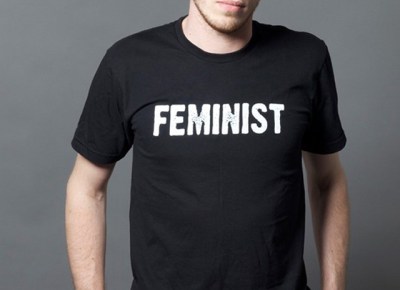
men_feminist_mainI’ve been thinking a lot about what it means to be a male feminist lately.  As the only man to be a permanent blogger on this very site until my colleague and friend Kile Jones came on board, I took my role, as a man in a traditional feminist (online) space very seriously.  Although the ongoing struggle to be a male feminist is one continually wrought with dialogues about power and positionality (amongst a host of many other topics), I am often conflicted when I see male feminists take advantage and destroy the hard work that many, specifically on this site and beyond, worked hard to build and defend.

Not wanting to reopen old wounds or start new online battles, men have been involved in feminism for quite some time.  From James Mott chairing the first women’s rights convention, to radical feminist Andrea Dworkin’s life partner John Stoltenberg, to Michael Kimmel and Michael Kaufman’s life long work to legitimize not only men in feminism but also what it means to be a man who works for gender equality, being a man in feminism isn’t easy and that’s how it is supposed to be. Continue reading “The Hot Seat by John Erickson”

Feminism vs. Humanism by Gina Messina

Gina Messina-Dysert profileRecently Susan Sarandon was asked if she is a feminist and her response left many asking if perhaps we are moving towards a post-feminist world. Of course, the very fact that Sarandon was asked if she is a feminist well demonstrates that gender politics continue (certainly, men are not asked such questions).

According to Sarandon, “I think of myself as a humanist because I think it’s less alienating to people who think of feminism as being a load of strident bitches.”  She went on to explain that “feminist” is an “old-fashioned word” and is actually used to minimize women and girls.

Sarandon’s comments left many questioning what the difference is between humanism and feminism, particularly when a definition of feminism calls for the honoring of the full humanity of all women and all men, as it does here on Feminism and Religion.  Why not move to a humanist identification and leave behind the baggage of feminism?  Continue reading “Feminism vs. Humanism by Gina Messina”

Women’s Christian Heritage by Elise M. Edwards

elise-edwardsIt is difficult to carve out time in a course that covers Christianity from the past 2000 years to address material beyond the standard textbooks.  But yet, I must because the visual and material culture, the worship practices, and the daily activities of women and men who have called themselves Christians or followers of Christ throughout history also comprise the story of the Christian heritage.

Over the past several weeks, I have been developing material for a historical and theological survey course called “The Christian Heritage.” In the multiple sections of this course taught at my university, and I imagine similarly at schools across the country, students are assigned a course reader.  The reader we use is a collection of texts that have shaped the Christian faith from the first century to the 21st.  It is a good collection, and I have no objection to using it.  However, for the way I would like to teach the course, I will need to supplement the reader with other material.  I have two interrelated concerns: the reliance on texts as a way of determining theological history and the absence of women in that history before the medieval period (and even then the number of women included is small). Continue reading “Women’s Christian Heritage by Elise M. Edwards”

Why I Try to Stay Away From the Media by amina wadud

Amina Wadud 2 I am Muslim, by choice, practice and vocation

Recently a controversy broke out surrounding a University talk I was to give in Tamil Nadhu, here in India.  That visit was to include a workshop and several meetings, including one with the all women Jamaat or STEP – the first of its kind in the context of the male dominated personal status law scenario in India).

This is how the events unfolded:  Before I came to India last year, I began communications with various Non-Government Organizations on gender and justice in Islam and with academics or others related to the study of Islam.  At that time an invitation to visit Madras University was extended to me. It took the better part of the year to get the details sorted out.  Meanwhile, I traveled throughout India, spoke at about a dozen Universities and several community organizations (including mosques), and started a book club discussing reformist Islam with interested persons in Kerala. Continue reading “Why I Try to Stay Away From the Media by amina wadud”