We’ve Seen This Playbook Before by Janet Maika’i Rudolph

Wikimedia Commons

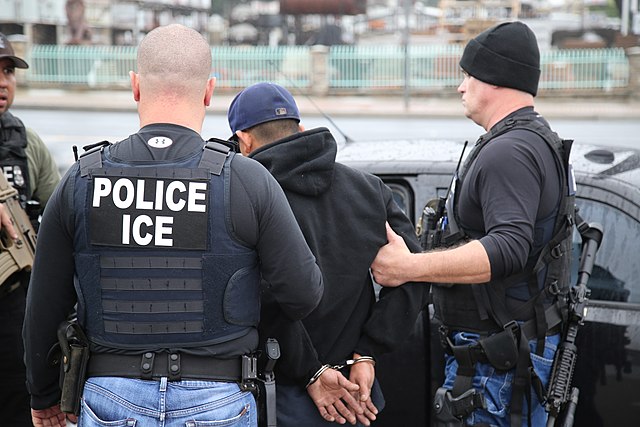
ICE has been doing mass round-ups of anyone who looks like “the other.” The people cheered.  “This is my country,” they shouted to the deportees. “Go back where you came from.” The people are flush with excitement thinking this is what we voted for, meanwhile ignoring that they came from someplace too. We know this is a publicity stunt. How? Dr. Phil tagged along on one of round-ups.  Newly minted secretary Kristi Noem also took her role in the spotlight attending one in NYC and saying dehumanizing words I will not repeat here. 

We’ve seen this playbook before. Creating chaos, disorientation and suffering for political points, TV or other publicity ratings. It doesn’t end well – EVER!

The NY Times had a report of how deportees were treated in a dehumanizing manner, being held on a broken plane in the Amazonian heat with no AC, people shackled, children were on board.  There are always people available to treat other people as less than human. “I was just doing my job.”  “I was only following orders.” 

We’ve seen this playbook before.  It doesn’t end well – EVER!

Continue reading “We’ve Seen This Playbook Before by Janet Maika’i Rudolph”
Incredibly! The Inquisitional Cultural Mechanism Rears its Hydra Head by by Elisabeth Sikie

As a young witch hungry for feminist sisterhood and spiritual wisdom in the 90s, before the blooming of the internet, I discovered a mag called The Beltane Papers. I remember devouring an article featuring channeled material of women killed during the European witch hunts. This transmission revealed past voices of everyday people living their lives until they were snagged by the slow creep of an increasingly oppressive cultural trajectory. What struck me was the normalcy of their voices, the deceased echoes of regular women trying to make sense of events beyond their control until they were taken by a system that destroyed them. What stayed with me is the author’s observation that even at their violent end these women’s voices remained “incredulous”. 

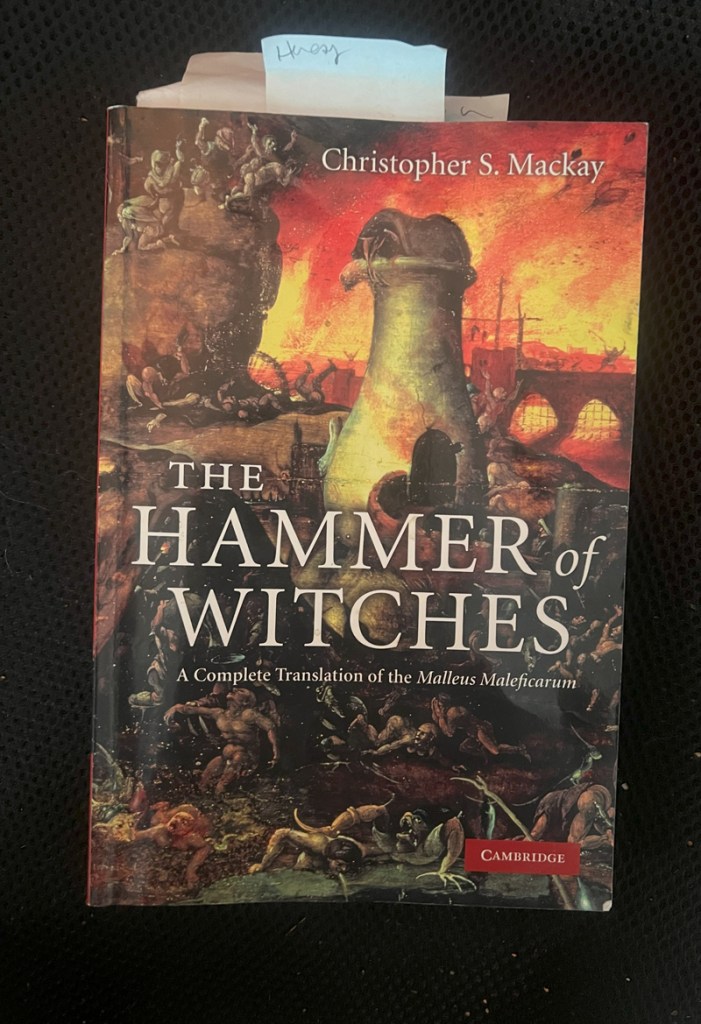
Decades, and seemingly lifetimes later, I completed my dissertation for my PhD in Religion and Philosophy in which I excavated some of the subaltern history of my European Ancestors and their female shamanic practices. At one inevitable point in my research – kicking and screaming – I reluctantly faced the inquisitions and witch trials. After waving a sage wand and cracking a sacred beer, I cracked open the Malleus Maleficarum, the infamous “Hammer of the Witches”.[1] This notorious guidebook, a how-to for career Christian Inquisitors written by two Dominican Friars[2] during the Middle Ages, details moral arguments supporting the legalized suppression, interrogation, and eradication of women designated by the church-state as heretics.

Continue reading “Incredibly! The Inquisitional Cultural Mechanism Rears its Hydra Head by by Elisabeth Sikie”

The Purpose of Women by Beth Bartlett

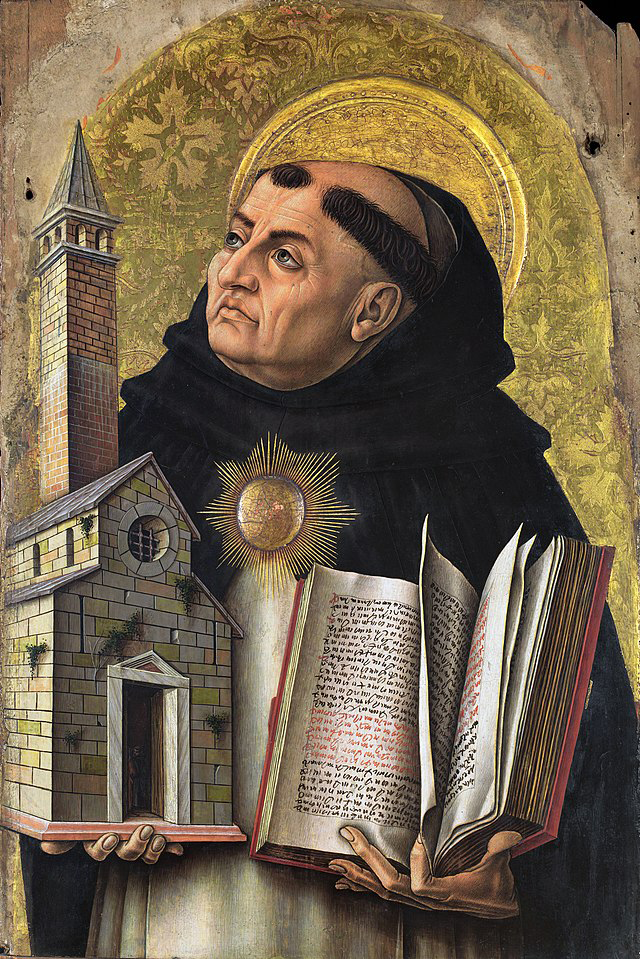
Thomas Aquinas, Wikimedia Commons

12th century theologian Thomas Aquinas didn’t think much of women.  He’d known less than a handful during his lifetime – his mother, who sent him off to a Benedictine monastery when he was five, as was the custom at the time, and later abducted and imprisoned him, with the help of her other sons, seeking to “rescue” him from his choice of becoming a Dominican priest; his two sisters who were sent to him while imprisoned to dissuade him from his choice; and the prostitute his brothers sent into his prison cell to try to tempt him to sin and break his vows – unsuccessfully. So perhaps it is no wonder that Question 92 of his Summa Theologica asks, “Should woman have been made in the original creation?” Though more likely his question was prompted by the milieu of misogyny in which he was raised and lived, having been educated in the theological tradition of Augustine who believed women to be the “lesser” sex and necessarily subject to men, and highly schooled in and known for reviving the thought of Aristotle, who said of women, “a woman is a misbegotten man.”[i]

Continue reading “The Purpose of Women by Beth Bartlett”

Women’s Rights: How Far Back in Time Will our Legal System Go? by Janet Maika’i Rudolph

Wikimedia Commons

I was in the process of writing this blogpost last week when the Arizona supreme court decided to turn abortion rights back to the civil war era (1864). This was a time when women had no rights at all and abortion from conception was illegal. But civil war era laws are downright quaint and modern compared the legal underpinnings of the supreme court’s Dobbs decision.  

In his decision, Mr. Alito cited four “great” and “eminent” legal authorities, Henry de Bracton, Edward Coke, Matthew Hale, and William Blackstone. For perspective here are their dates. 

Henry de Bracton  c. 1210 – c. 1268
Edward Coke 1552 – 1634
Mathew Hale 1609-1676
William Blackstone 1723 –1780

To help me understand Alito’s logic, I read up on some conservative commentary. Here is what I learned: When the founding fathers needed to create legal documents, they didn’t create them out of thin air. They relied on the logic of the four men (and others) listed above. Yes, they did pick some enlightened aspects of these thinkers of the time, esp. in regard to the rights of the common people in relation to royalty. The thought of commoners having rights was revolutionary in its day. But as we have learned so painfully, our founding fathers limited who those rights applied to. They did not take into consideration the rights of anyone other than landowners, which at the time meant white men.

Continue reading “Women’s Rights: How Far Back in Time Will our Legal System Go? by Janet Maika’i Rudolph”

Snapshots from the Parliament of World Religions by Janet Maika’i Rudolph

The Parliament of World Religions ran from Aug 14th to the 18th  in Chicago.  I returned with my head spinning having met new people, connected with inspiring beliefs, discussed fascinating ideas, watched meaningful performances, engaged in sacred play, danced, sang, cried, ate, and mostly experienced . . . just experienced. It is still overwhelming to sort out individual experiences. I am going to write up a few of my impressions, snapshot style. They scratch the surface, not only of my individual experience but of the Parliament in general where upwards of 7,000 people attended. It was incredible

Setting the tableau: As I was going down the escalator, a woman was followed by 2 groups were heading up. The woman was beautiful and young in full Mayan dress with white blouse, long orange skirt along with headdress and belt with Mayan symbols. Her thick dark hair was flowing down her back.

She was followed by five Sikh men who were dressed head to foot in white. Their heads and hair were covered by white turbans.

They were followed by two Buddhist nuns dressed in grey robes carrying beads. Their heads were shaved.

Such scenes were common.

Continue reading “Snapshots from the Parliament of World Religions by Janet Maika’i Rudolph”

Why We Need to Bring Back God as a Woman, part 1 by Caryn MacGrandle

26,000 years ago, life was precarious and dangerous.  And so the human race revered the Mother.  Mother Earth, who provided food amidst scarcity, protection from the dangers of the wild and healthy babies who grew to adulthood.

The Goddess.

In her many forms.

Some of these Goddesses.

Venus of Willendorf.  The artifact known as the Venus of Willendorf dates to between 24,000–22,000 B.C.E., making it one of the oldest and most famous surviving works of art.

Continue reading “Why We Need to Bring Back God as a Woman, part 1 by Caryn MacGrandle”

From the Archives: Who Owns the Sacred? A Personal Search beyond (European) Indigenous Knowledge by Eline Kieft

This was originally posted on Jan 17, 2020

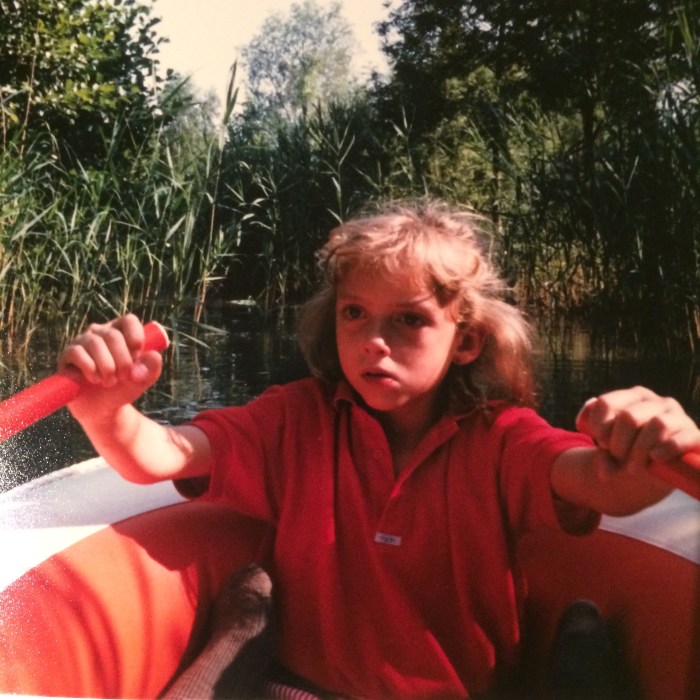
For almost 35 years nature has been my sacred place. As an 8-year old, I started to pray to Mother Earth even though the protestant tradition in which I grew up only recognised ‘God the Father’. I went outside in my inflatable rowing boat to seek solitude (as an only child in a quiet family!) on a small island in the lake of our local park. I practised rowing and walking quietly to not break the sacred silence. I collected herbs to brew infusions in my little thermos flask with boiled water brought from home. I sung to the moon, and danced my love for all creation back through my moving body. Over the last 15 or so years, I spent many days and nights at Neolithic monuments, dreaming in ancestral burial mounds, time traveling in stone circles in Cornwall, Wales, Scotland, England, Ireland and Brittany. This nature-based practice evolved naturally, and later incorporated my training with the Scandinavian Centre for Shamanic Studies and the School of Movement Medicine. Nature is where I reconnect most easily with the Sacred, and listen to the whispers on the great web of life in which all of nature is a great teacher. Nature, for me, is a strong place of prayer, solace, awe, reverence, gratitude, joy, guidance, reconnection, healing and transformation. 
Continue reading “From the Archives: Who Owns the Sacred? A Personal Search beyond (European) Indigenous Knowledge by Eline Kieft”

Remembering “The Burning Times,” Part 1 by Beth Bartlett

I first saw it when looking at their faces while showing The Burning Times in class — the blank stares, the pained expressions, the tears, the looking away. The scenes and sounds of women tortured and burned alive touched something deep and ancient in them.  Here it was — the historical trauma of women.[i]  The lasting impact of historical trauma is experienced by subsequent generations for hundreds of years, manifesting in such things as depression, PTSD, self-destructive behaviors, anger, violence, suicide, and more. As Native LGBTQ activist and writer Chris Stark so eloquently put it: “The experiences of our grandparents and great-grandparents are written into the library of our bodies . . . . My ancestors’ loss and screams are written in me – their pain and murder and rape merged with my own as a child. . . We carry them through time. We remember.”

Continue reading “Remembering “The Burning Times,” Part 1 by Beth Bartlett”

Who Owns the Sacred? A Personal Search beyond (European) Indigenous Knowledge by Eline Kieft

For almost 35 years nature has been my sacred place. As an 8-year old, I started to pray to Mother Earth even though the protestant tradition in which I grew up only recognised ‘God the Father’. I went outside in my inflatable rowing boat to seek solitude (as an only child in a quiet family!) on a small island in the lake of our local park. I practised rowing and walking quietly to not break the sacred silence. I collected herbs to brew infusions in my little thermos flask with boiled water brought from home. I sung to the moon, and danced my love for all creation back through my moving body. Over the last 15 or so years, I spent many days and nights at Neolithic monuments, dreaming in ancestral burial mounds, time traveling in stone circles in Cornwall, Wales, Scotland, England, Ireland and Brittany. This nature-based practice evolved naturally, and later incorporated my training with the Scandinavian Centre for Shamanic Studies and the School of Movement Medicine. Nature is where I reconnect most easily with the Sacred, and listen to the whispers on the great web of life in which all of nature is a great teacher. Nature, for me, is a strong place of prayer, solace, awe, reverence, gratitude, joy, guidance, reconnection, healing and transformation. 

Rowing contemplation Image credits Henk Kieft

Yet I am confused. I am confused because although this way of connecting to the mystery feels the most natural and innocent thing in the world to me, my practice is criticised as “playing Indian” because I did not happen to be born into one of the indigenous traditions that kept nature-based (“shamanic”, for want of a better word) practices alive. Critique includes cultural appropriation in relation to colonialism and white privilege, as well as that any form of spirituality outside the five major religions is considered as empty, eclectic, post-modern consumerist product that lacks meaning and substance because of its diluted, selective ‘picking’ of traditions from other times and contemporary contexts.   Continue reading “Who Owns the Sacred? A Personal Search beyond (European) Indigenous Knowledge by Eline Kieft”