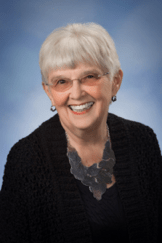
How Can Change Happen If We Can’t Imagine It First? by Darla Graves Palmer

More than one hundred years ago, a small group of women joined together and decided to create their own village, one rooted in relationship and guided by spirit. They weren’t the first such women-led town in the country – there was a web of sister villages throughout America, some formed as early as the seventeenth century – but Chantilly Lace was unique. Rising out of the dust of an abandoned Gold Rush era in the Rocky Mountains of Colorado, a time when many women were abandoned by men seeking further adventures or widowed when husbands lost their lives in the mines, this mostly female community determined its own fate. Now the modern women (and a minority of men) faced new challenges in the twenty-first century: how would they adapt and thrive?

If this had been true, how might things be different now for all of us?

The above sets the stage for a fictional series of books I’ve been writing (the first book is complete). The locale was always going to be a small town in the Rockies (because I’ve lived there), but the broader ideas about the town’s development have been evolving steadily, especially since the last presidential election. I keep asking myself how a culture based upon principles of peace and values of belonging, established firmly upon a spiritual core, might function in our capitalist patriarchy.

How can change happen in real life if we can’t imagine it in fiction? I’m challenging myself to make it happen.

Continue reading “How Can Change Happen If We Can’t Imagine It First? by Darla Graves Palmer”

Climate Change as a Socio-Spiritual Feminist Issue (Or 10 ways to be a leader in the era of climate change) by Nurete Brenner

Authorities have observed that climate change is a feminist issue because it disproportionately affects women. Among these, the United Nations has gone further to acknowledge that climate change is a feminist issue because women are on the forefront of adopting climate-change mitigating techniques and technologies. A recent UN report states that “women are key actors in building resilience and responding to climate-related disasters…” But overarching these admittedly important issues is the greater understanding – not mentioned by the UN report – that climate change is a feminist issue on the socio-spiritual level. This side of the issue is often overlooked because the institutions who compile reports are immersed in a masculine way of thinking.  

What do I mean by a masculine way of thinking and why do I label it in this seemingly gendered way? Masculine values are those of winning, achieving, proving, succeeding, counting, controlling. pursuit of achievement and status; individual self-reliance; strength and aggression. The UN climate report cited above goes on to say that “Enacting good policies requires quality data, so that we can quantify the issue and measure improvement…” Reports such as this make their points by tabulating numbers and citing statistics, not seeing that these are already masculine ways of expressions and that numbers can only ever tell part of the story.  These masculine traits and values are social constructs and not necessarily to be associated with the male biological sex. Both men and women and other-gendered can display masculine values and attributes but they are labeled masculine because society typically associates them with the male gender. Continue reading “Climate Change as a Socio-Spiritual Feminist Issue (Or 10 ways to be a leader in the era of climate change) by Nurete Brenner”

Advocating Respect for Goddess by Susan de Gaia

I served as general editor for the recently published Encyclopedia of Women in World Religions: Faith and Culture Across History (2018/19 ABC-CLIO). It was an honor and a pleasure to work with a hundred and thirty wonderful scholars, many with expertise in female divinities. In working with a publishing house on this project, I negotiated for the capitalization of Goddess and other terms for the Female Divine.  

‘I recommend not capitalizing “goddess”’ – was the first reply I got on this question. It came from Anne, the development editor assigned to the project. Negotiations ensued. Continue reading “Advocating Respect for Goddess by Susan de Gaia”

The Tree as Mother by Mama Donna Henes

Arbor Day, Earth Day, May Day and Mother’s Day are deeply connected conceptually, etymologically, culturally and emotionally.
The tree, with its roots buried deep in the earth and its branches reaching upward toward heaven, spread wide to embrace all of eternity, is a prime symbol of life in many cultures. Trees have long been worshipped as beneficent spirits of bounty. Trees, after all, shade and feed us. Supply and sustain us. Serve us in endless ways. Trees breathe life into our lungs, the source of endless inspiration.
Possessing the potent powers of fertility, growth, resilience and longevity, the tree is widely seen as the progenitor of the world Family Tree. The Tree of Life. The tree goddess was seen as a sylph, an airy tree spirit who resides among the green leaves, sustaining and nurturing the vegetative forces. She is the symbol of the flow of life, a Mother Goddess who is Herself the Tree of Life.

Continue reading “The Tree as Mother by Mama Donna Henes”

May is the Month of Mary by Mary Jane Miller

 Mary Icons

There are three classic prototypes of Mary Icons, their collective messages point toward a new contemporary kind of trinity. Perhaps the concept of Mary is still undeveloped, as our society has changed her message is still provocative and meaningful. It has been through contemplating her image, and painting icons of her that I have come to realize a deeper mystical message. Her popular iconography may have the keys to how we are to care for creation and one another in the world.

Mary Icon of the Panagia

Mary looks directly at the viewer, beckoning us towards poised stillness and constant prayer with palms extended outward in total surrender to what she receives. She contains the Creator of the Universe in her womb.

Mary Icons of the Theotokos

She is the feminine energy which tenderly nurtures Jesus to become a teacher, rabbi, master and lord. She is the icon which reminds us to love one another, to love life, and to love creation.

Mary Icons of the Hodegitria

Mary becomes a mystical location where we can be taught to give ourselves to God and one another. There, held by the church tradition, we like Mary are called to release to the world what we most love and cherish.

Continue reading “May is the Month of Mary by Mary Jane Miller”

The Legend of Arawello, the Somali Goddess by MaryAnn Shank

Image of Arawello. Since there is no known portrait of Arawello, this is an artist’s interpretation.

I did not intend to find her.  In fact I wasn’t even looking.  But there she was, soaring before me, on my last night in Baidoa.  This majestic Somali woman reached high into the heavens, engulfed in a glorious wraparound garment that reflected the hues of the world around her: the azure of the Indian Ocean, white sparks of the splendiferous Milky Way, the orange of the clay soil beneath her feet.

The golden snake wrapped around her arm identified her immediately.  This was Arawello, the Somali Goddess.

I had only heard hints of this treasured goddess.  She was born of her people in the first century.  She took the beatings, the whips that scarred her as a child, and escaped to the aromatic fields of myrrh in the northern Somali mountains.  Female torture was rampant at that time, an outgrowth of the centuries-old clan wars.

In the fields of myrrh Arawello found many women like herself, women who ran to save their own lives, women who wanted to help their sisters, mothers, aunts and friends left behind.

And so she formed her plan.

Continue reading “The Legend of Arawello, the Somali Goddess by MaryAnn Shank”

“Closer to Fine:” Trans Femme Reflections on the Sacred Found in Lesbian Music Culture by Nathan Bakken

“I’m trying to tell you something about my life.” I joke with my friends that if the 1990’s weren’t so transphobic, I would have thrived as a trans lesbian. Citing my knowledge of the L Word, Pacific Northwest flannel sensibilities, and Spotify playlists as my reasoning; I embody a millennial genderqueer take on lesbian stereotypes. The only thing missing is an exclusive attraction to women which― I would argue―is the main factor holding me back from waving the lesbian pride flag high. Though I write with a particular levity, I cannot deny the role that lesbian singer songwriters and folk/rock singers have played in cultivating my sense of self and my sense of the Divine. The Holy, for me, is wrapped up in the the harmonies of the Indigo Girls, the raspy blues of Melissa Etheridge, the heart-breaking riffs of Tracy Chapman, and the tear-jerking truths of Brandi Carlile.  These women have gifted me Divine Imaginaries of what justice is, who God is, and how I fit in.

In full trans-parency (pun intended), I hold a small level of fear in writing this piece. As the rhetorics of Transgender Exclusive Radical Feminists (TERF) appear to be touching the mainstream, I am reminded that these rhetorics are deeply tied to lesbian music culture. The Michigan Womyn’s Music Festival holds itself as a historic cultural object created by the amazing and radical work of lesbians and feminists and lasted from 1976 – 2015. MichFest, as it was later known, also uplifted and validated the concept of “womyn-born-womyn” only spaces. A concept with the intention to center the experiences of cis women, and the impact of  discriminating against trans people.  I reference this not to tear at the scabs of these two communities as we continue healing. Rather, I am naming the irony that my anthems for my survival are also the songs that have historical ties to mindsets and movements that prohibited my community from experiencing them first hand.

But this piece isn’t about trans exclusive feminists. This piece is about the soundtrack of my survival, and the powerful women who’s wise words guide that experience. The following four songs are invitations into my survival.

Closer to Fine – Indigo Girls

“The less I seek my source for some definitive, the closer I am to fine.” Since I was 17, this lyric has echoed in my mind. I would drive around Seattle listening to this song on a mix CD, wondering if I would ever get close to fine. Masked in their flawless harmonies, Amy Ray and Emily Saliers words gave me comfort and language to articulate my experiences. They mixed joy and laughter with the harsh truth of growing older. They gave room for a multiplicity of perspective and called out institutions and dominant epistemologies as inefficient modes of knowledge gaining. I was gifted a queer critical lens, a slightly Gnostic view of God, and an acknowledgement that “[t]here’s more than one answer to these questions/ Pointing me in a crooked line.”

Silent Legacy- Melissa Etheridge

To say that Melissa Etheridge’s 1993 album “Yes I Am” is not one of the best albums―let alone queer albums―ever created is homophobic. I wish I could tell you I’m being facetious. I am not. While her singles “I’m the Only One” and “Come to My Window” remain as her most popular hits; the song “Silent Legacy” is a testimony to queer feminist survival. I encourage you to set aside some time to listen to this song as if it were a prayer. In five minutes, Etheridge manages to describe and enflesh the impact of spiritual trauma on the queered body. Each verse unpacking the silent internalization of misogyny, homophobia, and transphobia. Each chorus echoing a prayer to heaven. Only to finish with Etheridge repeating the phrase “Oh my child,” building her emotions from tenderness to rage as if she, herself, embodies God calling us home to protect us.

Talkin’ Bout a Revolution – Tracy Chapman

I confess, my conversion to the Gospel of Tracy Chapman occurred later than I would prefer. Knowing her for her iconic lesbian anthem “Fast Car,” it wasn’t until I discovered her full discography about two years ago that I felt held in her words. With “Talkin’ Bout a Revolution” as the first track on her first album, “Tracy Chapman.” Chapman sets a specific tone for the album. The album is a protest. She reveals a portrait of her experiences of the United States in 1988, one that does not shy away from harsh realities of racial injustice and domestic violence. And at the same time gives tender insights into how to love someone. Chapman’s wisdom grounds my survival in the hardest truths of our world. That if I am to survive, I must ensure others’ survival as well.

The Joke- Brandi Carlile

Brandi Carlile feels like home. As an out lesbian musician of my home state of Washington, Carlile’s music reaches the depths where few dare to dive.  I recognize the majority of this soundtrack dates to the late ‘80’s and early ‘90s, Brandi Carlile’s “The Joke” is from her Grammy Award winning 2018 Album “By the Way I Forgive You.” Carlile is contemporary, current, and continuing the legacy paved before her. Her song―“The Joke”―echos like a ghost of queer future. Carlile’s voice is moving forwards while reaching back. She gives assurance, not that it gets better, rather that it gets different. Carlile invites the listener into the act of survival.

As a queer theologian, I tend to search for scripture in the most secular of places. These women have formed a gospel where the Divine Imaginary provided is an invitation to all people to the radical act of survival. As a trans femme person, I know, and these women testify, that one can survive and thrive simultaneously. Because “there’s more than one answer to these questions/ Pointing me in a crooked line/ And the less I seek my source for some definitive / The closer I am to fine.”

P.S. I believe that my fair, sincere, and soft mention of the “TERF/trans exclusion” conversation can spark strong push back from some of the readership of this blog. I am aware that we (cis and trans) who are in Feminist theological spaces need to continue engaging seriously in conversation around this topic and start working together to construct something from it. I would like for my post to be a part of starting that conversation. The heart of my post is that there is something profound in the liberative music created by these amazing and powerful women. Part of that profundity, is that I, a trans feminine queer person, heard an invitation into a legacy of liberation and justice. So I invite you, whoever you are, reading this to reread my piece. Reread it, knowing this is a small part of a larger conversation, and the heart of the conversation is a painful history of exclusion and transphobia and simultaneously a history of liberation and justice.


Nathan Bakken (they/them), originally from Seattle, WA, has found home in Boston, MA. Raised Roman Catholic, Nathan stands firm in the intersection of Christianity and Esoteric Spirituality. They earned their Master of Divinity, and Master Certificate in Religious Conflict Transformation, from Boston University School of Theology with particular focus in trans and queer theologies, queer spiritual practice, and the intersection of pop culture and theology.

Slippery Package: A prayer poem by Isabella Ides

She speaks a various language.


Bound in the bardo bereft

vaguely present, almost dead.

For fucking shining aloud

let me


back in. Come again, sweet terror

Carve my shadow on your cave walls

Render me a soul, source me

mystify, crush, obscure me

in that deep gorge

confine, stretch, reveal me

Let me wobble

stand.

  Continue reading “Slippery Package: A prayer poem by Isabella Ides”

Storytelling as a Spiritual Practice by Nurete Brenner

“The master’s tools will never dismantle the master’s house.” Audre Lorde

Question: What tools do we have that are powerful enough to dismantle the Master’s house?

Answer: Storytelling.

Storytelling does not belong to the “master.” Storytelling is subversive because it belongs to the collective and not to the individual; it gives agency to the powerless; it is not dependent on time or money, and it makes visible those who are overlooked and ignored in our globalized industrialized system. Continue reading “Storytelling as a Spiritual Practice by Nurete Brenner”

Why Pro-Life Stops at Birth: Who Really Supports Life and Why by Winifred Nathan

The patriarchal Catholic Church claims to be pro-Life.  But is it pro-Life?  Or is it pro-Birth?  A Catholic Benedictine sister outed the pro-Life movement. Her position: the pro-life crowd shows little if any ongoing interest in life after birth.  They’re pro-birth, but not pro-life.  Legislators who enact laws to restrict a woman’s right to an abortion, but then stand firm against funding  programs that assist the mother and her baby once the child is born are not pro-life.   Too often the goal of anti-abortion advocates is for the fetus to make it to birth. Birth is the important value, life not so much.

I propose the starting point for deciphering this puzzle is to look at our desire as human beings for immortality.  We want to defy death believing that there is a spiritual continuation of who we are after our bodies shut down.  We want death to be a new beginning.

A great deal of effort goes into seeking  an answer to the question what comes next.  A question we presently lack the capacity to answer. We honestly do not know what if anything happens following death.

Continue reading “Why Pro-Life Stops at Birth: Who Really Supports Life and Why by Winifred Nathan”