For the last forty years, the Christian Right has influenced the conversation in American politics. Where is the Religious Left and how are they impacting our nation’s moral agenda? It is an important question, and now, more than ever, we need a progressive religious viewpoint in the conversation.
We are living in an era where the morality of our society is at stake and the soul of our nation is being bought by billionaires who have an insatiable appetite for money, power, and control. With an alt-right movement growing and nationalism becoming the Trump Administration theme, we are in danger of losing our humanity. Continue reading “Resistance and the Religious Left by Gina Messina”
It started with Pelé, the Hawai’ian Volcano Goddess who governs fire, lightning, volcanoes, and the flow of lava. When my little family set off on a big adventure in June 2015, I knew I’d research and paint her as a Holy Woman Icon, but I wanted to get to Hawai’i first so that I could experience her power firsthand. After three months volunteering without running water in Vermont, a month in southern Virginia’s finest fall foliage, and a holiday season traversing the country from east to west in a camper named Freya, we crossed the Pacific in search of Pelé.
The long-term goal of nearly two years of full-time travel was to discern next steps for our queer little family, and to find land to open an intersectionally ecofeminist retreat center. We always imagined returning to the southeast, likely buying land and creating the retreat center in the North Carolina mountains. Pelé had something else in store.
After three wild months volunteering on the Big Island, we fell in love, enlivened by this place we now call home: its beauty, the diversity of people, access to living off-grid, access to growing your own food, its rich culture and history, access to a vegan lifestyle, and the ability to live the majority of our life outside. In short, all of our plans were upended and recreated in the most beautiful and challenging ways because we knew Hawai’i must become our home.Continue reading “Painting, Privilege, and “Going Tiny” in Hawai’i by Angela Yarber”
If Gaia is a living body, why are we painting her blue? Whether it is public parks or residential lawns, when there is that special odor in the air, I know to look down and there it is, an endless dye job on the grass indicating treatment. My city is concrete and blue dye for miles. Furthermore, I have sales people knocking at my door monthly asking if I want to spray pesticide around the house to decimate wasps, ants and spiders.
Many religious texts encourage us to mindfully consider the earth. The Jain Acaranga sutra, for instance, says, “a wise [person] should not act sinfully toward plants” (I.1.5.7). One way we sin against the earth so casually is by these mindless manipulations of our lawns, if we have them. (Technically, I do not have a lawn, but my roommate does, and I try to protect it). I do not think most people think about researching what they allow into the earth. Continue reading “The Blue No Gaia Wants: Protecting the Sacred through our Lawns by Elisabeth Schilling”
Last year, the leader of the (un)Free World was elected by ‘right choice’, much to the collective dismay of liberal leftists, a huge proportion of people of colour, progressive educationists, environmental conservationists, human rights defenders, religious reformists, and a large fragment of the developing world in the south of the globe. Today, Donald Trump has brought the world to the brink of World War III. Amidst accusations of undeclared tax returns and unabashed grabbing of female genitalia, the term ‘toxic masculinity’ is thrown about in a variety of media platforms. Many critiques lament how “inflammatory” the term is, one that is not quite “hopeful” for men, whilst the criticisms by media oligarchs reflect a hatred towards femininity.
Entitlement, sexism and narcissism can no longer be virtues of a millennial masculinity – we have lost so much already to corporate greed, warlords and racist bigots. Traditional, armorial masculinity is breaking our homes and our planet. At the ecological scale, the lungs of the earth mother are clogged. Wisdom-keepers decry the daily rape and plunder of their lands. The planet’s heart valves bleed toxins that can no longer sustain flora, fauna, fungi. Continue reading “What Could ‘Masculinity’ Mean in 2017? by Meghana Bahar”
There have been so many times
I have seen a man wanting to weep
but instead,
Beat his heart until it was unconscious.
— ‘Masculine’, Nayyirah Waheed
PART I of II
There have been many times when I have wondered whether the world has reached a peak in a broken kind of masculinity.
The notion that there is only one kind of masculinity deserving pedestalisation, or even just one kind of masculinity, has long been discarded in the enclaves I have access to as a grassroots activist and scholar. These are not secret societies that are password-protected. They are protected, of course, by communities that uphold principles of freedom, dignity, equality and justice. But anyone is welcome.
Welcome to the resistance, Feminism and Religion family. This month is Gay Pride Month in many cities, including mine—Long Beach, California—where we just celebrated our 34th gay pride parade and our annual “Dyke March.”
This blog is primarily a photo essay of those events and past pride events I have been in—a celebration of pride and gay family during the spring months which commemorate the first televised gay uprising against police harassment by the gay and lesbian and transgender family on June 28, 1969 at the Stonewall inn in New York City, NY. Continue reading “Gay Pride and Gay Resistance by Marie Cartier”
Since the U.S. has elected a reality TV show billionaire to represent our nation, we should be no longer be able to shy away from the ignorance, violence, and frivolity that is within us. Happiness and peace in humanity seem to be in short supply. How many of us experience continuing bliss, or do we only fantasize and find brief reprieves in our suffering? Even the more extreme privileged among us most likely share the same emotional landscape.
In Indian cosmology, Hinduism specifically, there are four stages (yugas) of humanity that occur in a cycle. They represent the ascending and declining spiritual, psychological, and physical well-being of humanity. The Satya Yuga is first (descending) and last (ascending) era, where people are without strife, disease, or fear. Satya means “truth.” Life increasingly deteriorates through out the Treta Yuga to the Dvapara Yuga to the Kali Yuga.
Except for a couple of Dr. Phil shows, I have not watched TV since last November’s presidential election. I don’t want to be assaulted by the images of men (and a few women) occupying positions of power and leadership in the United States. I’m still outraged that so many inept, mean people are at the helm, being led, at least symbolically, by the “tweeter-in-chief.” I struggled for weeks after the election to achieve some balance. I cried. I raged. I signed petitions. I marched in protest. After the frenzy of all that physical and emotional activity, I have calmed down.
I’ve accepted the inevitable (and unnecessary) suffering—animals, humans, the Earth—that the new administration appears inured to and hell bent on continuing. I’m not hopeful things will improve. Continue reading “The Bird No Longer Perches by Esther Nelson”
We all remember the protests—and the pink knitted caps with the pussy ears—that filled the streets of our major cities after the inauguration of the Troll-in-Chief. Some members of this FAR community went to those marches and wrote about their thoughts and feelings in this space. I don’t go to marches and demonstrations anymore, mainly because it would be majorly inconvenient if I had an asthma attack right in the middle of when other people are trying to do important things. But I always send my thoughts.
And so I have recently been thinking about a feminist hera who can inspire us resisters. (Note that “hera” is not only the name of the queen of the Olympians, but it’s also the feminine form of “hero.” I’ve heard some women say “shero.” I guess that works, but it’s an ungainly word. Let’s call our courageous women heras and superheras. But I digress.) I’ve been thinking about Wonder Woman since the election. Here’s what I wrote about her in my book Pagan Every Day. (Note that I’m expanding what I wrote in 2003.)Continue reading “Do We Need Wonder Woman Today? by Barbara Ardinger”
My students are taking their final exams this week, which means I will be spending the week frantically, but attentively grading in order to make our grade submission deadline next week. End of semester grading is a mountain of careful criticism we educators scale one step at a time, with deliberateness, towards an ultimate goal of student success (if not in our classes, then in the next, or in life, relationships, etc.). Thus, I often find myself returning to the question: what am I hoping to create in what I say and write, and in how I critique?
One of the goals of feminist pedagogies is to help us prevent recreating the domination of kyrio-patriarchy in classroom spaces. While activism is not the same thing as education, and strategies of resistance are different than pedagogy in important ways, the concern for careful critique is warranted in both praxes. What do we create in how we critique, resist, and protest? What do we recreate, wittingly or no? I have found myself concerned with this since the election of Trump, DT (cause I can only write that name so many times), to the presidency. Continue reading “Careful Criticism: Resisting Hetero-Patriarchy while Resisting Trump by Sara Frykenberg”


 For the last forty years, the Christian Right has influenced the conversation in American politics. Where is the Religious Left and how are they impacting our nation’s moral agenda? It is an important question, and now, more than ever, we need a progressive religious viewpoint in the conversation.
 If Gaia is a living body, why are we painting her blue? Whether it is public parks or residential lawns, when there is that special odor in the air, I know to look down and there it is, an endless dye job on the grass indicating treatment. My city is concrete and blue dye for miles. Furthermore, I have sales people knocking at my door monthly asking if I want to spray pesticide around the house to decimate wasps, ants and spiders.
  PART II
 Welcome to the resistance, Feminism and Religion family. This month is Gay Pride Month in many cities, including mine—Long Beach, California—where we just celebrated our 34th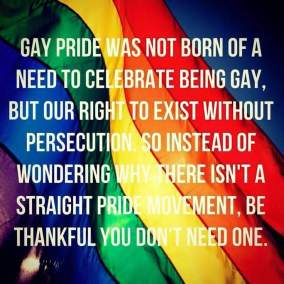
 Since the U.S. has elected a reality TV show billionaire to represent our nation, we should be no longer be able to shy away from the ignorance, violence, and frivolity that is within us. Happiness and peace in humanity seem to be in short supply. How many of us experience continuing bliss, or do we only fantasize and find brief reprieves in our suffering? Even the more extreme privileged among us most likely share the same emotional landscape.
 Except for a couple of Dr. Phil shows, I have not watched TV since last November’s presidential election. I don’t want to be assaulted by the images of men (and a few women) occupying positions of power and leadership in the United States. I’m still outraged that so many inept, mean people are at the helm, being led, at least symbolically, by the “tweeter-in-chief.” I struggled for weeks after the election to achieve some balance. I cried. I raged. I signed petitions. I marched in protest. After the frenzy of all that physical and emotional activity, I have calmed down.
 My students are taking their final exams this week, which means I will be spending the week frantically, but attentively grading in order to make our grade submission deadline next week. End of semester grading is a mountain of careful criticism we educators scale one step at a time, with deliberateness, towards an ultimate goal of student success (if not in our classes, then in the next, or in life, relationships, etc.). Thus, I often find myself returning to the question: what am I hoping to create in what I say and write, and in how I critique?
