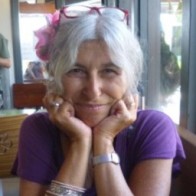
Goddess Spirituality and Women’s Leadership by Jessica Bowman

As a public school administrator, and a human, I feel tremendous grief for the tragedy generated in the latest school shooting. The impact is devastating and disastrous. Immediately after such a calamity is the public outcry for change and the immediate backlash from others who don’t want to lose their perceived rights under the constitution. Blaming federal agencies isn’t the answer either.

I find it critical to recognize that school shootings are not isolated events. Despite the outcry and current tug-of-war, stricter gun laws will only serve as a Band-Aid to one aspect of a major debilitating world problem. In just over 15 years of serving children and communities as a school administrator, I have witnessed extreme violence, rape, racism, walkouts orchestrated by teachers, administrators engaged in illegal behavior, parents abusing children, bullying, decay, outrageous political power struggles, and more.

Public schools are a microcosm of society; they are not stand-alone programs independent of the larger world. Truthfully, I am sometimes quite taken with how successful school programs are across the nation in spite of these immense pressures and misguided criticisms. Increasing student achievement in math and the English language arts is our charge; sometimes the realities and tragedies of life make this very difficult. But, that isn’t the point of this conversation.

Continue reading “Goddess Spirituality and Women’s Leadership by Jessica Bowman”

Activism Helps You Heal: #RESIST #NeverAgain by Marie Cartier

Here we are, as I write this,  a week after the horrible shooting of 17 students and teachers in Parkland, Florida. And the beginnings of a new student led movement: #NeverAgain—never another school massacre like what happened in Florida.

Today, one week after this horrific event, you had massive student walk-outs all over the country to protest the government’s refusal to do anything substantive about it. Here are images of student protests.

One of the out spoken survivors of the Parkland shootings, Emma Gonazlez, has turned into a spokeswoman/teen, for the movement, fueled by her fiery speech the day after the shootings.

Emma Gonzalez

She has continued to speak out as have the other students.

And the movement grows. 

I am a college teacher, a college teacher in two public universities. I teach students one to four years older than the students at Parkland. Last week at one of the public schools I teach at there was an active shooter warning that turned into a hoax. I have in the past been on lock down because an active shooter was on campus. This is a very real problem for me.

Today I heard the president of the United States suggest that the solution to the every growing problem of gun violence is to arm teachers or other school officials with weapons. As a black belt in karate, I have had gun training and gun safety as part of my training and it is part of my self-defense resume. I had to learn it. What I can tell you about owning a gun (which I don’t) is that having a gun is not the same as knowing how to us one. I know how to disarm someone, if I am lucky and the fight goes in my favor. Anyone with any experience in self-defense will tell you that the quickest way to escalate a situation is to introduce a gun into the situation.

Continue reading “Activism Helps You Heal: #RESIST #NeverAgain by Marie Cartier”

Considering Our Spaces in the Pursuit of Justice by Elise M. Edwards

This past summer, my friend and I were perusing the exhibits at the National Museum of African-American History and Culture when she urgently called for my attention.  “Psst… Isn’t this where you are from?” she asked, pointing at a placard titled African American Life in Montgomery County.  Yes!  I grew up, I was educated, and I was churched in Montgomery County, Maryland.  So I eagerly read the exhibit’s description:

By 1900 there were at least eight African American communities in Montgomery County, Maryland. Unlike many rural African Americans, the residents were not tenant farmers—they owned their property and homes.  This gave them greater control over the land and the crops they produced.  They also directly benefited from improvements to their homes, which was an incentive to make additions and to stay in place.  Descendants of these early settlers still live in these communities today. Continue reading “Considering Our Spaces in the Pursuit of Justice by Elise M. Edwards”

Exploring Muslimness in the Aftermath of September 11, 2001 by Stephanie Arel

In my last post, I addressed the deeply personal accounts of Haroon Moghul’s self- and religious exploration in his memoir How to be a Muslim: An American Story. This post will broaden that reading to consider an October 2017 interview with Moghul at the 9/11 Memorial & Museum in New York City.

The interview echoes themes relevant to current global crises which implicate religion including how religious rhetoric circulates to support extremist violence and Islamophobia. Exploring how the events of 9/11 intertwine with such crises adds depth to understanding Moghul’s individual experience.

Continue reading “Exploring Muslimness in the Aftermath of September 11, 2001 by Stephanie Arel”

Looking for a Mouth to Tell the Story by Esther Nelson

In Chinua Achebe’s novel, THINGS FALL APART, Okonkwo, a proud, hard-working, albeit quick-tempered tribesman living in the village of Umuofia, fires a gun at Ekwefi, one of his three wives, almost killing her.  Chielo, a widow with two children, who also serves as the priestess of Agbala, Oracle of the Hills and Caves, asks Ekwefi, “Is it true that Okonkwo nearly killed you with his gun?”

Ekwefi replies, “It is true indeed, my dear friend.  I cannot yet find a mouth with which to tell the story.”

I love Ekwefi’s turn of phrase as she responds to Chielo.  Shaken, distraught, and outraged over being shot at by her fiery husband, she “cannot yet find a mouth with which to tell the story.”  That’s exactly how I feel these days.

Continue reading “Looking for a Mouth to Tell the Story by Esther Nelson”

Of Monument(al) Importance by Esther Nelson

I remember being blown away when I read Judith Plaskow’s book, Standing Again at Sinai: Judaism from a Feminist Perspective, shortly after it was published in 1990. She writes, “The need for a feminist Judaism begins with hearing silence.” She notes it’s a “silence so vast [it] tends to fade into the natural order….”  Women’s presence throughout Judaism has not been reflected in Jewish scripture, Jewish law, or in liturgical expression.

Plaskow zeroes in on the story in Exodus where the entire Israelite congregation, gathered at the base of Mt. Sinai, eagerly anticipates entry into the covenant, “the central event that established the Jewish people.” Before this communal event, the covenant had been entered into by way of the individual patriarchs—Abraham, Isaac, and Jacob.  The particularly disturbing verse for Plaskow is Exodus 19:15: “Be ready for the third day; do not go near a woman.”

The specific issue Moses addresses is ritual impurity since the emission of semen renders both parties that engage in coitus temporarily unfit to engage with the sacred.  Both women and men need to be ceremonially purified before approaching the holy.  However, Moses does not say “Men and women do not go near each other.”  At this crucial juncture in Jewish history, “Moses addresses the community only as men.” The text makes women invisible. Clearly it was men’s experience that shaped Torah.

Plaskow writes that “[Jewish] women have always known or assumed our presence at Sinai.” Exodus 19:15 “is painful because it seems to deny what we have always taken for granted. Of course we were at Sinai; how is it then that the text could imply we were not there?”

Why make a big deal of this? Can’t the text, asks Plaskow, be relegated to a time in history “way back then” when people and communities accepted gender inequality as the natural order?  Why not just accept the past for what it was and get on with things?  Because Torah (Hebrew Bible) is not “just” history, “but also living memory.” When the story of Sinai is read and recited in services as part of the lectionary reading over and over again, year after year, “women each time hear ourselves thrust aside anew, eavesdropping on a conversation among men and between men and God.” Continue reading “Of Monument(al) Importance by Esther Nelson”

Kneeling as Protest by Anjeanette LeBoeuf

In a previous FAR post, I talked about the newest trend in sports of including women in marketing strategies for American football. Today I have decided to throw my hat into the ring regarding the recent polarizing “Kneeling” protest taking place at NFL games. I started writing this on the morning that the current Vice President walked out of a NFL game due to players ‘taking the knee’ during the National Anthem; a protest which has been reported to cost TAXPAYERS $200,000. Weeks have gone by with the issue getting bigger and bigger. I can no longer stay silent.

This protest started when NFL quarterback Colin Kaepernick took a knee during the National Anthem in August of 2016. He stated he was taking a knee to stand for people that were being oppressed. It has since exploded as a social movement/protest.

It has become a highly sensitive and polemic topic. And it is polarizing bcause the two groups which are opposing each other are actually, talking about two different things. The group that supports the kneeling protests understand that this ‘peaceful, and respectful’ act during the National Anthem is an important way they can voice their solidarity, take a stance, and bring awareness to the violence and injustices that minority groups face, especially African Americans. The group that radically opposes this protest only see it as a disrespecting act of our country, our flag, our troops, and their faith. Thus, the arguments and pseudo-discussions are not getting anywhere. Continue reading “Kneeling as Protest by Anjeanette LeBoeuf”

Nobel Peace Prize 2017: ICAN and Those Who Can’t by Elisabeth Schilling

If there is any sanity in the world, it has come from the Nobel Peace Prize of 2017, which was awarded to ICAN, the International Campaign to Abolish Nuclear Weapons. They received the award for the work they have done on the Treaty for the Prohibition of Nuclear Weapons. According to the ICAN site, the agreement was adopted July 2017 and is backed by 122 nations. If signing the Treaty, a nation must agree to refrain from the following:

“[. . .] developing, testing, producing, manufacturing, transferring, possessing, stockpiling, using or threatening to use nuclear weapons, or allowing nuclear weapons to be stationed on their territory. [. . .] A nation that possesses nuclear weapons may join the treaty, so long as it agrees to destroy them in accordance with a legally binding, time-bound plan.”[1] A nation cannot encourage or support another nation to hold them either.

Continue reading “Nobel Peace Prize 2017: ICAN and Those Who Can’t by Elisabeth Schilling”

Hillary Clinton, What Happened and What Happens Now? by Marie Cartier

“In the past, for reasons I try to explain, I’ve often felt I had to be careful in public, like I was up on a wire without a net. Now I’m letting my guard down.” —Hillary Rodham Clinton, from the introduction of What Happened

I just finished reading Secretary Hillary Clinton’s new book, What Happened. It is currently Number One on Amazon, outselling even Stephen King’s It and Margaret Atwood’s The Handmaid’s Tale at this moment. Put another way- hardcover sales of the book are the highest for any non-fiction book in the past five years.

I’ve written several times during the past year regarding Hillary Clinton and the election of 2016. About the real meaning of “sanctity of life”—living a full life and voting for a candidate who believed in that for everyone, including women’s right to choose and also about the process of those trying to silence her/ shame her/ not listen to her and how she refused to be silenced.

Devastated after the election I wrote a post here on FAR. And months afterward, I wrote how many of us were not “over it” and were not “ready to play nice.” We, along with Secretary Clinton, are not “ready to play nice” still. And probably will not ever be. We may be willing to (as I will speak of later) lead with love and kindness—but that is different from “playing nice.”

Continue reading “Hillary Clinton, What Happened and What Happens Now? by Marie Cartier”

The Spirit and Jarena Lee: Inspiration to Break Boundaries by Elise M. Edwards

elise-edwardsI am so frustrated that we are still fighting to affirm women’s place in leadership.  I’ve been thinking about this struggle in the context of church ministries (especially preaching) and social activism, seeing a stark contrast between the way institutional churches and universities promote and subvert women’s authority and the ways movements like Black Lives Matter do.

Particularly, I’ve been struck by the ways that more radical movements employ language and practices that are based in spirit more than hierarchical authority.  I have found a theme emphasizing equality in humanity’s access to spirit in both historical and contemporary movements and writings about religious experience.  I’m certainly not the first one to notice or discuss how appeals to Spirit have empowered those excluded from dominant systems of power to challenge constrictive social structures, but I would like to share how this dynamic has become more visible to me so that, together, we might find encouragement, inspiration, and food for thought.

Continue reading “The Spirit and Jarena Lee: Inspiration to Break Boundaries by Elise M. Edwards”