GRANDMOTHER MOON by Iona Jenkins

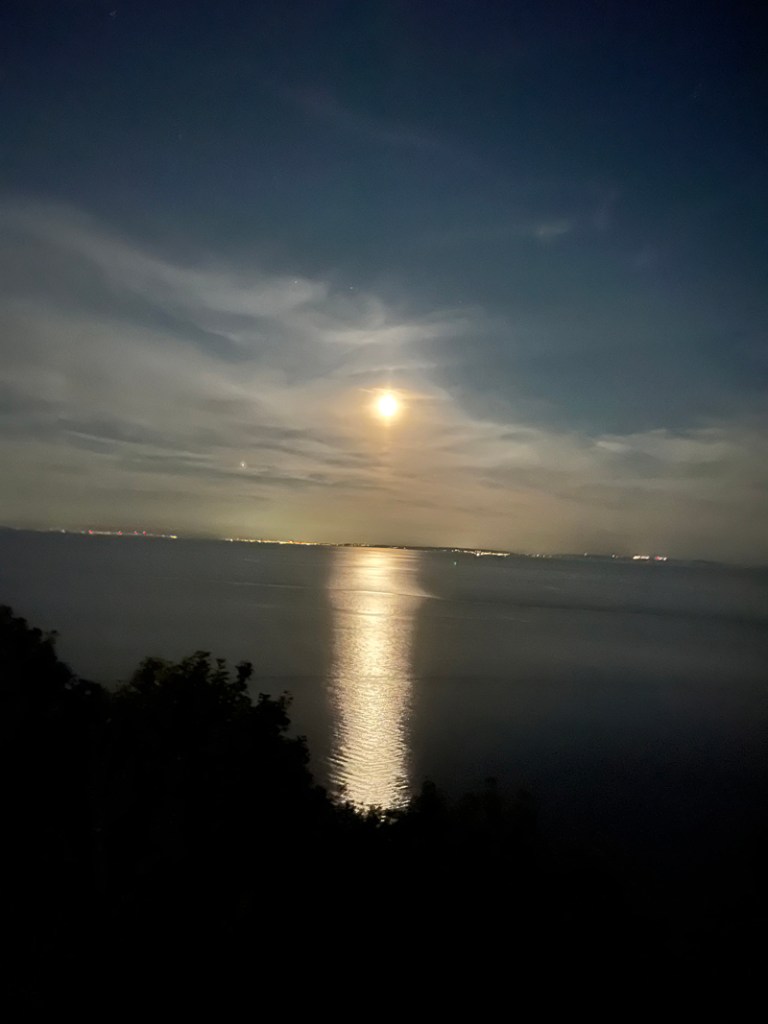
Blue Supermoon at 9.30p.m. on 30th August 2023

This year, the full moon on 30th August, which was a Super Moon, is also called Blue Moon – the name given to a second full moon occurring in the same month. I stayed up meditating and reflecting, because the rising of this moon flooded both my front room and my awareness with a light of great beauty. Beginning gold, she changed into a robe of silver, and eventually pearl white, with a crown of pastel shades, in her vault of luminous blue flecked with white feathered clouds. The full moon is always an inspiration, a Goddess who lights up the psyche, revealing hidden shadows to be faced, firing intuition, or illuminating the soul with her timeless wisdom. She has become my good friend over the years, and in my life as an elder human being, she offers me inspiration, visions of creative wisdom and possibility on those gold and silver paths stretching between the shores of Wales and The County of Somerset in England.

Continue reading “GRANDMOTHER MOON by Iona Jenkins”

The Old Woman and the Wave: Sage-ing, Age-ing, Wage-ing Wander & Wonder by Margot Van Sluytman

“Set out, pilgrim. Set out into the freedom and the wandering. Find your people. Godde is much bigger, wilder, more generous, and more wonderful than you imagined.”
― Sarah Bessey

Joy and justice reside in grace. Thrive in gratitude.  Find fulminating llanos of miracle, might, and magic contoured in story. Etched in song. Sculpted in the untempered and unmanacled invitation of HER resplendent and resounding voice and vision willing us to be the very creative fires we wish to live. To come to recognize, at the time of age-ing and sage-ing, the call to freedom.

The call to be wage-ing pilgrimage and poetry with and because of being Grandparents, is a gift SHE bestows upon us, often when we are not even aware of the liminal’s need of our life’s learnings.

Continue reading “The Old Woman and the Wave: Sage-ing, Age-ing, Wage-ing Wander & Wonder by Margot Van Sluytman”

Collective Joy as Our Birthright by Mary Gelfand

One of two pieces on Joy, part 2 tomorrow.

Joy was not a conspicuous presence in my childhood home.  My parents were kind and loving, but both had been raised in the Protestant conservatism of rural Alabama during the Depression years.  Laughter, contemporary music, dancing, drinking—none of these were part of my growing up years.  Attending church was our primary social activity.   I started middle school in the mid-1960s having never heard of the Beatles, Chubby Checker, or the Twist. 

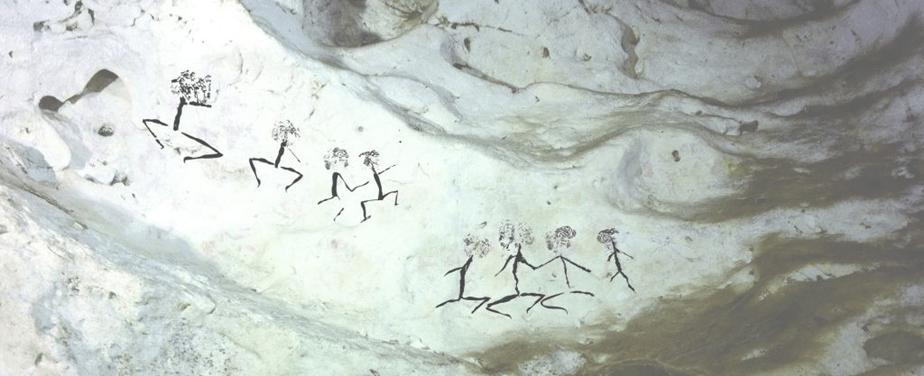
2000 year old cave art from Borneo

Instinctively, I felt that there must be more to religious experiences than the dull passivity of listening to an old white man lecture on details of an antiquated religious text.  Psalm 100 in the Hebrew Bible instructs us to “Make a joyful noise unto the Lord,” but I couldn’t find joy anywhere in my home church.  Even my relationship with Jesus, which felt sacred and special, was dimmed by the constant focus on Jesus’ suffering and death and my concurrent obligation to avoid sin at all costs.

Continue reading “Collective Joy as Our Birthright by Mary Gelfand”

Jonnet Lies Under the Thorn Tree, 1634 by Carolyn Lee Boyd

While researching my family tree, I discovered the Survey of Scottish Witchcraft of the University of Edinburgh, an amazing database listing those who were accused of witchcraft in Scotland between 1563 and 1736 and what happened to them. I found a woman named Jonnet who had an unusual last name that closely matched one of my ancestors, who happened to come from a small town very close to where my ancestor had been born, and who had several children. Jonnet would have been of the previous generation or maybe two generations earlier than my ancestor. I was not able to trace my ancestor’s line back any farther than her birth, so I wondered if Jonnet had perhaps been the mother or grandmother of my ancestor, or maybe a more distant relative. 

Continue reading “Jonnet Lies Under the Thorn Tree, 1634 by Carolyn Lee Boyd”

From the Archives: The Three Mothers: Feminine Elements and the Early Kabbalah by Jill Hammer

This was originally posted May 22, 2108

For over ten years, I’ve been teaching a work of early Jewish mysticism known as Sefer Yetzirah, or the Book of Creation.  There are widely differing opinions on the book’s origin and dating, but many scholars date it to the sixth century.  Its core concept can be described simply: the Divine used the Hebrew letters as metaphysical channels to create the different aspects of reality: the directions, the elements, the planets, the months of the year, and so forth.  Each letter is a channel by which God creates a unique form or entity, and meditating on the letters provides us with a connection to divine creative power. In its discussion of the letters, Sefer Yetzirah shows a strong connection to feminine imagery, and thus helps the later kabbalah develop its own link to the feminine.

Continue reading “From the Archives: The Three Mothers: Feminine Elements and the Early Kabbalah by Jill Hammer”

Archives from the FAR Founders: Learning Compassion from Inmate Number 74799 by Cynthia Garrity-Bond

This was originally posted on July 21, 2017. This is the first post of our new series to highlight the work of the four founders of FAR, Garrity-Bond, Caroline Kline, Gina Messina and Xochitl Alvizo

Technically I was employed as a lab assistant at our community

Considered standard prison procedure, Michael was scheduled for an autopsy the following day. While my grief over Michael’s death was considerable, it was the pending autopsy that caused my immediate concern. As I pictured Michael on the cold table of steel, the crude instruments sawing and cutting into his already weathered body, I took it upon myself to somehow ease this last assault. I phoned the Tucson corner’s office, hoping to speak to the pathologist who would be performing Michael’s autopsy. With surprising bureaucratic ease, I was transferred to him. After introducing myself, I explained he would be receiving Prisoner 74799, my brother, from Tucson General, and that by all appearances this was just another disposable inmate whose criminal past simply caught up with him, sort of a karma-like ending. His thin, emaciated body, I warned, is covered in tattoos, which I feared might induce a harsher judgment upon this cast away soul. I asked the pathologist that when he begins the post, he please remember Prisoner 74799 was somebody’s son, somebody’s brother, father and friend and more importantly, that this man was loved. “Please” I pleaded, “try to see beyond the obvious signs of poor choices mapped onto his body, instead see he is more than his prison issued number and that Michael Paul, while far from saint, was a man who loved and was loved.”

Continue reading “Archives from the FAR Founders: Learning Compassion from Inmate Number 74799 by Cynthia Garrity-Bond”

To Stand in the Presence of the Ancients! – Enheduanna, Part 1 by Janet Maika’i Rudolph

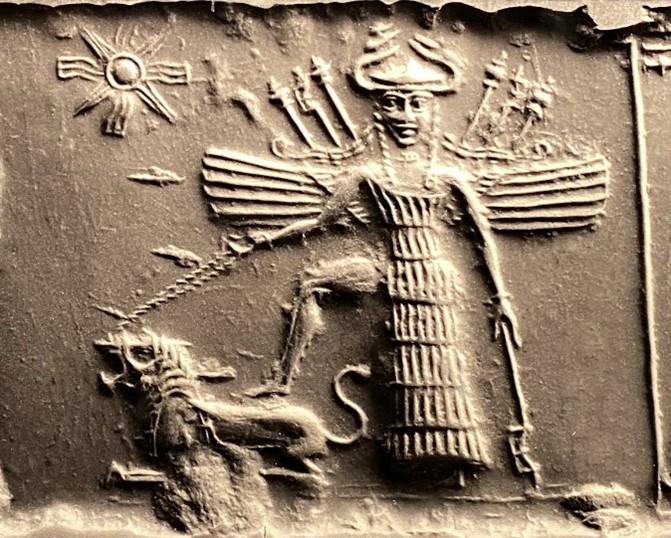
Ishtar controlling a lion ca 2334-2154 BCE

To be in the presence of antiquities is powerful. They carry an energy which is palpable.  I found this to be true at the recent exhibit at the Morgan Library in Manhattan that ran from October 14, 2022 through February 19, 2023. 

Enheduanna is a fascinating woman who lived in the lands of Mesopotamia circa the 23rd century BCE. She was a priestess who was also a writer and chronicler of her times. She named herself in her writings making her the first known author of any written works in history. She was so influential that for centuries after her death, scribes learned their craft in scribal schools by reading and copying out her work. Scholars have referred to her as the Sumerian Shakespeare[1]

Her main temple was in Ur, the very city that hundreds of years later gave rise to the biblical priestess Sarah and her husband, Abraham. We can only image how much they had been influenced by her.

Continue reading “To Stand in the Presence of the Ancients! – Enheduanna, Part 1 by Janet Maika’i Rudolph”

Boundaries: A Poem Drawn from the Well of Jacob by Marcia Mount Shoop

kikuchi valley, waterfall and light lay in the forest, kikuchi, kumamoto, japan

Today is the day in the Christian church year that we remember Jesus’ last supper with his friends/chosen family before he was betrayed by some of those same friends/chosen family. He talked to his beloved circle that night about many things, including betrayal and their capacity to embody Divine Love in a broken world after his death. Just a few days later he was executed by the Roman government because his prophetic and compassionate life was a threat to the powers that be of his day–both governmental and religious. In honor of this day in my faith tradition, I share a poem I wrote about one of the women in Jesus’ life before he was executed by Empire. Since Jesus’ death, he was kidnapped again by multiple Empires who have used him to put an ecclesial and even divine seal of approval on systems of oppression and genocide. The woman at the well gives us a window into Jesus the liberator. May we have space to remember him today as another Easter Sunday approaches for Christians around the world.

Continue reading “Boundaries: A Poem Drawn from the Well of Jacob by Marcia Mount Shoop”

Life Still Shaped by the Witch Hunts? by Eline Kieft

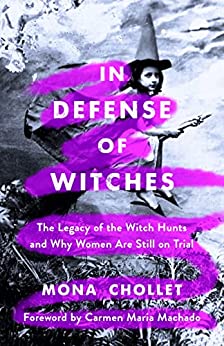
In this article I reframe my understanding of feminism through the lens of Mona Chollet’s In Defence of Witches, and reflect on how my psyche as a woman today is still deeply influenced by the effects of the witch hunts in mediaeval times. 

Continue reading “Life Still Shaped by the Witch Hunts? by Eline Kieft”

Legacy of Carol P. Christ: Curiosity About Everything and the Language of the Goddess

The was originally posted on April 14, 2014

mochlos altar stone

My recent discovery of Marija Gimbutas on Youtube rekindled my admiration for her work. In her slide-lecture “The World of the Goddess” Marija Gimbutas allows us to follow the line of reasoning she used to decipher the “language of the Goddess” in Old Europe.

Careful attention to her lecture shows that Gimbutas did not close her eyes, dream, and then attach her own ideas and intuitions to the artifacts she later discussed. Rather, she catalogued groups of images with similar symbolism and used her knowledge of nature (what does a water bird or an owl look like?) and folklore (she collected thousands of songs connected to the agricultural and life cycles in her native Lithuania in the 1930s) to unlock the meaning of ancient symbols.

Continue reading “Legacy of Carol P. Christ: Curiosity About Everything and the Language of the Goddess”