Hope Is Giving Birth in the Face of the Dragon by Beth Bartlett

Syrian Baby

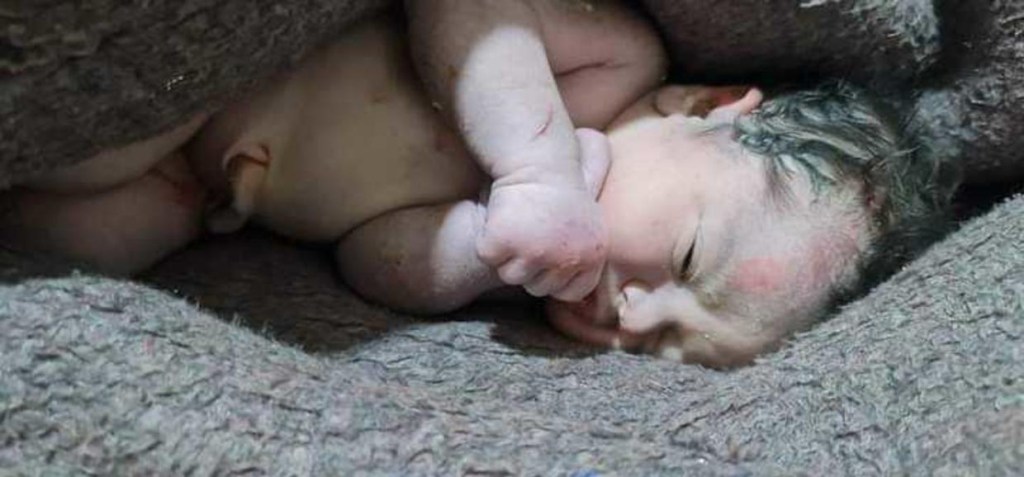
The image of the baby born under the rubble of the earthquake in Syria has been haunting me. So has the image in my mind of her mother, giving birth to her baby while trapped after the building, where she, her husband, and their children were sleeping, collapsed.  The baby’s uncle, when digging through the debris hoping to reach his brother and family, found the baby alive, her umbilical cord still attached to her mother. When he cut the cord, the baby let out a cry.  Tragically, her mother had died after giving birth, as had her father and siblings.

Continue reading “Hope Is Giving Birth in the Face of the Dragon by Beth Bartlett”

The Reindeer Goddess Seeks Help by Judith Shaw

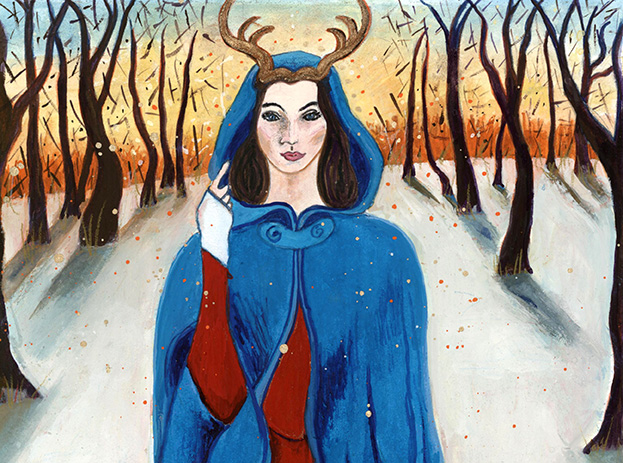
Imbolc has come and gone. It appears that Punxsutawney Phil, the American version of animal weather prophets on that cross-quarter day, was correct. Winter cold continues. I’ll admit that I am getting pretty tired of the cold but it does help me to keep focused on the paintings for my winter fairytale – Elena and the Reindeer Goddess.

Though my work on this project will certainly continue into the spring and summer, this will be the last excerpt I post here at FAR. I know you will all be more interested in postings related to the growing times of spring and summer once the days are longer and warmer. This third excerpt picks up where my post from last month stopped. If you missed excerpts one and two you can check them out here and here.

Continue reading “The Reindeer Goddess Seeks Help by Judith Shaw”

Considering “Everything Everywhere All at Once”

The multiverse as a metaphor for trauma is rather compelling to me. It speaks to the way in which different realities and experiences impose themselves on others as a matter of fact rather than malintent. These realities necessarily co-exist in interrelationship but may compound the weight and confusion of present experience.

Warning: Spoilers Ahead!

Everything.

Everywhere.

All at Once.

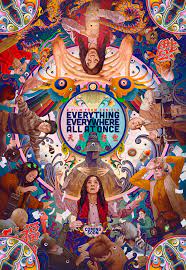
I remember thinking, this is kind of a weird name for a movie, even if it is about the multiverse and shifting realities. But I’m a big sci fi fan, so of course, I jumped at the chance to see it when my friend said she wanted to see the movie, again, with me specifically. Mom’s day out for both of us. Check. A… m.o.v.i.e. I remember movies from a time pre-pandemic: there’s a big screen, right? And food? I like food. Sign me up. (j/k). I seem to remember movie theaters being more crowded though—my friend and I had almost a private viewing. And sitting practically on top of my friend by the end of the film, after laughing so hard I cried, crying because I was so sad, gaping in shock, horror, and even disgust, and wondering what I just saw, I reflected: this movie was perfectly named.

Continue reading “Considering “Everything Everywhere All at Once””

From the Archives: A Feminist Retelling of Noah’s Ark

This was originally posted on May 4, 2018

My daughters came to me after Sunday School one day, concerned about a story they had heard in which God drowned almost everyone on Earth. So I sat down and thought about why a community might want to tell that story, and what valuable wisdom might be lifted from it for my children. Here is what I told them:

God/ess  has  many  faces,  which  help  us  understand  different  things we  need  to  know  at different  times. Sometimes we think of God/ess as Crone, an old, old  woman  crowned with silver hair as  an  emblem of her wisdom, who helps us  learn to let go of anything that is holding back the wellness of our community and ourselves. 

Continue reading “From the Archives: A Feminist Retelling of Noah’s Ark”

The Legacy of Carol P. Christ: Weaving and Spinning Women: Witches and Pagans by Max Dashu A Review

Moderator’s Note: This was originally posted on September 19, 2016

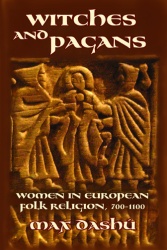
Max Dashu’s  Witches and Pagans: Women in European Folk Religion 700-1000 challenges the assumption that Europe was fully Christianized within a few short centuries as traditional historians tell us. Most of us were taught not only that Europe became Christian very rapidly, but also that Europeans were more than willing to adopt a new religion that was “superior” to “paganism” in every way. Careful readers of Dashu’s important new work will be challenged to revise their views. When the full 15 volumes of the projected series are in print, historians may be forced to hang their heads in shame. This of course assumes that scholars will read Dashu’s work. More likely they will ignore or dismiss it, but sooner or later–I dare to hope–the truth will out.

witches-and-pagans-cover

History has been written by the victors—in the case of Europe by elite Christian men. These men may have wanted to believe that their views were widely held, but Dashu suggests that they were not. Combing artistic and archaeological records, Dashu finds (to give one example) that images of Mother Earth nursing a snake are far from uncommon and can even be found as illustrations in Christian documents and on Christian monuments. Clerics rage against people—particularly women–who continue to visit holy wells and sacred trees and to practice divination and healing rituals invoking pagan powers. To paraphrase Shakespeare: “Methinks the cleric doth protest too much.” Were these things not happening and happening often, there would have been no need to condemn them.  Using these clues, Dashu provides intriguing new readings of the Poetic Edda and Norse sagas.

Continue reading “The Legacy of Carol P. Christ: Weaving and Spinning Women: Witches and Pagans by Max Dashu A Review”

Iron Mothers: Iron as Embodiment of the Biblical Matriarchs in Jewish Folklore by Jill Hammer

Jewish amuletic objects come in many forms: salt, the hamsa or hand, the bowl, the scroll with verses, even sword-shaped amulets. These items are meant to provide spiritual protection from malevolent forces such as demons and the evil eye and vary across different times and places.  One protective item from Jewish folklore is iron. In medieval Germany, for example, pregnant Jewish women carried an iron object to repel malevolent forces.  This was part of a wider cultural norm: across Western Europe, iron was understood to repel fairies and spirits of all kinds, and was sewed into babies’ clothing, hung above cradles and doorways, etc.  According to one Jewish legend, when the waters of Egypt turned to blood during the first plague, water in metal vessels was 34245 the only water to remain unchanged. Pieces of iron were placed on all vessels containing water during the solstices and equinoxes—considered to be a time when spirits were roving the world—to protect them from contamination.

Continue reading “Iron Mothers: Iron as Embodiment of the Biblical Matriarchs in Jewish Folklore by Jill Hammer”

On Ukraine, War and Goddess’s Protection by Judith Shaw

We have all been horrified by the Russian invasion of Ukraine as we witness the brutal bombardment of not only military sites but also of civilians, neighborhoods, hospitals, churches, historical sites and nuclear power plants. It has been called the first TicToc war as these images fill up our computers and cellphones, leaving peace lovers challenged to maintain their belief in peaceful resolutions to conflict

Continue reading “On Ukraine, War and Goddess’s Protection by Judith Shaw”

Carol P. Christ’s Legacy: Does Belief Matter?

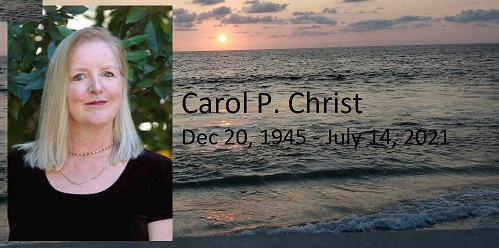
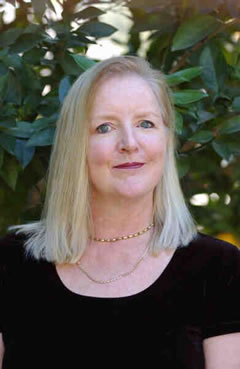
Moderator’s Note: Carol Christ died from cancer in July, 2021. Her work continues through her non-profit foundation, the Ariadne Institute for the Study of Myth and Ritual and the Goddess Pilgrimage to Crete. This blog was originally posted December 10, 2012. You can read it long with its original comments here.

In recent days I have been pondering the fact that some people and some feminists seem to see the issues of religious faith and belonging to be rooted in birth, family, and community, while for others the question of belonging to a religious community hinges on belief and judgments about the power exerted by religious institutions.  What accounts for this difference in the way we view religious belonging?

Recently I watched The Secret History of Sex, Choice and Catholics, a film featuring Roman Catholic feminists and ethicists who dissent from the Roman Catholic hierarchy’s views on contraception, abortion, and homosexuality.  At the beginning of the film those interviewed state almost univocally that for them being Catholic stems from having been born Catholic. These Catholic dissidents continue as Catholics, even though they disagree with major portions of Roman Catholic teaching.  It may have been because they were not asked, but most of them did not name reasons of belief for remaining Catholic.

Continue reading “Carol P. Christ’s Legacy: Does Belief Matter?”

Carol P. Christ’s Legacy: Women And Weeding, The First 10,000 Years* by Carol P. Christ

Moderator’s Note: We here at FAR have been so fortunate to work along side Carol Christ for many years. She died from cancer in July, 2021. Her work continues through her non-profit foundation, the Ariadne Institute for the Study of Myth and Ritual and the Goddess Pilgrimage to Crete. To honor her legacy, as well as allow as many people as possible to read her thought-provoking and important blogs, we are pleased to offer this new column to highlight her work. We will be picking out special blogs for reposting. This blog was originally posted February 10, 2014. You can read it long with its original comments here.

Mary, Mary, quite contrary, how does your garden grow? With silver bells and cockle shells, and pretty little maids all in a row.

From the beginning of horticulture about 8000 BCE or earlier to the present day, weeding has been women’s work. Women, who were the gatherers and preparers of food in traditional nomadic societies, no doubt were the first to discover that seeds dropped at a campsite one year sometimes sprung up as plants the next year. When this discovery was systematized, agriculture was invented, and human beings began to settle down in the first villages and towns.

Continue reading “Carol P. Christ’s Legacy: Women And Weeding, The First 10,000 Years* by Carol P. Christ”

Fiction: Buddha and the Rocking Chair

Your ex-boyfriend gave you a solid brass Buddha, one foot high. You hate to think what he had to pay for it. Not knowing what else to do with it, you place it on your bookcase. You must admit that it’s a beautiful object, that it inspires a certain peace. But it leaves you cold, just like the crucifix hanging in your parents’ bedroom always left you cold.

Your ex-boyfriend gave you a solid brass Buddha, one foot high. You hate to think what he had to pay for it. Not knowing what else to do with it, you place it on your bookcase. You must admit that it’s a beautiful object, that it inspires a certain peace. But it leaves you cold, just like the crucifix hanging in your parents’ bedroom always left you cold. Only when you sit in your dead grandmother’s chair and rock yourself into a trance can you reach your world of wonder, that green and gold place where May sunshine washes through newly unfurled birch leaves, where shadow and light dance on the white bark you peel off like onionskin. Long ago, you think, people worshipped their ancestors.

You wake up to cold and gray, to a day so drab that it hurts like a permanent migraine. On the bus ride to the office, the commuters in their career clothes are scrying into their phones. No free seats so you grab the handrail and gaze out the window. Instead of city buildings and dirty snow, you see an old farmhouse at the edge of an apple orchard. A gaggle of geese guards that house. They rush towards you, flapping their wings and hissing. But you walk resolutely on until you reach the veranda, and then the front door, propped open by a pair of gardening shoes. Stepping into the hall, you breathe in the mixture of baking bread and boiled coffee. A woman comes to you, a woman like your grandmother, but older. Her thin silver hair reaches her knees. Her face is so wrinkled, you can hardly see where her glittering eyes end and her crow’s feet begin.

Cocking her head, she says, “What took you so long?” And taking your hand, she marches you into her kitchen where a cat sleeps on the windowsill. She sits you down and serves you elderflower wine in an old jam jar. You take one sip and the kitchen reels around you.

You hear a rushing sound, a pounding, and then you are alone on a beach holding a piece of driftwood shaped like a goose in flight. A strange new weight pulls at your shoulder blades. Craning your neck to investigate, you see the wings sprouting there, blue-black crow wings. Of their own volition, they stretch and flap until you are airborne. Heading out over the waves, the tips of your bare toes graze the water.

“You dream too much,” your ex informs you. “You live on another planet. When’s the last time you watched the news? When’s the last time you voted? You can’t just spend your whole life with your head in the sand.”

Your ex is an activist. He majored in queer theory. He worked on Bernie Sander’s election campaign. He buys everything organic and volunteers one day a month at the soup kitchen. You are humbled by his social engagement, but when he sends you links to articles and videos overflowing with the world’s misery, the weight is too heavy for you to bear. You find yourself wondering how many homeless people he could have fed for the price of that solid brass Buddha.

Your grandmother lived until she was ninety-nine. She quarreled bitterly with everyone who came to visit and expressed concern about the farm falling into disrepair around her. She told them she just wanted to be left in peace. Then one day she died of a stroke while chopping wood on that old farm where she had lived alone for fifty-six years. She died instantly—no lingering pain, hospital gowns, or stench of bedpans or disinfectant. That’s how it is on your mother’s side of the family—the women are widowed early and seem to live forever until the day they suddenly drop dead.

After her death, her children sold her farm to a developer, who tore down her Victorian house to build rows and rows of condos. They left only three of her apple trees standing. Those trees are as old and gnarled as she was when she died. Like old women, they no longer bear fruit but stand and bear witness to what once was, but is no longer.

You pack the brass Buddha away in old newspapers, stick it in a cardboard box. You’ve decided to donate it to a drug rehabilitation center. Maybe it will bring the people there peace and clarity. Then you brew a pot of tea and sit in the rocking chair, huddled in an afghan your grandmother crocheted before you were born. You close your eyes and you are far out over the ocean, sometimes floating, sometimes flying. A blast of salt wind fills your shiny black wings, lifting you even higher. Opening your beak wide, you cackle and caw.

Mary Sharratt is committed to telling women’s stories. If you enjoyed this short piece, please check out her acclaimed novel Illuminations, drawn from the dramatic life of Hildegard von Bingen, and her new novel Revelationsabout the mystical pilgrim Margery Kempe and her friendship with Julian of Norwich. Visit her website.