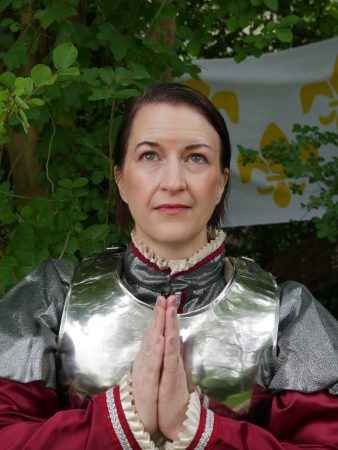
Joan of Arc from The Goddess Project: Made in Her Image by Colette Numajiri

“I’m not afraid. I was born to do this.” -Joan of Arc

Women are inherently valiant. In extreme situations we armor up and lead others through whatever we are battling at the time.

Joan of Arc was a human woman with otherworldly faith who, as a young teenager, listened to Divine voices and lead an army that eventually ended the 100 Years War.  “The real Joan of Arc is an uncomfortable fit as an icon of female solidarity or democratic rights. She achieved what should have been impossible for someone of her gender and class in 15th-century France.” wrote Helen Castor in her book Joan of Arc: A History. She was so respected and revered that 20 years AFTER Her death, 115 people testified on behalf of Joan of Arc (Jeanne d’Arc) and overturned the ruling.

Enbodying the Divine Feminine on Earth, women look to Joan as an inspiring example of a brave and active woman.  Joan inspired the Suffragettes, they held her banner and wore white (as Joan chose to wear white for purity when She was taken to the stake to be burned for the crime of cross-dressing) as they marched for women’s right to vote. Just as, a few months ago our newly elected Congresswomen all wore white in solidarity.

Continue reading “Joan of Arc from The Goddess Project: Made in Her Image by Colette Numajiri”

The Dying Time by Esther Nelson

At the end of Anita Diamant’s novel, THE RED TENT, Dinah—the same young woman who is only briefly mentioned in the biblical account (Genesis 34)—dies after a long and full life.  The biblical text tells us that Dinah “went out to visit the women of the region” and that “Schechem son of Hamor the Hivite, prince of the region, saw her…seized her and lay with her by force” (vss. 1-2).  The passage is often titled “The Rape of Dinah.”

In Diamant’s version of the story, Dinah and King Hamor’s son engage in consensual sex.  In keeping with the biblical account, the king then attempts to negotiate a bride price with Jacob (Dinah’s father), but Jacob and his sons are reluctant to agree to the marriage.  They demand soon thereafter that all the men in Hamor’s kingdom undergo circumcision as a bride price.  On the third day after surgery, the sons steal into the city and kill the men.

After just a mere mention of Dinah’s “rape” in Genesis 34, she disappears from the story.  In THE RED TENT, Diamant not only gives Dinah a powerful voice, she also weaves a wonderful tale of mothers, daughters, heartache, betrayal, loss, love, and joy.  Dinah gives birth to her lover’s son in Egypt, develops a strong bond and working relationship with the midwife, Meryt, and eventually falls in love with Benia, a master carpenter.

Continue reading “The Dying Time by Esther Nelson”

Autumn Equinox with the Ancestors, or after ecstasy indeed the laundry*) Eline Kieft

As I hang the laundry back home, I remember how just 24 hours earlier I arrived back on the beach after an incredible time at the ancestral burial mound where I spend the night in ceremony at the Autumn Equinox.

Ile Carn is a neolithic passage grave on a small tidal island in Finisterre, Brittany. I had visited there the summer before, and found that the other world was strongly accessible. When places become very touristy, like Stonehenge or Mont St. Michel, it sometimes appears as if the spirits retreat and the potency of the place thins. I asked them then if I could come back for ceremony, and when the answer was yes, I promised to return.

So here I was, on the Autumn Equinox, or Mabon. This is a time of balance, when the days and nights are equally long. A time in which the harvest has been gathered and we can start to prepare for a time of gestation and growing in the dark womb of winter, before the light is reborn again next year. My personal aim was three fold: I wanted to celebrate this year, especially to give thanks for my life, which had been on a precarious knife-edge earlier in May. I also wanted to ask for guidance for both my budding business and for my academic work in terms of re-discovering our own indigeneity in the west.

Continue reading “Autumn Equinox with the Ancestors, or after ecstasy indeed the laundry*) Eline Kieft”

Finding Missing Pieces of My Ancestral Story: Scotland and Ireland by Carol P. Christ

When I began researching years ago, I knew the names of my grandparents and what country in Europe their ancestors were from, but not much more. I have now traced most of my ancestors back to the Old Country, some to the 1600s. But there remained four ancestors with unknown places of origin among my sixteen 2x great-grandparents. A week or so ago, I decided to go back to the online resources, focusing on James Inglis, the Scottish seaman, and his Irish wife, Anne Corliss. This time I was more experienced, and I was determined to find the records.

Several sources confirmed that James’ parents were James and Isabella. Unfortunately, more than one James Inglis was born about 1838 to parents with these names. I had already ruled these Jameses out, because they were living in Scotland during the 1861 census, while my ancestor was by that time married and living in New York City. Scottish birth, marriage, and death records are incomplete before 1855 when civil registration was required; neither the marriage of James’ parents, nor his birth record were online. Continue reading “Finding Missing Pieces of My Ancestral Story: Scotland and Ireland by Carol P. Christ”

“This Golgotha of Modern Times” by Joyce Zonana

Our visit to Poland coincides with the Feast of the Assumption, a time when tens of thousands of pilgrims arrive on foot to pay homage to Our Lady of Częstochowa, Poland’s Black Madonna. I too am a pilgrim, visiting the sites, not of miracles but of martyrdom. As I make my way through what Pope John Paul II called “this Golgotha of modern times,” I am overcome; like him, I “am here kneeling down” to implore Our Lady to help us heal the vast, still open wound that is our life on this earth.

4BC9846D-628B-4F1D-89BF-BB212E5D94BCI had never imagined visiting Eastern Europe, a place toward which I felt no attraction, or, if anything, a deep aversion. To my mind, these were the killing fields, where six million Jews, Roma, political prisoners, homosexuals, and others were massacred by the Nazis during World War II. As a bisexual Jew, a dark-skinned Middle Easterner sometimes taken for a gypsy, why would I want to go there?
But my husband, who was raised Catholic in Chicago, is of Polish and Lithuanian descent. He and his two sisters have talked for years about visiting the villages from which their grandparents, escaping economic hardship and military conscription, had emigrated early in the twentieth century. It remained wistful talk until Mike and I made plans to attend a yoga retreat in rural Denmark. We’d be so close, we reasoned, why not cross the Baltic to explore his ancestral homes? His two sisters readily agreed to join us. Continue reading ““This Golgotha of Modern Times” by Joyce Zonana”

Rejecting TMT: Protecting and Protesting the Sacred for Mauna Kea and for all by Anjeanette LeBoeuf

AnjeanetteRoughly 3 ½ years ago my FAR post was about the struggle that the Hawaiian people were facing with the proposed building of a Thirty Meter Telescope on the most sacred mountain in the Hawaiian Islands, Mauna Kea. When that post was published, there was a large social media presence and protests that helped cease construction of the telescope and sent the issue to the Hawaiian Courts. I am writing this post because Mauna Kea is again under threat. The Courts ruled in the favor of the telescope and for the last two months, large scale protests have gone under way on the road up to Mauna Kea.

Continue reading “Rejecting TMT: Protecting and Protesting the Sacred for Mauna Kea and for all by Anjeanette LeBoeuf”

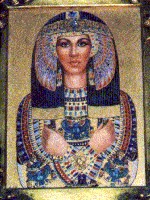
Happy Birthday Isis: Isis Isis…Ra! Ra! Ra! by Karen Tate

I wanted to pull myself away from the ugliness out there and take time to honor the Egyptian Goddess, Isis, as Her birthday is recognized to be in the latter part of July.  My husband, Roy, and I formed the Isis Ancient Cultures Society and the Iseum of Isis Navigatum, in Los Angeles, sometime ago and for more than a decade, in Her name, we sponsored Moon Circles to promote diversity, Salons to teach, and we put out a quarterly newsletter when you still had to fold and mail them – remember that?  But the premier events every  year were the Isis Birthday Tea and the Isis Navigatum or Festival of Isis, every March.    Our aim was to reconstruct Isis rituals in a modern context and make them relevant  for today.

We put on the Isis Tea in prestigious locations like aboard the Queen Mary and the Isis Navigatum in various public locations including The Japanese Gardens, in the San Fernando Valley, and on the beach on Point Dume, in Malibu, California.  So detailed were our events, sometimes the public joined us thinking we were a movie crew and our organization was written about by a anthropologist/folklorist citing the detail and depth of the material culture of contemporary Isian devotees.

Continue reading “Happy Birthday Isis: Isis Isis…Ra! Ra! Ra! by Karen Tate”

Sappho’s Poems as an Ethos for Women’s Ritual by Jill Hammer

Photo by: Zac Jaffe

For by my side you put on

many wreaths of roses

and garlands of flowers

around your soft neck


and with precious and royal perfume

you anointed yourself.


On soft beds you satisfied your passion.


And there was no dance

no holy place

from which we were absent.


–Sappho (trans. Julia Dubnoff)


Sappho, the poet from Lesbos (630-570 BCE), was considered one of the greatest poets of her time—one of her epithets was “the tenth Muse.” I discovered the poems of Sappho in my thirties and was utterly captivated.  I had newly embarked on a relationship with a woman and Sappho’s love poetry (though by no means exclusively lesbian) supported the expression of eros between women.  Yet even more than that, Sappho’s poems supported an erotic relationship between self and world—a relationship that included ritual as a form of intimacy.  I’m not a Greek scholar—I experience Sappho’s poems in translation. Yet the translations I read back then were a revelation: a world in which women lived in circle with one another.

Continue reading “Sappho’s Poems as an Ethos for Women’s Ritual by Jill Hammer”

Temple Magdalen by Elizabeth Cunningham

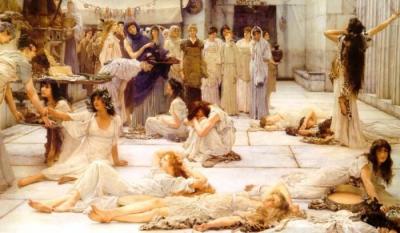
The Women of Amphissa, 1887, by Lawrence Alma-Tadema

Since I began writing for FAR in July 2012, I have written about Mary Magdalen, or excerpted a passage from one of my novels, near or on her July 22 Feast Day. For why I made the controversial choice to depict her as a prostitute, see last year’s post. The below excerpt is from The Passion of Mary Magdalen. I made this selection in remembrance of all the refugees in the world today. In this passage, Judith, a Jewish widow whose family was driven from the land by tax collectors, returns to the place where Maeve (my fictional Celtic Magdalen) and her friends have recently founded a Temple to Isis on the outskirts of Magdala. Maeve has just invited Judith to join them. (Edited for brevity.)

She stared at me, her eyes full of anger and longing.

“I will not be a slave and a whore where I was once a wife, the one who made the challah bread, who said the Sabbath prayers over it. This was our place, my husband’s and mine. We brought the best we had to the temple, the finest oil and wine, the unblemished kid—”

“Goats? You kept goats? You know how to make cheese?”

She sat quietly for a moment before she answered. “How can I live here with you?” she wondered. “I don’t understand.”

Continue reading “Temple Magdalen by Elizabeth Cunningham”

Facing Life Part 1 by Janet Maika’i Rudolph

I remember the first time I killed a living animal for food. I was a college student. I was traveling with other students on a month-long backpacking trip along the Sea of Cortez in Baja, Mexico. It was a very long time ago, yet the experience was so impactful that the memories are etched into my being.

Truth be told, my prey wasn’t all that sexy. It was scallops. There are certain benefits to “hunting” scallops. They have no legs or fins to force someone into a chase, no arms to fight back, and no reproving eyes to haunt dreams. All fairly milquetoast. Or so it appeared to me on the surface.

The way to harvest scallops is straightforward. They are made up of two shells, the lower one is plastered to rocks in the water. The upper one moves up and down by pivoting on a membrane. A diver plunges into the depths of the sea to find them. Then a diver inserts a knife between the two halves of the opened shells in order to cut the membrane at the back. There is delectable meat inside both shell halves. The top shell will come free to be taken to the surface. The meat is cut out of the lower shell, which is immovably attached to the rock.

Continue reading “Facing Life Part 1 by Janet Maika’i Rudolph”