Yes There are Goddesses in the Bible, Part 3

This blog post is the 3rd in a series of looking for female deities in the bible who have been translated out of easy reach or otherwise hidden within its words. In my last blog post I discussed bird imagery and the bible. It is available here
 You can’t complete a discussion about birds without also bringing up Lilith. She appears by name only in one place in the bible; Isaiah 34:14. Isaiah uses the word liyliyth as a feature in a hellish landscape. Although it is also a name, liyliyth is treated as a common noun. The most prevalent translation is “screech owl” although others have included such names as night creature, night monster, night hag, and she-vampire. Continue reading “Yes There are Goddesses in the Bible, Part 3”

ANNA’S DANCE: A BALKAN ODYSSEY by Michele Levy – Book Review by Joyce Zonana

Toward the end of her complex odyssey, Anna finds herself alone in an ancient Istanbul synagogue, where at long last she unreservedly “name[s] herself” a Jew and experiences connection with a God that “fuse[s] both male and female” and “from that wholeness birth[s] mercy and love.” Vowing to work to “help repair [the] world”–tikkun olam–she moves forward to face her life with a “sense of wholeness” that had eluded her for so long.

202002_Zonana_JoyceHow to come to terms with the most maligned or vulnerable aspect of ourselves—whether it be race, ethnicity, religion, gender, sexuality, physical ability, or any other trait—remains among the most pressing questions of our time. Should we try to “pass,” identifying with the oppressor and denying or rejecting who we are? Should we assume a militant, defiant stance, wreaking vengeance on those who have harmed us? Or can we find a way to embrace and affirm ourselves, neither denying nor reifying the pain of our individual and collective pasts? Can we love those who have harmed us?
These are among the questions faced by 23-year-old Anna Rossi, the central character in Michele Levy’s complex, lyrical new novel Anna’s Dance: A Balkan Odyssey (Black Rose Writing, $20.95), set in the turbulent summer of 1968. 

Raised in the U.S. as a non-observant Jew, Anna has nevertheless been seared by anti-Semitism—both the indignities experienced by her parents, and those she has encountered herself. Her mother, a brilliant mathematician, had been denied admission to Purdue’s engineering school— “You’re a woman and a Jew”—and rejected by her Irish-American mother-in-law as a “filthy immigrant Jew.” Growing up in a Northern Virginia suburb, Anna was branded “Miss Israel” in the ninth grade and given low marks by a teacher who insisted she was “not like us.” Later, in college, a professor called her a “Jewish bitch.”

Continue reading “ANNA’S DANCE: A BALKAN ODYSSEY by Michele Levy – Book Review by Joyce Zonana”

Hagar and Intersectionality by Marilyn Batchelor

I began to follow Kimberlé Crenshaw a little more than five years ago when I first learned of her theory of intersectionality as a more concise description of oppressions stemming from race, age, gender, sex/sexual orientation, religion and socio-economic status. 

In Delores Williams’ book, Sisters in the Wilderness, there is a closer look at womanist theology as it relates to Intersectionality. The focus on traditions of biblical appropriation that emphasize liberation of the oppressed “showed God relating to men in the liberation struggles,” Williams says in the introduction. “In some African American spiritual songs, in slave narratives and in sermons by black preachers, reference was made to biblical stories and personalities who were involved in liberation struggle.”  Continue reading “Hagar and Intersectionality by Marilyn Batchelor”

Elder – Berry Musings by Sara Wright

I first became interested in herbalism as a young mother who kept a small herbal garden outside her back door. There is nothing better than fresh herbs to spice up any dish (as any good cook knows well) and baking my own bread, making homemade granola, etc., like gardening, was simply part of what I did. In retrospect, I see that cooking served as a highly creative endeavor that helped me to create some balance between the millions of mundane jobs associated with single motherhood and my need for creativity…

It seemed quite natural to begin to explore herbs for medicinal purposes. I first experimented with plants that grew wild near my house on the island on which I lived. I sensed that developing a personal relationship with the plants I was using mattered, an intuition that continues to inform my growing and preparation of herbal remedies to this day. If I don’t have the right growing conditions for an herb I need, I wild craft responsibly. Until recently I have never used store bought preparations.

When I studied with medicine folk in the Amazon thirty years after first using herbs for culinary and then medicinal purposes, I learned that each healer only used his/her own garden grown herbs and preparations differed based on the knowledge that each medicine person received directly from the plants, so perhaps the importance of having a personal reciprocal relationship with individual plants is tied to their efficacy – my sense/experience is that it is. The ways of the natural world are not well understood by most westernized people. Continue reading “Elder – Berry Musings by Sara Wright”

Ancient Mothers, I Hear You Calling Me to Crete by Carol P. Christ

On a cold and rainy morning in Lesbos, I ponder the advice of my intuitive friend Cristina to reflect on the spiritual dimensions of my decision to move to Crete. When asked why I am moving from Lesbos to Crete, I tend focus on the negative: I am lonely in my small village; and I am disheartened by my neighbors’ lack of compassion for the refugees who come to our island from Syria, Iraq, Iran, and Afghanistan.
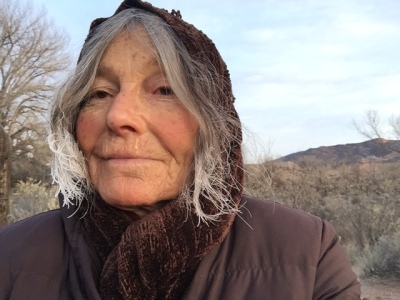
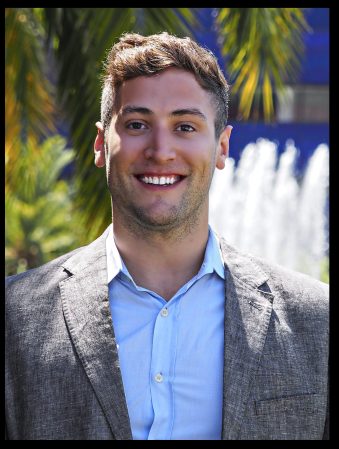
As I begin to think again, I recall the many wonderful things I have experienced in Lesbos. This is the island where Sappho sang, and I too have been inspired by the muses who arise from the land. It is here that I first felt Greece calling me to leave my home. It is here that I learned to speak Greek. It is here that I listened to the stories of the old people who remembered a time when everyone lived closer to each other and the land. It is here that I learned to dance the traditional dances of Greece. It is here that I learned to identify over 300 species of birds that visit the wetlands on spring migration or are year-around or summer and winter residents. It is here that I dedicated a decade of my life to the effort to protect the wetland home of the birds I came to love. It is here that I was asked to run for regional and national office by the Green Party Greece. It is here that I met green friends I will always hold in my heart. It is here that I became an amateur geologist, learning the volcanic history of an island that has been declared a UNESCO Geopark. It is here that I imagined the time before 1922 when Turks, Armenians, and Greeks lived together in my village. It is here that I renovated a small Turkish house in a neighborhood that once had a mosque and later, a Neoclassical “mansion” (not particularly large by American standards) built by a Greek shipowner who transported goods brought by camels along the silk road from China. It is here that I learned to drink retsina and to relish food drenched in olive oil. I will carry all of this with me, for it is in my blood and in my bones.

But now, Crete is calling me. Continue reading “Ancient Mothers, I Hear You Calling Me to Crete by Carol P. Christ”

Tree Talk: Dr. Susan Simard by Sara Wright

Scientist Susan Simard is a professor of forest ecology at the University in Vancouver, British Columbia, who has been studying the below-ground fungal networks that connect trees and facilitate underground inter-tree communication and interaction. Over a period of more than thirty years this field scientist and her students have learned how fungi networks move water, carbon and nutrients such as nitrogen between and among trees as well as across species. Her research has demonstrated that these complex, symbiotic networks in our forests — at the hub of which stand what she calls the “mother trees” — mimic our own neural and social networks. This groundbreaking work on symbiotic plant communication has far-reaching implications that include developing sustainable ways to ‘manage’ forests, and to improve tree and plant resistance to pathogens. Although much of Simard’s research occurs in forests, she has also studied the underground systems of grasslands, wetlands, tundra and alpine ecosystems.

Under our feet there is a whole world of biological pathways that connect trees and allow them to communicate and share resources and information. Other scientists who study these networks (like Dr. Merlin Sheldrake) agree with Susan who suggests that the forest behaves as though it’s a single cohesive organism. Continue reading “Tree Talk: Dr. Susan Simard by Sara Wright”

Welcome to the New Year by Natalie Weaver

Welcome to the New Year.

One year ago, on New Year’s eve, I buried my father’s ashes.  It was an incredible experience to orchestrate the funeral and burial of the man who begat me.  He was nowhere near a Hallmark greeting card kind of father.  He was complicated and difficult in ways both minor and severe.  Yet, this was the man I called “Dad,” and I was left to deal with the baggage of his life.  I cried in a way I had not cried before and felt a kind of sadness that, when given over to, seemed fathomless.  There is no real answer to grief like that.  I decided that one must just confront it or become it or traverse it.  And, there were things to do, practical things, such as repurposing clothes and rehoming cats, for which no one, I believe, could ever be totally prepared. I did not resent what I had to do; I just did it.  These things were hard for me.

Yet, despite the pain, something in that loss was deeply freeing.  There was no progenitor in the person of my father to come before me now, so there was suddenly no sense (however falsely constructed it may have been to begin with) that someone stood between me and whatever it is that was and is coming at me.  There is no longer even the false perception of a windbreaker, no frontline, no wise man, no one to shield, no guide.  There is just a naked sense of myself in the world, and though others surely came before me and stand around me now, on an existential level, I am not answering to him any longer.

Continue reading “Welcome to the New Year by Natalie Weaver”

Becoming Scrub by Sara Wright

In the precious hour before dawn I walk down to a river that no longer empties into the sea – the circle of life has been broken – the earth’s veins and arteries are hopelessly clogged by human interference (stupidity) – the birds and animals that used to be able to rely on the river waters for food and resting places can no longer do so because dams control the water flow and westerners “own” the water. This morning black stone sculptures appeared overnight because the water level has been dropped another foot. And yet, acknowledging the flowing waters in their death throws seems like an important thing to do. For now, at least, the river turns crimson, reflecting the raging beauty of a pre dawn sky, and I am soothed by water rippling quietly over round stone.

I open the rusty gate to enter the Bosque, a place of refuge, for the cottonwoods and for me. Now I am surrounded by desert scrub and graceful matriarchs arc over my head. As I traverse the well  – trodden path I enter a meditative state without effort. Soon I am walking in circle after circle passing through the same trees and desert scrub hearing voices.

Continue reading “Becoming Scrub by Sara Wright”

The Door by John Erickson

Faith is something we get from each other, and sometimes in the most magical of circumstances, faith becomes embodied by the person you love the most.

I have a Ph.D. in American Religious History but I’ve never been much of a religious person.  It’s been one of the conundrums of my life but nevertheless, I found religion and its role in influencing, for good and bad, the lived experiences of the LGBTQ community something worth exploring.

I’ve been struggling with writing this post ever since I graduated and officially became “Dr. John.” In preparing for my defense, the Chair of my Dissertation Committee requested that at the start of the defense, he wanted me to introduce my project, its overall scope, and most importantly why I wrote it.

Why did I write it?  How does one answer why they chose to devote 8 years of their life to a single subject in search of an original idea?  While some would sit and grapple with this question, I knew what the answer was all along because it always was (and always will be) about my maternal grandmother, Gladys Hritsko.

I wanted to know what made me different.  Throughout my dissertation, I interviewed people who, much like myself, grew up in similar small towns, attended the same conservative church services, and heard the same damning things that I did about my sexuality being preached from the pulpit. Many of my subjects were deeply hurt by religion and it set some of them up for years of searching and painful memories and experiences that both forced them to leave their religious and faith-based communities they grew up in or, in the worst case, being kicked out by their family as a result of their religion.

Continue reading “The Door by John Erickson”

Embracing the Darkness by Judith Shaw

judith shaw photoFor most of my life I dreaded both the approach of winter and winter itself. Having grown up in the semi-tropics of New Orleans I had little tolerance for the cold. Living further north as an adult, the shortening days seemed to contradict the joy I found during the blooming of spring and the abundance of summer. Though I certainly appreciated the crisp, clear, golden days of fall they also caused feelings of trepidation as the days continued to shorten.

Continue reading “Embracing the Darkness by Judith Shaw”