I know that most Christians accept some version of the idea that Jesus, the person, died, and then ‘rose from the dead’ in a supernatural, miraculous way – probably the most common definition of what Christians celebrate at Easter. I grew up in progressive Christian churches, where I, too, was taught this idea, which I found fascinating and inspiring. Many people (both Christians and others) still find it healing and inspirational; and I want to state clearly that I think that’s well and good.
Okay.
What I would like to suggest, however, is that this approach may miss the main point of Easter, of resurrection, and of these narratives. Here goes.
As a minister’s daughter, I grew up almost literally in the church, its red door and ivied walls across the driveway from the rectory. On Easter the church was packed; every family received a pink or red geranium. There were Easter egg hunts, baskets stocked with chocolate rabbits and the jelly beans these magical creatures laid. The church rang with triumphant hymns: Jesus Christ is risen today. Although like all children I reveled in holidays involving excessive sweets, it was not the candy or the or the requisite rejoicing that moved me most.
It was the women, or in the Gospel according to John, the woman, bereft and brave, who went to the tomb to tend Jesus’s body. The male disciples had scattered and gone into hiding. In the Protestant Episcopal Church, Christmas Eve and Easter were the only times women played a prominent role in the story. Those were not the loud, triumphant moments. They lived in my child’s imagination as the quiet, mysterious times, Mary giving birth in the night attended by cows, donkeys, and stars. Dawn in a garden, wet with dew, the only sound birds waking and singing, the only people, the women, or the one woman who captured my imagination and, in my story, has her own apotheosis on that morning.
I did not question the miracle of resurrection. Miracles and magic made sense to me as a child. Theology didn’t. My father liked to expound on Jesus’s utterance from the cross “My God, my God why hast though forsaken me.” He insisted that Jesus was not crying out in despair but quoting Psalm 22, which ends in triumph. The Gospel narratives emphasize Jesus’s rising again “in accordance with the scriptures,” implying that he knew he would come back to life on the third day.
Even though I realized at least 17 years ago that it makes no theological sense to limit our symbols of the Divine to male symbols – Lord, God, Father – it took several years for this idea to embed itself into my subconscious. Over time, male language moved from ‘unnoticed’ to ‘noticed’ to ‘distracting’ to, eventually, ‘oppressively violent when used exclusively, without female images to balance out millennia of the idolatry of maleness.’
One of my favorite ways to dislodge this subconscious, internalized patriarchy has involved rewriting favorite old hymns. I usually try to incorporate a combination of images, to represent the incarnate divinity of all genders and all Creation. But let’s be honest: female terms for the Divine remain startling in many religious and secular, cultural contexts. In my own Methodist tradition, even though progressive Methodists sign up on paper to the idea that “God” (there we go again with the male terms) is bigger than any symbol or gender, I’ve as yet only ever been to one Christian church that used balanced gender images of the Divine, and that was a queer welcoming Methodist ministry with intentionally inclusive theology and liturgy.
I think that church saved my life. Some days, I also think it ruined my life. It showed us all what Methodism can be; and then, its time ended, and we alums drifted into the diaspora to try to take the hope and healing we experienced there into our own journeys. Some of us remain within Methodism and continue to work for the vision of welcome, of the kin-dom, that we sought together there. Personally, I love being Methodist. Grace, the journey, grace, the quadrilateral, grace.
This piece was written in response to Gina Messina’s recent Feminism and Religion piece “Who is God?”
Dear Mary,
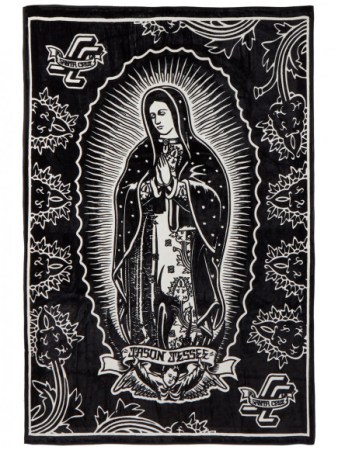
When I responded to a post on feminism and religion this morning I wrote that you were my first goddess. As a child I knew little beyond that you were the “Mother of God,” and I found your presence immensely comforting, even seeking you out in secret, entering your rose garden in a local monastery. I needed you so.
Early in adolescence I learned that your life was one of purity, sacrifice, and loss. Your purity left me bereft. How could a young Victorian girl be “good enough” to serve such a figure? I was fierce and passionate – a thorny red rose – with an empty hole in my heart.
Sadly, I released you and chose your sister the whore, the Black Goddess in disguise… but I didn’t know that then; I only knew that the “black” woman succumbed to her flesh as I did, covered herself in shame…What lies Patriarchy tells…
Mantras are not just the prescribed sound formulas or sentences found in Eastern religions, but they can also be thought of as the words or phrases that we continually repeat to ourselves. The word mantra comes from Sanskrit and its roots are manas-, meaning “mind,” and -tras, which can be translated as “tool.” Thus, mantra is a tool to protect the mind.
How often do we engage in negative self-talk like “It’s my fault” or “I’m to blame for what’s happened to me” or “No one loves me”? These expressions can become mantras, as we believe their messages from constant repetition. In hospice and hospital settings, one often finds patients who have convinced themselves that “This is God’s punishment” or “Everyone has forgotten me” or “I’m so scared.” These phrases, rather than protect the mind, become what is believed by the mind and may lead to increased anxiety, stress, and depression, and consequently the need for spiritual and emotional support.
Chaplains, as members of the care team in hospice and hospitals, provide spiritual and emotional support to patients and their families. Most often, chaplains attentively listen to patients and their caregivers (often family members) about the patients’ life story, their relationships, their dreams unfulfilled, and their wishes for those whom they are leaving behind. Chaplains take part in family meetings where decisions are made about patients’ care, sometimes interjecting to ask for clarification of medical terms and to ensure that the family understands. Sometimes, the chaplain will lead prayer with the patients and their families, and at other times, the chaplain will pull other tools from her toolbox such as mantra meditation.
Once I became a mother I found the demands as well as my own expectations for holiday gifting, decor and celebrations to be SO taxing that I quickly felt a bit of resentment toward Santa Claus for getting all of the credit. Now I tell my children that Santa Goddess is posing as homekeeping MRS. CLAUSE and that SHE and the elves do all of the work, and that “Santa” is merely their courier. Engulfed in modern society, I don’t think my young children hear me as they still dance with glee at any mention of Santa Claus.
Even though Jesus was born during the reign of Augustus, first Roman emperor, the empire didn’t celebrate that birth until three centuries later when his birth date was moved to mid-winter to match the birth date of the sun god Mithra. The Romans already had a long tradition of celebrating the winter solstice. This celebration was called the Saturnalia. Here are three days in December, taken from my daybook, Pagan Every Day. (When I wrote this book in 2003, I wrote longer days. The publisher demanded that I reduce every day to 300 words. I edited them all down to 301 words.)
December 17: Saturnalia begins
Saturn, who was conflated with the Greek Titan, Cronus, was an ancient Latin agricultural god whose name may derive from satur, “stuffed,” or sator, “a sower”; in either case he stands for abundance. He was a working god who oversaw viniculture and farming, the king of Italy during the golden age. When Jupiter conquered him, he hid himself (latuit) in the region that came to be called Latium. The Romans said Saturn’s body lay beneath the Capitol in Rome. Because his reign brought prosperity to the city, the state treasury and the standards of the Roman legions were kept in his temple when the army was at home. Saturn’s statue was bound in woolen strips to keep him from leaving Rome.
In the book, Women v. Religion: The Case Against Faith and for Freedom, editor Karen L. Garst puts together the voices of women from a variety of backgrounds in an effort to present a case against faith.
While the introduction to the full volume suggests that women ought to turn away from all forms of religion the majority of the individual pieces that the book features focus on the Abrahamic religions: Judaism, Christianity, and Islam. The included pieces are written from a variety of disciplines and viewpoints, some feature historical facts and timelines, while others are the raw and difficult personal stories of women struggling to leave the religions they were raised within.
Most of the articles dig into many of the traditional critiques of religion. For example that the Abrahamic faiths are inherently patriarchal, and cannot be redeemed for women. Others take these traditional arguments against religion a step further and argue that in addition to religion being a tool for female subjugation, religion has in fact inhibited Western progression and is a key reason why the United States has not yet had a female president, and why women continue to have to fight for their bodily and human rights.
Most of us are trying to make it to a place of material comfort where we are living in a way that feels honorable. Some of us feel we could have made better decisions in the past so that we might have figured out how to do such before the age we are now. I recently did a tarot card reading that I interpreted as mainly positive or neutrally-revelatory. But one of the cards stood out from the rest, and I really didn’t understand it. I was feeling positive that day, and, even though I have often felt unsure and longing in my recent travels despite all I have accomplished materially and psychologically, I have to say it wasn’t a card I was expecting: the III of Swords, which symbolizes disappointment and heartache, especially due to mental happenings. What could I feel heartache at? Perhaps I am disappointed that creating that place of safety and material comfort seems a long way down the road.
My dad took me to see Bill Cosby in Columbus, Ohio when I was a kid. We used to listen to a record of him talking, which I could only pretend to find funny even then, but dad liked it and wanted to see him in person. The venue had really narrow seating, and although I could barely hear Cosby’s routine, I laughed for most of the show. I had brought a friend with me, who was heavier set, and she squirmed miserably the whole time, at one point looking pleadingly at me and whispering, “I’m trying to get comfortable.” Now, he’s in the slammer, and I get a little ill every time I think of Pudding Pops.
Not too long ago, Uncle Frank died. He terrorized three generations of women in my family. My mom was a little girl when he exposed himself behind a door jam, so that all she could see was his ghostly pale member protruding through the open walkway. She would laugh when she told the story but reminded us to stay clear of him. He was regarded as a family clown, but on his death bed, as my mom put it, he finally “got her.” As she sat at the edge of his bed to bid him farewell, his toes wriggled contentedly into her buttocks. He died with a smile on his face. We laugh, but it isn’t funny. Who knows what he did on his free time?








 Feminism and Religion