I Was Brainwashed to Believe I Wasn’t Human. Now I’m on a Mission Against that Cult – Part 2 by Trelawney Grenfell-Muir

Trigger warning: rape, sexual assault, domestic abuse, graphic sexual content

In Part 1 of this story, I introduced a discussion of Johan Galtung’s theory of cultural violence as it relates to my experience as a young woman in an abusive relationship. To recap:

Cultural violence is: “…any aspect of a culture that can be used to legitimize violence in its direct or structural form. Symbolic violence built into a culture does not kill or maim like direct violence or the violence built into the structure. However, it is used to legitimize either or both.”[1]

Cultural violence against women is: Normalization and promotion of pornography, prostitution, degradation, and sexual objectification of females in media, predominantly male language in civic, business, and religious institutions, gender roles and stereotypes, misogynist humor, gaslighting, minimizing or denying any of these forms of violence.

Part 1 ended right before my ex convinced me to leave MIT and move with him to Minnesota. I had been trying my best to please him by sculpting my appearance to match his preferences, believing that it was my job as a female partner to try to satisfy my male partner sexually.

Continue reading “I Was Brainwashed to Believe I Wasn’t Human. Now I’m on a Mission Against that Cult – Part 2 by Trelawney Grenfell-Muir”

The Four Phases of the Feminine Way by Elisabeth Schilling

For so long I’ve been wandering in the maiden stage, but now I am a mother, to myself, since I’ve made hard decisions to loosen or cut ties with people who have not always acted in my best interest in their attached and, at least to me, manipulative ways; I have long felt a mother to whatever group of students I have the honor of guiding; and I moonlight as a card reader/astrological guide where I feel I can nurture and provide compassionate advice to those who desire a connection from the universe. The way I practice is that I allow my empathy and research about ourselves to encounter the client’s own internal wisdom. There is not anything that qualifies me to be a teacher or reader any more than anyone else. We are all guru to each other when we listen closely.

I am not sure why I have never wanted to be a mother of a child. Not-wanting has felt very natural to me. Now that I have put some distance between myself and my own mother, her voice and so her desires are not so much hovering over me. I feel free and good about my decisions, about following the path that is normal for me.

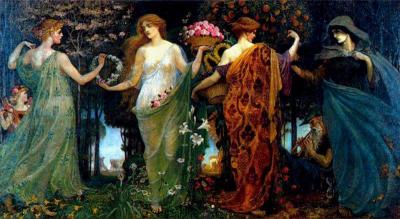
But what I really love about the four phases of the feminine way – maiden, mother, maga, and crone — is that we do not necessarily need to always identify with the stage that aligns with our age or any rites of passage. I remember going to a goddess ceremony in California where we could speak from any of the perspectives we felt aligned with that at the time and explain why.

Continue reading “The Four Phases of the Feminine Way by Elisabeth Schilling”

Medieval Torture Devices and the Goddess by Colette Numajiri

There is a campy dinner and tournament “castle,” Medieval Times, in our city in which you can eat and watch a fully- costumed period play complete with stunning Spanish horses in an indoor arena. Inside of this building, for a mere additional $2, there is a “torture chamber” attraction, a mini museum with a dozen or so of actual torture relics used in the Medieval Inquisition (or accurate looking replicas of them!) along with illustrations from the era.

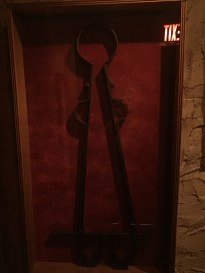
In this collection they have what appears to be an authentic orifice-expanding “pear” and a “breast ripper” (see and read photo below) among other devices meant to inflict pain and often death to those with the misfortune to be accused.

The actual “Medieval Times” period was a horrific and bloodstained era when the NEW ORDER (the established Catholic and new Protestant churches) set out to “Christianize Europe.” They succeeded and became beyond wealthy by creating a WIDESPREAD FEAR of WOMEN, gaining power over more than half of the population and confiscating their money and land.

There is an hour long film funded by the Canadian government called: “THE BURNING TIMES” that tells the story of the people (85% women) that were brutally killed over a 300 year period in what was the WOMEN’S HOLOCAUST.

Continue reading “Medieval Torture Devices and the Goddess by Colette Numajiri”

I Was Brainwashed to Believe I Wasn’t Human. Now I’m on a Mission Against that Cult – Part 1 by Trelawney Grenfell-Muir

Trigger warning: child sexual abuse, domestic abuse

I was so thoroughly brainwashed that my voice changed without me realizing it. My appearance changed so much that close family members did not recognize me. Multiple therapists told me that I had undergone such sustained brainwashing and abuse that I was like a POW or a sex trafficking victim. Here is my story.

I will never forget the first time I came across the famous quote, “Feminism is the radical notion that women are people.” Reading that phrase rocked me back on my heels as few things have done. Suddenly, with that simple summary, so much of my experience, so much of life, so much of the world made perfect sense. Clarity struck, bringing both pain and relief: in my society, females are not considered human.

Continue reading “I Was Brainwashed to Believe I Wasn’t Human. Now I’m on a Mission Against that Cult – Part 1 by Trelawney Grenfell-Muir”

It’s All About Control by Vibha Shetiya

VibhaWhen I first moved to America, I was shocked to learn of the high rate of domestic violence here. Surely, American men weren’t like that. Besides, American women were strong – they would never take BS from their husbands, fathers or brothers. How could this be even remotely possible? Of course, I was younger then, and not quite aware of the insidious workings of patriarchy. But then America is supposedly one of the most liberal and progressive countries in the world. Being of Indian heritage, it was “natural” that I had heard of and witnessed male domination and control. After all, we Indians were “backward.” But America? Really?
I have, for a while now, been utterly confused by the inherent paradoxes within both countries, but it was Justice Kennedy’s retirement and the possibility of the overturning of Roe v. Wade that helped clarify my thoughts. Continue reading “It’s All About Control by Vibha Shetiya”

On Chronic Illness and Justice by Ivy Helman

29662350_10155723099993089_8391051315166448776_oFor almost four years, I’ve been living with the long-term effects of an inner ear lesion.  The lesion is long gone but its side effects are not.  Throughout the day, I feel a combination of unsteadiness and sudden, unpredictable sensations of movement.  On better days, the unsteadiness is almost non-existent and the feelings of movement are minimal.  On worse days, I’m troubled with a type of brain fog that makes it hard to concentrate as well as disrupting unpredictable sensations of being on a boat that can’t pick one direction in which to move.  It’s frustrating, tiring and demoralizing.
Summer is the season of worse days.  There is really nothing I can do to feel better.  Even staying well-hydrated and taking it easy often doesn’t steady the boat.  So, instead, I often continue my life as normal.  Then, I lay in bed at night and hope sleep comes soon. Continue reading “On Chronic Illness and Justice by Ivy Helman”

A Nurturing Environment is Not a Luxury by Elisabeth Schilling

There are two tarot card decks that have accompanied me on my trip overseas this summer: Alana Fairchild’s Rumi Oracle and Lee Bursten’s Tarot of Dreams. In recent readings, I have been presented with messages of place, thus the topic of my post.

But first, Seneca, Stoic philosopher born around the time of Jesus, cautions that people traveling to escape their difficulties are sometimes no better when they have arrived to a distant land because they have not become rid of themselves. Likewise, zen philosophy suggests that it is not our circumstances that matter so much as the peace and calm we create in our inner landscape. Nhat Thich Hanh or Ram Dass or Pema Chödrön (maybe all 3) have a metaphor for the tumultuous ocean – that the sea is often rocky, but it is always calm in the deep beneath. Yet, I see all this as a reminder to be mindful about the added layers of suffering we can create and advice for difficult times when we can’t leave yet. Regardless, I think any wisdom cannot discount the need for a nurturing, healing space when at all possible.

Continue reading “A Nurturing Environment is Not a Luxury by Elisabeth Schilling”

The Wings of the Butterfly by Vanessa Rivera de la Fuente

0e324b7dc38871515f6637945ede9a65


Shhhhh… good women are quiet.
My mother was a beautiful woman, she never complained.

Denial is a silent violence that aims to make invisible a trauma maybe evident or not, to make it acceptable as normal and allow the victims of this trauma to be exploited from a system of oppression or people in power. Denial is that voice sugarcoated with correctness that asks us to shut up and sit down on our own pain so as to not disturb anyone. Is a silence that yells loudly, because sooner or later it will speak through the different ways we hurt ourselves and others.

It is not a mystery that women all over the world are subjected to a variety of violence and oppression. Women and girls are hijacked, raped, assaulted, murdered, their experiences mocked or banalized and their bodies thrown around like trash. People get outraged asking how this is possible? Well, this is possible because when a girl is born, she is “bestowed” the foundational denial that will allow the normalization of this violence and belittling during all her life: The denial that she is a human being. Continue reading “The Wings of the Butterfly by Vanessa Rivera de la Fuente”

Celtic Myth, Moon Blood, and the White Beauty Standard by Marisa Goudy

My woman’s body is entering the dark time of the moon, even with blinding white snow lashing the windows, even with a full moon tracing its way far above thick clouds. My mood is black and soon I’ll be flowing red, and the snow will just drive on white, white, white.

In The White Goddess, Robert Graves tells us: “…the New Moon is the white goddess of birth and growth; the Full Moon, the red goddess of love and battle; the Old Moon, the black goddess of death and divination.”

The Celt in me feels cradled by this imagery, even if, as Judith Shaw and Carol P. Christ have pointed out elsewhere on this site, the idea of maid, mother, and crone is a modern invention, not gift from the past. I agree with Christ:  “My suggestion is that we give up the idea that the details of contemporary Goddess Spirituality are rooted in and authorized by tradition. We can instead acknowledge that though we are inspired by the past, we are the ones who are creating contemporary Goddess Spirituality.”

Continue reading “Celtic Myth, Moon Blood, and the White Beauty Standard by Marisa Goudy”

The Doubt of the Empty Tomb and the Hope for Tomorrow by Katie M. Deaver

I recently had the opportunity to travel to my undergrad institution on a student recruitment trip.  During this trip I was able to preach during the college’s weekday chapel service.  Despite the fact that I have lived, studied, and worked within a seminary community for the last seven years I had not actually written (not to mention preached!) a sermon since I was a senior at this very college… to say the least I was a bit nervous.  As it turned out the sermon writing went well, and I also felt positively about the preaching experience.  But even though the writing and preaching are over I can’t stop thinking about the topics I choose to speak about.

The scripture lesson I used was Luke chapter 24 verses 22-24 “Moreover, some women of our group astounded us.  They were at the tomb early this morning, and when they did not find his body there, they came back and told us that they had indeed seen a vision of angels who said that he was alive.  Some of those who were with us went to the tomb and found it just as the women had said; but they did not see him.”

These verses offer a quick recap of the Easter story that comes earlier in chapter 24 of Luke.  The women go to the tomb with the spices that they have prepared, but when they arrive they discover that the stone has been rolled away and the body of their friend and teacher is not there.  Instead, there are two men in dazzling clothes who ask the women “Why do you look for the living among the dead?”

Continue reading “The Doubt of the Empty Tomb and the Hope for Tomorrow by Katie M. Deaver”