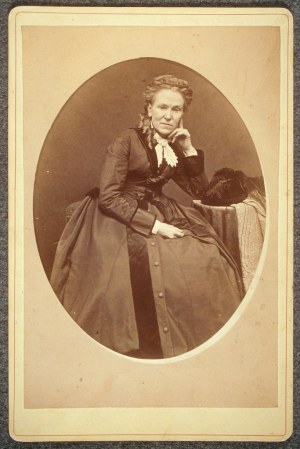
Matilda Joslyn Gage was an activist in the nineteenth century struggle for women’s rights equal to Susan B. Anthony, and a writer and theorist equal to Elizabeth Cady Stanton. That she is not remembered is due in large part to Susan B. Anthony’s efforts to write her out of history.
Matilda Joslyn Gage was also a scholar of women’s history unrivaled in her time. In Woman Church, and State, Gage argued that “the most grievous wrong ever inflicted upon women was in the Christian teaching that she was not created equal with man.” (page 1) From this it follows that feminists must never lose sight of the role Christian teachings have played and continue to play in the unequal treatment of women.
According to Gage, women’s position in church and state did not improve in the Christian era. To the contrary it declined! Gage proved this thesis in chapters titled: The Matriarchate, Celibacy, Canon Law, Marquette, Witchcraft, Wives, Polygamy, Woman and Work, and The Church of Today.
This was first posted on 09/09/11 and then again on 5/23/22
A founding mother of the study of women and religion and feminist thealogy, Carol has been active in social justice, anti-war, feminist, anti-nuclear, and environmental causes for many years. Her books include She Who Changes and Rebirth of the Goddess and the widely used anthologiesWomanspirit Rising and Weaving the Visions.
In my last blog I wrote that the image of God as a dominating other who enforces his will through violence–found in the Bible and in the Christian tradition up to the present day–is one of the reasons I do not choose to work within the Christian tradition. To be fair, there is another image of God in Christian tradition that I continue to embrace. “Love divine, all loves excelling” is the opening line of a well-known hymn by Charles Wesley. Charles Hartshorne invoked these words and by implication the melody with which they are sung as expressing the feelings at the heart of the understanding of God that he wrote about in The Divine Relativity.
Love divine, all loves excelling also expresses my understanding of Goddess or as I sometimes write Goddess/God. Though I am no longer a Christian, but rather an earth-based Goddess feminist, I freely admit that I learned about the love of God while singing in Christian churches. Hartshorne wrote that he knew the love of God best through the love of his own mother, and I can say that this is true for me as well. My mother was not perfect, and she did not understand why I wanted to go to graduate school, my feminism, or my adult political views, but I never doubted her love or my grandmothers’ love for me. (I count myself lucky. I know others did not have this experience.) Like Hartshorne, I also learned about the love of God through the world that I always understood to be God’s body. Running in fields and hills, swimming in the sea, standing under redwood trees, and encountering peacocks in my grandmother’s garden, I felt connected to a power greater than myself. Continue reading “Legacy of Carol P. Christ: Love Divine, All Loves Excelling”
I attend Czech classes twice a week. This time of year the courses focus on Christmas. I’ve attended three different schools over the last five years, and all handle Christmas similarly. Even though the Czech Republic is only marginally Christian, for many Czechs being Czech and observing Christmas seem to go hand-in-hand. In fact, Czech customs around Christmas even figure into the citizenship exam.
In last Tuesday’s class, my teacher asked me how I celebrate Christmas here. She knows I’m Jewish. When I said that I don’t observe Christmas traditions in my home, she responded, “you don’t have to be a believer to do Advent-related and Christmasy things. Only 20% of Czechs are, and yet we all participate in Advent and Christmas.” It was part invitation, part assimilation request. However, the excited in-class discussion felt more like an attempt at conversion. Don’t you want to be a part of this amazingly joyful time? Continue reading “From the Archives: On My Invitation as a Jew to Participate in Advent and Christmas by Ivy Helman.”
When I first began to think about female language and images for God I imagined that changing God-He to God-She and speaking of God as Mother some of the time would be a widespread practice in churches and synagogues by now. I was more worried about whether or not images of God as a dominating Other would remain intact. Would God-She be imaged as a Queen or a Woman of War who at Her whim or will could wreak havoc on Her own people?
Forty years later, very little progress has been made on the question of female imagery for God. I suspect that most people in the pews today have never even had to confront prayers to Sophia, God the Mother, or God-She. Most people consider the issue of female language in the churches to have been resolved with inclusive language liturgies and translations of the Bible that use gender neutral rather than female inclusive language.
In her new book, Women, Ritual, and Power: Placing Female Imagery of God in Christian Worship, Elizabeth Ursic states that one of the reasons that the issue of female language seems less pressing than it once did is because those for whom the issue was important have for the most part left the church. But the question is why.
Charlie Kirk embodied characteristics lauded by people I remember from my fundamentalist, Christian upbringing. Confident “believer” who knew the absolute “truth,” a willingness to proselytize (or better known in fundamentalist circles as spreading the Good News of Jesus Christ), and a pugnacious personality essential to fight Satan and his minions in this “ungodly” world.
In a New York Times article titled “We Need to Think Straight about God and Politics” (9/25/25), David Brooks writes: “As people eulogized Kirk, it was rarely clear if they were talking about the man who was trying to evangelize for Jesus or the one trying to elect Republicans.” A spokesperson at Turning Point USA said, “He [Kirk] confronted evil and proclaimed the truth and called us to repent and be saved.” Brooks asks, “Is that what Kirk was doing when arguing with college kids about tariffs?”
I want to focus here on some of the brilliantly choreographed, yet deceptively cruel imagery present at Kirk’s memorial service, showing how the MAGA movement uses a religious group’s theology to foment hatred—with the goal of gaining/retaining political power.
“He looked at me without judgment. With him, I didn’t feel the need to perform.” Both her future husband (first year medical resident) and she (now studying applied linguistics) disliked fundamentalism’s legalism, but they were still committed to Christianity. Both were “devoted to [sexual] abstinence.” Sex did not even happen on their wedding night, but when it did, it hurt. For years, the pain continued. Vaginismus. “I didn’t know there was a name for it. I didn’t know that…it was twice as common for those who had grown up in religiously conservative households.” It took years to get through the pain. “It’s not until we can believe that our bodies are inherently good and worthy of pleasure and joy that we can begin to heal.”
A new pastor arrived at Rollins’ church armed with Christian nationalist ideas and fervor. It didn’t set right with her. She was moving toward progressive positions beginning with “my body, my choice.” She adds, “If there’s anything someone who’s struggled with an eating disorder understands, it’s the concept of bodily autonomy.” She began to research the Reformers beginning with Martin Luther who said this about women: “If women become tired, even die, it does not matter. Let them die in childbirth. That’s what they are there for.” Rollins’ husband pushes back, though, quoting Scripture—“there is no male or female…we are all unified in Christ.” Why then, Rollins wonders, does sexism run rampant in the church?
Recently, I have thought about a common idiom that has been used to refer to sexual reproduction, the birds and the bees. I became curious why animals that appear in most gardens were used as an example to explain where babies come from, until I did some research. It turns out that since the birds lay eggs, that is their representation of the female body and the bees represent the sperm due to pollination. It is a very subtle, overlooked message that can be disguised as being more age-appropriate to young children. However, I decided to dig a bit deeper. Ed Finegan, a USC professor of linguistics and law, has stated that this phrase has existed a lot longer than one might think. There is evidence of it being used in a somewhat sexual context going back to at least two authors, Samuel Coleridge Taylor (1825) and an entry from John Evelyn’s The Evelyn Diary (1644).
In Work Without Hope, Samuel Coleridge Taylor quotes, “All nature seems at work . . . The bees are stirring, birds are on the wing . . . and I the while, the sole unbusy thing, not honey make, nor pair, nor build, nor sing.” This separation of the birds and bees is indicating the loneliness and sadness of missing out on a potential romantic connection. When going even further back in time to 1644, it was noticed in the Evelyn Diary that there was an entry discussing the interior design of St. Peter’s in Rome: “That stupendous canopy of Corinthian brasse; it consists of 4 wreath’d columns, incircl’d with vines, on which hang little putti [cherubs], birds and bees.” This description is illustrating that there is a possible sensual or sexual meaning of the architecture in St. Peters.
I went to the lake this morning, seeking the peace, sustenance, and perspective it so often provides. I had been particularly distressed and distraught the day before after watching the documentary on Christian Nationalism, “Bad Faith.” It was chilling to say the least. Among other things, the film demonstrates the longevity of Christian Nationalism in this country, dating back at least to the Ku Klux Klan, founded in 1865. However, the central theme of the documentary is the staggering influence of conservative political operative Paul Weyrich, who orchestrated the merger of conservative Evangelical Christians with the Republican Party in the 1980s. He founded the Moral Majority with Jerry Falwell, the Heritage Foundation which authored Project 2025, the American Legislative Exchange Council, and the Council for National Policy – all of which seek to undermine democracy in order to bring about what these organizations and their followers call a “Christian nation,” by force if necessary. But as former Republican strategist Steve Schmidt states in the film, there is nothing “Christian” about this movement. It is pure nationalism, a striving for power requiring the dismantling of the institutions of democratic government as we know them. These extremist Republican strategists found a powerful base of voters by tapping into Evangelical Christians and manipulating the messages they received to fill them with fear, and found just the puppet they needed in the charismatic and amoral figure of Donald Trump. As we’ve seen in recent years, they have been quite successful in the destruction of government. After filling the Supreme Court with their chosen nominees during Trump’s first term, getting Christian Nationalist Mike Johnson installed as Speaker of the House, and getting Trump elected a second time despite the January 6th insurrection, or perhaps because of it, they are now successfully dismantling or otherwise destroying the Departments of Education, Health and Human Services, Energy, Defense, Agriculture, Justice and more along with the Environmental Protection Agency, the Food and Drug Administration, the Social Security Administration, the Federal Regulatory Agency. . . the list goes on. It’s all part of the plan to fulfill the “Seven Mountain Mandate” of dominionism[i], which seeks to impose its beliefs in seven spheres of influence: religion, family, education, government, media, arts and entertainment, and business. As one of the Christian Nationalists interviewed in the film proudly said, “It’s the Christian Taliban.”
This post was originally published on Nov. 26th, 2012
Recently, in an interview with the Women’s Living History Project of Claremont Graduate University, I was asked: What religious tradition did you identify with as a child and how did it impact your childhood? and: Is your tradition the same today that you had when growing up?
I was surprised that the interview questions didn’t ask anything about feminism, experiencing exclusion in patriarchal religions, or belief. My religious and political convictions, which are intertwined, have alienated me from family members. Therefore, I was suspicious of questions that seemed to have been formulated by someone for whom religion and family go together, and for whom believing or not believing (!) did not seem to be an important issue.
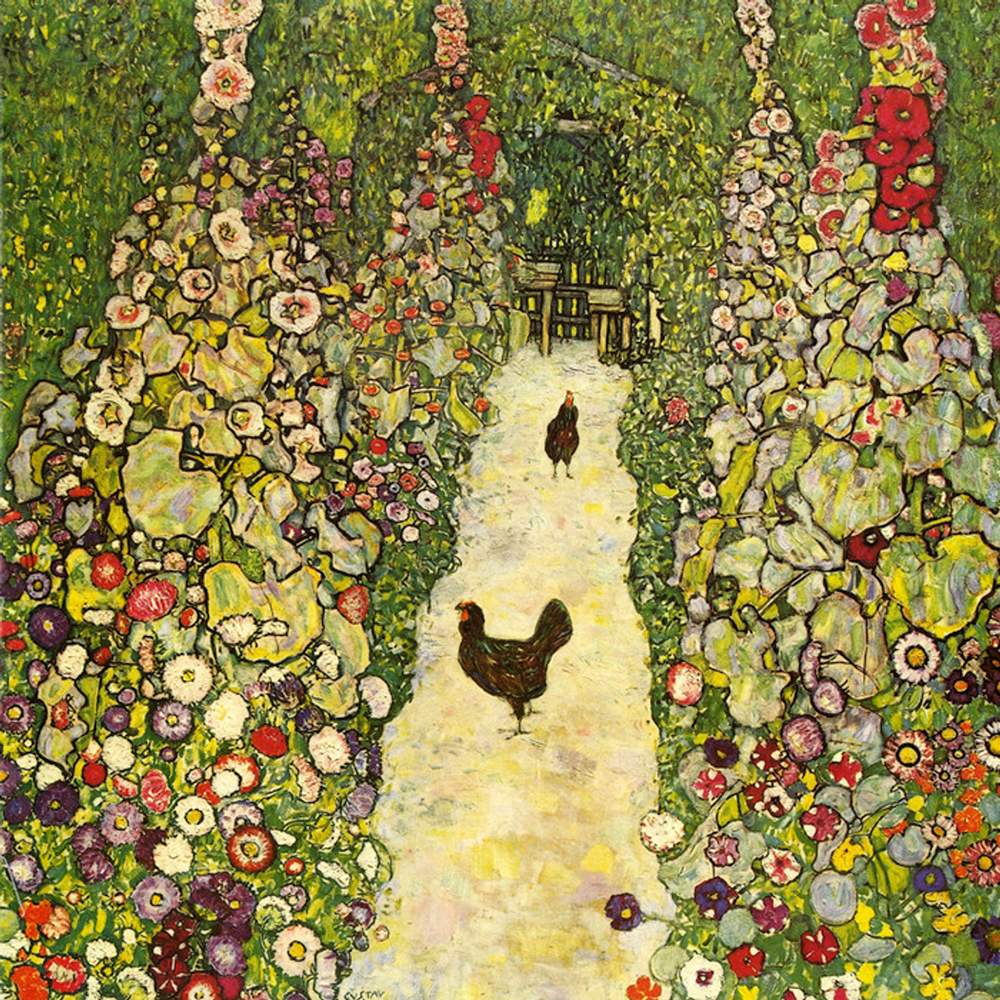
In the early years of my childhood, my family lived for a short time on a poultry farm in Bandırma. Hens wandered freely, unconfined. The contours of that land have long since changed, replaced by refrigerated depots and industrial freezers that hum along the highways, the relentless march of capital. In the Gospels of Luke and Matthew, Jesus laments: “How often have I desired to gather your children together as a hen gathers her brood under her wings, and you were not willing.” These days, I find myself returning to the image of the mother hen—a figure who embodies a special wisdom that is seldom named, yet deeply and instinctively known.
Although I did not have a religious upbringing, I grew up embracing aspects of many faiths. My spiritual background is Alevi, and after inviting the Presbyterian faith into my life following my marriage, I find these layered identities influence each other in ways that are both intricate and transformative. In her sermon Who Is Jesus? Mother Hen, Reverend Agnes Norfleet lingers on the vulnerability of the mother hen metaphor, questioning what strength a hen can possibly offer in the face of the fox—Herod—and, more broadly, in the face of violence at large. Reverend Norfleet asks why Jesus does not invoke a more forceful or fiercer maternal figure—a lion, perhaps, or a bear? What does this choice imply for our activism and understandings of leadership? What unique wisdom does the mother hen offer?



 I attend Czech classes twice a week. This time of year the courses focus on Christmas. I’ve attended three different schools over the last five years, and all handle Christmas similarly. Even though the Czech Republic is only marginally Christian, for many Czechs being Czech and observing Christmas seem to go hand-in-hand. In fact, Czech customs around Christmas even figure into the citizenship exam.



 Feminism and Religion