

Early in Jóusè d’Arbaud’s 1926 Provençal novella, The Beast of Vacarés, the narrator, a 15th century gardian or bull herder, describes how in summer la Vièio ié danso—the Old Dancer— “can be glimpsed on the dazzling salt flats” that surround the Vacarés lagoon in the Camargue region of Southern France.
In a note, d’Arbaud explains that la Vièio is how locals refer to mirages in this liminal landscape where earth, sea, and sky merge. “Mirages are common in the Camargue,” he tells us:
They begin with a vibration in the air, a trembling that runs along the ground and seems to make the images dance; it spreads into the distance in great waves that reflect the dark thickets. How not to see in this mysterious Vièio, dancing in the desert sun, a folk memory of the untouchable wild goddess, ancient power, spirit of solitude, once considered divine, that remains the soul of this great wild land?
“The untouchable wild goddess . . . once considered divine . . .”
Nearly a century later, d’Arbaud’s words still have the power to startle and move us, vividly evoking Earth’s sacredness. Here is a man, himself a bull herder in the region he so lovingly describes, who seems to have been a devotee of the Goddess, the “ancient power” he venerates and bring to life for his readers. Indeed, in an early poem, “Esperit de la Terro” — “Spirit of the Earth”— d’Arbaud explicitly dedicates himself to the old gods sleeping below the earth, vowing to “defend” and “aid” them. How extraordinary to discover this writer making such a commitment, well before the rise of our recent feminist spirituality and ecofeminist movements. D’Arbaud speaks directly to our current environmental, theological, social, and political concerns.
Continue reading “Glimpsing La Vièio ié Danso – “The Untouchable Wild Goddess” – in Jóusè d’Arbaud’s Beast of Vacarés by Joyce Zonana” We have nine justices usually but one of our most beloved, and notorious,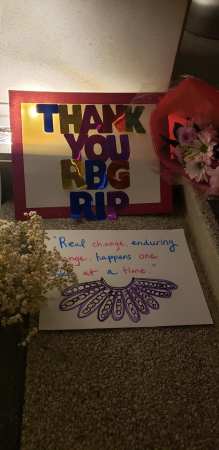
 Jill Hammer’s recent post on midrash surrounding
  I’ve been puzzled for a long time why people, especially conservative Christian people who seem to be decent human beings, enthusiastically support Donald Trump, our current president. My thinking stems from my own experience of being brought up in an evangelical, fundamentalist space.
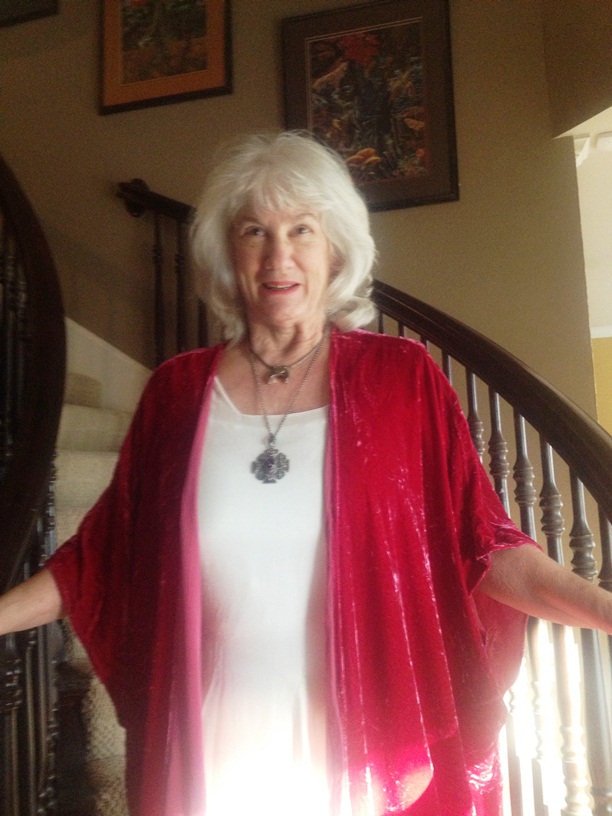 I am a priestess of the divine feminine, ordained in the Fellowship of Isis. So how did I end up becoming ordained for a second time in the Christian
  The meaning we derive from stories—especially religious stories we’ve heard and become familiar with since infancy—shape how we perceive and understand the world. Our beliefs are an amalgam of “my story” (my individual life experience in a specific context) shaped by another story. Who I am is heavily informed by particular narratives and their (often) codified interpretation.
 I am an annoying feminist. I annoy pretty much everyone about it, because I’m never NOT applying a feminist lens to every aspect of life: science (looking at you,
  Have you forgotten yet? Have you forgotten what it felt like to go about your life pre-pandemic?
 I have always loved Lent and Holy Week. When I was young, I enjoyed the challenge of fasting. Holy Week was the powerful culmination of it all, so I would try to make the fast even harder then, like a sprint at the end of a marathon. Chocolate quickly got boring, so once I gave up all desserts. Another year, I gave up lying. (I’m a PK – Preacher’s Kid; enough said.) And then there’s the famous year sometime in my 20s when I decided I’d better give up swearing. (PK, remember?) Both my sister Trelawney and my husband just love to remind me of how I literally swore while walking out of the Ash Wednesday service. And didn’t even notice. And when they finally explained why they were laughing at me, I, of course, immediately cursed again. Sigh. Well, I respond each time, that’s why I decided to give it up in the first place!
