Stories for (Re)creation in the New Year by Natalie Weaver

Natalie Weaver editedTwo New Years’ Eves ago, I came to the realization that I did not need to watch the television countdown to ring in midnight and begin the New Year.  I had always watched the show with my family as a child, and even while it made me feel curiously bad, I still somehow felt like it was an obligatory component of the day, right up there with kisses, well wishes, blowers, horns, and sparkling wine.  Since we seldom went to an actual New Year’s party, it was a way of connecting with the world.  I gave it up, though, when I ultimately deemed the musical guests and hosts to be unviewable.

I was not looking to make a new tradition per se that year when I decided to light a hunk of myrrh in the fireplace.  The myrrh had come to me as a gift in a Three Kings Christmas set.  It made a pretty decent blaze because I had placed it atop a bed of shallow candle wax from an old votive candle.  Let me say, while it smelled lovely and burned a long time, I do not recommend doing this – the fire became alarmingly vigorous for a little while.  Anyway, I spread a cloth on the floor and set out some food, calling my family together to sit in a circle by the hearth.  We dimmed the lights, and by fire I read the Epic of Gilgamesh (with some tasteful PG 13 edits) from 11:00 pm until 1:00 am.  I had been reading great epics to the kids, and it seemed somehow appropriate to return to Babylon that year.  We did not mark the New Year at a precise moment but rather sailed into it on the tides of an ancient tale.  It was a revelation to us all, mostly because we were reclaiming that night from the media usurpers who had defined it for us for most of our lives.

This year, we intended to do something similar until we ended up throwing an impromptu party for some friends and their children.  I knew they would all have limited interest in my second annual fire reading, so we just fed them and eventually counted down the final moments of 2014 on my watch.  But, after they left, we returned to the myth, this time reading the Babylonian Epic of Creation.  We hit the mark, as the story itself was ritually performed at each New Year.  It carried us deep into the first day of 2015 and was also a great revelation. Continue reading “Stories for (Re)creation in the New Year by Natalie Weaver”

Morrigan, Celtic Goddess of Sovereignty, War and Fertility by Judith Shaw

judith Shaw photoMorrigan, Celtic Goddess of War and Death, is a dark goddess we mortals tend to approach with fear and trepidation. A great Warrior Goddess, She represents the more terrifiying aspects of female energy; sensuality, magic, prophecy, revenge, and war. She could either shapeshift into a crow or raven or be accompanied by them.  In the Ulster cycle stories she also appears as a cow, a wolf and an eel.  This indicates Her connection to prosperity, sovereignty and the land.  Encompassing all essential divine functions, She is the Goddess of War, Sovereignty, Fertility and the Land.

Continue reading “Morrigan, Celtic Goddess of Sovereignty, War and Fertility by Judith Shaw”

Be Wild this Holiday and Find the Face of God(dess) by Marie Cartier

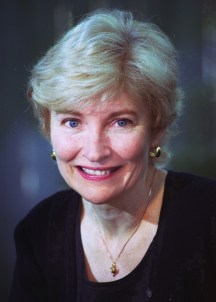
MarieCartierforKCETa-thumb-300x448-72405I know that you all will be reading this the day after Christmas…so this is my Christmas and/or winter holiday gift to you. I so love the Feminism and Religion (FAR) community—its discourse, intelligence, and its community of like minds. And I appreciate that so many of us offer lessons to each other on how to live—wild. For in some ways the very juxtaposition of the words “feminism” and “religion” posits an out of bounds existence. What does it mean?
I was recently asked how I would teach a class on “women and religion.” Among my first responses was that I would, among other texts, use the book The Feminine Face of God: the Unfolding of the Sacred in Women by Sherry Ruth Anderson and Patricia Hopkins (1992). Although this book was published over two decades ago it still holds, perhaps unfortunately, as true today as then. The text is based on interviews with women regarding the “unfolding of the sacred” in their lives. This book was required as part of my graduate program in the first class I took at Claremont Graduate University (CGU) “Women’s Studies in Religion.” CGU was the first program in the country where you could get your Ph.D. in Religion, with an emphasis in Women’s Studies in Religion, and I believe it is still the only program where you can do so.

My professor for that class, Dr. Karen Torjesen, challenged us to write, if we could, the “theology” in the book—was there one? She challenged us to see if there was a “theo” “logo” word of God in this idea of the “unfolding of the sacred” in women. I took up her challenge—and so one of my first big graduate papers was to unpack this book of interviews and see if I could find a theology in these lives/stories. This is what I found—what is sacred to women—right now (in 1992 and still today)—is the chance to find the sacred. Continue reading “Be Wild this Holiday and Find the Face of God(dess) by Marie Cartier”

Painting Aurora by Angela Yarber

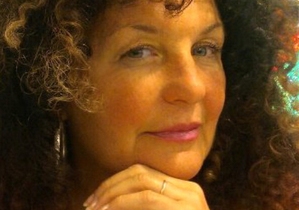
angelaFor those of us in the northern hemisphere, December is one of the darkest months. The days are shorter. Night comes earlier. Each morning I eagerly await the dawn, the potential sliver of sunshine seeping through my window and warming my otherwise cold wintery skin. For those of us who struggle with seasonal depression, December can be difficult. The colder and shorter days cast shadows on our spirits as we yearn for the warm glow of light. Each December as we inch toward the winter solstice, I am reminded of the Goddess of the Dawn, Aurora, and of the unique ways in which a variety of wisdom traditions invoke the coming of light amidst the stark December night skies.

So, this December I welcome Aurora into the vast witness of Holy Women Icon with a folk feminist twist that I feature each month: Virginia Woolf , the Shulamite, Mary Daly, Baby Suggs, Pachamama and Gaia, Frida Kahlo, Salome, Guadalupe and Mary, Fatima, Sojourner Truth, Saraswati, Jarena Lee, Isadora Duncan, Miriam, Lilith, Georgia O’Keeffe, Guanyin, Dorothy Day, Sappho, Jephthah’s daughter, Anna Julia Cooper, the Holy Woman Icon archetype, Maya Angelou, Martha Graham, Pauli Murray, La Negrita, Tiamat/tehom, Mother Teresa, and many others.

Aurora is the Goddess of the dawn in Roman mythology; each morning she soars across the sky to announce the arrival of the sun. As the nights grow longer and longer, I can think of few other goddesses I hope for more than Aurora. In fact, many faith traditions invoke the coming of light during this month of long nights and short days.

In my own tradition, we are not yet celebrating Christmas (despite the capitalist consumer onslaught that has been on full throttle since October). Rather, we still dwell in the deep blue darkness of Advent, when we wait, long, and prepare for light to be birthed into our world. For most Christians, a candle is lit each Sunday during Advent and the light grows brighter as they anticipate the birth of Christ. Continue reading “Painting Aurora by Angela Yarber”

Revolution Through Rituals by Jann Aldredge-Clanton

Jann's pictureA revolution is happening through Divine Feminine rituals! More and more faith communities are reclaiming the power of the Divine Feminine in sacred rituals.
Rituals move feminist theory and theology/thealogy from the head to the heart. Words and visual symbols in rituals shape our deepest beliefs and values, which drive our actions. Multicultural female divine images in our sacred rituals affirm the sacred value of females throughout the world who continue to suffer from violence, abuse, and discrimination. For feminism to transform our culture, we need Divine Feminine rituals in faith communities. In Women-Church: Theology and Practice, Rosemary Radford Ruether writes: “One needs communities of nurture to guide one through death to the old symbolic order of patriarchy to rebirth into a new community of being and living. One needs not only to engage in rational theoretical discourse about this journey; one also needs deep symbols and symbolic actions to guide and interpret the actual experience of the journey from sexism to liberated humanity” (p. 3).

As I was growing up in the Baptist tradition, hymns were my favorite part of our rituals. One of the hymns I loved singing was “He Lives,” increasing in volume along with the congregation as we came to the refrain which repeated over and over the words “He lives.” Not until many years later could I even imagine singing or saying, “She lives.” I had learned to worship a God who was named and imaged as male. But while studying in a conservative seminary, I was surprised to find Her. I discovered female names and images of Deity in scripture and in Christian history. As an ordained minister, my call has included writing, preaching, and teaching to persuade people that we need multicultural female divine names and images in rituals if we are to have social justice, peace, and equality. My call expanded to writing Divine Feminine rituals, including lyrics to familiar hymn tunes. Continue reading “Revolution Through Rituals by Jann Aldredge-Clanton”

An Archaic Trinity of Goddesses? Not Necessarily. by Barbara Ardinger

Barbara ArdingerIn her comment following my last post which was about mythology, my friend, Carol Christ, expands on my paragraph about how the so-called “ancient triple goddess” was really invented in 1948 by Robert Graves in his book, The White Goddess. (Thanks, Carol.)

Back in the 1970s and 1980s, when the Goddess movement was just getting up on its feet and our ovular books were being published, the idea arose that if “they” have a holy trinity, “we” have one, too. And ours is older and holier. We see it in the three phases of the moon, new (Virgin), full (Mother), and dark (Crone). Here’s a tiny sample of these books that changed the lives of so many women and men:

  • Woman’s Mysteries Ancient and Modern by M. Esther Harding (1971, but first published in 1933)
  • The Goddesses and Gods of Old Europe (1974) by Marija Gimbutas
  • When God Was a Woman (1976) by Merlin Stone
  • Lost Goddesses of Early Greece: A Collection of Pre-Hellenic Myths (1978) by Charlene Spretnak
  • The first edition of The Spiral Dance (1979) by Starhawk
  • The Chalice and the Blade (1987) by Riane Eisler
  • Laughter of Aphrodite (1987) by Carol P. Christ
  • The Holy Book of Women’s Mysteries (1989) by Z. Budapest
  • The Reflowering of the Goddess (1990) by Gloria Feman Orenstein
  • Whence the Goddesses: A Source Book (1990) by Miriam Robbins Dexter

Triple goddess? ’Tain’t so. Our beloved triple goddess is one of our foundational myths. It’s nice and it’s perhaps inspiring, but it’s only a myth. Anyone who looks at a calendar or almanac—or up into the sky every night for a month—can easily see that the moon doesn’t have three phases. It has four: waxing, full, waning, and dark. And since the late 20th century, women have lived long enough to go through more than three stages of life. Continue reading “An Archaic Trinity of Goddesses? Not Necessarily. by Barbara Ardinger”