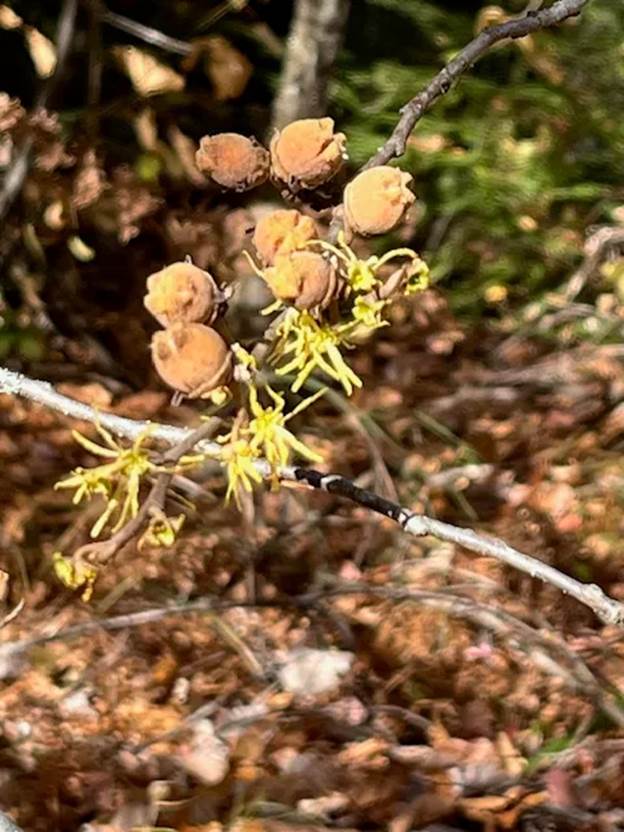
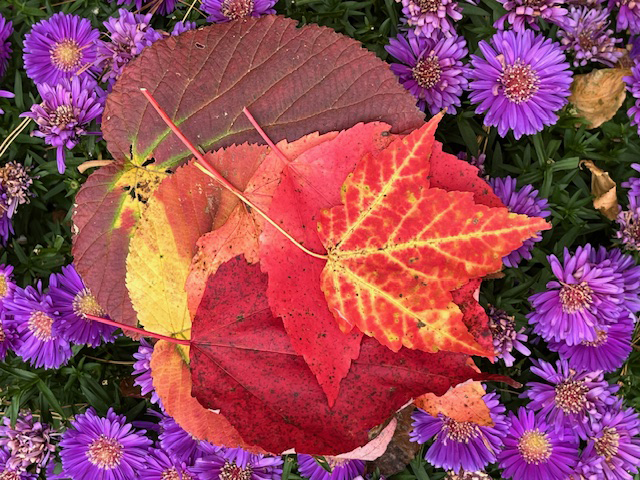
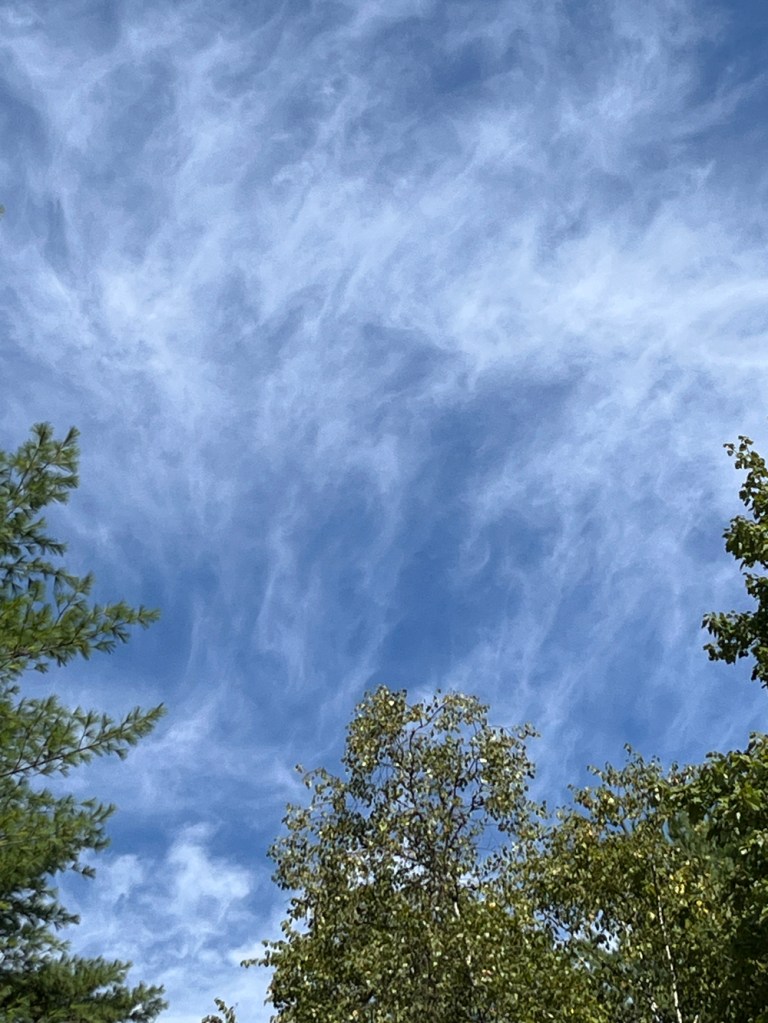
Autumn Light by Sara Wright

Where are they?

September’s light
illuminates one butterfly
in flight
Bittersweet losses
cast slanted shadows
pierce cool nights

morning mist
lifts as
light streams
through translucent
leaves

one acorn falls…

autumn’s breath
a gift of
primal scent

Continue reading “Autumn Light by Sara Wright”

Legacy of Carol P. Christ: “Immanent Inclusive Monotheism” with a Multiplicity of Symbols Affirming All the Diversity and Difference in the World

carol-christ

This post was originally published on March 10th, 2014.

In recent years monotheism has been attacked as a “totalizing discourse” that justifies the domination of others in the name of a universal truth. In addition, from the Bible to the present day some have used their own definitions of “exclusive monotheism” to disparage the religions of others. Moreover, feminists have come to recognize that monotheism as we know it has been a “male monotheism” that for the most part excludes female symbols and metaphors for God.  With all of this going against monotheism, who would want to affirm it?

In response to some or all of the above critiques, many modern pagans define themselves as polytheists, affirming at minimum, the Goddess and the God, and at maximum a vast pantheon of individual deities, both female and male, from a single culture or from many, including divinities with animal characteristics.  Other pagans define themselves as animists, affirming a plurality of spirits in the natural world. A group of Christian feminists have argued that the Christian Trinity, the notion of God Three-in-One, provides a multiple and relational understanding of divinity.

While also rejecting exclusive monotheism and male monotheism, Jewish poet, ritualist, and theologian Marcia Falk provided a definition of inclusive monotheism that I find compelling.

Monotheism means that, with all our differences, I am more like you than unlike you. It means that we all share the same source, and that one principle of justice must govern us equally.  . . Continue reading “Legacy of Carol P. Christ: “Immanent Inclusive Monotheism” with a Multiplicity of Symbols Affirming All the Diversity and Difference in the World”

Legacy Of Carol P. Christ: The Great Commandment for Women: Love and Care for Yourself as You Love and Care for Others

carol-christ

This post was originally published on Feb. 3rd, 2014.

A rabbi known as Jesus of Nazareth taught that you should  “love God with all your heart and your neighbor as yourself.”  Charles Hartshorne, philosopher of relationship and a twentieth century advocate of the “two great commandments,” added that it should be understood that this means that God wants you to love yourself too.

I quote Hartshorne’s midrash on the great teaching often because, sadly, too many women—and some men too–have been taught to love their neighbors at the expense of themselves, to care for others, but not to care as much for themselves.  Continue reading “Legacy Of Carol P. Christ: The Great Commandment for Women: Love and Care for Yourself as You Love and Care for Others”

“Over the Edge of the World” by Elizabeth Cunningham: A Book Review by Judith Shaw

Elizabeth Cunningham’s new book is a marvel you won’t want to miss. It’s subtitled, “A Fairytale Novel” which lets you know you are in for a magical experience. Fairytales have meaning and contain wonder, beauty and truth.  Fairytales awaken new insights for the reader, inspiring us all to think more deeply about our world.  “Over the Edge of the World” certainly does all that. It will leave you pondering the difficult reality of our world today and the sacrifice and grit needed to create it anew. 

Continue reading ““Over the Edge of the World” by Elizabeth Cunningham: A Book Review by Judith Shaw”

Emergence – Miracle Birth by Sara Wright

When my ‘good neighbor’ sent me the photo yesterday morning I could see the outlines of the butterfly, so my little dog Coal and I walked up to see for ourselves. It was hot – very hot though only around 9:30 AM. The capsule was already twisted and turning though not even the lightest breeze was in evidence. The outlines of the monarch were clearly etched through the now blackened but still translucent chrysalis.

 Standing under the porch overhang that the caterpillar had chosen for transforming, a miracle was in progress. Before our eyes the capsule split as the butterfly emerged head-first, feelers extended and waving from the bottom of a rapidly shrinking chrysalis that had so recently been lime green tipped in gold. The wings were still quite small, but the butterfly was already pumping fluid into them readying for first flight. As the wings expanded before our eyes I cried out like a child exclaiming in my joy and excitement – “oh a miracle, a miracle”, and of course it was, the birthing of new life.

Continue reading “Emergence – Miracle Birth by Sara Wright”

Legacy of Carol P. Christ: What is the Nature of the Hope that Can Trump Despair in the New Year?

This was originally posed on December 20, 2013

carol-christ“All hope abandon, ye who enter here.” These words posted on the gates of hell in Dante’s Inferno have an eerie resonance in our time. 

Marie Cartier recently posted a blog on children and hunger with facts so devastating I could not finish reading it. Earlier in the month Jassy Watson wrote about her deep feelings of grief on hearing Luisah Teish’s “Prayer for Disappearing Species.” Grief, despair, and sadness about the injustices in our world can be overwhelming.

A friend of mine has recently fallen into a deep depression. When I try to talk her out of it, she repeats that they are threatening to cut down the last remaining old growth forest in her home state of Oregon and that she can no longer eat fish because radioactivity released in the Fukishima nuclear plant disaster is reaching the seacoast of Oregon.

When I tell my friend she should not dwell only on these things and that she must remember that the world is still a beautiful place, she responds, “I do not want to give up my feelings. I know I must find a way to acknowledge my sadness and make a place for joy, but I don’t know how to do it.”

I have been in the grip of deep grief about the planet myself, not once but many times. But this happens less frequently than it used to.  When I think about the differences between how I once felt and how I feel now, I think the difference is that I have come to terms with and accepted the likelihood that “the world as we know it” is “going to hell in a handbasket”—as I put it.

I believe that the most likely conclusion of the choices human beings are making on planet earth today is massive environmental destruction leading to great suffering and probable extinction for human and many other species on planet earth. This is what I believe, but I also remind myself that I cannot know for sure. The earth and its species including human beings may have resources of resistance and survival, transformation and adaptation,that I do not know about and cannot imagine.

When I began to accept that the world I know and love (where spring follows winter, where birds sing, and where there is hope that injustice can be rectified) may not exist in the very near future, I had an astonishing insight. The death of the world I know and love will not mean the death of our planet or the end of the evolution of the universe.

Thinking about the disappearance of species and the death of human beings from starvation often feels too much to bear. None of this should be happening. Still, it can be strangely comforting to remind myself that the world I love is not the only possible world. There have been other worlds on this very planet—the time when the first cells were formed, the time of the dinosaurs, and many others. Evolution will continue on planet earth for several billion more years, and when our sun burns out, other suns will most likely still be shining in the universe.

This insight was followed by another. The reason for hope is not the conviction that we will be able to save the world we love. The reason for hope—and the reason to keep trying to save our world—is the deep knowing that it is right to try. Even if we cannot save the world we love for all time, we can savor the gift of life, and we can continue to try to create a world in which the gift of life is shared widely today and tomorrow.

I have written many times that we must learn to love a life that ends in death. I was speaking about accepting that each one of us will surely die. I do not fear death. Overcoming this fear has opened me to a greater and more clear-sighted love for life.

Can we learn to love life while accepting that the world we love may be dying? Can we continue to work to improve the conditions of life for individuals and species knowing that the world as we love it may not survive? Do we have any other choice?

For me the hope that can trump despair in our time begins in gratitude for a life that has been given to us, a life that has come down to us through the generations, and through billions of years of the evolutionary process on our planet.

Let us bless the Source of Life.

Let us bless the Source of Life, and the cycles of birth, death, and regeneration.

Let us turn back from despair.

Let us embrace the gift of life and share it with as many others as possible in the new year.

Carol P. Christ  learned to be grateful for the gift of life in Crete on the Goddess Pilgrimage to Crete she leads through Ariadne Institute.  It is not too early to sign up for the spring or fall pilgrimages for 2014.  Carol can be heard on a WATER Teleconference.  Carol’s books include She Who Changes and Rebirth of the Goddess and the widely-used anthologies Womanspirit Rising and Weaving the Visions. She wishes you great joy in the new year.

Reflection on the Fourth of July by Sara Wright

Early Summer Days 2025

Hermit thrush’s trill and the bittern’s kerplunk are only two of the birds that mark this dawning with squawks or song. Red eyed vireo sings from the highest pine. My little Lucy (Lucia means Light in Italian, one of my mother tongues) and I bring in the day listening to bird symphonies as the sun star rises over the trees splashing verdant leaf tips in gold.  First the ferns and then sparks of light sweep through the forest lighting patches of brook waters, lemony splotches appear here and there on deep humus, the rich soil that is conversing with the roots below the forest floor. Listen and you will hear that hum.

The phoebe family is fledging, and I feel privileged to be part of their story. Especially because they lost their first nest to a giant squirrel. Flicking their tails just like their parents the fledglings land on the little cherry growing just beyond my window before diving towards ground covers for tasty insect morsels.

The Mark of the Bear is upon us.

Continue reading “Reflection on the Fourth of July by Sara Wright”

Legacy of Carol P. Christ: Is the Spirit of Great Generosity in Crete a Survival of Ancient Matriarchal Values?

This was originally posted on October 28, 2013

carol-christAt a coffee shop in Agios Thomas, Crete last month a perfect stranger offered to pay for the coffees and sodas of the 16 women on the Goddess Pilgrimage to Crete. This spirit of great generosity is rarely experienced in the United States or other parts of Europe, but it is still common in rural Crete and some parts of Greece.

 In fact our group was in Agios Thomas because our bus driver Babis, also in a spirit of great generosity, insisted on stopping to show us his village when we were passing nearby. He guided us to see Roman rock cut tombs and arranged for the early Byzantine church to be opened. At the end of the our pilgrimage, Babis stopped the bus at a wooded glen beside a small church where he offered us his own homemake raki, wine, and olives, accompanied by local sheep cheese he had purchased while we were climbing a mountain. After every meal that we ate in local tavernas, we were offered bottles of cold raki, fruit, and sweets.

crete fruitsThis spirit of great generosity has long been commented on by travelers in Greece, who often speak of it as unexpected (for them) hospitality to the stranger or traveler. That it is, of course. Through the work of Heidi Goettner-Abendroth, I now understand that the famous Greek hospitality to the stranger has deep roots in matriarchal cultures. According to Goettner-Abendroth, equality of wealth is assured through the widely-practiced custom of gift-giving in matriarchal cultures. Continue reading “Legacy of Carol P. Christ: Is the Spirit of Great Generosity in Crete a Survival of Ancient Matriarchal Values?”

Time Travel with Your Moving Body as Antenna by Eline Kieft

Explore how your body is always positioned in time and space, connected to the world around you, and even to the times that came before and the ones still to unfold. Use movement as a way to travel through time…

I’m passionate about movement as a way of knowing, and how we can calibrate our body* to perceive information from our interior world, and from the living, breathing world around us. Read how movement can become a conscious act of locating yourself in various conditions and unfolding layers of being.

Eline Kieft, 2025 by Andy Murray.

Continue reading “Time Travel with Your Moving Body as Antenna by Eline Kieft”

Two Poems: Crucifixion and Renewal by Sara Wright

(The Mark of the Bear is Upon Her)

CRUCIFIXION

Part I

She listens
to those
who intone
Betrayal
break hearts
open

love
pours golden
honey
healing
blood
soaked
wounds

truth
often
lies hidden
deep
beneath
kindly words

torment
tears holes
in fragile
skin

without
closure

Continue reading “Two Poems: Crucifixion and Renewal by Sara Wright”