In his column “Professors, We Need You!” New York Times columnist Nicholas Kristof charges that most university professors “just don’t matter in today’s great debates” and admonishes them not to cloister themselves “like medieval monks.”
Many academics and others took offense at what he has written. A Twitter hashtag #engagedacademics sprung up and many have posted opposing views.
That Kristof imagines the professors who isolate themselves from the real world as “medieval monks” betrays his bias that the professors to whom he is addressing and the public intellectuals he longs to see are male (and possibly white)! Continue reading “Feminist Professors Are Not Secluded Monks by Kwok Pui-lan”
One of my academic joys is interviewing people I find particularly interesting (see most of my posts here). This time I am honored to present a recent interview I did with Judith Butler.
One topic that emerges from the discussions I have with other Muslims and people in general relates to marriage. Starting with, I don’t agree with marriage. Not because I think married life is negative but because, under the prevailing patriarchal logic, marriage is not conducive to full relationships. Patriarchy has also polluted Islam and, therefore, the way in which gender relations are understood as part of a Muslim’s life including the concept of marriage.
Since I converted to Islam, I have received 11 marriage proposals. I have refused them all. Many people have seen in my attitude a sign of pride and rebellion. They are wrong. I do not rebel against married life, but against the terms in which it is presented to me and the role I am supposed to have because I am a woman in it. Manly-man-male ideas about women, prejudices related to the fact that I am not “pure Muslim, but converted,” “not Arab,” and stereotypes about Hispanic-Latina women, have all played a major role in the deep indignation and disgust with which I have rejected each prospect. Continue reading “A Not So Ideal Deal: Perspectives On Sexism In “Islamic Marriage” by Vanessa Rivera de la Fuente”
My friend whom I teach frame drumming teaches us shamanic journeying. There was an episode in one of my journeys, when, unable to see the way forward, I put the palm of my hand on the ground and went down a hole I was creating to the core of the earth. Since then, this scene came into my mind several times when I was talking to friends about inner truth. Also, the posture itself bears uncanny resemblance to the iconic Buddha posture of touching earth with his right hand.
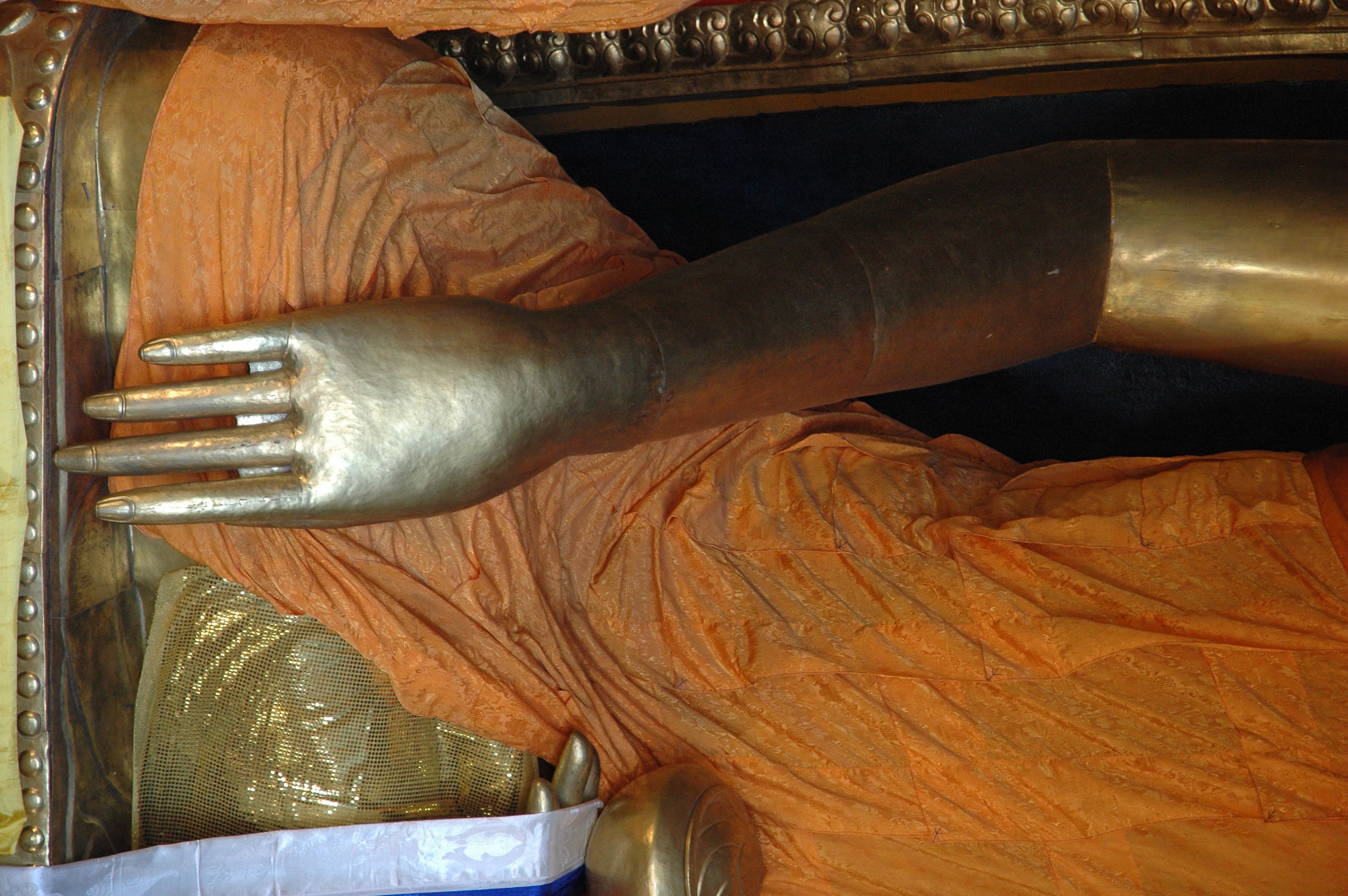
Touch the Earth Mudra
According to a Buddhist legend, on the night of Enlightenment Prince Siddhartha encountered Mara, the Lord of Death, who threw various hindrances the Buddha’s way to prevent him from attaining Supreme Enlightenment. The final challenge was Mara’s claim that the Buddha had no right to be in the seat of Enlightenment. The Buddha then touched the earth with his right hand to call Her as a witness of his past spiritual achievements and his right to gain Enlightenment.
Lori Gottlieb’s article in the February 9 New York Times magazine, “The Egalitarian-Marriage Conundrum,” was yet another tired entry in the New York Times’s annual clickbait misogyny Olympics. Who doesn’t remember the supposed opt-out revolution, and the sadness of the decade-later follow-up demonstrating every single consequence that any feminist could have predicted? Or the weekly gender terrorism spewed by Maureen Dowd, who somehow gets people to believe that constant belittling and feminizing male Democratic politicians counts as incisive, progressive political commentary? To name just a few of the most memorable, and most infuriating, examples.
Gottlieb’s article rehashed the studies – I’ve lost count of how many times I’ve read about them in one version or another – that suggest that equality in household labor leads to decreased frequency of intercourse among married heterosexual couples. The most revolting lines in the article – among many contenders – start with a quote from Julie Brines, the author of the study in question: ‘”The less gender differentiation, the less sexual desire.’ In other words, in an attempt to be gender-neutral, we may have become gender-neutered.” It is possible that Brines may be quoted out of context, or that what she intended to say was something quite different, but as the quotation stands, it implicitly suggests that so-called “traditional” gender differentiation is necessary for sexually satisfying heterosexual relationships. (For, of course, there are plenty of other ways in which gender differentiation might be present in heterosexual relationships. Gender differentiation is here being equated with a very particular set of decisions about ‘housework’, a notion that arguably exists only to render some parts of women’s work invisible.) That’s before getting into the implications of the word “neutered” used in the second sentence. Why would egalitarian distribution of household labor be considered “gender-neutral” to begin with? Continue reading “Anti-sex feminism? by Linn Marie Tonstad”
As Valentine’s Day approaches, it seems normal to think of love, perhaps with cynicism or hope or a mix of conflicted emotions. Last year, I wrote a post on this site about Valentine’s Day, and I’m happy to contribute this year around the same time. But this year I’ve been doing a different kind of reflection. Maybe it’s because I just took my artificial Christmas tree down this past weekend, but I’ve been a little slow to get in the Valentine’s spirit, more specifically to reflect on the idea of a holiday dedicated to love.
It’s not that I haven’t been talking about love and relationships—I’ve been doing a lot of that lately. I’m teaching a class that is currently in the middle of a unit on Christian sexual ethics, I’ve been conversing with friends about their upcoming weddings and future plans, and I have spent a lot of time on the phone navigating the terrain of a long-distance relationship. But all this talk hasn’t left me too much time to reflect. It wasn’t until last night, as the church choir rehearsal I was attending was ending, that my thoughts of devouring chocolate hearts were interrupted by a litany prepared by two choir members in honor of Valentine’s Day. Continue reading “Love and Happiness by Elise M. Edwards”
It may come as a surprise to those who identify as both feminists and religious practitioners that I don’t believe women should be pastors of any dominant religious congregation. This includes most religions which, I assert, are rooted in and structured by the tenets of patriarchy. Does that mean I think women should be congregants of a patriarchal-originated religious system? You guessed it – no. While this may seem like a radical notion to some, it took me quite some time to come to terms with my own conflict in being both feminist and a believer.
My transition from the Pentecostal sect was a long, intricate process that involved life-altering decisions. The notion of leaving the church was driven by my immersion in women’s studies during my undergraduate degree. There were many difficult questions I simply didn’t have an answer for, as the church didn’t provide me with them.
One of them being: Can women instruct an entire congregation of believers?
For those who are female pastors, I’m sure you’ve heard this one a million times, but somehow it never fades from religious and secular discourse. Whether it’s the Islamic, Jewish, Christian, or Mormon faith, women have had to constantly fight for their right to preach religious doctrine. In the beginning of my transition, I was on the side of: Preach it ladies! Continue reading “Why I Don’t Believe in Female Pastors by Andreea Nica”
It is so easy to blame feminism for the ills of the world – mainly because of continued misconceptions and misunderstandings about the definition or meaning of feminism. Feminism is responsible for poverty, bad leadership, wars, the polar vortex, the list goes on. Feminism is still considered a derogatory term that serves to incite prejudice against those who label themselves as one. In fact, negative connotations surrounding feminism are exacerbated in today’s culture, especially in the media. Fox News seems to be the poster child of “femiphobia” – a term coined by Stephen Ducat and defined as “wanting to repress every man’s feminine side and demonize the feminine and gay wherever we see them.” Elisabeth Hasselbeck and Nick Adams, in a recent interview, illustrate this femiphobic viewpoint by blaming feminism for raising a culture of “wimps” and “wussies” and thus compromising the U. S.’s national security and weakening its global presence. In other words, feminism is to blame for the problems of the world.
According to Adams, men around the world are no longer allowed to be “manly” and that this phenomenon is a “dangerous” problem:
American men are of course very susceptible to it. It’s really important particularly in America given the leadership role that America has in the world that American men be allowed to be men.
What does in mean to be a man and how is Adams defining that stereotype? While I am aware of the discussion of gender identity and roles even gendered stereotypes, this post is not about what those roles mean. Rather, for this point of discussion, I want to address the issue of masculinity, feminism, and what it means to be a “wimp” as portrayed by popular media.
With that caveat in mind, I ask the following questions:
Is the author suggesting a move to a “hypermasculinity”?
Is Adams identifying masculinity with aggression and violence in a world where feminists and perhaps all women are demonized?
In a society dominated by the “alpha male” character trait,male honor and pride are paramount. Is Fox News telling men to replace so-called passive behavior with pride, abrasiveness, authoritarianism, and arrogance–in such a world if where women are demonized, then assaultand rape will follow. The call for “real men” or “hyper-masculinity” therefore provides a real potential to move us further towards a misogynistic rape culture of violence–in the direction of barbarianism.
Women: Architects and Engineers of a Franciscan World
This New Year’s Eve I find myself attending Mass at St. Austin’s Church in Austin, Texas. A long way from Hawaii and en route to Argentina which gave us Pope Francis. This Mass is also a celebration of the Solemnity of Mary, Mother of God.
This crossing of many currents is perhaps as eloquent a statement as any on where women have traditionally found themselves in the church—up on a pedestal or totally in service to others. Both exalted and silenced. Tradition has not served women in the church as well as women have themselves served the church and the community through many ministries. The male leaders of the church have been happy to raise their eyes heavenward and sing the praises of Mary and the many female saints while consigning the women around them to positions of pure service, if not servitude. Continue reading “Women for a Franciscan World by Dawn Morais Webster”
In autumn 2001 I attended a youth workshop in Moscow, where I saw for the first time a brand new flash animation character who would accompany us in our young adulthood. Her name is Masyanya. She is a leader of a punk rock band. She does not take herself too seriously, but she means everything she says or does. I look up to her. She makes me laugh. And in one of the recent episodes Masyanya taught her male friend Lokhmaty (Shaggy) Buddhist meditation.
Masyanya is a creation of Oleg Kuvaev, a male Russian designer and animator. You can read his brief history of the project and watch episodes without dialogue here. On YouTube there are some Masyanya episodes with English subtitles, like this one, entitled “Women Triangles”.


 In his column “Professors, We Need You!” New York Times columnist Nicholas Kristof charges that most university professors “just don’t matter in today’s great debates” and admonishes them not to cloister themselves “like medieval monks.”






 Feminism and Religion