Like Crosley-Corcoran, I was raised in poverty. After my parents divorced in the early 1960s, our fall into poverty was pronounced. My mother liked to move, so much so that I attended no less than 15 different schools before high school. We lived in one house for two years without hot water. I learned early on the stigma of poverty, when even a Catholic school uniform could not protect me from signs of inferiority. Perhaps worse was the alienation I experienced as a young girl when other children’s parents discovered my father’s second job as a tattoo artist. Once that was known, most friends could no longer play with me outside of school. My psyche situated itself between shame and love, with the burden of keeping my humiliation a secret from the rest of my family. Continue reading “White Privilege: Confessions of a Poor White Girl by Cynthia Garrity-Bond”
I’ve been married for most of my life. Marriage, along with all our institutions, is influenced by and therefore takes shape from the culture/society in which it exists. When I got married, I had certain expectations that I’d absorbed from my environment. Attaining “marital bliss” by achieving an indistinguishable oneness with my spouse was part and parcel of it all. Popular thought tells us that marriage (especially heterosexual marriage) brings about the completion of two individuals. How often do we hear about people searching for, and sometimes finding, a person they label as their soulmate? People seem to long for that one human being they think will make them happy.
I recently picked up Rainer Maria Rilke’s (Bohemian-Austrian poet and novelist, 1875-1926) short book, LETTERS TO A YOUNG POET, and found his thoughts about marriage liberating. A few months after he married Clara Westhoff he wrote, “I am of opinion that ‘marriage’ as such does not deserve so much emphasis as has fallen to it through the conventional development of its nature. It never enters anyone’s mind to demand of an individual that he be ‘happy’,–but when a man marries, people are much astonished if he is not!” Continue reading “Solitary Marriage by Esther Nelson”
Boann, Celtic Goddess of Poetry, Fertility, Inspiration, Knowledge and Creativity was one of the Tuatha De Danann (People of Danu). She was associated with the 70 mile long river Boyne in Northeast Ireland and its source, the Well of Segais. Some bards say that long, long ago when the world was young and wild places were everywhere, Boann initiated that spring by walking counter-clockwise around stones found there, causing the water from under the earth to spring forth with great strength and rush down to the sea. The pool formed by the spring was encircled by nine sacred hazelnut trees, whose nuts could impart knowledge when eaten. The salmon of wisdom swam in the waters of this hidden pool from which the river Boyne flows.
This blog is an excerpt from our new book Goddess and God in the Worldwhich will be published by Fortress Press in just one week — on August 1. As we look forward to its release, we remember the critical works that started us on a journey of discovery that continues to unfold. In a jointly written chapter, we describe the beginnings of feminist theology.
Feminism was welling up from under during [the late 1960s]. We became feminists early in graduate school but did not discover feminist theology until we were preparing for our comprehensive exams. As Judith was later to write, feminism placed a question mark over absolutely everything for us: the maleness of God, the male authorship of the Bible, and the male perspectives from which virtually all theologies had been written. Three key essays set the stage for future work in the field, including our own. We have already mentioned these essays, but it is important to address the challenges they posed to traditional theology, and our own responses to them, in more detail here. Continue reading “The Emergence of Feminist Theology: Remembering our Roots by Judith Plaskow and Carol P. Christ”
As a practicing witch, feminist, energy worker and a student of life, I am often puzzled as to why, in this day and age, we continue using the terms “masculine” and “feminine” as descriptive modifiers. What exactly does it mean when we call an energy masculine or feminine, anyway? While I understand that these are descriptors that generally address what are typical characteristics – why do we insist on being so vague, misunderstood and perhaps even, insulting, depending on who we are speaking to? Continue reading “The Adjectives We Use by Deanne Quarrie”
In my home city of Cleveland, Ohio, yesterday Donald Trump received the nomination to run as the Republican presidential candidate in the 2016 election. While we were on an upswing following the Cavaliers NBA championship and have been highlighted as “Believeland,” the nomination of Trump is another disappointing and health hazardous event that can be added to the reasons Cleveland is sometimes called “the mistake on the lake.”
There are so many reasons to be angered by the nomination of Trump; his blatant racism and bigotry, incitement of violence, ignorance of domestic or foreign policy, his insistence on discussing his penis size, and the list goes on. With the recent tragic murders of Alton Sterling, Philandro Castile, and eight police officers in Dallas and Baton Rouge, Sterling’s 15 year old son has called for us to come together as “one united family” and end the violence. Trump on the other hand, capitalized on their deaths as a way to highlight his “law and order” campaign and argue that Obama and Hillary Clinton are weak.
We’ve seen time and time again that Trump is unable to articulate anything meaningful in relation to his ability to fulfill the role of POTUS and his hateful rhetoric is influencing the ongoing violence in our nation. Critical points are being made about an anti-immigrant, anti-Muslim, anti-Latino, pro-white supremacy Trump; however, I am concerned that appropriate attention is not being given to the anti-woman sentiment of Trump and the GOP in general.
Oppressions are deeply intertwined and must be uprooted together. And so, the misogyny that exists within the Republican party must also be acknowledged as problematic.
Trump has certainly been condemned for his statements about women; however as a whole the Republican party is focused on a campaign that is anti-woman and ordained by God. My question is why are many much more willing to acknowledge racist and bigoted statements, but often turn a blind eye to the repeated right wing attempts to over turn Roe vs. Wade, defund Planned Parenthood, and regulate women’s sexuality in the name of religion?
Despite the fact that we are a secular nation, the Republican Party has claimed Christianity as a weapon against women’s human rights and it has been accepted as fair game in the world of politics. Trump’s argument, along with Gingrich’s and others that we should create tracking systems or ban Muslims from coming into the nation has been immediately recognized as racist, ethnocentric, and fear mongering (and rightfully so). But attempting to control women’s bodies and send us back to biblical times, well, it is something that many shrug their shoulders at and call a reasonable political issue.
All forms of oppression need to be addressed; you cannot uproot one, you must uproot all. And so, if we are to properly address the bigoted statements coming from the Republican nominee, and booming through Cleveland at the moment being, we must acknowledge the complexities of these issues, the ways they are intertwined, and why all are unacceptable.
Gina Messina, Ph.D. is an American feminist scholar, Catholic theologian, author, and activist. She is also Co-founder of Feminism and Religion. She writes for The Huffington Post, has authored multiple publications and is the co-editor of the highly acclaimed Faithfully Feminist: Jewish, Christian, and Muslim Feminists on Why We Stay. Messina is a widely sought after speaker and has presented across the US at universities, organizations, conferences and on national platforms including appearances on MSNBC, Tavis Smiley, NPR and the TEDx stage. She has also spoken at the Commission on the Status of Women at the United Nations to discuss matters impacting the lives women around the world. Messina is active in movements to end violence against women and explores opportunities for spiritual healing. Connect with her on Twitter @FemTheologian, Facebook, and her websiteginamessinadysert.com.
“All children are our children.” As I was posting my recent blog about the shooting of black men by the police, these words came into my mind with the force of revelation. At the time I was looking at a photograph of Philando Castile, taken at his place of work. Yes, I thought, my heart opening: “he is my child too.” This widening of the heart is at the center of the maternal values of ancient and contemporary matriarchal cultures around the world. It is a feeling some of us who were mothered well enough or who mothered children—including children not our own—carry within us. Is this the healing balm our world needs today?
Maternal values? So many of us turn up our noses at such a “gendered” term. Perhaps we were not mothered enough in our families of origin. Perhaps we still feel un-mothered. Perhaps we don’t want to be told that we have to become mothers. Perhaps we fear that if we become mothers, we will be only mothers—all of our other ambitions and desires will have to take second place.
I have entitled this post O Tempora o mores after a sentence by Cicero, meaning “Oh what times! Oh what customs!” I would like to discuss how some of the messages we get from religious writings are defined by the age in which they were written.
As a result, I argue that it is wiser to pay more attention to the overall message of a given spiritual tradition, rather than to subject our view on a single quote.
One of the most popular texts in Thai Buddhism (which is of Theravada tradition) is called Phra Malai Klon Suat, “Chanted Version of Phra Malai.” It was reproduced copiously in the 19th century, with the earliest version dating from the 18th century. However, its origins are believed to be more ancient, coming from the original Indian Buddhism.
During another week of killings, war, protests, and debates about whether Black Lives Matter or Blue Lives Matter, I’m concerned about the toll it takes on those who are witnessing the violence and fighting for justice.
I’m not on the front lines of these battles, but I can feel my energy draining, nonetheless. Over the past few days, while I’ve stayed informed about the latest tragedies and conflicts, I’ve intentionally limited my exposure to most news and social media outlets. I’ve begun preparing for a contemplative retreat with other women who also care about justice. For me to continue to participate in any effort of transforming society, culture, or the church, I must nurture my mind, spirit, and body.
Audre Lorde put it like this:
“Caring for myself Is not self-indulgence. It is self-preservation, and that is an act of political warfare.”
Self-care is a radical practice of self-love. It is absolutely necessary when engaged in conflict against those who do not show love to you, or worse, those who seek to destroy you. Your survival and your flourishing are defiantly brave. Self-care honors the God who created you, the One who loves you, and the Spirit who sustains you. Continue reading “What My Mothers and Mentors Taught Me about Self-Care by Elise M. Edwards”
My book club recently read The Handmaid’s Tale by Margaret Atwood, a futuristic novel wherein women’s reproductive rights, as well as the women themselves, are controlled entirely by those in power. I’ve wanted to read it for a long time and appreciated this opportunity, though I ended up quite disturbed—not just by the tale, but by our obliviousness at times to the possibilities of what could potentially become us. During our club discussion, one of the women commented that she couldn’t understand the point or purpose of writing such a book as she felt it was too far-fetched. I was startled by her remark because I easily viewed it as a cautionary story, one that had presented what could happen if we ignore history and current events.
One pivotal passage for me in the novel was this:
“Is that how we lived, then? But we lived as usual. Everyone does, most of the time. Whatever is going on is as usual. Even this is as usual, now.
We lived, as usual, by ignoring. Ignoring isn’t the same as ignorance, you have to work at it.
Nothing changes instantaneously: in a gradually heating bathtub you’d be boiled to death before you knew it. There were stories in the newspapers, of course, corpses in ditches or the woods, bludgeoned to death or mutilated, interfered with, as they used to say, but they were about other women, and the men who did such things were other men. None of them were the men we knew. The newspaper stories were like dreams to us, bad dreams dreamt by others. How awful, we would say, and they were, but they were awful without being believable. They were too melodramatic, they had a dimension that was not the dimension of our lives.
We were the people who were not in the papers. We lived in the blank white spaces at the edges of print. It gave us more freedom.
We lived in the gaps between the stories.” (56-57)


 Recently FAR contributor Sara Frykenberg posted an article to Facebook that caused me to think again about the now-famous essay by Peggy McIntosh, “White Privilege: Unpacking the Invisible Knapsack.” In “Explaining White Privilege to a Broke White Person,” Gina Crosley-Corcoran does an excellent job of including issues of class, meaning poverty, into the discourse about race and privilege using the theory of intersectionality. If I am honest, the tensions between race and poverty have made the owning my white privilege challenging.
 I’ve been married for most of my life. Marriage, along with all our institutions, is influenced by and therefore takes shape from the culture/society in which it exists. When I got married, I had certain expectations that I’d absorbed from my environment. Attaining “marital bliss” by achieving an indistinguishable oneness with my spouse was part and parcel of it all. Popular thought tells us that marriage (especially heterosexual marriage) brings about the completion of two individuals. How often do we hear about people searching for, and sometimes finding, a person they label as their soulmate? People seem to long for that one human being they think will make them happy.
 Boann, Celtic Goddess of Poetry, Fertility, Inspiration, Knowledge and Creativity was one of the Tuatha De Danann (People of Danu). She was associated with the 70 mile long river Boyne in Northeast Ireland and its source, the Well of Segais. Some bards say that long, long ago when the world was young and wild places were everywhere, Boann initiated that spring by walking counter-clockwise around stones found there, causing the water from under the earth to spring forth with great strength and rush down to the sea. The pool formed by the spring was encircled by nine sacred hazelnut trees, whose nuts could impart knowledge when eaten. The salmon of wisdom swam in the waters of this hidden pool from which the river Boyne flows.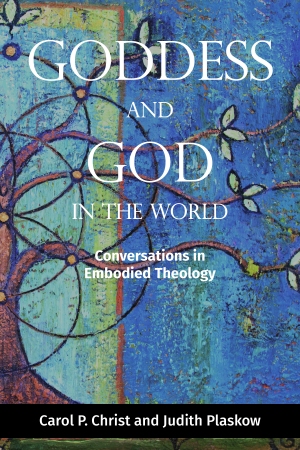
 As a practicing witch, feminist, energy worker and a student of life, I am often puzzled as to why, in this day and age, we continue using the terms “masculine” and “feminine” as descriptive modifiers. What exactly does it mean when we call an energy masculine or feminine, anyway? While I understand that these are descriptors that generally address what are typical characteristics – why do we insist on being so vague, misunderstood and perhaps even, insulting, depending on who we are speaking to?
  In my home city of Cleveland, Ohio, yesterday Donald Trump received the nomination to run as the Republican presidential candidate in the 2016 election. While we were on an upswing following the Cavaliers NBA championship and have been highlighted as “Believeland,” the nomination of Trump is another disappointing and health hazardous event that can be added to the reasons Cleveland is sometimes called “the mistake on the lake.”
 “All children are our children.” As I was posting my
  I have entitled this post
 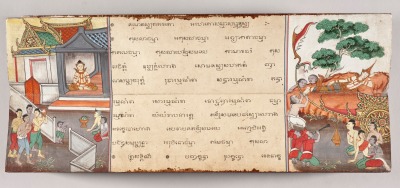 One of the most popular texts in Thai Buddhism (which is of Theravada tradition) is called
 My book club recently read
  Feminism and Religion