

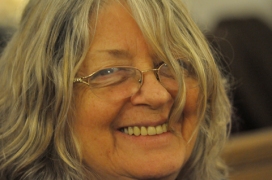
 As a practicing witch, feminist, energy worker and a student of life, I am often puzzled as to why, in this day and age, we continue using the terms “masculine” and “feminine” as descriptive modifiers. What exactly does it mean when we call an energy masculine or feminine, anyway? While I understand that these are descriptors that generally address what are typical characteristics – why do we insist on being so vague, misunderstood and perhaps even, insulting, depending on who we are speaking to? Continue reading “The Adjectives We Use by Deanne Quarrie”
Category: Gender
I’m Every (Bit A) Woman by Vibha Shetiya
 I often recall the time many years ago when a relative sympathized with the fact that my kittie had been spayed. Pigou was one of five girl cats we had and rather than face the difficult task of having to find homes for all of their offspring, or worse, put their lives in danger for lack of adequate care, we decided to get Mama Cat along with her four daughters fixed. My aunt’s words still resonate in my ears: “That is so sad. After all, every woman nurtures a desire to be a mother.” I remember feeling terrible. My parents and I had just committed the grave sin of severing Pigou (along with her sisters) from her identity – her natural role of mother. As I have gotten older, my views on Pigou and her lack of choice in the whole matter have changed, although I acknowledge that it may remain an ethical issue for some. Much as I empathize, however, Pigou and animal rights are not the center of this post, although a related topic is – that of motherhood.[1]
I don’t have children. It is out of choice. I’m not sure when exactly I consciously decided to forego being a parent, but I suspect the seeds were sown sometime during my teenage years, the result of looking at the world around me. In particular, the memories of my mother turning from the self-assured, even independent woman I knew as a child to someone who was forced to limit herself to home and family later in life and get nothing in return; a picture which probably made me think that was what motherhood was really all about. Continue reading “I’m Every (Bit A) Woman by Vibha Shetiya”
Goddess Politics and the Cauldron of Memory by Kavita Maya
 ‘Someone needs to gather the stories, to keep the cauldron,’ said the late Goddess feminist artist Lydia Ruyle during one of the last times we spoke, at the 2014 Glastonbury Goddess Conference. I had hinted at my concerns around conducting doctoral research in the presence of ongoing conflict within the Glastonbury Goddess community (especially when my broadly-stated site of interest is ‘politics’), and in reply she had stressed the need to ‘hold space’ for the different voices and perspectives in the UK Goddess movement, and that conflict would be inevitable. ‘There needs to be a weaver,’ she said.
The following day I recorded an interview with Lydia and some of her friends at Café Galatea on the High Street, which she had been keen to ensure since the previous summer—with poignant foresight, given her death in March 2016. I’m not sure if she was expecting that I should fully take on the role of this ‘weaver’—there are more stories than one PhD thesis can claim to encompass—but the theme is present in my writing. Her words lead me to reflect on the weaving together of politics with memory and storytelling, and on the need to honour the plural histories of the British Goddess movement. Continue reading “Goddess Politics and the Cauldron of Memory by Kavita Maya”
Reflections on Researching the Goddess Movement in Britain by Kavita Maya
 I’ve been asked by both academics and Pagans what inspired me to pursue doctoral research on the British Goddess movement: of the many ways that people first click with feminist politics, a story entwined with a ‘spiritual’ impulse might seem unusual, given the slow-to-change secular assumptions of mainstream feminism.
When I reflect on my history, two threads at the core of my early feminist identity leap out: one, the value of thinking and asking questions; the other, ‘feminist spirituality’, which for me describes a profound emotional, intellectual and creative investment in the struggle for a fairer, more inclusive world. Two early ‘click’ moments: as a child, asking persistent questions about the sexist gender roles modeled by those around me (and being told “You’ll understand when you’re older,” which I now recall with a grim irony), and—perhaps unusually—coming across the concepts of patriarchy, feminism and the Goddess by way of 1990s teen fiction about witches. Continue reading “Reflections on Researching the Goddess Movement in Britain by Kavita Maya”
Hamilton Part 2 – “You want a revolution, I want a revelation,” Changing the Narrative by Anjeanette LeBoeuf
 My April FAR post introduced the phenomena that was sweeping the nation; Hamilton the Musical blending contemporary hip hop to the Broadway musical scores. The show has been breaking barriers with its success, intelligence, and fortitude. Hamilton is showing that a diverse cast can be successful. “Hamilton has created a space on Broadway for black and brown performers that otherwise wouldn’t exist. Opening up roles designed specifically to be played by performers of color means encroaching on that space.” It is showing mainstream that including dialogue surrounding immigration, race, class, and gender equality can be highly successful. The director has stated that this show is about America, past and present and one can look at the cast to see it is true.
Moving Away from Normative Maternal Roles in the Catholic Church by Michele Stopera Freyhauf
 Earlier this week, social media was all abuzz about the Pope’s investigation into restoring women to the diaconate. In the complete transcript of the Pope’s comments, the traditional notion of women’s maternal role in the church is mentioned in relation to the Church. Certainly this is nothing new. Here the Pope describes important “maternal” work such as working with the marginalized, catechesis, and caring for the sick – once again, nothing new.
However, in the next sentence, a very subtle shift is seen when it comes to normative gender roles:
…. there are men who do the same [work as consecrated women], and it is good…..and this is important.
What does this mean – a change in language? a laying of groundwork? or nothing at all?

It is no secret that cultural constructs of women as maternal and how a mother is defined as or even does has radically changed in today’s society; but, the Church continues to remain steadfast in normative roles between the priesthood and the “motherhood” of the Church (and therefore “motherhood” in general).
#HillYes by John Erickson
I’m going to do something I’d never thought I’d do: fill your newsfeed with yet another article pertaining to the 2016 United States Presidential election and yes, I’m going to talk about former Secretary of State Hillary Clinton (hint: I’m emphatically supporting her and I’m unapologetic about it.)
 I’m going to do something I’d never thought I’d do: fill your newsfeed with yet another article pertaining to the 2016 United States Presidential election and yes, I’m going to talk about former Secretary of State Hillary Clinton (hint: I’m emphatically supporting her and I’m unapologetic about it.)
Let me start off with my central point: a vote for Hillary is a vote to change history and the world. No, not because she’ll hail in some type of new economic stimulus (although I’m sure she’ll do just fine with our economy #ThanksObama) or because she’ll save us all from the evils of the GOP (looking at you Trump/Cruz/and the “moderate” Kasich) but because she’ll do one thing that’s never been done before: become the first female President of the United States, ever.
While I have tried not to get into “it” (read: online trysts with my friends on social networks who are #FeelingtheBern) the question I beg to ask is: what’s so wrong with wanting the right woman to be the President? This is one, but not my only reason, I will cast my vote for her both in the Democratic Primary in California in June as well as in November (and, if you haven’t guessed, I do not believe or promulgate the reasoning or rhetoric that Bernie Sanders will come from behind and win the Democratic Party’s nomination because I passed 5th grade level Math.)

What Happens when Wonder Woman “Leans In” and Winds up in Traction? by Michele Stopera Freyhauf
 They always say in writing – use a title and the first few sentences to grab attention and the reader will want to see what you have to say. By my title, you have probably ascertained that I have made reference to a couple things: Wonder Woman, Sheryl Sandberg’s “Lean In,” and traction. While lately, I have suffered from writer’s block and lack of time to work on my writing, I have also found myself in another place of suffering that has me in traction at least thrice weekly.
It is in that spirit that I reflect on my former status as the infallible wonder woman – the mom of 4, who works full time, teaches, writes, supports her family, is in the middle of writing a dissertation and who started this new year as my year to “Lean In” and really excel in my career – to the current status of fallible woman, mom of 4 trying to stay afloat in all of her obligations, dealing with difficult sibling and teenage bantering as well as (thanks to a begging daughter spouting promises of responsibility) a Siberian Husky puppy and a resident 10 year-old Boston Terrier who now demonstrates the 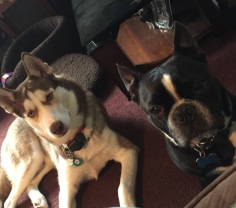 epitome of love-hate relationships, to prioritizing projects in order to keep everyone happy while I try to heal, attend physical therapy, and manage newfound pain and limitations.
In this post, I offer my [brief] thoughts about aging and struggles when a body, probably abused through pushing too hard, but also enduring the normal wear and tear of aging, begins to betray you while trying to come to terms with to a new normal of limitation within your own being – “adapting” if you will – a skill that I believe women have come to master well.
Throughout life, we all face our shares of limitations and encounters with mortality. Lately, it seems like I have encountered one thing after another. However, as these events arise, life must inevitably move on – but, moving on does not mean ignoring what just occurred. Rather, time needs to be taken to understand and appreciate each of these things – even if things do not go our way. Continue reading “What Happens when Wonder Woman “Leans In” and Winds up in Traction? by Michele Stopera Freyhauf”
I Am Queen by Vibha Shetiya
 I started this post just after getting back from an India trip, always very challenging because of memories that haunt me not only through their high negative recall value, but also in that I often find myself reverting to the diffident, fearful person I used to be while living there. In fact, palpitation is the first to greet me at Bombay airport even now after nearly seventeen years of being an expat. But with every trip, I also find myself evolving as a person, as a woman. And of course, it is always fun to meet up with family and old friends, all of whom I hold very dear. But the highlight of this trip was Queen.
Queen is a Bollywood movie unlike any other I’ve seen. As mentioned in a previous post, B-wood cinema if you can call it that, is made mostly of predictable, formulaic themes centering on impossible flights of fancy, not-so-subtle patriarchy, and gendered stereotypes. The good news is that in recent years, film makers have been trying to push boundaries in their own small ways, no doubt a laudable attempt in an industry where success still depends on mass consumption; box office success over critical acclaim. Queen, however, stands out in its portrayal of the protagonist Rani Mehra, a middle class young lady from Delhi (“rani” is “queen” in Hindi). Even more remarkable is that it portrays Rani’s female friends – “scantily” dressed women and prostitutes – without judgment, as human beings who are far from detrimental to Rani or the plot. Continue reading “I Am Queen by Vibha Shetiya”
The German Diotima by Stuart Dean
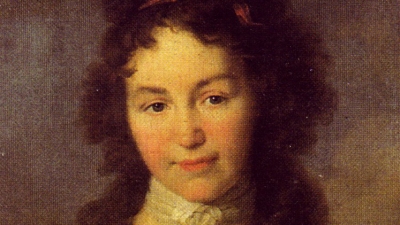
The title of the essay Über die Diotima (hereafter, the ‘Essay’ (translation here (pp400-419))) by Friedrich Schlegel (hereafter, ‘Friedrich’) suggests it is focused on Plato’s portrayal of Diotima in the Symposium. That portrayal, though, is but a starting point for Friedrich, who attempts to demonstrate that Diotima was a particular type of woman he associates with other ancient Greek women, including Sappho. The Essay is ostensibly of little relevance today, largely because knowledge of ancient Greece has evolved substantially since Friedrich’s time. In particular, a compelling case has been made that far from being related to ancient Greek women, Diotima is a fictional figure used by Plato “to vanquish Sappho” (Jantzen, Foundations of Violence, p193).
Yet, the Diotima Friedrich principally had in mind was not the one in Plato’s Symposium, but rather Caroline Schelling (hereafter ‘Caroline’), who was–for a time–his sister in law. On the third anniversary of his meeting Caroline he wrote a letter to her, reminding her of that anniversary and thanking her “for everything you have done for me and my development” (Caroline was almost a decade older than Friedrich, who was then in his early 20s, and yet to establish a name for himself as a scholar). Towards the end of his letter he asks her to read the Essay “once more and mark in pencil those passages in which you believe a small change might be necessary.” While his ‘once more’ suggests Caroline had previously given him input, the fact that in a letter to her from almost a year earlier Frederick refers to her, somewhat flirtatiously, as the “independent Diotima” relative to her ‘god’ (Frederick’s brother, August) confirms his identification of her with the subject of the Essay. Continue reading “The German Diotima by Stuart Dean”
 Feminism and Religion