On Chronic Illness and Justice by Ivy Helman

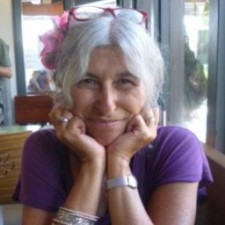
29662350_10155723099993089_8391051315166448776_oFor almost four years, I’ve been living with the long-term effects of an inner ear lesion.  The lesion is long gone but its side effects are not.  Throughout the day, I feel a combination of unsteadiness and sudden, unpredictable sensations of movement.  On better days, the unsteadiness is almost non-existent and the feelings of movement are minimal.  On worse days, I’m troubled with a type of brain fog that makes it hard to concentrate as well as disrupting unpredictable sensations of being on a boat that can’t pick one direction in which to move.  It’s frustrating, tiring and demoralizing.

Summer is the season of worse days.  There is really nothing I can do to feel better.  Even staying well-hydrated and taking it easy often doesn’t steady the boat.  So, instead, I often continue my life as normal.  Then, I lay in bed at night and hope sleep comes soon. Continue reading “On Chronic Illness and Justice by Ivy Helman”

Following My Dreams by Natalie Weaver

Dreaming has always been a huge part of my life.  When I was a little girl, I would run to my mom in the morning, before I was even completely awake, and tell her what I had been dreaming,  It would seem very important, I mean, desperately, terribly important, to share whatever journey I had been on.
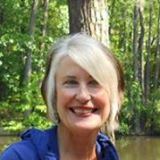
I would have repeating dreams; dreams with choose-your-own-adventure options; dreams with strange symbols and images and words.  I must have known that my dreams were valuable in a particular way to my waking mind, my manner of knowing, and even my concepts of reality because quite early on in my life I started to try to understand what dreaming actually was.  I remember getting a book called Far Journeys (or something like that) about lucid dreaming.  I remember learning about dream paralysis, which was a cause of great relief, since I occasionally experienced it and had to overcome the sense of terror it created.  I developed an early and avid interest in dream symbolism and psychology.  I was relieved when I finally learned the name Carl Jung.  In short, dreaming was central to my total experience of mind. Continue reading “Following My Dreams by Natalie Weaver”

Haiku Getaway by Esther Nelson

One of my undergraduate professors was (and still is) a haiku enthusiast.  When I took his Zen Buddhism course, students were required to write haiku throughout the semester.  He encouraged us to focus on the natural world as we struggled to come up with three lines of seventeen syllables, arranged in a five-seven-five pattern.  I eventually discovered lots of pleasure creating a haiku poem—crisp, even stark—using words with a precision I found beautiful.
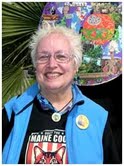
I recently spent some time in North Carolina (from the Outer Banks to Asheville), treating myself to a short vacation after finishing up the Spring semester.  In spite of good intentions, I have failed over and over again to keep a detailed journal while traveling.  On this trip, I made a vow to write at least one haiku a day.  I kept that vow.

Writing haiku daily forced me to be mindful of my surroundings, reflect on my experience, and then use carefully-chosen words to capture the moment.  That mindfulness created a glue of sorts, anchoring me in time and place.  To my delight, have found this trip lingering in my memory in ways that other trips have not. Continue reading “Haiku Getaway by Esther Nelson”

America’s Two National Goddesses by Barbara Ardinger

I bet almost no one knows this secret: the United States is being watched over by two goddesses! One of them stands on top of the Capitol dome in Washington, D.C. The other stands on an island in New York harbor.
The goddess standing above our congressional building is named Libertas, or Freedom. She’s a Roman civic goddess whose sisters are Concordia and Pax. Although the Romans hardly ever experienced freedom, civic harmony, or peace, they always kept their eyes on the possibilities. Libertas was sometimes merged with Jupiter, sometimes with Feronia, who was originally an Etruscan or Sabine goddess of agriculture or fire. In Rome, Feronia became the goddess of freed slaves. Libertas is shown on Roman coins as a matron in flowing dress and wearing either a wreath of laurel leaves or a tall pilleus, which is called a “liberty cap” and looks like a witch hat without the brim. And there’s also a bird—is it a raven?? She holds either a liberty pole (vindicta) or a spear, and in some paintings of her (she was a popular subject in the 19th century) there is a cat at her feet. Continue reading “America’s Two National Goddesses by Barbara Ardinger”

Protecting the Children, Jesus Christ Superstar Style by Marisa Goudy

“Where is my mother? I am thirsty.”

My four year old is crooning quietly to her dolls. She is making sense of the crucifixion through play, asking her Disney princesses to stand in for Jesus, the Marys, and “the bad guys.”

Whatever she’s working through has more to do with the voice of John Legend and the cast of Jesus Christ Superstar In Concert than it does with a reading of the gospels. My children were raised with an eclectic mix of goddess spirituality, “all gods are one god” thinking, and occasionally attending a holiday mass. Thanks to this soundtrack, however, they’re suddenly saying things like, “Mama, I really love Jesus!” and “can I be Mary Magdalene for Halloween?” Continue reading “Protecting the Children, Jesus Christ Superstar Style by Marisa Goudy”

Priestess at the Crossroads by Joyce Zonana

In order to transform what is happening at the Mexico/U.S. “border” (and elsewhere) we must first break down the borders within our heads—all the borders in all our heads. Mr. Trump tells us “If you don’t have Borders, you don’t have a Country”; my response today is: “Who needs countries? Who needs genders? Who needs races or competing religions? What we need is Coatlicue.”

jz-headshotAs so many of us recoil in horror at the Trump administration’s cruel attempts  to enforce an impenetrable border between the U.S. and Mexico, I find myself struggling to understand what he and his supporters mean by “borders,” and why they are so invested in maintaining them. The administration’s vicious immigration policy, recently epitomized in a brief tweet on June 19th, 2018—Juneteenth, the day in 1865 when slaves were finally freed throughout the U.S. at the end of the Civil War—“If you don’t have Borders, you don’t have a Country” has sent me back to Gloria Anzaldúa’s visionary 1987 book, Borderlands/La Frontera: The New Mestiza.

Grounded in her experience as a queer mestiza raised in the Texas/Mexico borderlands, Anzaldúa’s bilingual, cross-genre manifesto argues for the transformative role of the mestiza, no longer “sacrificial goat” but “officiating priestess at the crossroads”:

Continue reading “Priestess at the Crossroads by Joyce Zonana”

Swan – Guide to Love and Spiritual Evolution by Judith Shaw

judith shaw photoSwan glides gracefully across the mirror-like surface of the lake, stirring sensibilities of purity, loyalty and love in our hearts. Her long, curved, delicate neck reflects in the water as gentle ripples spread out behind her. Swan evokes feelings of peace and can signify self-transformation, intuition, sensitivity, and the soul.

Continue reading “Swan – Guide to Love and Spiritual Evolution by Judith Shaw”

Don’t Look Away by John Erickson

Why can’t social media be fun anymore? Why can’t we spread happy pictures of puppies, babies, and rainbows? While the answer may be simple to many of us, let me state it plainly to my relative: Because the world is on fire and we have a racist in the White House creating edicts that call for babies and children to be placed in ‘tender age’ facilities.

WEHO CA (June 7, 2015)©2015 Rebecca Dru Photography All Rights Reserved
http://www.rebeccadru.com

Don’t look away. I know how hard it is to say this but don’t look away. All of those images, recordings, and other horrific accounts of the deplorable, sickening, and unconstitutional events at the camps they have set up along the southern border need to be your fuel to take action, get fired up, and take back this country from those that would want to destroy everything we hold dear.

I’ve written a lot about how the 2016 election has impacted my family. If you want to catch up on any of those posts, you can click here:
         * A Letter to Those I’ve Lost
         * Happy Anniversary

I didn’t think I’d be writing a series about my family post-2016, but if I learned anything, it is that the personal is political, and sadly, things don’t seem to be getting any better. Continue reading “Don’t Look Away by John Erickson”

Ethics of Goddess Religion: Healing the World by Carol P. Christ

Nurture life.

Walk in love and beauty.

Trust the knowledge that comes through the body.

Speak the truth about conflict, pain, and suffering.

Take only what you need.

Think about the consequences of your actions for seven generations.

Approach the taking of life with great restraint.

Practice great generosity.

Repair the web.


In a recent interview on Voices of the Sacred Feminine on “Gratitude and Sharing: Principles of Goddess Spirituality,” Karen Tate asked me to review the “Nine Touchstones” of Goddess religion I offered in Rebirth of the Goddess as an alternative to the Ten Commandments. Tate expressed concern about the lack of social and political ethics in New Age spirituality and in some parts of the Neo-pagan movement at a time when ethical discernment and action is more necessary than ever.

Before discussing the ethical principles of Goddess feminism, it is necessary to dispel a common assumption that there can be no ethics in Goddess religion because ethics stem from a transcendent principle of justice that stands outside the world. Christian liberation theologians usually identify this transcendent principle with the commanding “Word of God” in the prophetic traditions of the Bible. They often assume that this word comes from outside ourselves and outside nature and as such is the only firm basis for ethics. Continue reading “Ethics of Goddess Religion: Healing the World by Carol P. Christ”

 Witches in the Weeds by Sara Wright

In folklore Old women are believed to control all aspects of Nature – Fire, Earth, Air and Water, but in myth and story they have a special relationship with water.

The title “witches in the weeds” emerged after I did some research on the Datura plant. This plant is usually associated with old women and sorcery in myth and story. For example, in European mythology, the dark goddesses, Hecate, and Baba Yaga are associated with Datura. Datura is considered to be a ‘witch weed’ and is categorized as a poison along with deadly nightshade, henbane and mandrake. The seeds and flowers have a history of creating visions, delirious states, and causing death. Datura thrives in wilderness areas. Old women, dark goddesses and Datura have a lot in common.

Women and birds have been associated since Neolithic times. Scholar and mytho-archeologist Marija Gimbutas unearthed many bird-women sculptures that were fashioned out of clay in “Old Europe”. Old women in particular are most often associated with owls, herons, crows, ravens, and black birds of all kinds. It is probably the relationship between women and birds that is one of the roots behind the belief that old women can fly. The other root behind flight can probably be found in the relationship between women healers and the plants they used. Plants like Datura contain alkaloid properties (scopolamine, hyoscyamine, and atropine) that are capable of producing visions of flight and are used by folk healers and medicine women and men. Continue reading ” Witches in the Weeds by Sara Wright”