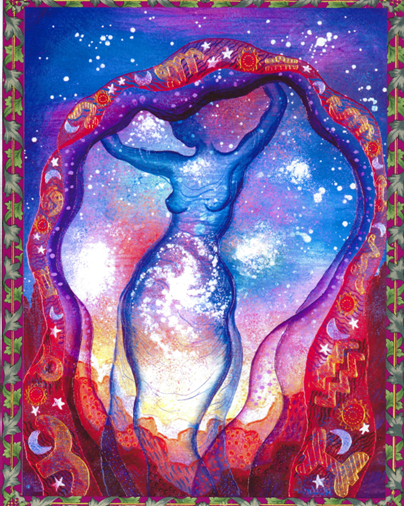
My Goddess is unconfined
–unbound
–unlimited
–unrestricted.
My Goddess exists beyond
–the images of Her created by men
–the words describing Her written by men
–the laws coercing Her, enacted by men.

Exploring the F-word in religion at the intersection of scholarship, activism, and community.

My Goddess is unconfined
–unbound
–unlimited
–unrestricted.
My Goddess exists beyond
–the images of Her created by men
–the words describing Her written by men
–the laws coercing Her, enacted by men.
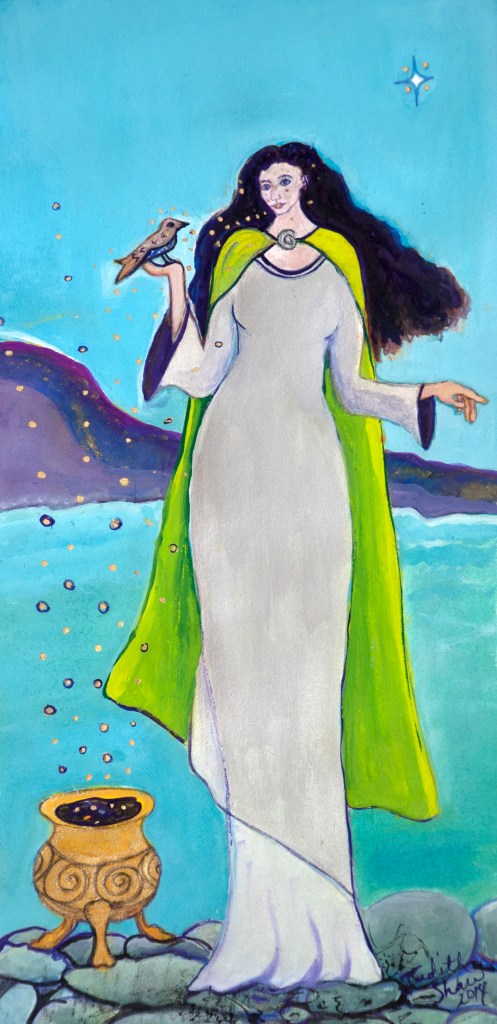
I was on my way home from a wonderful morning spent with my son when I heard the news of the horrific attack by Hamas on Israeli citizens. We had risen early to witness the mass ascension of balloons at the Albuquerque Balloon Fiesta, joining tens of thousands of people from around the world. For 10 days, a diverse crowd gathers on a vast field, experiencing childlike wonder as they watch brightly colored balloons ascend into the early morning sky. It was a joyful morning.
But then, after all that wonder, the car radio delivered the shocking news of the Hamas attack. My joy was shattered.
Continue reading “War, War and More War – Can Goddess Wisdom Offer a Path to Peace? by Judith Shaw”This was originally posted on November 25, 2013
The charge of “essentialism” has become equivalent to the “kiss of death” in recent feminist discussions. In this context it is taboo to speak of Mother Earth. Yet, I would argue there are good reasons for speaking of Mother Earth that do not add up to essentialism. What if the values associated with motherhood are viewed as the highest values? What if the image of Mother Earth encourages all of us to recognize the gift of life and to share the gifts we have been given with others?
For those not familiar with the “essentialism” debate in feminist theory, it might be useful to define “essentialism.” In philosophy, essentialism is the idea that every “thing” has an “essence” which defines it. In its pure form, essentialism is a by-product of Platonic “idealism” which states, for example, that the “idea” of table is prior to every actual table and that every actual table is an embodiment of the idea of table.
Continue reading “Legacy of Carol P. Christ: Is It Essentialist To Speak Of Earth As Our Mother?”When my father was a boy in the 1950’s, he had a butterfly collection. His friends would bring him dead butterflies to add his collection and ask him what they were called. He got so many monarchs that his reply would be, “Thanks! That’s a ‘common sicker,’” secretly meaning they were so common he was sick of them. Now, my father is 70 and his grandchildren rarely see a monarch butterfly, the population of them having declined by 85% or even more in just two short decades. This rapid change is one of the most clear and alarming, observable indications of the massive changes wrought by both climate change and industrialized farming in our very own lifetimes.
Each year, I watch for monarchs from my Missouri home, during their migration season that carries them over our heads and on their way to Mexico. Each one I spot feels like a brush with magic on the wing, a testament to endurance and to hope. I watch them careen along in their delicate and determined way across highways and rooftops, across cars and parking lots, across my own house, and across open fields. I watch them alight on thistles, on goldenrod and oak trees, vine and bush. I see one above the Atlantic Ocean at Daytona Beach. I see two above the weeds in the Dollar General parking lot in Alabama. I see one above the sunflowers by the overpass in Kansas City. I see two coming over the Walmart roof and into the Staples parking lot in central Missouri.
Continue reading “Monarch Magic, by Molly Remer”This was originally posted on November 11, 2013

“The mystery of God in feminist theological discourse” is the subtitle of Elizabeth Johnson’s widely read She Who Is. The notion that God is “a mystery” is rarely questioned in feminist theologies. But maybe it should be.
Although it is true that the finite cannot encompass the infinite, and that all knowledge is rooted in particular standpoints, I do not agree that the first and last thing to be said about the divine power is that it is “a mystery.” Indeed as I will argue here, speaking about God as “a mystery” obscures more than it “reveals.”
Continue reading “Legacy of Carol P. Christ: “THE DIVINE MYSTERY”?”We live in difficult times. Daily we hear of culture wars, real wars, mass shootings, floods, fires and multiple other climate disasters and human clashes.
How on Earth can one maintain a positive outlook and experience genuine happiness? I’ve discovered a few activities that effectively pull me out of dwelling on past challenges or worrying about future uncertainties. These activities consistently guide me back to a state of inner peace and contentment.
Continue reading “Finding Happiness Through Nature and Creativity by Judith Shaw”26,000 years ago, life was precarious and dangerous. And so the human race revered the Mother. Mother Earth, who provided food amidst scarcity, protection from the dangers of the wild and healthy babies who grew to adulthood.
The Goddess.
In her many forms.

Some of these Goddesses.
Venus of Willendorf. The artifact known as the Venus of Willendorf dates to between 24,000–22,000 B.C.E., making it one of the oldest and most famous surviving works of art.
Continue reading “Why We Need to Bring Back God as a Woman, part 1 by Caryn MacGrandle”This was originally posted on August 9, 2017
“Drinking the water, I thought how earth and sky are generous with their gifts and how good it is to receive them. Most of us are taught, somehow, about giving and accepting human gifts, but not about opening ourselves and our bodies to welcome the sun, the land, the visions of sky and dreaming, not about standing in the rain ecstatic with what is offered.”
–Linda Hogan in Sisters of the Earth
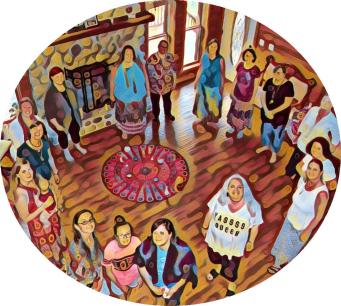
The women have gathered in a large open living room, under high ceilings and banisters draped with goddess tapestries, their faces are turned towards me, waiting expectantly. We are here for our first overnight Red Tent Retreat, our women’s circle’s second only overnight ceremony in ten years. We are preparing to go on a pilgrimage. I tell them a synopsis version of Inanna’s descent into the underworld, her passage through seven gates and the requirement that at each gate she lie down something of herself, to give up or sacrifice something she holds dear, until she arrives naked and shaking in the depths of the underworld, with nothing left to offer, but her life.
Continue reading “From the Archives: Sacred Water by Molly Remer”Sometimes I feel like my own Ninshubur.
I set up a lamentation in the street.
I call my own name,
beat the drum
to lead myself back home,
prepare the temple
for my own arrival.
I will not give up on myself,
will not abandon my own wholeness,
I refuse to sacrifice my Self.
I will not stay in the underworld forever.
We all need people in our lives who will say:
No, this will not do.
I’m coming after you.
I will help you to crawl back up,
back out, back through.
I will reach out to you.
I will boost you up.
I will rise with you into becoming.
You will not stay behind defeated
and alone so long as I,
your Ninshubur,
draw breath.
I will beat the drum for you.
I will call your name.
You are not alone.
Come back to me.
I see your power
and your strength.
I hear your longing.
Return,
return,
return.
I first met Inanna in the firelit darkness of a midwifery retreat in central Missouri. Toddler son at my breast, I watched, spellbound, as the charismatic, dark-haired midwife recounted the tale of Inanna’s descent into the underworld, through the seven gates we traveled, to the seat of our own wounding and our own medicine.
Continue reading “Inanna’s Sisters, by Molly M. Remer”This was originally posted on August 1, 2013. We usually do Carol Christ’s legacy posts on Mondays. Given the closeness of Lughnasadh, it felt appropriate to share the work of one of our other long-time writers today. Carol’s legacy posts will be back next week.

Lughnasadh (pronounced LOON-us-uh) or Lammas—is the first of the three traditional harvest festivals of the traditional Celtic calendar that most pagans follow today. And what naturally follows harvest? Feasting, fairs, and festivals. To help us celebrate the season, here are two Found Goddesses of good eating. The term “found goddesses” was created in 1987 by Morgan Grey and Julia Penelope, authors of a hilarious book titled Found Goddesses. After reading this book and having never met a pun I didn’t instantly love and being of a naturally satirical state of mind, I started Finding—i.e., inventing—my own goddesses shortly before the turn of the century. After I found a hundred of them, they were published in 2003 in my book, Finding New Goddesses.
Continue reading “From the Archives: The Found Goddesses of Good Eats by Barbara Ardinger” Feminism and Religion