Gather the Women and Heal What Ails Us by Karen Moon

Karen 2006I wrote this piece in response to an e-mail from a friend that said: “Yes, women’s circles may help you with your headaches that you have every 3 to 7 days (or whatever else ails you.)”

I think women (and men as well, but I think women feel this more deeply in general) are missing a genuine connection to others, a safe place to be heard and accepted, a chance to step outside of their roles and responsibilities in life (if only to see how very similar our challenges are), and a chance to honor beauty whether that be by reading a poem, singing a song or listening to music.

When the minister at the church turned you off towards Christianity by his fear and misdirected anger, you were searching for Divinity within someone else. But Divinity resides within yourself. Continue reading “Gather the Women and Heal What Ails Us by Karen Moon”

On Being of Sound Mind, Body, (&/or) Soul by Juliane Hammer

hammerAs I write yet another email apologizing in advance that I will miss a deadline, I debate whether to provide a reason. Should I write that I am struggling with sometimes crippling anxiety, that I have physical symptoms related to that anxiety and to depression? Or should I stick with “some health issues”? Or is even that too much information? Is it better not to provide a reason at all?

I have written quite a few such emails over the years and it is only now that I both fear and anticipate the response. If I openly acknowledge what others would call mental health challenges, I usually get no response at all or one that entirely ignores that part of the discussion. Using physical illness as an explanation rarely generates a more direct response either, and if it does, it usually takes the form of wishes that I get well soon, as if I have caught the flu. If only depression and anxiety or even their somatic manifestations went away or could be cured!

When I am able, I analyze such responses for what they can tell me about this society’s willingness and ability to take seriously how we feel, how we function, and what either of those have to do with meaningful living.

There are two main concerns in the above: that we cannot openly discuss our mental and physical health challenges and instead we are expected to suppress them in polite company; and that the boundary between being healthy (mentally or otherwise) and being unhealthy, does not in fact exist despite the language we employ that seems to insist on such a boundary.

As I become a little more confident about sharing my struggles, I find that doing so encourages others to share as well. In conversations with my students, undergrads as well as graduate students, and occasionally with colleagues, I see the light of hope and with that hope, I see relief. I understand that academia, my work environment is as much part of the capitalist system as any other workplace, so the expectation to be functional, perform one’s work tasks and generate profit is not surprising. It is, however, hurting countless individuals, women as well as men, and that, combined with my feminist idealism, has me convinced that a system that enables theoretical reflection and sometimes even induces change in society (however reluctantly) should do better than it does at this point. We may have some access to mental health services (also part of capitalism and thus costing money), but professional services are not all we need.

This brings me to my second point, one which is for me at least more directly related to religion. I realize that the mind, body, and soul division is the product of a particular history, philosophy, and time period. But I do not experience these supposed parts of my being as three distinct thirds that form a whole. They seamlessly blend into each other, all making me who I am and who God made me to be. Why then is it so difficult some days for me to do anything at all? Should it be a daily exercise to determine where I seem to fall that day on a five point spectrum, from mentally healthy (5) to mentally ill (1)? How often do I not have a concrete answer? And whose “mental state” can truly be captured by such a simple scale?

I do not know whether I have ever had a day on which I felt normal or didn’t worry about being normal. Normal compared to whom? Stuck somewhere between protestant work ethic, socialist utility for the community, and gratitude owed to God for being alive, I have serious difficulty relating to modern psychiatry and even conventional medicine. And perhaps the five-point spectrum above exists simultaneously for physical health or even more likely for the same whole. If my body, mind, and soul are all interconnected, it makes sense that my physical health cannot be measured separately from my mental or spiritual health.

Continue reading “On Being of Sound Mind, Body, (&/or) Soul by Juliane Hammer”

Artemis As Artemisia: Ancient Female Spirituality & Modern Medicine by Stuart Dean

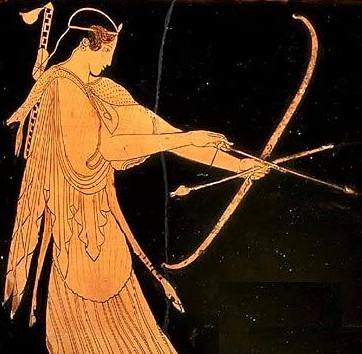
Detail of Artemis from a 5th century BCE Attic Vase
Detail of Artemis from a 5th century BCE Attic Vase  (Museum of Fine Arts (Boston))

The 2015 Nobel Prize for Medicine was awarded in part to a Chinese woman (Tu) for her identification and isolation to treat malaria of a chemical known as Artemisinin.  The name of that chemical derives from the fact that it is found in varying amounts in the ‘family’ (technically, genus) of plants known as Artemisia.  The name of that family derives from its association with the goddess Artemis.

Because Tu’s work began in China in the 1960s it is understandable that even if she knew this about Artemisia (a term I use to refer to any one plant or all of the plants of that family) it would not have been a ‘careerbuilder’ for her to point it out to those for whom she was working.  It was bad enough that she was a woman.  At that place and time, however, if she had said or done something that could be associated with Western culture her name might not even be known today.   

Nevertheless, because those awarding the Nobel Prize are free from discrimination or intimidation, it is startling that in the explanation provided for the award no mention is made of the Western legacy of Artemisia.  To begin with, the very fact that the Prize was being awarded to a woman for a plant named after a goddess should have elicited at a sense of uncanniness that arguably deserved mention.  Be that as it may, the failure to mention that Artemisia has a long history of being used medicinally in the West not only as an insect repellent but also to treat fever–a common symptom of malaria–is simply inexcusable. Continue reading “Artemis As Artemisia: Ancient Female Spirituality & Modern Medicine by Stuart Dean”

The Mother of Socrates: Priestess, Pharmacist, Obstetrician by Stuart Dean

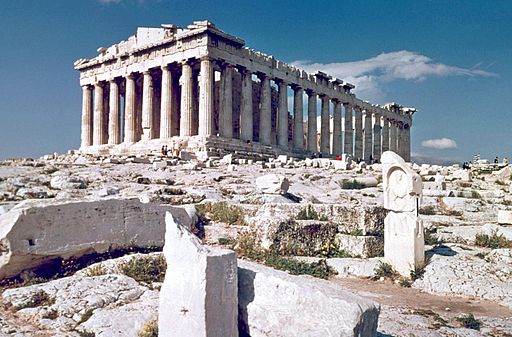
ParthenonBecause the dates for the life of Socrates are certain, it is safe to conclude his mother, Phaenarete, was born about 500 BCE.  She seems to have lived well past menopause and thus was certainly alive to see the start of construction of the Parthenon (447 BCE) and probably its completion (432 BCE).  As was traditional for many Greek mothers, after menopause she became a priestess, pharmacist and obstetrician.

The relevance of the chronology for Phaenarete requires some context to appreciate.  Writing had yet to be widely adopted during her life (the alphabet was not standardized until about 400 BCE).  Literary evidence in particular for the practice of medicine before and during her life is scarce. Although Hippocrates was a contemporary of her son, nothing survives of medical writings from antiquity that can confidently be attributed to him.  Parmenides and Empedocles (contemporaries of Phaenarete) appear to have been medical practitioners, but what survives of their poetry relates to nature philosophy in general and only in places to medical theory.

Hence, it is extraordinary that an account of Phaenarete’s medical practice survives in Plato’s dialogue, Theaetetus, 149a-150a (hereafter “PMP”).  Though PMP was composed by Plato in the 300s BCE, he emphasizes it is based on a transcript of an actual conversation from the late 400s BCE.  PMP records what Socrates said about his own mother.  It is as authoritative a source of information about her as it is about the origins of the sine qua non of medical practice: optimizing human reproduction.

While evidence exists for women healers in many ancient cultures, the specifics PMP provides show postmenopausal mothers were especially important to early Greek medicine.  Curiously, there was no word for ‘menopause’ itself, a fact that suggests it was thought of more in metaphysical than physical terms.  Evidence indicates it was thought of as a type of ‘virginity’ (parthenia), the metaphysical meaning of which can be detected in its association with goddesses such as Artemis and Athena (cf. ‘Parthenon’ for her temple’s name).  It marked the completion of the ‘internship’ of motherhood, the prerequisite to graduate to become a priestess of Artemis.  The name of Socrates’s mother, Phaenarete, evinces that religious context: it essentially means “Revelator.”  The Greek for “obstetrician,” maia, also evinces that context: it was also the name of a goddess.  The status such a word then connoted is lost in translating it, as many do, as ‘midwife.’ Continue reading “The Mother of Socrates: Priestess, Pharmacist, Obstetrician by Stuart Dean”

Relaxation as a Spiritual Discipline by Katey Zeh

Katey HeadshotI have a productivity obsession. I wouldn’t go so far as to call it an addiction, though in describing to a friend how euphoric it feels to check off a bunch of to-dos, he said, “You kind of sound like a junkie.” He may be right. Up until a year ago I didn’t think I had a problem. When I heard experts talk about self-care and meditation and “me” time, I’d roll my eyes a bit. Self-care is for wimps, I thought to myself. And I was certainly not one of those. I didn’t need time off for self-care. I had my to-do lists.

I started to question if I really had this all figured out when I was two weeks postpartum and back to work full-time because like most workers in the United States, I didn’t have paid family leave. Between the hormonal fluctuations and sleep deprivation, I lacked the mental clarity I needed to prioritize tasks. So then every task became the most urgent thing. On top of caring for a newborn and recovering from the birth, this created a perpetual state of mental exhaustion that was simply not sustainable. I needed to do something before I burned out completely.

One of the first steps I took was doing a self-assessment of the current state of my overall wellness–physical, mental, emotional, and spiritual. The first thing I jotted down was, “I’m stretched to my limits. I’m productive to a fault.” That was telling. My next step was to write out a wellness prescription. Since lists and schedules are my drugs of choice, could I try using them for good? I wrote out a self-care to-do list with a dozen different items, including weekly yoga sessions and scheduled downtime. Continue reading “Relaxation as a Spiritual Discipline by Katey Zeh”

The Religiosity of Silence by John Erickson

In a repetitive culture of abuse and silence, is it really shocking to find out that an individual who preached such hate and discontent for others actually perpetuated other forms of heinous abuse against others?

John Erickson, sports, coming out.In 2013, I wrote an article about the then latest reality TV scandal featuring A&E’s Duck Dynasty’s Phil Robertson and his rampant foot-in-mouth disease that caused him to express, in the pages of GQ, his true distaste for the LGBT community and specifically for the sexual proclivities of gay men.

Now, two years later in another reality TV show, TLC’s ’19 Kids and Counting’, it isn’t star Josh Duggar’s anti-LGBT statements getting him into trouble but rather his sexual assault and molestation of 5 girls, including two of his sisters. However, while the Internet explodes with attacks against Josh Duggar and his Quiverfull background, it is vital to remember that the silence that he and his family inflicted upon his victims since 2006 has not only been ongoing since then but is also being reemphasized today with each keystroke focusing on the assailant rather than the victims. Continue reading “The Religiosity of Silence by John Erickson”

LGBT Faith Leaders of African Descent by Jameelah X. Medina

Jameelah MedinaIn January 2015, I presented at the LGBT Faith Leaders of African Descent‘s third annual forum in Harlem, NYC. As an ally, I was honored to be invited. The theme of the forum was “Ain’t No Hurt Like Church Hurt.” I spoke about becoming an ally as wekk as about sexuality in Islam and among Muslims. However, what I learned while listening to other speakers and audience members will stay with me for life.

I have Christian family members who are gay and have dealt with church hurt because of it. Yet, it is not something I ever witnessed up close or spoke in depth about with them. Being Muslim, heterosexual and cisgender at the conference made me feel like an outsider yet everyone treated me as an insider. I felt as if I were witnessing pain I had no business seeing yet I felt obliged to witness and testify to it. So many people stood up to talk about their church hurt. There were so many tears of great pain and rejection shed during the conference. Everyone there was a great example of resilience. Throughout the day, I just kept thinking how blessed I was to be in the company of such wonderful, embattled, yet humble and loving people. Continue reading “LGBT Faith Leaders of African Descent by Jameelah X. Medina”

The Importance of Rituals (Part 2) by Elise M. Edwards

elise-edwards

In my previous post, I wrote about the importance of rituals. The rituals of the Easter season helped me process some difficult emotions. The way that rituals mark time and demonstrate consistency has been a comfort for me when facing new challenges and settings. But I am quite aware that rituals can become empty.   In one of the comments to that post, a woman named Barbara responded, “There came a time for me when familiar and meaningful ritual no longer made sense. I had changed in understanding of what the ritual symbolized and celebrated. And haven’t found new rituals that make sense for me now…or at least I’m not aware of any.” Barbara’s remarks capture not only the loss from no longer being able to relate to existing rituals after life changes, but also the difficulty in finding or creating new rituals to take their place. I thanked Barbara for her honesty and decided that this post would continue the discussion, focusing more on discovery and creation of new rituals.

As I was preparing that post, I watched an episode of Call the Midwife that prompted me to reflect on the need to create rituals when existing ones just don’t work. Call the Midwife is a BBC-PBS show about nurses and midwives living in a convent in London’s East End at the end of the 1950s and early 1960s. The show is based on the memoirs of Jennifer Worth, and it does a better job than most primetime dramas of showing female characters’ experiences the joys and challenges of their professional lives and personal lives. As it is set in a convent with several characters who are both nuns and midwives, the show also explores the theme of vocation. What does it mean to be called to the religious life? Called to nursing? What does motherhood demand? Continue reading “The Importance of Rituals (Part 2) by Elise M. Edwards”

Hildegard the Healer by Mary Sharratt

mary sharrattSaint Hildegard von Bingen (1098–1179) was not only a visionary Benedictine abbess, composer, and Powerfrau extraordinaire. She was also a physician and healer who developed her own highly original system of medical treatment and holistic dietary philosophy.
Saint Benedict of Nursia (480-543), the founder of her order, expressly forbade the study of medicine, which in his era derived solely from texts written by Pagans such as Hippocrates and Galen. Benedict believed that prayer alone must suffice in healing Christians.

But by Hildegard’s time, monasteries had become centers of healing that embraced the medical knowledge of both the Classical Pagan world and the pioneering work of Arab and Persian physicians. Nearly every monastic house had its own infirmary, hospice, apothecary, and medicinal garden. Hildegard would have had ample opportunity to train as a physician and apothecarer at Disibodenberg Monastery, a double monastery housing both monks and nuns, where she lived for most of the first half of her life.

hildegard universal human 200px-Hildegard_von_Bingen_Liber_Divinorum_Operum
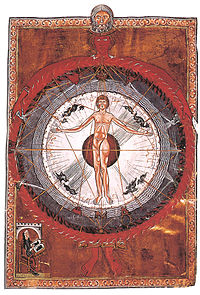
Illumination based on Hildegard’s vision of the human body as the microcosm within the sacred macrocosm.

Continue reading “Hildegard the Healer by Mary Sharratt”

The Importance of Rituals by Elise M. Edwards

elise-edwardsMy sister once said about me, “One thing you have to understand about Elise—she takes the ritual of whole thing very seriously.” My sister was right and her words helped me see this quality about myself. What ritual was she talking about me taking so seriously? Happy hour on Fridays.

It was a different season of my life when she said this. I don’t have Friday happy hours regularly anymore, although I did gather with my friends nearly every week for food and drinks for many years throughout my 20s and 30s. It was often on Fridays, but at one point it was Wednesdays and then, for about a year, it was Thursday nights after a late shift at work.

More recently, I would meet a friend for crepes at the farmers’ market on Saturday mornings. Although the day and the time and specifics of these gatherings would vary, the act of setting aside a weekly time to connect with people dear to me and relax as we indulged in good food or drink was a ritual to me.

Continue reading “The Importance of Rituals by Elise M. Edwards”