The Religiosity of Silence by John Erickson

In a repetitive culture of abuse and silence, is it really shocking to find out that an individual who preached such hate and discontent for others actually perpetuated other forms of heinous abuse against others?

John Erickson, sports, coming out.In 2013, I wrote an article about the then latest reality TV scandal featuring A&E’s Duck Dynasty’s Phil Robertson and his rampant foot-in-mouth disease that caused him to express, in the pages of GQ, his true distaste for the LGBT community and specifically for the sexual proclivities of gay men.

Now, two years later in another reality TV show, TLC’s ’19 Kids and Counting’, it isn’t star Josh Duggar’s anti-LGBT statements getting him into trouble but rather his sexual assault and molestation of 5 girls, including two of his sisters. However, while the Internet explodes with attacks against Josh Duggar and his Quiverfull background, it is vital to remember that the silence that he and his family inflicted upon his victims since 2006 has not only been ongoing since then but is also being reemphasized today with each keystroke focusing on the assailant rather than the victims. Continue reading “The Religiosity of Silence by John Erickson”
LGBT Faith Leaders of African Descent by Jameelah X. Medina

Jameelah MedinaIn January 2015, I presented at the LGBT Faith Leaders of African Descent‘s third annual forum in Harlem, NYC. As an ally, I was honored to be invited. The theme of the forum was “Ain’t No Hurt Like Church Hurt.” I spoke about becoming an ally as wekk as about sexuality in Islam and among Muslims. However, what I learned while listening to other speakers and audience members will stay with me for life.

I have Christian family members who are gay and have dealt with church hurt because of it. Yet, it is not something I ever witnessed up close or spoke in depth about with them. Being Muslim, heterosexual and cisgender at the conference made me feel like an outsider yet everyone treated me as an insider. I felt as if I were witnessing pain I had no business seeing yet I felt obliged to witness and testify to it. So many people stood up to talk about their church hurt. There were so many tears of great pain and rejection shed during the conference. Everyone there was a great example of resilience. Throughout the day, I just kept thinking how blessed I was to be in the company of such wonderful, embattled, yet humble and loving people. Continue reading “LGBT Faith Leaders of African Descent by Jameelah X. Medina”

The Importance of Rituals (Part 2) by Elise M. Edwards

elise-edwards

In my previous post, I wrote about the importance of rituals. The rituals of the Easter season helped me process some difficult emotions. The way that rituals mark time and demonstrate consistency has been a comfort for me when facing new challenges and settings. But I am quite aware that rituals can become empty.   In one of the comments to that post, a woman named Barbara responded, “There came a time for me when familiar and meaningful ritual no longer made sense. I had changed in understanding of what the ritual symbolized and celebrated. And haven’t found new rituals that make sense for me now…or at least I’m not aware of any.” Barbara’s remarks capture not only the loss from no longer being able to relate to existing rituals after life changes, but also the difficulty in finding or creating new rituals to take their place. I thanked Barbara for her honesty and decided that this post would continue the discussion, focusing more on discovery and creation of new rituals.

As I was preparing that post, I watched an episode of Call the Midwife that prompted me to reflect on the need to create rituals when existing ones just don’t work. Call the Midwife is a BBC-PBS show about nurses and midwives living in a convent in London’s East End at the end of the 1950s and early 1960s. The show is based on the memoirs of Jennifer Worth, and it does a better job than most primetime dramas of showing female characters’ experiences the joys and challenges of their professional lives and personal lives. As it is set in a convent with several characters who are both nuns and midwives, the show also explores the theme of vocation. What does it mean to be called to the religious life? Called to nursing? What does motherhood demand? Continue reading “The Importance of Rituals (Part 2) by Elise M. Edwards”

Hildegard the Healer by Mary Sharratt

mary sharrattSaint Hildegard von Bingen (1098–1179) was not only a visionary Benedictine abbess, composer, and Powerfrau extraordinaire. She was also a physician and healer who developed her own highly original system of medical treatment and holistic dietary philosophy.
Saint Benedict of Nursia (480-543), the founder of her order, expressly forbade the study of medicine, which in his era derived solely from texts written by Pagans such as Hippocrates and Galen. Benedict believed that prayer alone must suffice in healing Christians.

But by Hildegard’s time, monasteries had become centers of healing that embraced the medical knowledge of both the Classical Pagan world and the pioneering work of Arab and Persian physicians. Nearly every monastic house had its own infirmary, hospice, apothecary, and medicinal garden. Hildegard would have had ample opportunity to train as a physician and apothecarer at Disibodenberg Monastery, a double monastery housing both monks and nuns, where she lived for most of the first half of her life.

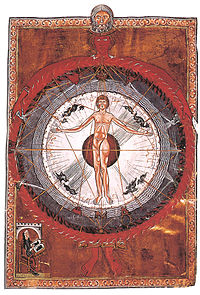
hildegard universal human 200px-Hildegard_von_Bingen_Liber_Divinorum_Operum
Illumination based on Hildegard’s vision of the human body as the microcosm within the sacred macrocosm.

Continue reading “Hildegard the Healer by Mary Sharratt”

The Importance of Rituals by Elise M. Edwards

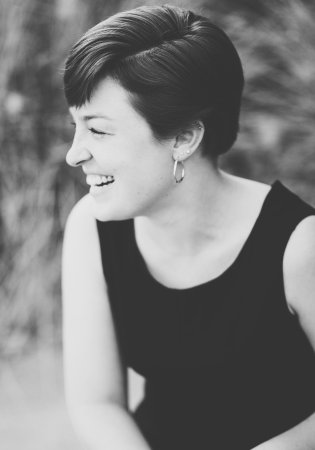
elise-edwardsMy sister once said about me, “One thing you have to understand about Elise—she takes the ritual of whole thing very seriously.” My sister was right and her words helped me see this quality about myself. What ritual was she talking about me taking so seriously? Happy hour on Fridays.
It was a different season of my life when she said this. I don’t have Friday happy hours regularly anymore, although I did gather with my friends nearly every week for food and drinks for many years throughout my 20s and 30s. It was often on Fridays, but at one point it was Wednesdays and then, for about a year, it was Thursday nights after a late shift at work.

More recently, I would meet a friend for crepes at the farmers’ market on Saturday mornings. Although the day and the time and specifics of these gatherings would vary, the act of setting aside a weekly time to connect with people dear to me and relax as we indulged in good food or drink was a ritual to me.

Continue reading “The Importance of Rituals by Elise M. Edwards”

Painting Women from Judges – Part 3: The Sacred Account of the Levite’s Pîlegeš by Melinda Bielas

Melinda BielasReading the story of the Levite’s pîlegeš – found in the Hebrew Bible, Judges 19:1-20:7 – is unlike any other scholastic endeavor I have undertaken.1 The narrative is of a woman who leaves her husband’s house, only to be retrieved by her husband, gang raped on her way to his home, and dismembered upon arrival. This intense violence then escalates to the abduction and rape of more than 400 virgins and the death of many more (Judges 20-21).
The first time I encountered this narrative was while reading Phyllis Trible’s Texts of Terror as an undergrad student. While at the time I did not fully understand the textual nuances Trible points out, I did understand this story was sacred in a way I could not articulate. It was not until years later that I realized I was not truly listening to the story because I had not read it from the pîlegeš’ perspective and was yet to be affected by the horror of it.

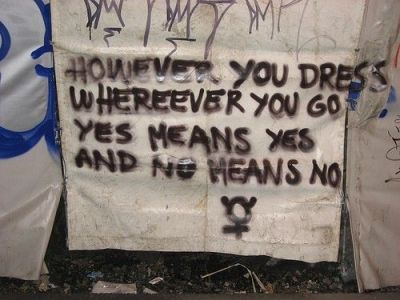
An explanation is needed when one calls a story of violence sacred. To clarify, it is the telling of the story that makes it sacred, not the violence. In much of the world today, violence done to women is taboo.2 Not only are the violent acts ignored, but the victim and her retelling of the acts are also often ignored. Perhaps this is because our society is biased towards the perpetrator. Perhaps it is because our faith communities have self-identified as loving and to acknowledge violence is to acknowledge failure. But perhaps it is mostly because violence is hard to process, especially when the violent act is committed against a loved one, and we prefer not to struggle with the presence of violence all around us. Continue reading “Painting Women from Judges – Part 3: The Sacred Account of the Levite’s Pîlegeš by Melinda Bielas”

Breaking The Silence About Sexual Violence by Vanessa Rivera de la Fuente

Vanessa Rivera de la Fuente. Rape CultureMy last article for Feminism and Religion had a very brief reference to an episode of sexual violence; since its publication I have received emails from women who decided to tell me their experiences with rape and abuse.

I am deeply grateful, ladies. I read each one of your stories. I am honored by the trust you placed in me to open your heart and let me go in to see your sorrow and hopes. My soul found solidarity in your words and I recognized myself in your struggle with physical and emotional scars, with your courage to pick up the pieces and coming back from the ashes to pursue justice, inner peace and build new self confidence.

Breaking the silence is not easy. We live in a culture where “women are prettier the more they remain quiet.” We’re taught rather to accept violence without complaints; if we talk, we will be blamed and vilified, isolated, ashamed or mocked. Rape is frequent topic of jokes and the medicine many males recommend for disciplining women who don’t behave “as a woman should.” Continue reading “Breaking The Silence About Sexual Violence by Vanessa Rivera de la Fuente”

Safety and Vulnerability in a Dangerous and Fertile World: A Meditation on Incarnation

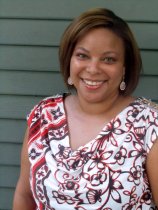
Marcia headshotFeeling safe again is often the healing and elusive aspiration of a person like me.
I have been living with the deep and cellular residuum of sexual trauma for most of my life—over thirty of my going-on forty-six years.

For many years, the grief and shame of losing my innocence cultivated an intense orientation to life’s doing. Safety for me back then was activity, noise, frenetic schedules, and a constant soundtrack to my life that meant I never had to be quiet with myself. Safety was in the predictable metrics of success that I could use to measure my self worth. I never had to stop and admit that I didn’t feel safe, ever.

I got a lot done all those frenetic years and my diligent efforts were affirmed with everything from scholarships to awards to pay raises.

But, trauma does not allow itself to be ignored. It demands attention. Its cellular ghosts haunt their host. They must be acknowledged, sometimes cast out, sometimes befriended, other times adapted or transformed. My trauma is tethered to the violence of a dangerous world, a world that knows no boundaries when it comes to annihilating innocence.

How can I be safe in this kind of world? How can any of us? Continue reading “Safety and Vulnerability in a Dangerous and Fertile World: A Meditation on Incarnation”

Responding to Human Suffering by Elise M. Edwards

Elise EdwardsIn the past few weeks, there have been renewed debates throughout the US about death with dignity laws and the role of government is providing or securing access to health care. The tragic story of Brittany Maynard and the incessant election-year politicking about the Affordable Care Act (Obamacare) have made issues about human suffering more visible and volatile than usual. These are topics I deal with in two courses I am teaching this semester–one about Christian ethics and the other about bioethics.

I truly admire those who work in the presence of suffering daily by caring for others.   It’s difficult to even talk about suffering in the classroom day after day. My intention behind doing so is for my students to resist simplistic responses by either valorizing human pain and suffering or retreating to escapism. I caution them about using religion to legitimize suffering when it accompanies from evil, yet encourage them to see the meaning in suffering as well. We try to maintain the fine line of affirming the experiences of those who claim to gain strength or some other good from their pain without crossing into discourse that names the pain itself as something good. We debate whether there can be any way of discussing suffering as redemptive. We discuss disparities in medical treatment and health care along economic, racial, gendered, cultural, and international divides and what the responses of clergy, medical providers, and everyday people to remedy them.

Through these heavy debates, I’ve gained more clarity about the ways that suffering is often a result of human injustice and I’m deeply saddened by it. Continue reading “Responding to Human Suffering by Elise M. Edwards”

Serpent Healing by Laura Shannon

Laura Monty DSCN0280Snakes have been considered sacred in Greece and the Balkans, as well as other cultures, since at least 7000 BCE. They are symbols of rebirth and regeneration, as they travel between our world and the world below, disappear and re-emerge from the earth in spring, and shed their skins in seasonal renewal.

Knossos Snake Goddess

The Cretan Snake Goddess from Knossos (ca 1600 BCE) stands serenely with serpents wrapped around her body, showing how snakes were considered benevolent and were revered, not feared. Snakes are also powerful symbols of healing. Recently, I had an extraordinary experience of ‘serpent healing’ after a serious injury.


Friends of mine run a yoga retreat centre in Mani, Greece, called The Spirit of Life, where their son keeps a number of snakes including a beautiful Royal Python named Monty. Monty and I have met on several occasions over the years, and whenever I have spent time holding him, I have felt a sense of great peace and calm. More than that, Monty has shown an uncanny ability to move directly to places of tension in my shoulders, and to gently yet firmly massage sore muscles in a soothing way.

Therefore, on a recent visit, I decided to let Monty go wherever he wanted, just to see where he might choose to move. I had had quite a bad fall from my bicycle several weeks before, resulting in multiple injuries, to my back and to my right elbow, hand, rib, shoulder, calf and foot. Continue reading “Serpent Healing by Laura Shannon”