Beyond Clenched Teeth: Reflections on Forgiveness by Elizabeth Cunningham

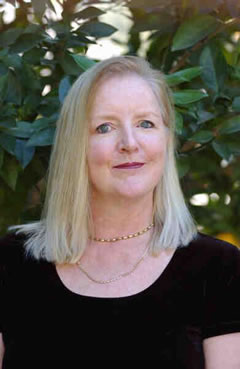
Elizabeth Cunningham headshot jpeg“I forgive you.”

These words make my teeth buzz like the sound of chalk squeaking on a blackboard. I can vividly recall my sister and myself, as children, saying these words through clenched teeth.  Not only were we Christians, we were the minister’s daughters.  We had no choice. The only other words I hated as much: “I’m sorry,” also forced through clenched teeth.

Oddly enough I cannot recall my older brother being told to ask my forgiveness when he and his friend pummeled me. That fell into the category of: “you egged them on.” My mother did used to say of my brother, mournfully and anxiously: “he doesn’t know his own strength.” Which meant: it isn’t his fault that he hurt you.  But my sister and I were supposed to be nice to each other. Continue reading “Beyond Clenched Teeth: Reflections on Forgiveness by Elizabeth Cunningham”

Creating Space: Mosques Affirming All Bodies, Minds, and Hearts by Laury Silvers

Silvers, Bio Pic FRBlogIn my first blog for Feminism and Religion, I discussed the cognitive and embodied dissonance that some Muslims experience as a result of historically (not eternally) gendered ritual forms. I ended with a promise to share with readers the ways in which el-Tawhid Juma Circle mosques try to create space to break free of those forms. Our mosques affirm all human beings as spiritually, socially, and ritually equal and try to break down the social hierarchy of ritual and theological leadership by opening up a space for all bodies, minds, and hearts to lead and follow as equals among each other.

Continue reading “Creating Space: Mosques Affirming All Bodies, Minds, and Hearts by Laury Silvers”

What is the Nature of the Hope that Can Trump Despair in the New Year? by Carol P. Christ

carol-christ“All hope abandon, ye who enter here.” These words posted on the gates of hell in Dante’s Inferno have an eerie resonance in our time. 

Marie Cartier recently posted a blog on children and hunger with facts so devastating I could not finish reading it. Earlier in the month Jassy Watson wrote about her deep feelings of grief on hearing Luisah Teish’s “Prayer for Disappearing Species.” Grief, despair, and sadness about the injustices in our world can be overwhelming.

A friend of mine has recently fallen into a deep depression. When I try to talk her out of it, she repeats that they are threatening to cut down the last remaining old growth forest in her home state of Oregon and that she can no longer eat fish because radioactivity released in the Fukishima nuclear plant disaster is reaching the seacoast of Oregon.

When I tell my friend she should not dwell only on these things and that she must remember that the world is still a beautiful place, she responds, “I do not want to give up my feelings. I know I must find a way to acknowledge my sadness and make a place for joy, but I don’t know how to do it.”

I have been in the grip of deep grief about the planet myself, not once but many times. But this happens less frequently than it used to.  When I think about the differences between how I once felt and how I feel now, I think the difference is that I have come to terms with and accepted the likelihood that “the world as we know it” is “going to hell in a handbasket”—as I put it.

I believe that the most likely conclusion of the choices human beings are making on planet earth today is massive environmental destruction leading to great suffering and probable extinction for human and many other species on planet earth. This is what I believe, but I also remind myself that I cannot know for sure. The earth and its species including human beings may have resources of resistance and survival, transformation and adaptation,that I do not know about and cannot imagine.

When I began to accept that the world I know and love (where spring follows winter, where birds sing, and where there is hope that injustice can be rectified) may not exist in the very near future, I had an astonishing insight. The death of the world I know and love will not mean the death of our planet or the end of the evolution of the universe.

Thinking about the disappearance of species and the death of human beings from starvation often feels too much to bear. None of this should be happening. Still, it can be strangely comforting to remind myself that the world I love is not the only possible world. There have been other worlds on this very planet—the time when the first cells were formed, the time of the dinosaurs, and many others. Evolution will continue on planet earth for several billion more years, and when our sun burns out, other suns will most likely still be shining in the universe.

This insight was followed by another. The reason for hope is not the conviction that we will be able to save the world we love. The reason for hope—and the reason to keep trying to save our world—is the deep knowing that it is right to try. Even if we cannot save the world we love for all time, we can savor the gift of life, and we can continue to try to create a world in which the gift of life is shared widely today and tomorrow.

I have written many times that we must learn to love a life that ends in death. I was speaking about accepting that each one of us will surely die. I do not fear death. Overcoming this fear has opened me to a greater and more clear-sighted love for life.

Can we learn to love life while accepting that the world we love may be dying? Can we continue to work to improve the conditions of life for individuals and species knowing that the world as we love it may not survive? Do we have any other choice?

For me the hope that can trump despair in our time begins in gratitude for a life that has been given to us, a life that has come down to us through the generations, and through billions of years of the evolutionary process on our planet.

Let us bless the Source of Life.

Let us bless the Source of Life, and the cycles of birth, death, and regeneration.

Let us turn back from despair.

Let us embrace the gift of life and share it with as many others as possible in the new year.

Carol P. Christ  learned to be grateful for the gift of life in Crete on the Goddess Pilgrimage to Crete she leads through Ariadne Institute.  It is not too early to sign up for the spring or fall pilgrimages for 2014.  Carol can be heard on a WATER Teleconference.  Carol’s books include She Who Changes and Rebirth of the Goddess and the widely-used anthologies Womanspirit Rising and Weaving the Visions. She wishes you great joy in the new year.

Yes, You’re a Homophobe by John Erickson

Jesus loved sinners and Jesus would rather be dancing with me in West Hollywood on a Friday night than lugging through a swamp luring ducks into a trap with a duck caller made by a clan who think that my sexual actions are similar to that of an individual having sex with an animal.

John Erickson, sports, coming out.

To be able to walk down the street holding the hand of the one you love is a great feeling and an action that some of us aren’t able to perform without fear.

A line has been drawn in the sand between those who support gay rights and those who do not.  While some call it being on the “right side of history,” I simply now refer to it as not sounding and looking like a bigot in the halls of history and in the various books, Facebook posts, and Tweets that our children will one day read. Continue reading “Yes, You’re a Homophobe by John Erickson”

How I Loved Myself through Charismatic Worship by Andreea Nica

Andreea Nica, pentecostalismBreaking up with your first love can be an excruciating process; especially when it happens to be completely entangled with your being. God was my first love and he stayed for a long while. We had many exhilarating times together, particularly within the branch of Christianity I was raised in: Pentecostalism. I fell in love with God when I uttered his divine language at 13 years of age.

Currently, I’m writing my memoir and narrative nonfiction, Freeligious ™, for which I explore the scientific explanations of my charismatic experiences in the church, which inevitably led to a closer attachment to God. In the Pentecostal church, we were encouraged to connect with God through supernatural phenomena.

Examples include: speaking in tongues (glossolalia), healings, trances (drunk in the holy spirit), visions (hallucinations), prophetic messages (delusions), rebuking evil spirits (paranoia), and many more god-friendly activities. While some of my church peers and most outsiders found the charismatic ordeal to be phantasmical and plain ol’ crazy, I became enchanted by the initiation. The initiation process was quite simple really. As believers in Christ, we must receive the baptism of the holy spirit which usually took the form of speaking in tongues, clinically known as glossolalia. Continue reading “How I Loved Myself through Charismatic Worship by Andreea Nica”

GIVING BACK TO THE MOTHER by Carol P. Christ

carol-christOne of the inspirations for the Goddess Pilgrimage to Crete was the spiritual power and energy I felt at the monastery of Paliani with its Sacred Myrtle Tree.  The Panagia, She Who Is All Holy, is said to live in the tree, and the nuns who tend the tree follow customs far older than Christianity.  When I first visited Paliani, I asked Her to heal my broken heart and help me find my true love.

panagia palianiOver the years, I have offered many other prayers:  for my books and tours, for health, for citizenship that would enable me to stay in Greece.   I tell other pilgrims that the Panagia of Paliani has performed many miracles and repeat the story of the doctors who desperately wanted to have a child, who had tried everything, and who had a son a year to the day after making a prayer at Paliani. I point to the many “tamas,” including gifts of precious jewelry, crutches and body braces that have been given in honor of the power of the Panagia of Paliani.

In the fall of 2012 one of our members prayed that a heavy flow of menstrual blood that often lasted for more than half of every month be stopped so that she would have the strength to participate fully in the pilgrimage. She had been bleeding for 5 weeks when she came on the tour, and her bleeding stopped the moment she touched the tree.  Continue reading “GIVING BACK TO THE MOTHER by Carol P. Christ”

Dreaming the dream on . . . by Kaalii Cargill

kaalii picI am author, writing fiction and non-fiction. My short stories have been published in various magazines and I have won an international writing prize. When my work was first published, I wanted to write a best-seller and earn enough from my books to retire from my ‘day job’ and write full time. I know the formula: open fast and strong, pick up the reader and carry her along until the last page, action, action, action…

Instead I found myself writing about balance, about land in need of healing and about the people called to defend the balance. My stories are as much about meaning and value as about action, and the same themes cycle though: cooperation vs. domination, defending the Earth, being an integral part of the world around us, cooperation with the rest of Nature. Continue reading “Dreaming the dream on . . . by Kaalii Cargill”